What Happens If Dove Eggs Don’t Hatch and How to Respond
If dove eggs don’t hatch, it’s often due to infertility, incubation disruption, or embryo death. These issues can be frustrating, especially if you’re hoping to see little doves hatch and grow.
Usually, you’ll notice the eggs remain unbroken beyond 14-16 days, and sometimes the parents might even abandon the nest.
First, make sure the parent doves have really left before you do anything. Then, carefully remove the unhatched eggs to avoid attracting predators.
Keeping the area calm helps support natural nesting cycles, which is important for the doves’ success.
Avoid trying artificial incubation unless you have the right tools and experience. Instead, keep an eye on the nest to support the doves naturally.
With a little patience and care, you can help these beautiful birds thrive.
Key Takeaways
- Dove eggs that don’t hatch after 14-16 days are likely infertile or have experienced embryo death. It’s a natural part of the process, though it can be disappointing.
- Sometimes, the parents may abandon the nest if the eggs remain unbroken and non-viable beyond the usual incubation period. So, it’s important to keep an eye on things without getting too close.
- You can confirm abandonment by observing from a distance before you step in. This way, you won’t disturb the birds unnecessarily.
- If you do find unhatched eggs, carefully remove them. This helps prevent attracting predators and keeps the nesting area safe.
- It’s best to let doves follow their natural nesting cycles. Avoid trying artificial incubation unless you have the right equipment and know what you’re doing.
Why Dove Eggs Sometimes Don’t Hatch: Causes and Warning Signs
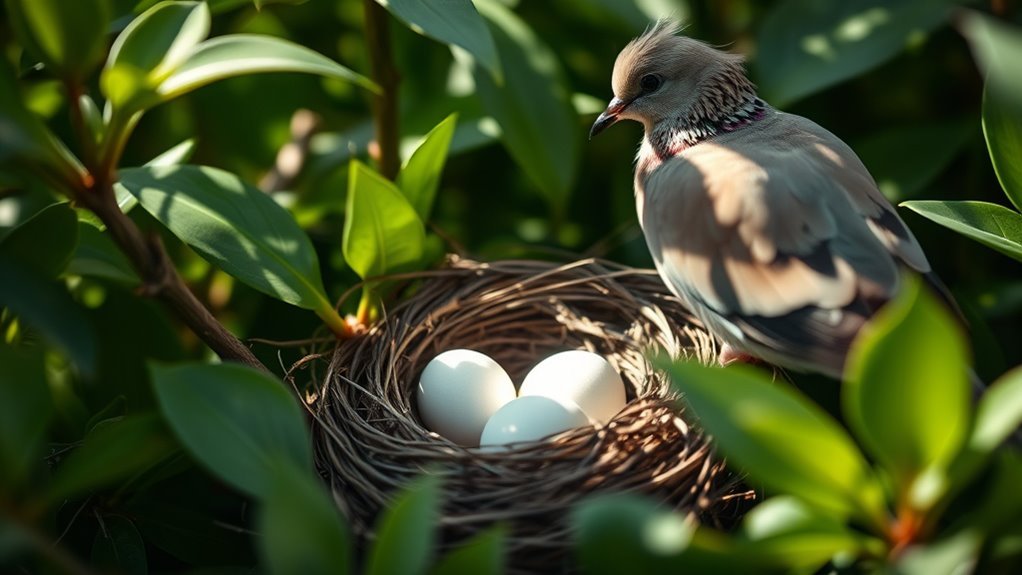
Although you might expect every dove egg to hatch, several factors can prevent this from happening. Dove eggs may be infertile from the start, which delays or stops parents from recognizing a viable hatch.
Incubation disruption, like eggs being left unattended overnight, often leads to embryo death. When you notice non-hatching signs—such as eggs remaining unbroken beyond the typical 14-16 day incubation—it’s a clear indicator something’s wrong.
Parental abandonment frequently follows, especially if the adults sense the eggs aren’t viable or if external disturbances occur. These causes can work alone or together, making some eggs fail to hatch despite natural efforts.
Understanding these warning signs helps you identify when dove eggs might not survive the incubation period.
How to Care for Abandoned or Unhatched Dove Eggs: What You Can Do Next
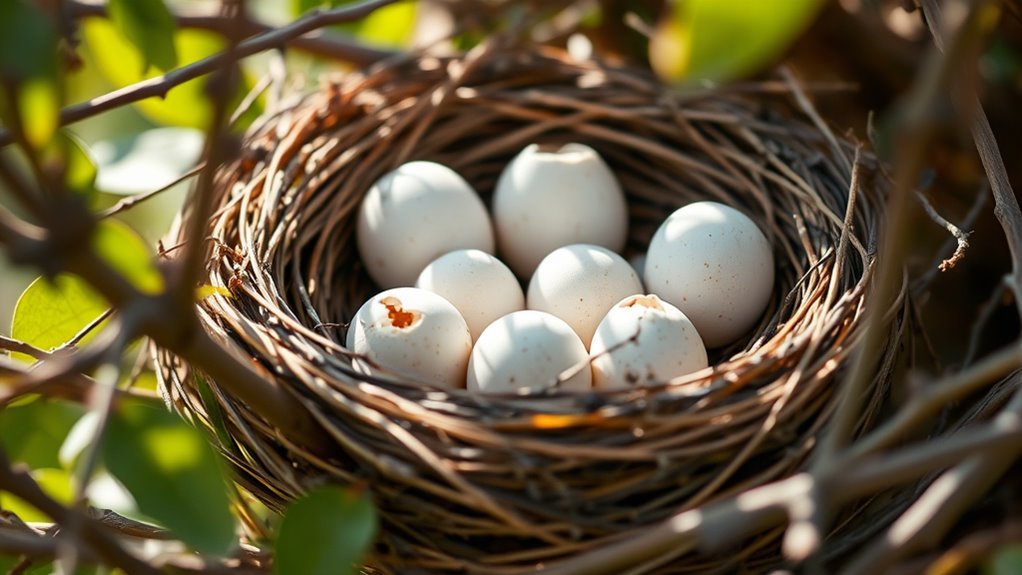
When dove eggs don’t hatch and the parents abandon the nest, you might wonder how to help. Unhatched eggs after 14-16 days are often infertile or no longer viable.
Here’s what you can do next for abandoned eggs:
- Nest Observation: Watch from a distance to confirm abandonment without disturbing the nest. You don’t want to cause any more problems by getting too close.
- Predator Prevention: Remove the unhatched eggs carefully. This helps avoid attracting predators and keeps the area safe.
- Support the Natural Nesting Cycle: Provide a calm environment so the doves can try again naturally. It’s better than trying artificial incubation, which is tricky without the right equipment.
Frequently Asked Questions
What if Dove Eggs Don’t Hatch?
If dove eggs don’t hatch, you should wait 14-16 days, then remove the unhatched eggs to prevent mold or predators. Avoid disturbing the nest during incubation to give parents the best chance to care for the eggs.
What Happens if Eggs Don’t Hatch After 21 Days?
If eggs don’t hatch after 21 days, they’re likely non-viable. You should remove them to avoid attracting predators since parents often abandon these eggs, and trying to incubate them usually won’t work.
What Happens if You Touch a Dove Egg?
You might imagine your scent scaring the parents away, but touching a dove egg won’t make them abandon it. Just handle it gently with clean hands to avoid damage—doves don’t recognize eggs by smell anyway.
What Happens When Dove Eggs Hatch?
When dove eggs hatch, you’ll see tiny, blind hatchlings without feathers. They rely completely on their parents for warmth and feeding, staying in the nest about two weeks before starting to learn how to fly.
Conclusion
If dove eggs don’t hatch, it can be frustrating and sad, but it’s important to understand why. Sometimes nature just takes its course, and not every egg will make it.
So, what can you do next? You can gently care for any unhatched or abandoned eggs, but remember, interfering too much might do more harm than good.
Trust nature’s timing, and keep an eye on the parents—they often know best. In many cases, the parent doves will either continue to incubate or eventually abandon the eggs if they’re not viable.
When dealing with unhatched dove eggs, patience and observation are key. Knowing when to step back and let nature handle things is part of responsible care. If you notice the parents are still attentive, it’s usually best to let them be.
In conclusion, if dove eggs don’t hatch, it’s natural and not always within your control. Providing gentle care without excessive interference helps protect the eggs and respects the natural process. Watching the parents and understanding their behavior can guide you on how to respond. Remember, sometimes the best action is to trust nature and give the doves space to do what they do best.