How to Feed Quail for Maximum Egg Laying
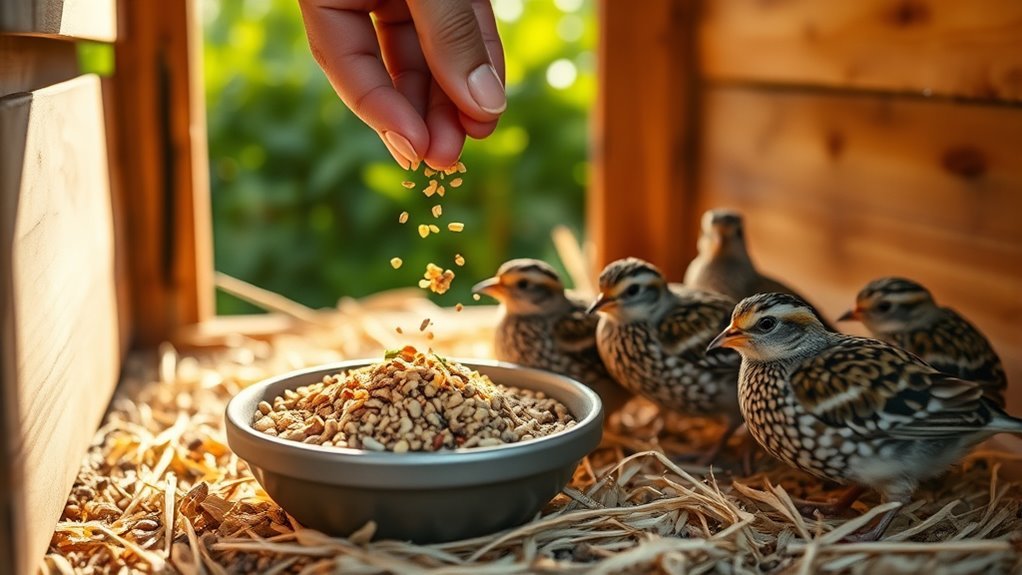
To maximize your quail’s egg laying, start them on a high-protein chick starter feed with 22-30% protein for the first 4-6 weeks. This high protein supports healthy growth and prepares them for strong egg production later.
Feeding your quail the right nutrition early on is key to boosting both egg quantity and quality.
As your quail mature, gradually switch to grower or layer feed containing 17-23% protein. Adding calcium sources like oyster shells is crucial to strengthen eggshells and keep your birds healthy.
Adjusting protein and calcium levels throughout their laying cycle helps maintain steady production without compromising their wellbeing.
Keep this feeding plan tailored to your flock’s needs, and you’ll notice consistent improvements in egg quality and quantity.
Feeding quail properly isn’t complicated, but a little attention to their diet goes a long way in maximizing egg laying success.
Key Takeaways
- Start young quail on high-protein (25-30%) chick starter feed for healthy growth and reproductive development. This helps them build a strong foundation early on.
- Transition to grower or layer feed with 17-23% protein to support consistent egg production. It’s important to keep their diet balanced as they mature.
- Supplement with calcium sources like oyster shells to strengthen eggshell quality. Strong shells mean fewer broken eggs.
- Adjust feed gradually based on age, production stage, and seasonal needs for optimal nutrition. Don’t rush changes; quail respond best to a steady routine.
- Monitor and balance protein and calcium intake to maintain steady and high egg-laying performance. Keeping an eye on their diet pays off with better results.
Choosing Quail Feed Types and Protein Levels for Maximum Egg Production
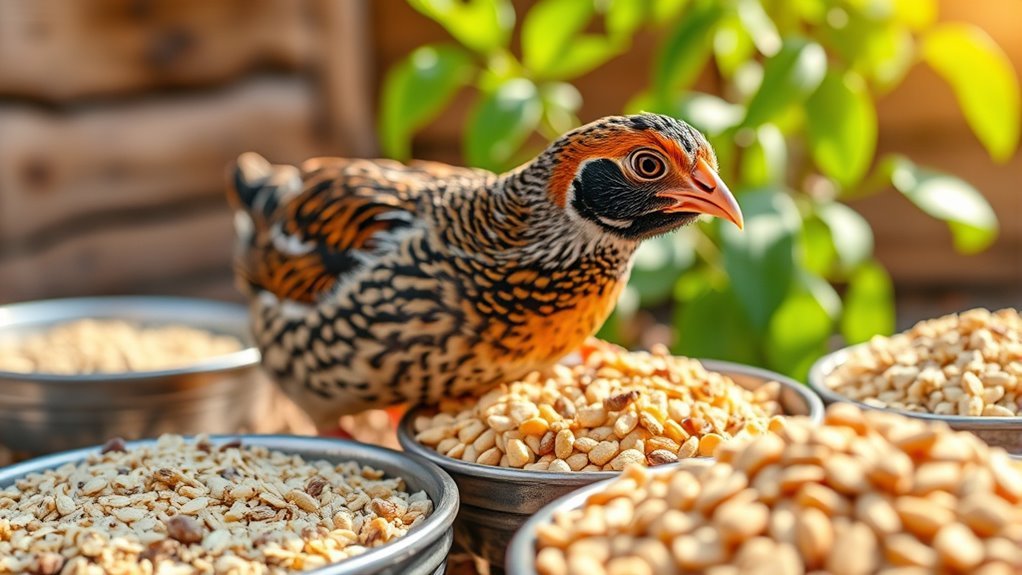
When you want to maximize your quail’s egg production, choosing the right feed type and protein level is vital. For Coturnix quail, start with a chick starter feed containing 22-30% protein during the first 4-6 weeks to support healthy growth.
As they mature, switch to a grower feed or balanced layer feed with protein levels between 17-23% to maintain consistent egg laying. Ensuring your quail feed includes adequate calcium sources like oyster shells is essential for strong eggshell formation.
You can also supplement with calcium-rich treats or grit to further enhance eggshell quality. By carefully selecting feed types and maintaining proper protein levels, you’ll optimize egg production and keep your Coturnix quail healthy throughout their laying cycle.
Adjusting Quail Feeding at Each Life Stage for Consistent Egg Laying
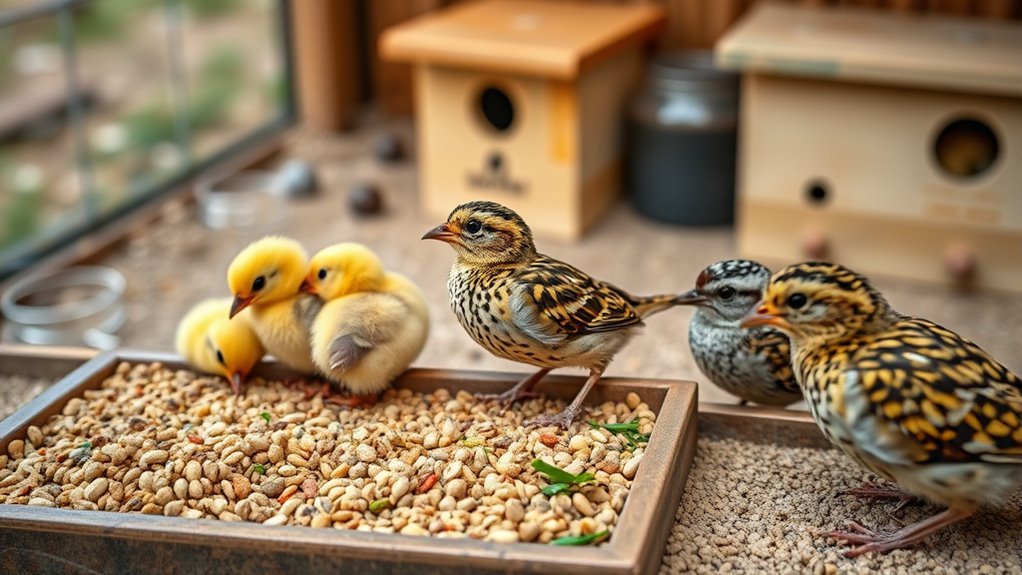
Although quail require different nutrients at each stage of life, adapting their feed correctly guarantees steady egg production. Start chicks on a high-protein starter feed (25-30%) to support growth and reproductive development.
Properly adjusting quail feed at each life stage ensures consistent egg production and healthy development.
At 6-8 weeks, switch to a grower feed with 20-22% protein, gradually adding calcium supplementation. When quail reach adulthood, provide adult quail with a layer feed containing 17-20% protein and oyster shells to promote consistent egg production.
Nutrition adjustment is key throughout the laying cycle—monitor protein levels and increase calcium during peak laying for stronger shells. By tailoring quail feeding to each life stage and adjusting seasonally based on egg production, you ensure your flock stays healthy and productive.
This way, you maximize egg quantity and quality efficiently.
Frequently Asked Questions
How Many Eggs Can One Quail Lay per Day?
You can expect one quail to lay about half to one egg per day during its peak. Keep in mind, this varies with age, breed, and conditions, but generally, they’ll give you nearly one egg daily.
What Should You Not Feed Quail?
You wouldn’t serve poison at a feast, so don’t feed quail raw beans, salty snacks, dairy, spoiled feed, or citrus. These harmful treats disrupt their delicate balance and stunt the golden gifts they work hard to produce.
What Makes Quail Lay More Eggs?
You’ll get more eggs by giving quail a high-protein, balanced diet with enough calcium, fresh water, and stable lighting around 14–16 hours daily. Keep their environment stress-free and safe to boost consistent egg laying.
What Time of Day Do Quail Lay Eggs?
Quail usually lay eggs in the late afternoon or early evening, often around sunset. You’ll notice most hens start laying after 5 pm, with peak activity occurring within a few hours of dusk, especially with longer daylight.
Conclusion
Feeding your quail the right nutrients at every stage is key to unlocking their full egg-laying potential. You might hear that high protein alone guarantees more eggs, but the truth is balance matters just as much.
By choosing the right feed types and adjusting protein levels as your quail grow, you guarantee consistent production without health risks. Remember, it’s not just about feeding more—it’s about feeding smart to keep your quail thriving and laying their best.
In the end, proper nutrition is the foundation for maximum egg laying in quail. Balancing protein with essential vitamins and minerals ensures your birds stay healthy and productive. So, focus on a well-rounded feeding plan tailored to their growth stages to boost egg output and maintain their well-being. Smart feeding is truly the secret to getting the most from your quail flock.