
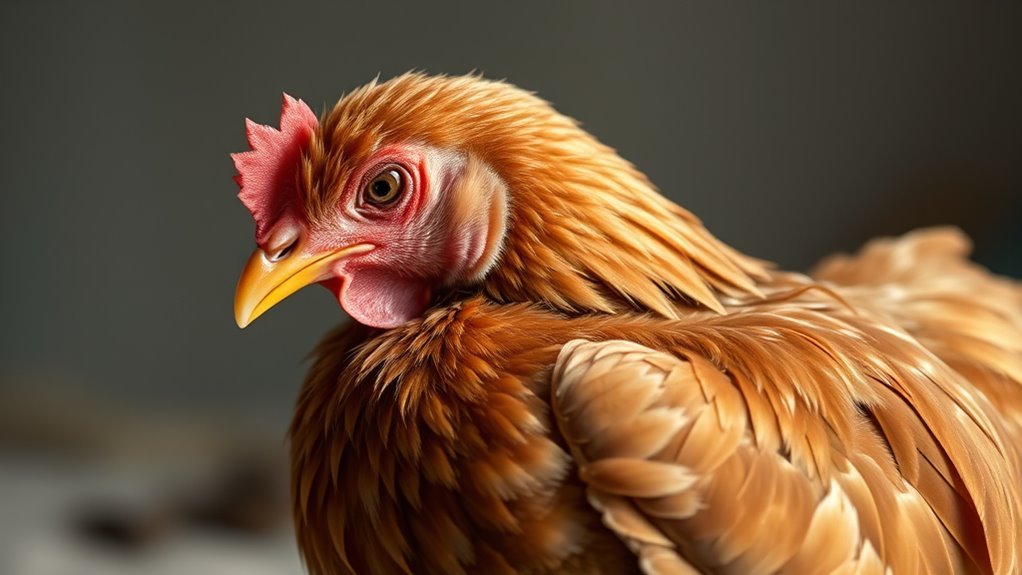
How to Tell If It’s Painful for Chickens to Lay Eggs
You can tell it’s painful for your chicken to lay eggs by noticing her loud vocal distress like wheezing or screeches, combined with physical signs like a swollen vent or difficulty walking. These signs often point to discomfort related to egg laying, such as egg binding or large eggs causing internal pain.
She might hide, avoid activity, or refuse treats, showing clear discomfort. When you see these behaviors, it’s a good idea to pay close attention and act quickly.
Keep an eye out for these signs, and you’ll understand how to support her better as you explore this topic further. It’s all about knowing when your chicken is in pain and helping her through it.
Key Takeaways
- Loud squawks, wheezing, or distressed vocalizations during laying signal pain in hens.
- Swollen vent area and difficulty walking indicate physical discomfort related to egg-laying.
- Hens avoiding activity, hiding, or refusing treats often show signs of egg-laying pain.
- Prolonged straining or inability to pass eggs suggests painful egg binding or internal injury.
- Early detection of vocal and physical signs allows timely veterinary intervention to ease pain.
How to Recognize Pain When Chickens Lay Eggs
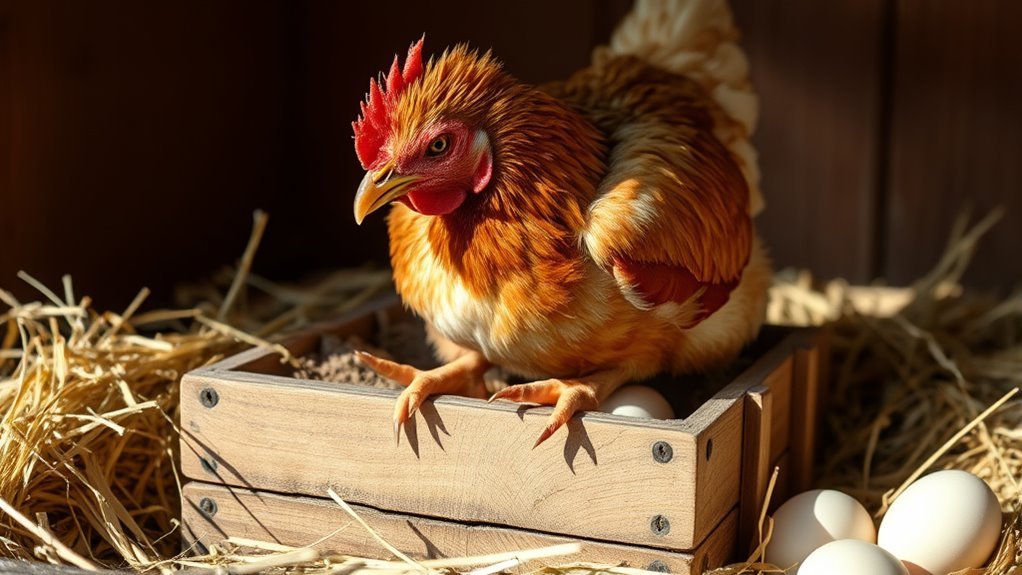
Although chickens often vocalize during egg-laying, you should pay close attention to distressed sounds like wheezing, gasping, or loud screeches paired with physical signs such as a swollen vent or difficulty walking.
These signs of pain in laying hens could indicate egg-laying discomfort or more serious issues like egg binding. Distressed squawks combined with vent swelling are strong behavioral indicators that your hen is experiencing pain during laying.
You might notice her avoiding activity, hiding, or refusing treats—these are key behavioral indicators of internal pain. Physical signs such as dragging wings or persistent loud vocalizations also suggest pain.
Recognizing these symptoms early helps you guarantee your hen receives timely care for egg-laying difficulties and internal pain that could otherwise worsen unnoticed.
Causes of Pain During Egg Laying and Ways to Help
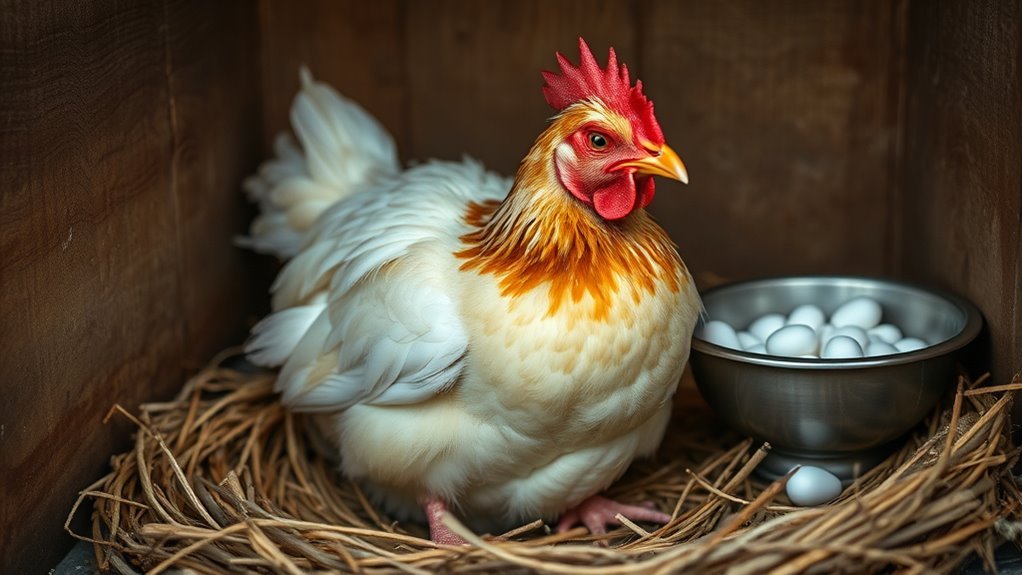
When hens experience pain during egg laying, it often results from issues like egg binding, internal injuries, or passing eggs that are too large for their reproductive tract. If a hen becomes egg-bound, she may show signs of pain such as loud screeches, wheezing, or reluctance to move.
Large eggs can cause vent injuries and significant discomfort, especially in young hens with unstretched vents. To support your hen’s welfare, provide a quiet, dark nesting area to aid stress reduction during laying.
If you notice prolonged straining, bleeding, or inability to pass an egg, seek veterinary care immediately. Prompt attention prevents complications from internal injuries and eases pain during egg laying, helping your hen recover comfortably and maintain her health.
Frequently Asked Questions
How Painful Is It for a Chicken to Lay an Egg?
It’s usually not very painful for your chicken to lay eggs once she’s used to it. However, if she struggles, you’ll notice distress or difficulty, meaning she might need help or a vet’s attention quickly.
How to Tell if a Chicken Is Struggling to Lay Eggs?
If your chicken sounds like it’s auditioning for a horror movie, keeps straining without success, or looks like it’s hosting a swollen vent party, you’re witnessing a struggle. Don’t ignore those dramatic egg-laying performances!
Do Birds Feel Pain When Laying Eggs?
Birds generally don’t feel much pain laying eggs since their bodies adapt for it. But if eggs are large, broken, or stuck, you’ll notice distress signs, meaning they’re likely hurting and need help immediately.
Do Chickens Cry When Laying Eggs?
You’ll hear hens sing loudly, almost like proud cries, as they lay eggs—not pain but excitement. If their sounds turn sharp or distressed, watch closely; it might mean something’s wrong or uncomfortable for them.
Conclusion
When your chicken lays eggs, pay close attention to any signs of pain—it’s like watching someone struggle with a heavy backpack; you want to help. If she’s straining, vocalizing, or acting unusually quiet, she might be uncomfortable.
Understanding the causes, like large eggs or infections, helps you provide relief. By acting quickly and offering care, you can make egg-laying easier and keep your flock healthy and happy.
Recognizing when it’s painful for chickens to lay eggs is key to their well-being. If you notice your hen struggling, don’t ignore it. Prompt attention to symptoms like straining or unusual behavior can prevent serious problems. Whether it’s due to the size of the egg or an infection, knowing the causes helps you act fast. With proper care and observation, you’ll ensure your chickens stay comfortable during egg-laying, keeping your flock healthy and happy in the long run.