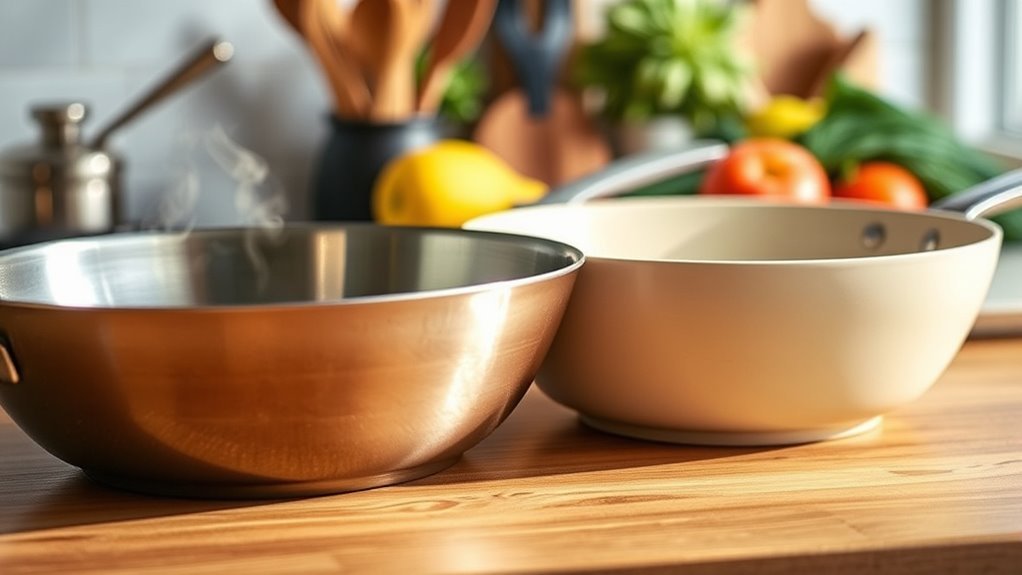
Differences Between Ceramic and Stainless Steel Pans: 3 Key Points
You’ll find stainless steel pans are highly durable, resisting warping and lasting much longer than ceramic ones.
Ceramic pans often wear out or scratch within a few years, which can be frustrating if you cook frequently.
Ceramic pans excel in non-stick performance right away, making cooking and cleaning easier.
On the other hand, stainless steel needs proper preheating and oil for good food release, so there’s a bit of a learning curve.
When it comes to safety and environmental impact, stainless steel is chemical-free and eco-friendly over time.
Ceramic cookware, however, may have potential wear issues and chemical concerns as it ages.
There’s definitely more to explore about these cookware choices, but understanding these key differences can help you pick the right pan for your kitchen.
Key Takeaways
- Stainless steel pans are highly durable, resistant to warping, rust, and corrosion. They offer a longer lifespan than ceramic pans, which is great if you want something that lasts.
- Ceramic pans provide superior non-stick performance and are easier to clean. But keep in mind, they usually last only 1-3 years before needing replacement.
- Stainless steel requires proper preheating and oil for effective food release. So, cooking with them can be a bit more skill-dependent compared to ceramic.
- Ceramic coatings may chip and even leach chemicals over time. This raises some safety concerns and means you might have to replace them more often.
- Stainless steel cookware is more environmentally friendly because of its durability and chemical inertness. Plus, it creates less waste compared to ceramic options.
Durability and Lifespan of Ceramic vs Stainless Steel Cookware
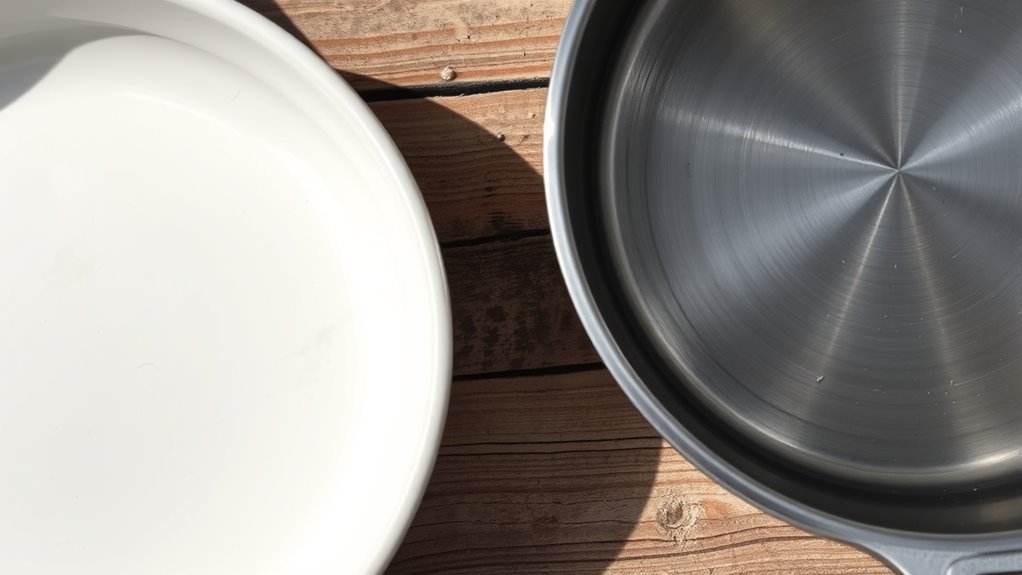
How long you want your cookware to last can greatly influence your choice between ceramic and stainless steel pans. When it comes to durability and lifespan, stainless steel cookware outperforms ceramic cookware by a wide margin.
High-quality stainless steel pans boast excellent material durability, resisting warping, rust, and corrosion. This makes them ideal for long-term use.
In contrast, ceramic cookware typically shows signs of wear and tear within 1-3 years. That’s largely due to its lower chip resistance and vulnerability to scratching and degradation.
While careful handling can extend a ceramic pan’s lifespan, it still falls short compared to stainless steel. If you want cookware that withstands daily use and demands less frequent replacement, stainless steel offers a superior cookware lifespan and corrosion resistance that ceramic can’t match.
Non-Stick Performance and Cooking Ease Compared
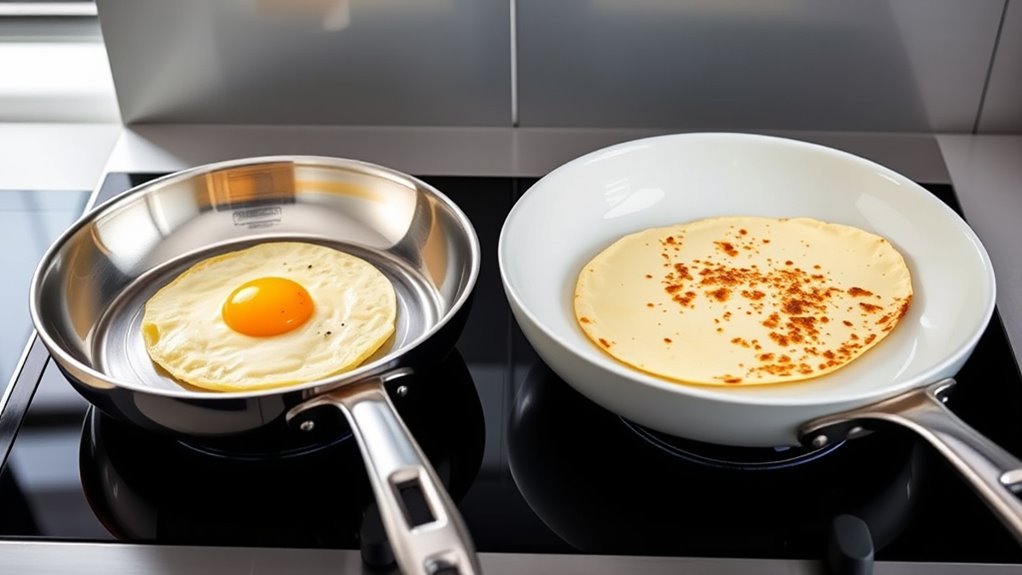
Although stainless steel pans don’t come with a built-in non-stick coating, you can achieve excellent food release by properly preheating the pan and using oil.
Ceramic pans, on the other hand, offer superior non-stick performance right out of the box, making cooking delicate foods like eggs or pancakes much easier. Their non-stick surface also makes them easy to clean.
Here’s what you can expect:
- Ceramic pans provide consistent non-stick performance until the coating wears down
- Stainless steel pans require skillful preheating for effective food release
- Ceramic’s non-stick coating lasts 1-3 years depending on use
- Stainless steel pans need more effort but can handle high heat better
- Ceramic pans simplify cooking ease with less sticking and scrubbing
Choosing between them depends on whether you prioritize effortless non-stick cooking or mastering technique. It really comes down to what suits your style in the kitchen!
Maintenance, Safety, and Environmental Impact Explained
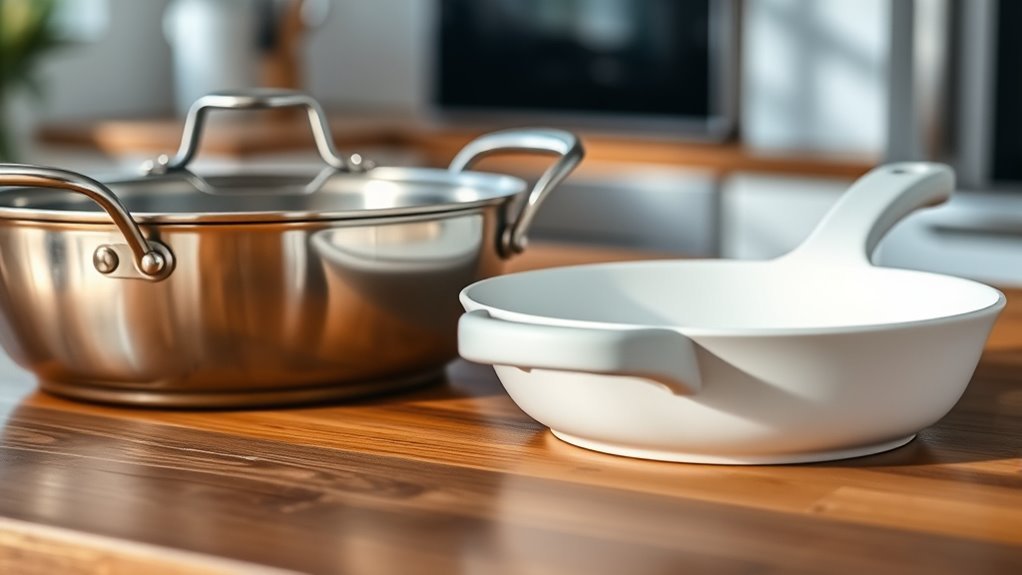
Beyond cooking performance, maintenance, safety, and environmental impact play a big role in choosing between ceramic and stainless steel pans. Ceramic coatings offer a non-stick surface but can wear and chip over time. That raises safety concerns because of potential chemical leaching.
You’ll need to replace ceramic pans every 2-3 years, which affects their environmental impact. This is despite ceramic being considered eco-friendly cookware with lower CO2 emissions during production.
On the other hand, stainless steel’s durability means you can rely on these pans for a lifetime with proper maintenance. Plus, stainless steel poses fewer safety risks since it doesn’t leach chemicals.
Choosing stainless steel reduces waste and long-term environmental impact. Meanwhile, ceramic pans require more upkeep and frequent replacement because of their shorter lifespan.
Frequently Asked Questions
What Is the Difference Between Stainless Steel and Ceramic Pots and Pans?
You’ll notice stainless steel pans offer durability and great heat control for searing, while ceramic pans provide a non-stick surface ideal for delicate cooking but wear out faster. Choose based on your cooking style and care preferences.
Which Is Better Ceramic or Stainless Steel?
Choosing between ceramic and stainless steel is like picking sneakers: ceramic’s great for easy cooking and cleanup, but stainless steel’s your durable, all-rounder that handles heat and lasts longer, saving you money over time.
What Are the Pros and Cons of Ceramic Cookware?
You’ll love ceramic cookware for its non-toxic, truly non-stick surface and easy cleaning, but you’ll need to handle it gently and replace it more often since the coating can chip or degrade within a few years.
What Is Healthier to Cook With Ceramic or Stainless Steel?
Think of stainless steel as a reliable shield; it’s healthier because it won’t leach chemicals or degrade over time. Ceramic’s like a fragile flower—safe at first but can chip, risking your meal’s purity. Choose durability.
Conclusion
When choosing between ceramic and stainless steel pans, you’re picking more than just cookware—you’re shaping your entire cooking experience. Ceramic offers effortless non-stick ease but can be less durable, while stainless steel stands tough and lasts forever with proper care.
Maintenance and safety also play big roles in your decision. Ceramic pans need gentle handling to keep their coating intact, while stainless steel requires seasoning and polishing to maintain its shine and performance.
Don’t let your kitchen tools hold you back. The right pan, whether ceramic or stainless steel, can make cooking feel like a magical, stress-free adventure every time you step up to the stove! Choosing the best pan for your cooking style ensures you enjoy both convenience and durability in the kitchen.