
What Does a Duck Egg Look Like Visual Guide
When you candle a duck egg, you’ll notice some fascinating changes as the embryo develops. By day 7, veins start spreading from the embryo, making the inside of the egg look like a tiny network of lifelines.
Around day 12, you can even see movement, which is pretty amazing to watch.
Early on, the blood vessels are quite clear, so it’s easy to spot them. But as the embryo grows bigger, the internal features become harder to make out.
By days 22 to 27, the embryo almost fills the entire egg, and you might catch subtle shifts like the duckling moving its bill.
Keep observing—there’s so much more to discover about what’s happening inside the egg!
Key Takeaways
– Early candling shows visible veins and a germinal disc inside the duck egg by day 7-12.
You can actually see the beginnings of life starting to form!
– By day 12, embryo movement becomes visible and blood vessels spread throughout the egg.
It’s pretty amazing to watch as the little life inside gets more active.
– Around days 22-27, the embryo fills most of the egg with denser blood vessels and subtle bill movements.
You might even catch a glimpse of the duck’s bill moving gently.
– The air cell grows near the wider end of the egg as hatching approaches.
It’s all getting ready for that big moment!
– Candling uses a bright light in a dark room to reveal internal structures and track embryo development.
It’s a simple but fascinating way to see what’s going on inside the shell.
What Duck Eggs Look Like as They Develop
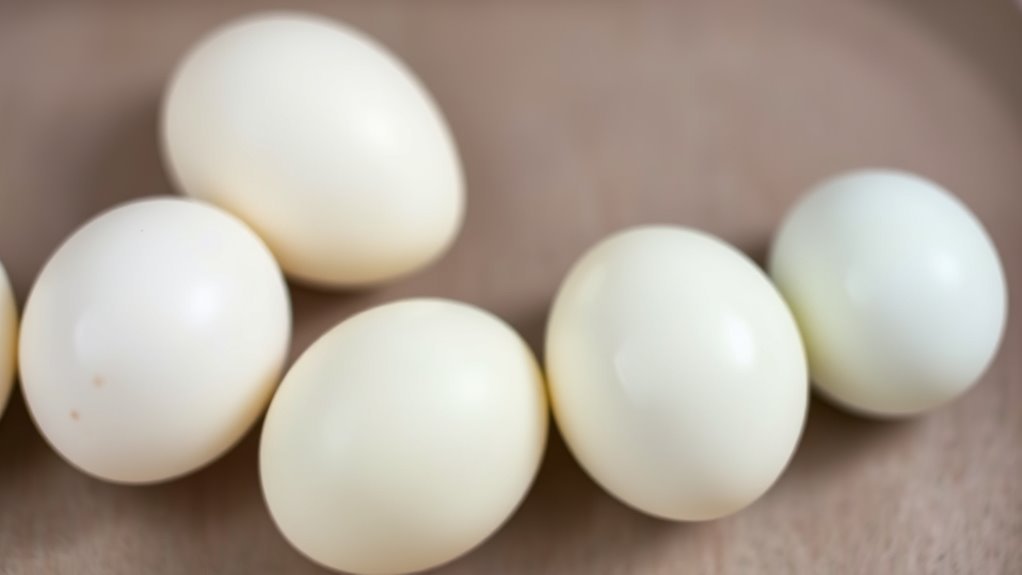
While candling duck eggs between days 1 and 12, you’ll notice visible veins and a small germinal disc developing inside. These veins are actually blood vessels feeding the growing embryo, showing early development clearly.
As days pass, the embryo expands, and by day 22, it occupies most of the egg, making internal features harder to distinguish. Around days 26 to 27, you might spot subtle movement, like the duck bill shifting inside the air sac, signaling the embryo’s increasing activity.
During this late stage, the blood vessels become denser, and the embryo fills the space more completely. This progression leads up to internal pipping, where movement intensifies, preparing for hatching.
Candling lets you track these changes, revealing the fascinating journey of the duck embryo inside the egg. It’s pretty amazing to watch!
How to Candle Duck Eggs and Spot Healthy Embryos
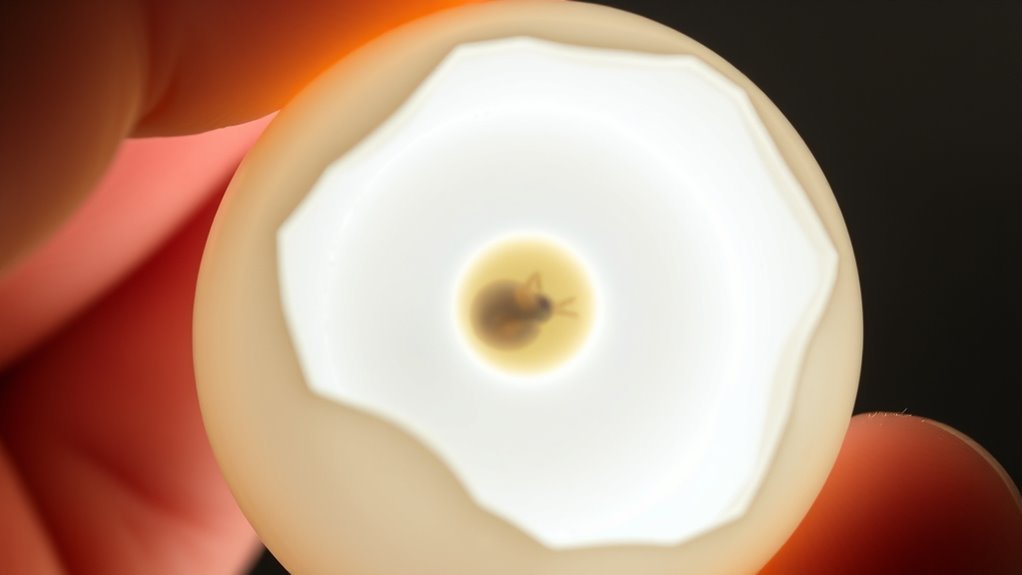
Observing the changes inside duck eggs through candling reveals a lot about embryo development. To candle duck eggs, use a bright candling light in a dark room to see internal structures clearly without disturbing the egg.
Around Day 7, you’ll notice blood vessels spreading from the embryo, indicating viability. By Day 12, embryo movement becomes visible, confirming a healthy embryo.
The air cell also grows during the incubation period, visible near the egg’s wider end. As the embryo fills most of the egg near Day 22, internal structures become harder to distinguish.
Regular candling helps you track development and spot any issues early, ensuring you can support a healthy embryo throughout incubation. Just remember to handle the eggs gently to avoid harming the delicate life inside.
Frequently Asked Questions
How Can You Tell if It’s a Duck Egg?
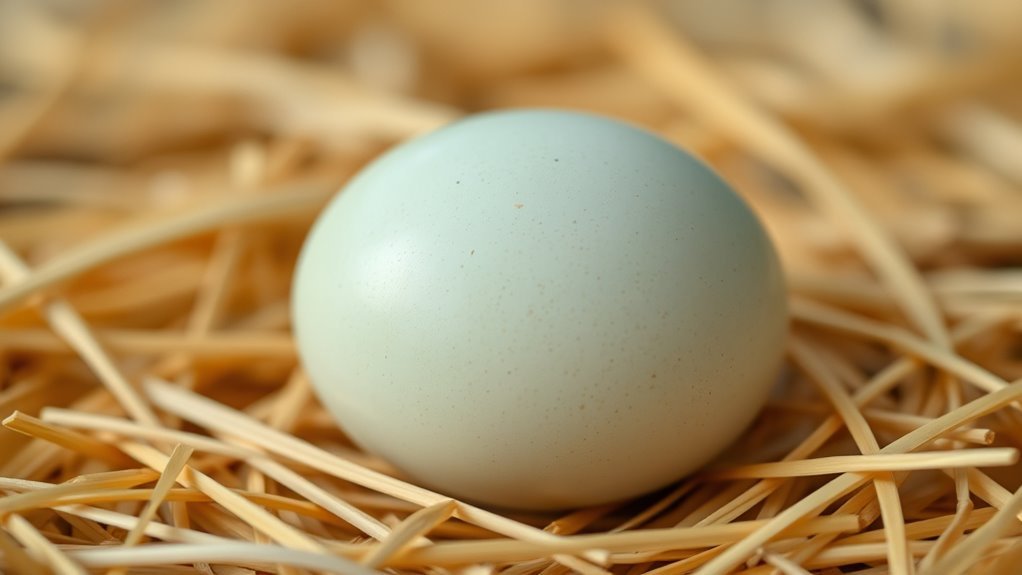
You can tell it’s a duck egg by its larger size, elongated shape, and thicker shell. The shell’s color might be white, blue, or green, and it usually has a matte finish compared to chicken eggs.
What Does a Duck’s Egg Look Like?
You might think duck eggs look just like chicken eggs, but they don’t. You’ll see they’re larger, oval-shaped, with thicker shells that can be white, blue, green, or gray, often with a slight sheen or matte finish.
Do Ducks Like Being Hugged?
No, ducks usually don’t like being hugged. You’ll want to approach them calmly and gently instead. Hugging can stress them out or make them try to escape, so build trust with slow, gentle interactions instead.
Are Duck Eggs Good for Diabetics?
Yes, duck eggs can be good for diabetics when you eat them in moderation. They provide protein and healthy fats that help stabilize blood sugar, but you should always check with your healthcare provider first.
Conclusion
Now that you’ve seen what duck eggs look like as they develop and learned how to candle them, you might think you’ve got it all figured out. But here’s the twist—sometimes, what looks perfect on the outside hides surprises inside.
Keep a close eye during candling; that tiny flicker of movement could mean the difference between life and loss. It’s those subtle signs that can tell you if your duck egg is developing healthily or not.
Are you ready to catch those subtle signs and guarantee a healthy hatch? Understanding what a duck egg looks like and how to candle them properly is key to spotting issues early. With careful observation and a bit of practice, you’ll increase your chances of a successful hatch and healthy ducklings. Don’t just guess—really know what’s going on inside that shell!