Why Is My AC Pan Full of Water?
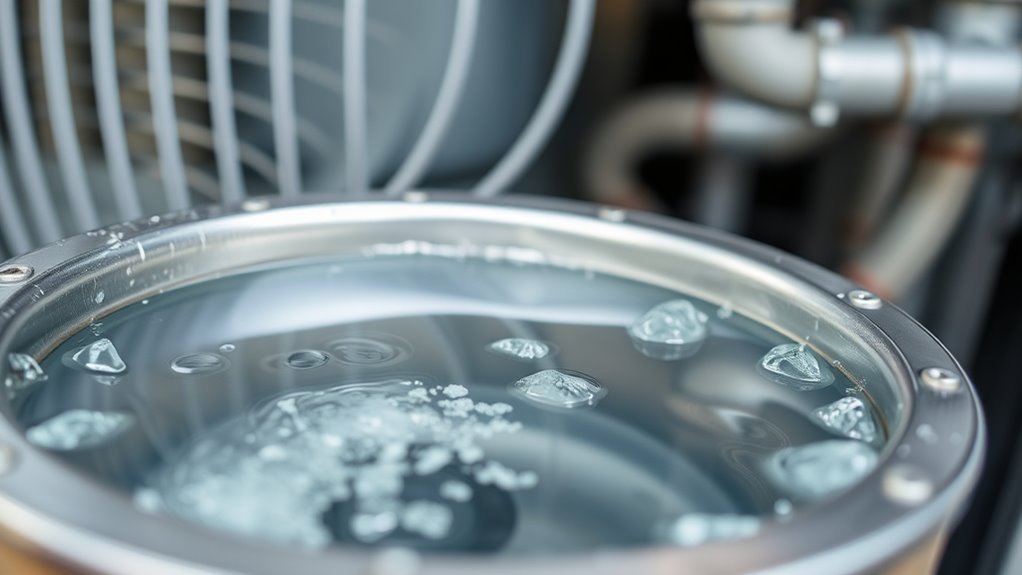
Your AC drain pan fills with water mainly because the drain line is clogged with dirt, algae, or debris. This blockage stops proper drainage, causing water to back up into the pan.
Sometimes, a frozen evaporator coil melting can add extra water, or a tilted drain pan can cause overflow too.
If the pan overflows, you might notice water pooling nearby or even musty smells. It’s a clear sign something’s not right with your AC’s drainage system.
The good news? You can often clear the clog or empty the pan yourself with some simple steps.
But if the problem keeps coming back, it’s best to call in a professional.
Keep reading to find easy fixes and prevention tips that will keep your AC running smoothly and your drain pan dry.
Key Takeaways
- A clogged condensate drain line with algae or debris often causes the AC drain pan to fill with water. It’s pretty common and can easily block the water from flowing out like it should.
- Sometimes, frozen evaporator coils melt and create excess water. This extra water can overflow the drain pan if it’s too much to handle.
- If the drain pan wasn’t installed right or is tilted, water won’t drain properly. That leads to water building up where it shouldn’t.
- Dirt and debris can also pile up in the drain pan. When that happens, water can get blocked and overflow.
- Blockages anywhere in the drainage system stop water from draining out. So, the pan fills up and eventually overflows.
Why Your AC Drain Pan Fills Up and Signs to Watch
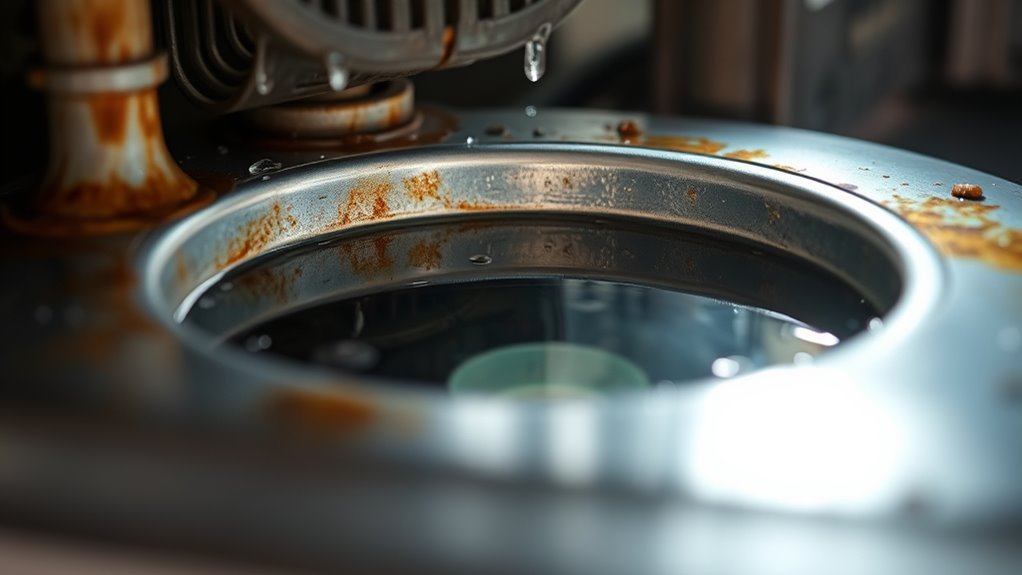
When your AC drain pan fills up, it usually means the condensate drain line is clogged with algae, dirt, or debris. This blockage stops proper drainage and causes water to pool in the pan.
That pooling can lead to overflowing and might even damage your system. Sometimes, a frozen evaporator coil melts and creates excess water, filling the pan faster than it can drain.
Improper installation or a tilted pan can make the water pooling worse by preventing proper drainage. You might notice signs like water pooling on the floor, musty odors, ceiling stains, or even system shutdowns triggered by safety switches.
Regular maintenance is key. It helps prevent dirt, debris, and algae buildup, keeping your AC drain pan clear and your system running smoothly without any unexpected interruptions.
Easy Fixes, Prevention Tips, and When to Call a Pro
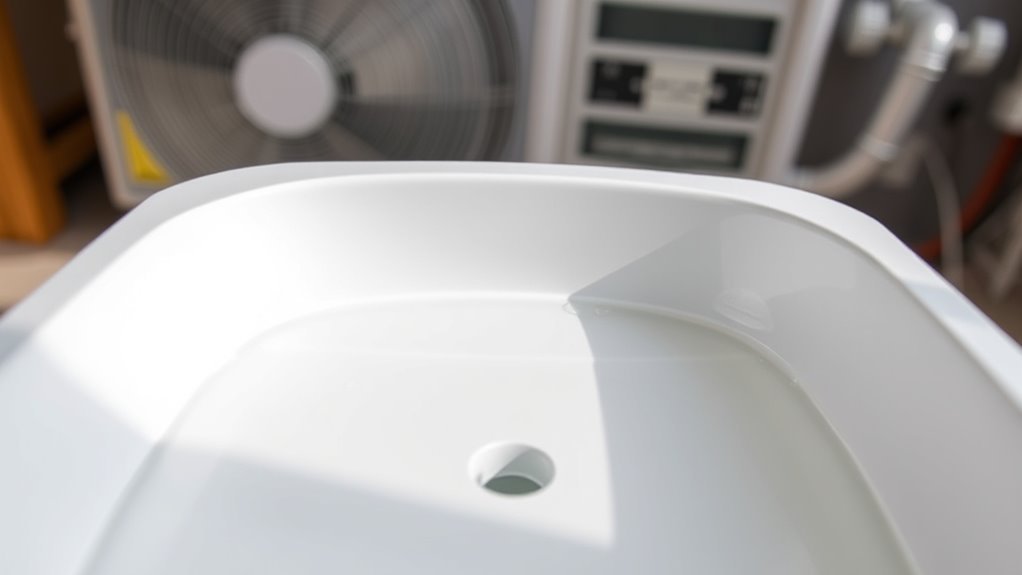
Although a full AC pan can be frustrating, you can often fix the issue yourself by turning off the unit, emptying the pan, and clearing the drain line with a vacuum or vinegar flush. A clogged drain line is a common cause of water overflow, so a drain line flush helps maintain proper drainage.
Regular maintenance, like cleaning or replacing air filters every 1-3 months, prevents coil freezing and reduces water buildup. Installing a float switch adds safety by automatically shutting off the system if the AC drain pan fills.
Also, make sure to check your condensate pump and drainage system to avoid water damage. If problems keep happening or leaks don’t stop, it’s best to call a licensed HVAC pro to inspect and repair the system.
Frequently Asked Questions
What to Do if Your AC Pan Is Full of Water?
If your AC pan is full of water, turn off the unit, carefully drain the water, clear the condensate drain line, replace dirty filters, and call a professional if it keeps overflowing despite your efforts.
Should My AC Drip Pan Have Water in It?
About 90% of AC units have some water in the drip pan during operation. You should expect minimal water, not overflowing. If it’s full, you’ll want to check the drain line for clogs or maintenance needs.
What Causes an AC Drain Pan to Fill Up?
Your AC drain pan fills up because the drain line’s clogged, filters are dirty, or the pan’s damaged. Low refrigerant or frozen coils melting also cause overflow. Regular maintenance helps you avoid these issues easily.
Will AC Shut off if Drip Pan Is Full?
Yes, your AC will shut off if the drip pan is full. The float switch detects water levels and triggers the system to stop, preventing overflow and potential water damage, so you’ll need to address the drainage issue promptly.
Conclusion
If your AC drain pan feels like a small pond after a rainstorm, don’t ignore it. That water’s a sign your system needs attention—like a whisper before a storm.
Quick fixes like clearing clogs or checking the condensate line can keep things flowing smoothly. But if the water keeps rising, it’s time to call a pro.
Stay ahead of the flood by regularly inspecting your AC pan for water buildup. Addressing issues like clogged drains or faulty condensate lines early can prevent leaks and damage. Remember, a full AC pan is often a warning sign that your system isn’t draining properly.
By taking care of your AC drain pan, you’ll keep your air conditioner running efficiently and avoid costly repairs. Don’t let a simple water buildup turn into a bigger problem—keep your AC cool, dry, and working well all season long.