7 Tips to Increase Egg Production in Chickens
To boost your chickens’ egg production, it’s important to provide 14–16 hours of light daily. This helps keep them laying consistently and on schedule. Light is a key factor in encouraging hens to produce more eggs, especially during shorter daylight months.
Feeding fresh, fortified pellets with 18-20% protein is another great way to support healthy egg production. You should limit scratch grains to maintain balanced nutrition and avoid empty calories.
Always offer clean, fresh water, and don’t forget to add warm water when the weather gets cold.
Including greens like alfalfa adds extra nutrients that your chickens will love. Plus, keep an eye on your flock’s health regularly to prevent parasites and disease.
These simple steps can make a big difference. There’s definitely more to explore for ideal results!
Key Takeaways
- Provide 14-16 hours of light daily using artificial lighting to maximize egg laying. This is especially helpful during shorter winter days.
- Maintain a balanced diet with 18-20% protein and enough calcium. This supports consistent egg production and strong eggshells.
- Conduct weekly health and parasite screenings, and keep the coop clean. This helps prevent illness and drops in laying caused by parasites.
- Offer fresh, clean water multiple times daily. In cold weather, warm the water to encourage proper hydration and better laying.
- Limit scratch grain to 10-15 minutes in the evening. This avoids nutrient imbalance and encourages hens to return to the coop.
Understand Key Factors That Affect Egg Production
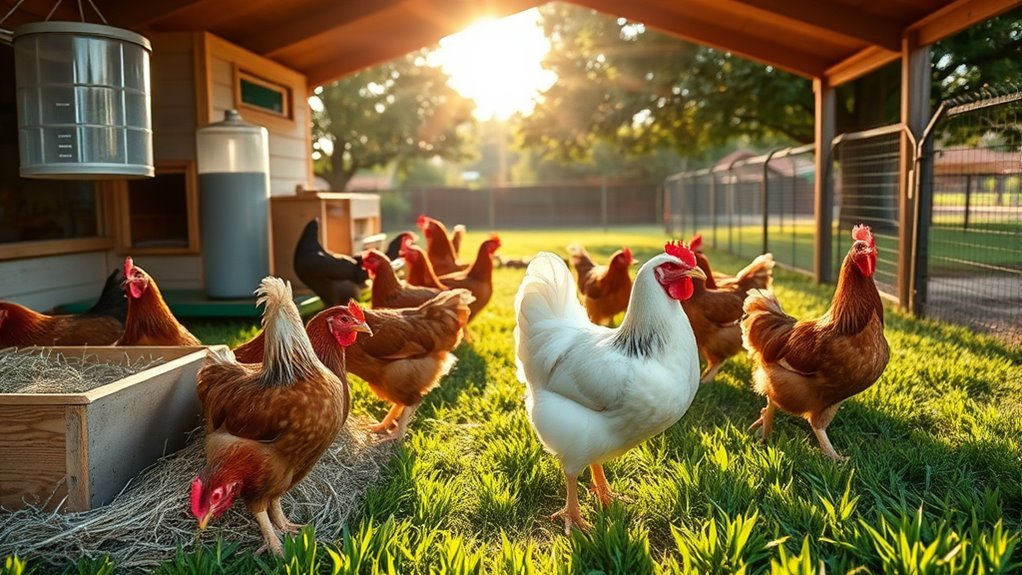
Although many factors influence egg production, understanding the key ones can help you boost your flock’s output. Breed plays a major role; for instance, Rhode Island Reds and White Leghorns lay between 200-250 eggs annually. So, choosing the right breed really matters.
Hen health is essential—illness, parasites, or molting will temporarily reduce egg-laying. That’s why regular health checks are a must.
Nutrition also affects egg production. Feeding your hens a balanced diet with 18-20% protein and enough calcium helps maintain consistent laying.
Environmental factors like predators, extreme temperatures, and overcrowding cause stress. This stress lowers egg output by impacting hen health and behavior.
Provide 14–16 Hours of Light to Stimulate Laying
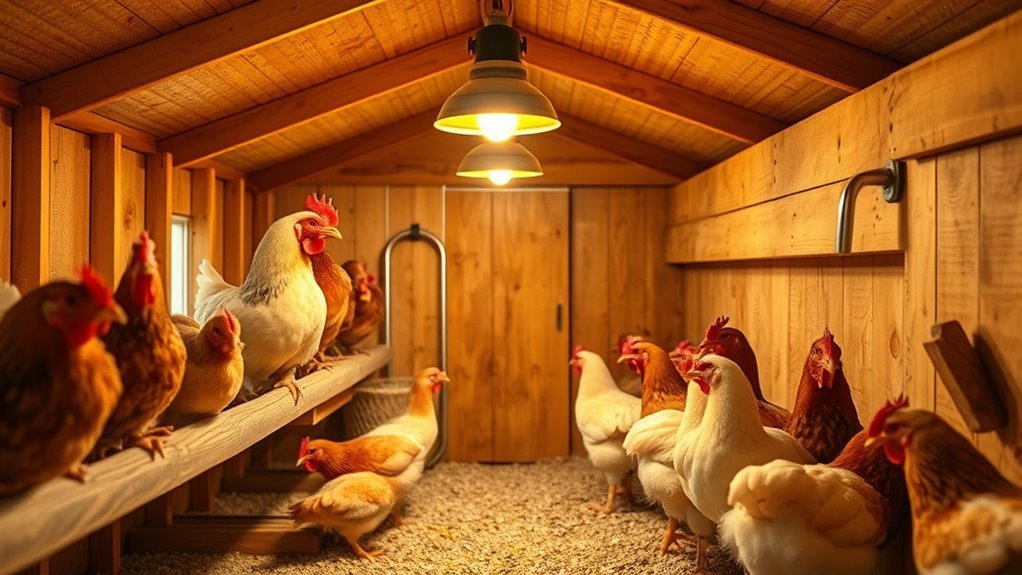
Once you’ve addressed breed, health, nutrition, and environment, focus on lighting to boost egg production. Chickens need at least 14 hours of light daily to maintain consistent egg laying.
After breed, health, nutrition, and environment, prioritize lighting—chickens need 14+ hours daily for steady egg production.
Increasing light exposure to 16 hours can maximize their egg-laying potential, especially during shorter winter days. Using artificial lighting in the coop helps extend daylight hours, ensuring your hens keep laying regularly even when natural light is limited.
However, it’s essential to provide 6 to 8 hours of darkness for their rest and overall health. By adjusting light schedules thoughtfully, you help synchronize their internal clocks, which promotes steady and predictable laying cycles.
Proper use of light is a simple yet effective way to stimulate and sustain egg production in your flock. It’s a small change that can make a big difference!
Feed Fresh, Fortified Pellets and Boost Protein Intake
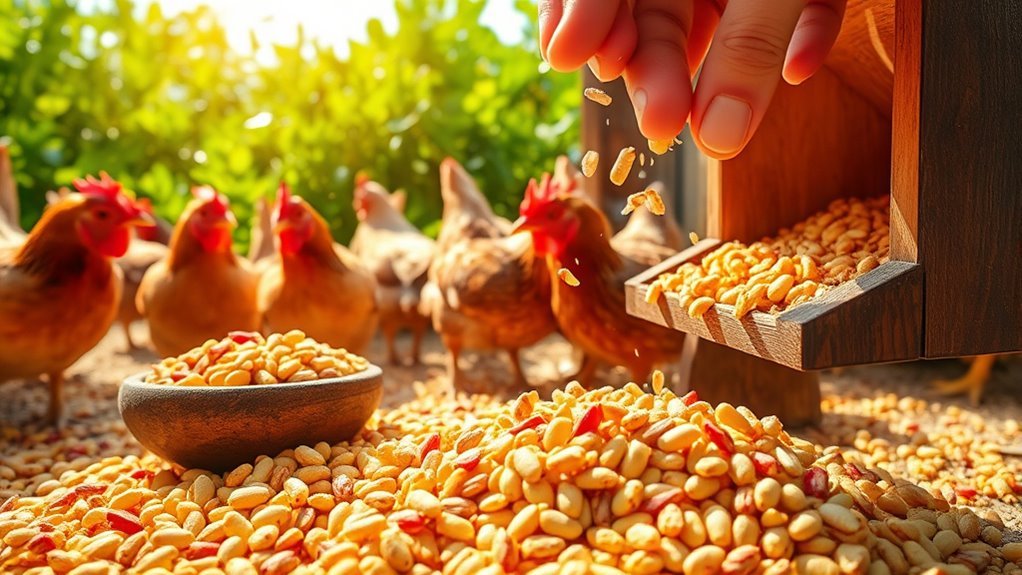
To keep your hens laying consistently, feed them fresh, fully fortified pelleted or crumble feed every two weeks. Fresh feed guarantees they get essential nutrients without waste, encouraging better intake and overall health.
Focus on boosting protein levels from the typical 16% to around 18-20%, especially during colder months. This helps your hens stay warm and maintain egg production.
You can increase protein by adding supplemental sources like mealworms or sea kelp alongside their fortified feed. This combination of fresh, fortified pellets and extra protein supports not only consistent laying but also stronger, healthier eggs.
Regularly providing fresh, nutrient-rich feed directly impacts your flock’s productivity. So, don’t overlook the importance of maintaining a balanced, protein-rich diet for your hens.
Manage Scratch Grains to Keep Nutrition Balanced
You should limit scratch grain feeding to just 10-15 minutes each day to keep your hens’ nutrition balanced. Offering scratch grains in the evening encourages your chickens to return to the coop and stay warm overnight.
Be careful not to overfeed scratch, so your hens don’t skip their essential pelleted feed that supports egg production. It’s all about balance to keep your flock healthy and happy.
Limit Scratch Grain Intake
Although scratch grains can be a tasty treat for your hens, you should limit their intake to what they can eat within 10-15 minutes. Overfeeding scratch grains disrupts nutrient balance, causing hens to skip their balanced pelleted feed.
This reduces egg production and weakens eggshell quality due to lower calcium intake. Use scratch grains sparingly to maintain optimal nutrition and boost egg production.
| Scratch Grain Intake | Impact on Hens |
|---|---|
| Limited (10-15 min) | Balanced diet, strong eggshells |
| Excessive | Skips pellets, poor nutrient balance |
| Moderate | Good treat, encourages coop return |
| High | Reduced calcium, weaker eggshells |
| Controlled | Supports egg production |
Timing For Scratch Feeding
When should you offer scratch grains to keep your hens healthy and productive? Timing is essential for managing scratch grains to support steady egg production. You want to feed scratch grains only in the evening to encourage hens to return to the coop and stay warm overnight.
Keep feeding sessions brief—limit scratch grain availability to 10-15 minutes. This helps prevent nutritional imbalances and guarantees hens don’t skip their balanced pelleted feed. Overfeeding scratch grains can reduce egg production and harm shell quality due to excessive starch.
Follow these key tips for timing scratch feeding:
- Offer scratch grains in the evening only.
- Limit feeding time to 10-15 minutes.
- Use scratch grains as a treat, not a main feed.
- Monitor intake and adjust timing as needed.
Proper timing keeps your hens healthy and maximizes egg production. It’s a simple step that makes a big difference!
Always Provide Fresh Water to Support Egg Production
Since hens rely heavily on hydration for consistent egg production, always providing fresh, clean water is vital. Fresh water boosts hydration, which directly supports egg production and quality.
You should offer warm water multiple times daily, especially in cold weather, to encourage hens to drink more. Contaminated water can cause illness, disrupting egg laying, so keep water sources clean and bacteria-free.
Regularly check and refill water containers to prevent dehydration. Keeping your hens well-hydrated really makes a difference in how well they lay.
| Tip | Reason |
|---|---|
| Provide fresh water | Supports hydration and laying |
| Offer warm water daily | Encourages more drinking |
| Keep water clean | Prevents illness |
| Refill regularly | Ensures constant access |
| Avoid contaminants | Maintains egg quality |
With proper water management, you’ll see better egg production from your flock.
Add Alfalfa and Greens for Better Hen Nutrition
Adding alfalfa flakes or cubes and fresh greens to your hens’ diet can greatly boost their egg production and improve yolk color. Alfalfa is rich in protein (15-25%), which supports stronger eggs and healthier hens.
Boost egg production and yolk color with protein-rich alfalfa flakes or cubes and fresh greens.
Fresh greens provide essential vitamins and minerals, enhancing overall hen health and egg quality. When fresh greens are scarce, soaked alfalfa cubes make a great substitute.
Incorporate these into your hens’ diet to see notable benefits:
- Enhance yolk pigmentation with alfalfa’s natural nutrients.
- Strengthen eggshells through improved nutrition.
- Support consistent and increased egg production.
- Reduce hen stress by enriching their diet with greens and alfalfa.
Adding alfalfa and greens is a simple, effective way to improve egg production and hen well-being. It’s an easy change that makes a big difference!
Monitor Health and Prevent Parasites for Consistent Laying
You need to check your hens regularly for signs of illness or parasites like mites and worms to catch problems early. Using natural dust baths and keeping the coop clean helps control pests before they affect egg production.
Staying on top of these health checks and treatments keeps your flock laying consistently. It’s all about being proactive and making sure your hens stay happy and healthy!
Early Illness Detection
How can you guarantee your hens keep laying consistently? Early illness detection is key to maintaining their health and productivity. By regularly checking your flock, you catch issues before they affect egg production.
Focus on these essential steps:
- Conduct weekly health screenings to spot early signs of illness or parasites. It’s easier to manage problems when you catch them early.
- Monitor behavior changes like lethargy or reduced activity that signal health problems. Your hens can’t tell you when something’s wrong, so watch closely.
- Inspect skin and feathers for external parasites such as mites and lice. These pests can quickly cause issues if left unnoticed.
- Keep your coop clean and practice good hygiene to minimize disease and parasite risks. A clean environment helps keep your flock healthy.
Effective parasite detection and coop hygiene work together to prevent outbreaks. Staying vigilant ensures your hens remain healthy, laying eggs consistently without interruption.
Parasite Control Methods
Consistent monitoring of your hens’ health naturally leads to effective parasite control methods that keep egg production steady. Regularly check for internal and external parasites by screening your flock weekly to catch infestations early.
Encourage dust baths using diatomaceous earth, ash, or sand. These help chickens naturally manage parasites and support their immunity.
Maintain a clean coop by replacing bedding often to reduce parasite buildup and health risks. Watch for signs like weight loss or feather loss—these can signal parasites that need prompt treatment.
Administer targeted natural or chemical dewormers at recommended intervals to eliminate worms effectively. Prioritizing these parasite control steps as part of your health maintenance routine guarantees your hens stay healthy and productive.
That way, you’ll sustain consistent egg laying throughout the year.
Frequently Asked Questions
What Can I Give My Chickens to Boost Egg Production?
You can give your chickens high-protein foods like mealworms, greens such as alfalfa flakes, calcium sources like crushed eggshells, and vitamin supplements. Also, make sure they get 14-16 hours of light daily to boost egg production.
What Is the 90/10 Rule for Chickens?
The 90/10 rule for chickens means you can boost egg production 90% by optimizing nutrition, lighting, and environment, while only 10% depends on genetics. You’ll see better results focusing on management over breed traits.
What Are 5 Foods That Improve Egg Quality?
You should feed your hens black oil sunflower seeds, crushed eggshells, alfalfa, mealworms, and sea kelp. These foods boost eggshell strength, yolk color, and overall egg quality, helping you get healthier, more vibrant eggs.
How Many Chickens Do I Need to Produce 12 Eggs a Week?
You’ll need about 4 to 6 hens to produce 12 eggs weekly. Choosing high-yield breeds and keeping them healthy guarantees consistent laying. Having a couple of extra hens helps cover any drops from molting or illness.
Conclusion
If you think boosting egg production means only feeding your hens more, think again! By giving them the right light, fresh water, and balanced nutrition—like alfalfa and fortified pellets—you’ll see more eggs than you expected.
Plus, keeping their health in check prevents surprises that could stop laying altogether. So, don’t just guess; combine these tips, and you’ll be cracking more eggs before you know it!
Remember, increasing egg production isn’t about one single trick. It’s about creating the perfect environment with proper lighting, clean water, and a nutritious diet. Maintaining your chickens’ health is just as important as what you feed them. Follow these simple tips consistently, and watch your hens lay more eggs regularly. With the right care and attention, boosting egg production becomes easier and more reliable than you might have thought!