How to Stop Chickens From Eating Their Own Eggs
To stop chickens from eating their own eggs, it’s important to start with a balanced diet. Make sure they get enough protein and free-choice calcium, like oyster shells, to keep them healthy and satisfied.
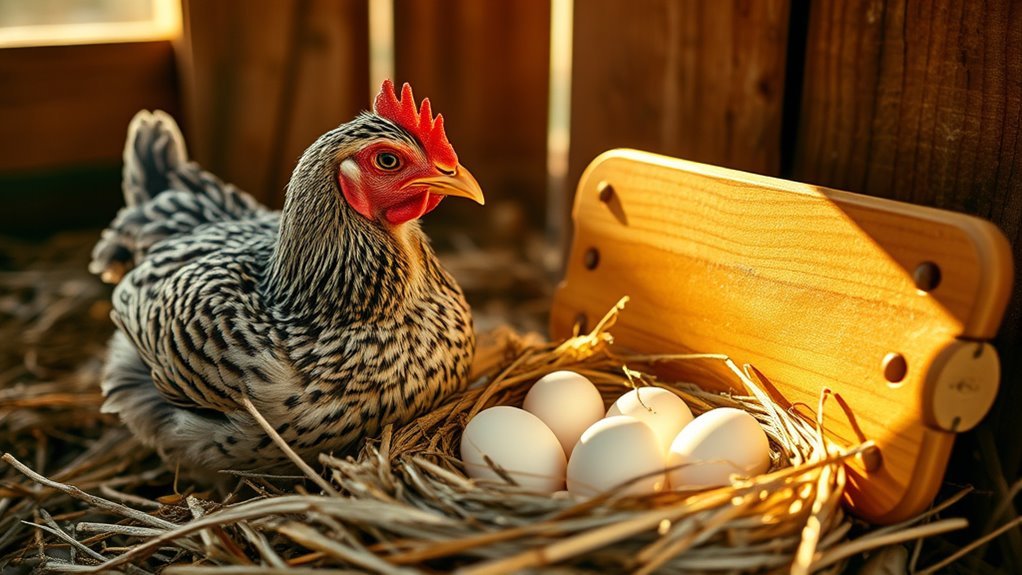
Collect eggs frequently throughout the day. This simple step can really reduce the temptation for chickens to peck at the eggs. Also, keep nests soft, dark, and private—it makes the hens feel safe and less likely to bother their eggs.
Another trick is to use fake eggs. Placing them in the nest can help break the egg-eating habit. If some chickens keep going after eggs, consider isolating those repeat offenders for a bit.
Reducing stress and boredom is key, too. Manage lighting and avoid overcrowding so your chickens stay calm and busy. When you combine diet, environment, and behavior strategies, you’ll see a big difference in stopping egg eating.
Want to dive deeper? There are plenty of simple, effective methods to explore!
Key Takeaways
– Provide a balanced diet with at least 16% protein and free-choice calcium like oyster shells to prevent nutritional deficiencies.
This helps keep your hens healthy and less likely to eat their own eggs.
– Collect eggs frequently and keep nesting boxes soft, dark, and private to reduce egg-eating temptation.
Hens feel safer and less stressed in cozy nesting spots, so they won’t be as curious about the eggs.
– Use fake eggs in nests to deter hens from pecking at real eggs and breaking the habit.
It’s a simple trick that can really help stop the behavior before it starts.
– Isolate hens that consistently eat eggs to prevent others from copying the behavior.
Sometimes, a little time alone can break the cycle.
– Reduce overcrowding and provide enrichment to minimize stress and boredom-related egg-eating.
Happy, busy hens are less likely to turn to their eggs as a snack.
Egg Eating: Causes and Early Signs to Watch For
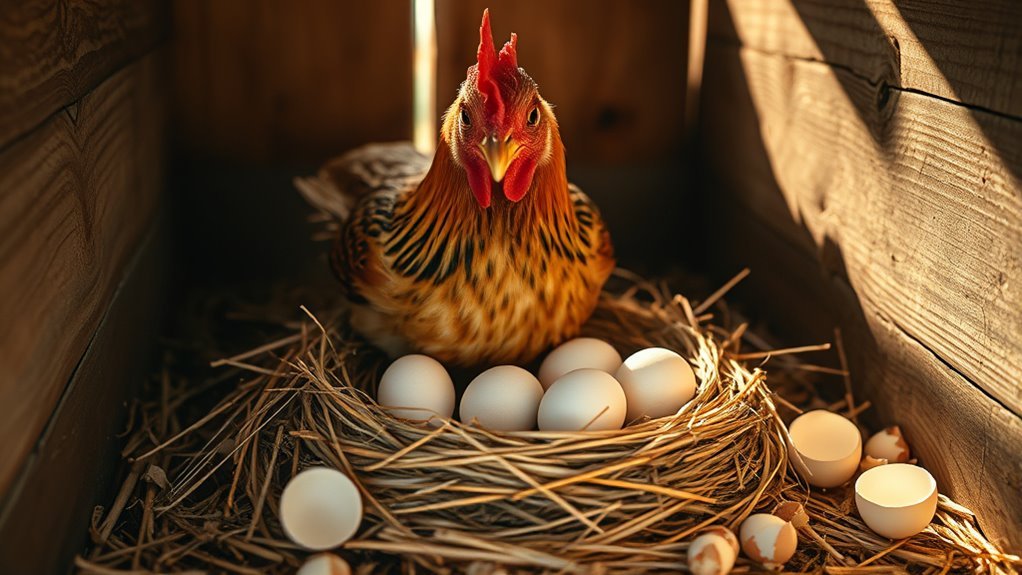
Although it may seem frustrating, chickens usually start eating their own eggs because of nutritional gaps, boredom, or accidental breakage rather than intentional misbehavior. Egg-eating often begins when you notice early signs like broken eggs or eggshells with yolk in the nesting area.
Cracked eggs in nests or on the coop floor are common signs of egg-eating, signaling that a chicken might have accidentally broken one and discovered the taste. Calcium deficiency is a frequent cause, as hens lacking enough calcium might seek it by consuming eggshells.
Changes in nesting behavior, such as increased egg consumption or disturbed nests, also indicate egg-eating habits. By recognizing these early signs, you can address the root causes before the habit becomes ingrained, especially since some breeds are more prone to this behavior.
Diet, Environment, and Behavior Tips to Stop Egg Eating
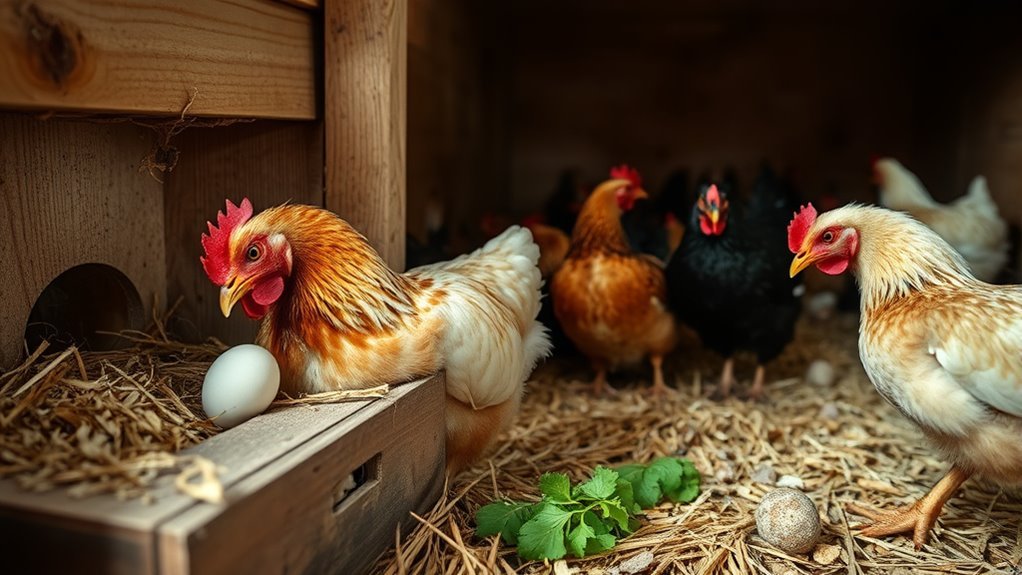
When you provide your hens with a well-balanced diet containing at least 16% protein and free-choice calcium like oyster shells, you tackle one of the main causes of egg-eating. Proper diet prevents nutritional deficiencies that trigger this behavior.
Providing hens a balanced diet with 16% protein and free-choice calcium helps prevent egg-eating behavior.
Next, optimize the environment by keeping nesting boxes soft, dark, and private, and collect eggs frequently to reduce temptation. Use fake eggs in nests as visual deterrents to discourage pecking.
Good poultry management also means reducing overcrowding, providing enrichment, and avoiding bright lighting to minimize stress and boredom, common triggers of egg-eating behavior.
If problems persist, isolate habitual egg-eaters and replace broken eggs with fake ones to break the habit. Combining diet, environment, and behavior strategies effectively stops egg-eating and promotes healthier hens.
Frequently Asked Questions
How Do I Get My Chickens to Stop Eating Their Own Eggs?
You’ll want to collect eggs often, provide proper nutrition, and place fake eggs in nests. Darken nesting boxes and try spicy deterrents inside eggshells to discourage pecking. These steps help stop your chickens from eating eggs.
What Are Chickens Lacking When They Eat Their Own Eggs?
You’re dealing with calcium, protein, and fat deficiencies when chickens eat their own eggs. These nutrients keep their shells strong and energy up, so lacking them makes your hens break the mold and peck at eggs for more.
What to Give Chickens When They Eat Their Eggs?
Give your chickens cooked eggs or scrambled eggs for protein, along with a balanced diet containing at least 16% protein and plenty of calcium, like oyster shells. Adding mealworms or small cooked meat portions also helps curb egg eating.
How Do I Break the Egg Eating Habit?
Imagine breaking a stubborn chain—replace real eggs with fake ones, collect eggs often, and spice things up by filling shells with hot sauce. You’ll shatter the habit, stopping egg-eating cold.
Conclusion
While some believe chickens eat their eggs out of boredom, the real reasons are often nutritional gaps or environmental stress. By ensuring a balanced diet, providing enough space, and collecting eggs frequently, you can break this habit.
Remember, egg eating isn’t just a bad habit—it’s often a sign your chickens need something more. So, don’t just blame boredom; dig deeper to keep your flock happy and your eggs intact.
To stop chickens from eating their own eggs, focus on nutrition and environment first. Make sure their feed covers all their dietary needs and give them plenty of room to roam. Collect eggs regularly to reduce temptation. By addressing these factors, you’ll reduce stress and discourage egg eating naturally. Taking these steps will keep your chickens healthy and your egg supply safe and plentiful.