
5 Benefits If I Should Freeze My Eggs at 35
Freezing your eggs at 35 means you’re preserving your peak fertility with stronger, healthier eggs and a higher chance of success. This age offers better egg quality and fewer genetic risks compared to waiting longer.
Plus, advanced freezing methods now improve egg survival rates, giving you even more confidence.
When you freeze more eggs, you create a valuable fertility cushion. This gives you flexibility to plan your family on your own terms without feeling rushed.
Taking action now really boosts your odds for future pregnancy and can even support having multiple children.
It’s all about timing and technology working together in your favor. Discover how freezing your eggs at 35 can maximize your chances and offer peace of mind for the future.
Key Takeaways
- Freezing eggs at 35 preserves high egg quality, increasing chances of healthy embryo development and live birth.
- At 35, egg freezing offers about an 81% chance of live birth, maximizing fertility preservation success.
- Collecting 15-20 eggs at 35 provides a strong fertility buffer with higher chances for multiple children.
- Advanced vitrification technology ensures over 90% egg survival post-thaw, improving pregnancy outcomes.
- Egg freezing at 35 extends reproductive options, allowing flexible family planning alongside personal or career goals.
Why Age 35 Is a Key Time to Freeze Your Eggs

If you’re considering egg freezing, age 35 is a crucial milestone to act. At this point, your ovarian reserve and egg quality are still strong, which boosts success rates for fertility preservation.
Freezing your eggs at age 35 helps you pause your reproductive timeline before a significant fertility decline begins. Studies show women who freeze eggs around this age have about an 81% chance of live birth from those eggs.
Freezing eggs at 35 pauses fertility decline, with an 81% chance of live birth from preserved eggs.
Acting now means fewer egg retrieval cycles and a higher likelihood of achieving your desired family size later on. By choosing egg freezing at 35, you’re taking control of your fertility, preserving healthier eggs before quality diminishes.
Plus, this approach increases your chances of future pregnancy with less emotional and financial strain. It’s a smart move if you want to keep your options open and your family plans flexible.
How Egg Quality at 35 Boosts Your Egg Freezing Success

Because egg quality remains relatively high at age 35, freezing your eggs now substantially improves your chances of success later. At age 35, your eggs have fewer genetic abnormalities and chromosomal errors, which boosts fertilization rates and supports healthier embryo development after thawing.
This means freezing at 35 captures eggs with prime genetic integrity, preserving your reproductive potential before quality declines. As a result, you enjoy higher live birth rates per egg compared to freezing at older ages.
Why Freezing More Eggs at 35 Increases Pregnancy Chances
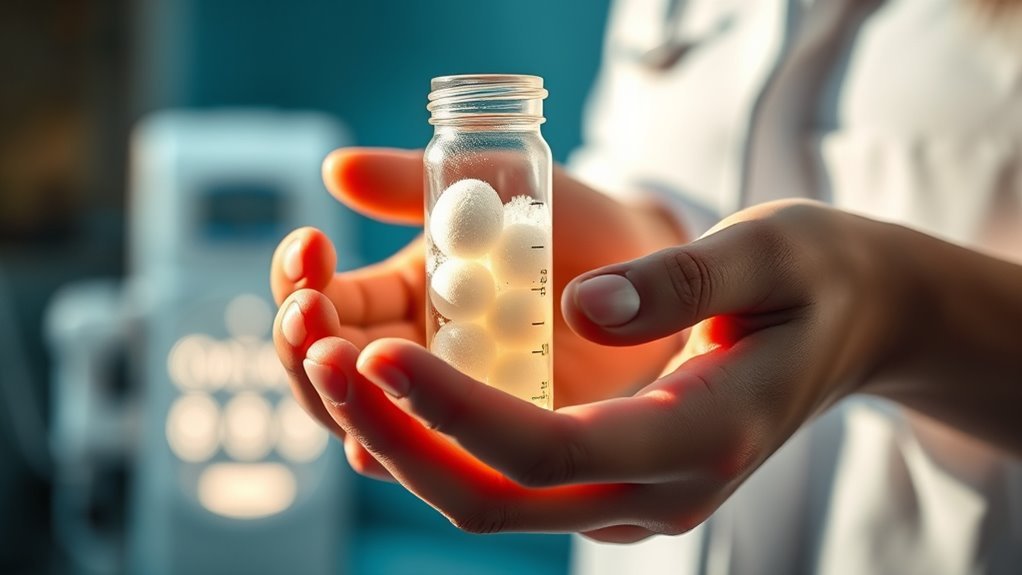
While egg quality at 35 remains strong, freezing a larger number of eggs considerably boosts your chances of a successful pregnancy later. At this prime time to freeze, your egg quality and quantity are both favorable, enhancing fertility outcomes.
Studies show that freezing 20+ eggs dramatically increases success rates, with an 81.8% chance of future pregnancy. Since thawing survival exceeds 90%, a higher number of eggs retrieved means more viable eggs for fertilization.
Freezing 15-20 eggs at age 35 also offers a 70-80% chance of at least one live birth, highlighting how egg quantity influences your odds. By maximizing the number of eggs stored through egg freezing at 35, you create a valuable buffer against potential fertility challenges.
This approach improves your chances for multiple children from a single cycle. So, if you’re thinking about freezing eggs, aiming for a higher number at 35 can really pay off down the line.
Advances in Egg Freezing Technology That Improve Your Odds
Recent advances in egg freezing technology have dramatically improved your chances of success by boosting egg survival rates to over 90% after warming.
Thanks to vitrification, a rapid cryopreservation method, ice crystal formation is minimized, preserving egg cellular integrity. These technological advances enhance fertilization and embryo development, increasing success rates and post-thaw viability.
As a result, freezing eggs at 35 now offers better fertility potential than ever before.
| Aspect | Improvement |
|---|---|
| Vitrification | Over 90% survival rate |
| Cryopreservation | Reduced ice crystal formation |
| Thawing | Enhanced post-thaw viability |
| Success Rates | Higher embryo development |
| Fertility Potential | Better outcomes at older ages |
These improvements mean your frozen eggs stand a much stronger chance at leading to a healthy pregnancy.
How Egg Freezing at 35 Gives You More Flexibility Later
Freezing your eggs at 35 lets you preserve a higher number of healthy eggs, giving you more control over when to start a family. By choosing egg freezing at age 35, you extend your reproductive window, providing greater flexibility for delayed pregnancy.
This fertility preservation method means your eggs are more likely to survive warming, fertilize, and develop into viable embryos. That really boosts your chances of a successful future pregnancy.
With live birth rates as high as 81% from eggs frozen at this age, you gain valuable reproductive options that support your family planning goals. Egg freezing at 35 empowers you to make confident decisions, balancing career or personal goals while keeping your path to parenthood open and achievable.
Frequently Asked Questions
Can You Take Adderall While Freezing Eggs?
Yes, you can take Adderall while freezing eggs, as it typically doesn’t interfere with the process. Still, you should talk with your fertility specialist and doctor to make certain it won’t affect your specific treatment or medications.
Are My Eggs Still Healthy at 35?
Your eggs are still healthy at 35, which coincidentally aligns with a peak fertility window. You’ve got good quality and quantity, so freezing now can preserve these prime eggs before natural decline gradually begins.
Should I Freeze My Eggs if I Have PCOS?
Yes, you should consider freezing your eggs if you have PCOS. You likely have a higher ovarian reserve, making egg retrieval easier, but make sure your doctor monitors you carefully to manage any risks like ovarian hyperstimulation syndrome.
Can I Freeze My Eggs if on Testosterone?
You can freeze your eggs while on testosterone, but it’s best to stop hormone therapy months before retrieval to improve egg quality and yield. Consult a fertility specialist to create a personalized plan for the best results.
Conclusion
Freezing your eggs at 35 can be a smart move, especially since egg quality starts to decline more rapidly after this age. Did you know that women under 35 have about a 60-70% success rate per frozen egg?
This means freezing at 35 gives you a better shot at future pregnancy. Plus, with today’s advanced technology, you’re not just preserving eggs—you’re preserving your options and peace of mind for years to come.
When you freeze your eggs at 35, you’re taking control of your fertility journey. It’s about giving yourself the freedom to decide when the time is right to start a family. Egg freezing at 35 can offer hope, flexibility, and a higher chance of success compared to waiting longer. So, if you’re considering egg freezing, doing it at 35 can be a proactive way to safeguard your fertility and future happiness.