How to Massage an Egg Bound Chicken in 5 Simple Steps
To massage an egg-bound chicken, first create a calm, warm space and handle her gently. This helps reduce stress, which is super important when your hen is feeling uncomfortable.
Soak her in warm water for 15-20 minutes to relax her muscles and make the process easier.
Next, lubricate her vent with a water-based moisturizer to ease the egg’s passage. Be gentle here, as this area is sensitive.
Then, gently massage her abdomen using slow, circular motions below the vent. Keep an eye on her for any signs of discomfort.
It’s important to keep this routine consistent and monitor her progress carefully.
If you want to guarantee the best care, there’s more helpful advice to explore. Taking these steps can really help your chicken feel better and get through being egg-bound safely.
Key Takeaways
- Prepare a warm, quiet, and dim environment. Place the hen on a soft surface to keep her calm and relaxed.
- Soak the hen in 75-80°F water for 15-20 minutes. This helps relax her muscles and soften the tissues around the egg.
- Apply a water-based lubricant around and inside the vent. Use gentle circular motions to loosen any hardened egg material.
- Massage the hen’s abdomen gently with light, steady pressure. Use slow circular motions just below the vent to encourage the egg to move.
- Keep an eye on how the hen responds. Repeat the massage every 15-20 minutes if needed, and don’t hesitate to seek veterinary help if there’s no improvement.
Prepare Your Egg-Bound Hen and Space for Massage
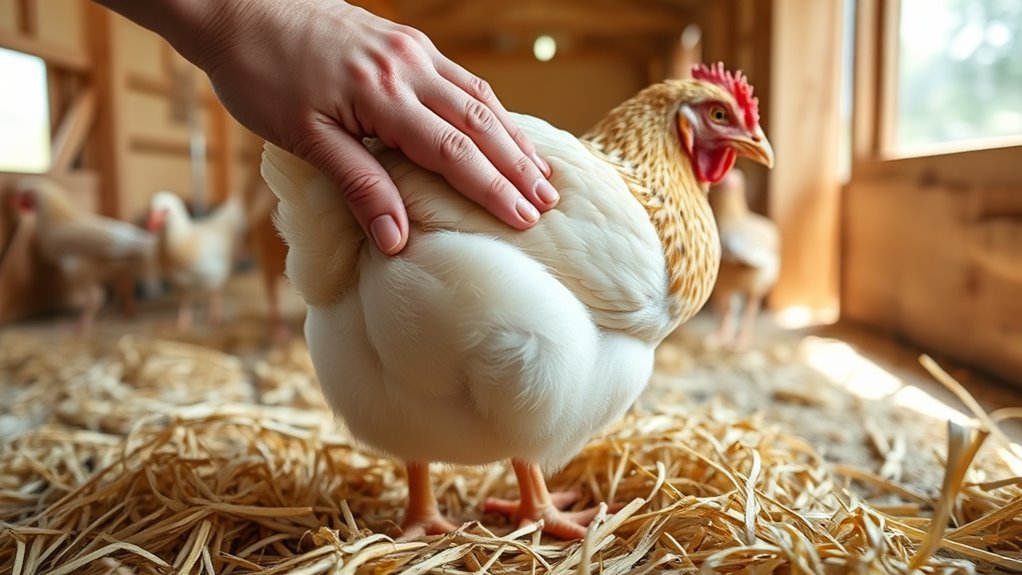
Before you begin massaging your egg-bound hen, make sure she’s in a warm, quiet, and dimly lit space to keep her calm and reduce stress. Place her gently on a soft surface like a towel or padded mat to provide comfort and stability during the massage.
Creating a warm environment between 60-65°F helps prevent chilling, which can worsen health issues related to egg binding. Gather supplies such as gloves and a lubricant to guarantee proper care.
Gentle handling is key to promoting relaxation and avoiding additional stress. By preparing both your hen and the space thoughtfully, you support her reproductive health and improve the effectiveness of the massage.
Proper care at this stage sets the foundation for successful treatment and recovery. So, take your time and make sure everything’s just right before you start.
Soak Your Egg-Bound Hen in Warm Water to Relax Muscles
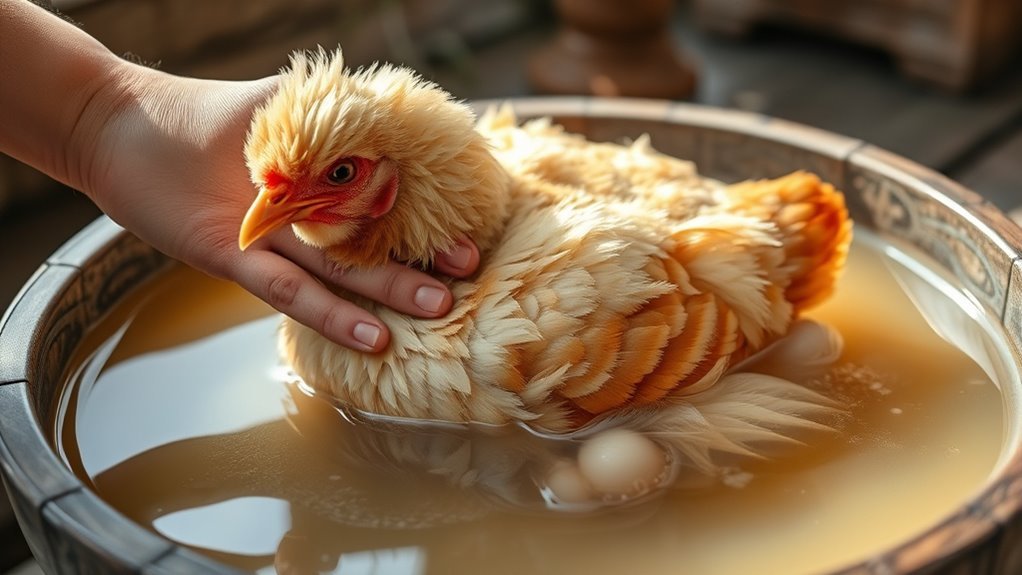
When you soak your egg-bound hen in warm water for 15 to 20 minutes, her muscles will relax, and the tissues around the egg will soften. This makes it easier for the egg to pass. Use warm water heated to about 75-80°F to promote relaxation without causing heat stress.
Support your hen carefully during soaking to prevent panic and provide comfort. Gently massage her abdomen to encourage egg passage. You might also consider adding Epsom salts to help relax muscles further and aid calcium absorption.
Remember to monitor her closely throughout the process.
- Fully submerge hen up to her sides for effective soaking
- Maintain water temperature to avoid heat stress
- Use gentle massage to stimulate muscle contractions
- Add Epsom salts for muscle relaxation and mineral support
- Provide calm support to enhance relaxation and egg passage
Lubricate Your Hen’s Vent to Help Egg Passage
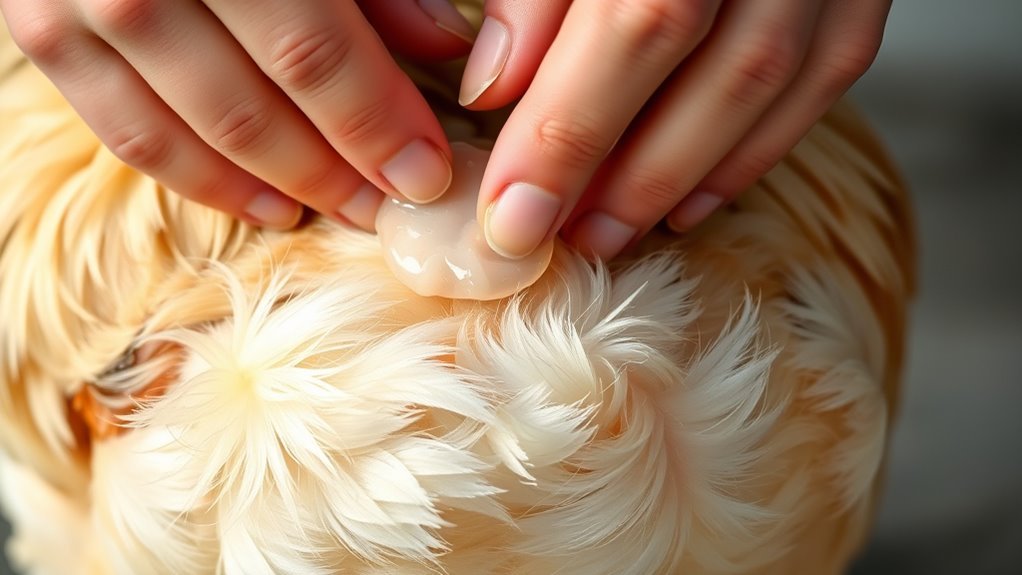
After soaking your hen and gently massaging her abdomen, the next step is to lubricate her vent to ease the egg’s passage. First, keep your hen calm and hold her comfortably to reduce stress.
Apply a small amount of a water-based moisturizer, like petroleum jelly or vegetable oil, around the hen’s vent to reduce friction. Then, gently insert your finger just inside the vent, spreading the lubricant evenly without forcing or going deep.
Use gentle, circular motions around the vent to help loosen any hardened egg material. Reapply lubricant as needed during your massage to maintain smooth lubrication, which encourages the stuck egg to move more easily.
This careful vent lubrication is essential in assisting your egg bound hen. Just take it slow and be gentle—your hen will thank you!
Gently Massage Your Egg-Bound Hen’s Abdomen
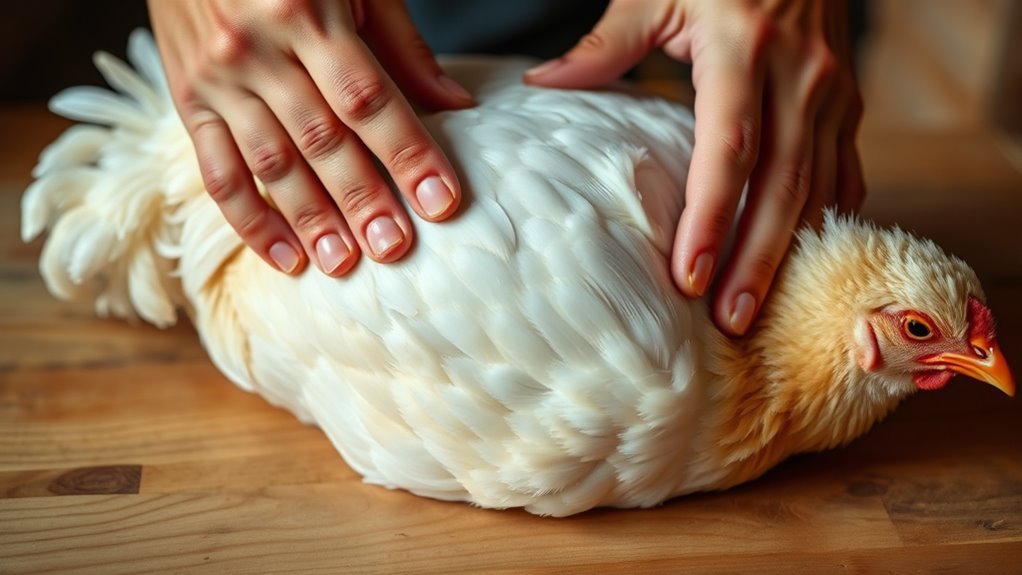
Even though it requires patience, gently massaging your hen’s abdomen can help move the stuck egg along. Start by placing your egg-bound hen on a soft surface, lying on her back or side, so you can easily access her abdomen.
Use your fingertips to gently massage the vent area with light, steady pressure. This encourages muscle relaxation and supports egg movement. Remember to focus on the area just below the vent where the egg likely is.
Gently massage just below the vent with light pressure to relax muscles and help move the egg along.
Try to gently massage in slow, circular motions. Apply gentle pressure to avoid causing any pain.
Move from the front of the hen’s abdomen toward the vent. Keep an eye out for any signs of distress or discomfort.
If the hen shows pain, stop immediately. This careful massage helps the egg pass and promotes your chicken’s health.
Monitor Your Egg-Bound Hen and Repeat Massage If Needed
While massaging your egg-bound hen, keep a close eye on her for signs of discomfort or improvement, such as less abdominal swelling or easier egg passage. You should monitor her behavior and physical condition closely during and after each massage.
If the egg hasn’t passed, gently repeat the massage every 15-20 minutes using light, circular motions to encourage muscle contractions without causing stress. Make certain she stays warm and relaxed to promote effective muscle movement.
Track each session carefully, noting any changes or worsening discomfort. If repeated sessions don’t lead to improvement or if she shows increased distress, stop and consult a veterinarian promptly.
Regular health checks and attentive monitoring are essential to guarantee your hen’s safe recovery from being egg bound. It’s all about being patient and gentle with her throughout the process.
Frequently Asked Questions
How to Release an Egg-Bound Chicken?
You’ll gently massage her abdomen in circular motions, combining warm water soaks to relax muscles. Use light pressure, avoid forcing the egg, and watch her comfort carefully. This helps encourage natural egg passage safely.
Will an Egg-Bound Chicken Resolve Itself?
Don’t wait for nature’s slow hands to fix this; an egg-bound chicken rarely resolves itself. You need to act swiftly, like a gentle tide guiding a trapped shell back to the sea, to prevent serious harm.
What Are the Best Home Remedies for Egg-Bound Chickens?
You can give your hen a warm Epsom salt bath, gently massage her abdomen, lubricate her vent, provide calcium supplements, and keep her in a warm, quiet place with fresh water and food to help pass the egg.
How to Lubricate Egg-Bound Chicken?
Lubricate your egg-bound chicken like spreading silk on skin—apply a water-based lubricant gently around her vent using clean fingers. Keep her warm and relaxed, reapplying as needed to ease the egg’s passage smoothly and safely.
Conclusion
By following these simple steps, you’ll be the gentle breeze that helps your egg-bound hen find relief. With patience and care, your feathered friend will soon feel the weight lift, like a dark cloud parting to reveal sunshine.
Keep your hands steady and your heart calm—nature’s rhythm will guide you both. Remember, every gentle massage brings her closer to comfort, turning a tough moment into a tender triumph.
Massaging an egg-bound chicken may seem daunting, but with these five simple steps, you’re giving her the best chance to recover quickly. Your gentle touch helps ease the discomfort and supports her natural process. So take a deep breath, stay kind and calm, and watch as your hen regains her comfort and health, one soothing massage at a time.