How to Make Fluffy Eggs Without Milk in 5 Simple Steps
To make fluffy eggs without milk, start by whisking them vigorously for at least 40 seconds. This traps air in the eggs, giving them that light, airy texture we all love. Use light, rapid strokes to get the best fluffiness.
Next, melt 2-3 tablespoons of butter or ghee in your pan. This adds both moisture and flavor, helping prevent the eggs from sticking.
Cook the eggs gently on medium-low heat to avoid overcooking. Fold them slowly as they cook to form soft curds that stay airy and tender.
Once they look slightly undercooked, remove them from the heat. This gives you a creamy, perfect finish every time.
Keep practicing, and you’ll discover even more tips to make your eggs fluffier and tastier!
Key Takeaways
- Whisk eggs vigorously for at least 40 seconds to trap air and create fluffiness without adding milk. This step is key to making your eggs light and airy.
- Add a splash of water or a dairy-free milk alternative to introduce steam and enhance fluffiness. It’s a simple trick that really makes a difference.
- Melt and coat the pan with butter or ghee to keep eggs moist and flavorful. This also helps prevent sticking, so your eggs cook evenly.
- Cook eggs gently over medium-low heat to prevent overcooking and maintain softness. Patience here means perfectly tender eggs.
- Fold eggs slowly and remove them slightly undercooked to finish cooking off-heat for a creamy texture. This way, they stay soft and delicious without drying out.
Whisk Eggs To Incorporate Air For Fluffy Texture
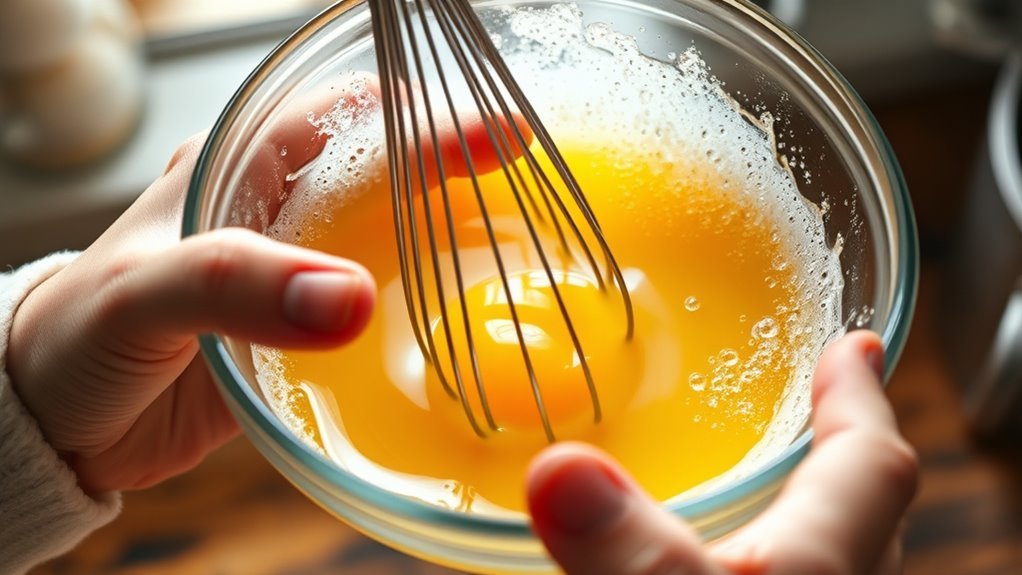
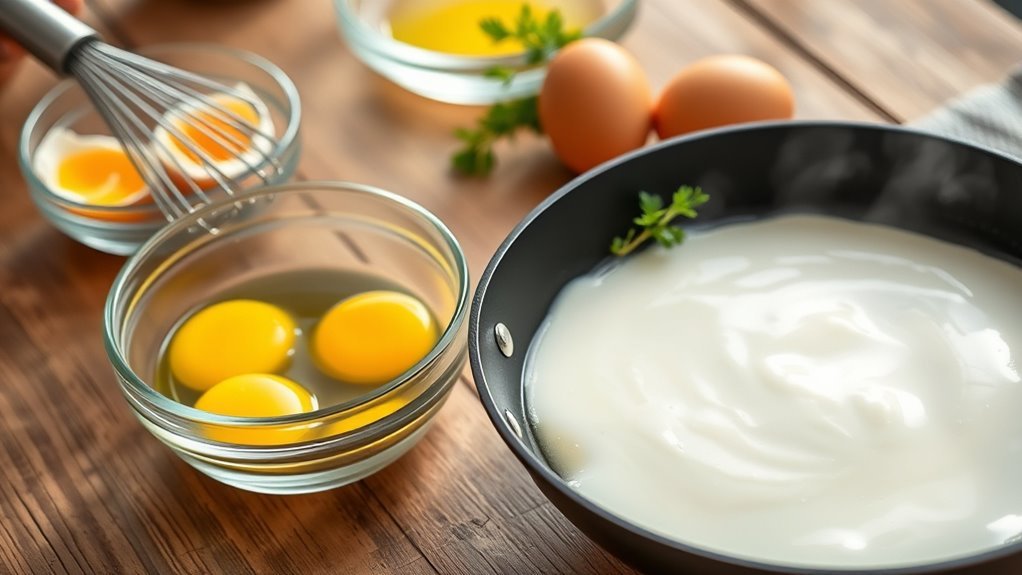
Although it might seem simple, whisking your eggs vigorously for at least 40 seconds is key to trapping enough air and creating a fluffy texture. To do this effectively, use a medium-sized bowl that gives you space for thorough whisking.
Whisk eggs just before cooking to keep the light, airy mixture intact. Focus on your whisking technique by using light, rapid strokes—this helps incorporate air without deflating the eggs.
These quick movements create fine air bubbles, which expand with steam during cooking, boosting fluffiness. Adding a small splash of water or dairy-free milk while you whisk can also introduce steam to the mix.
Use Butter Or Ghee For Moisture And Flavor
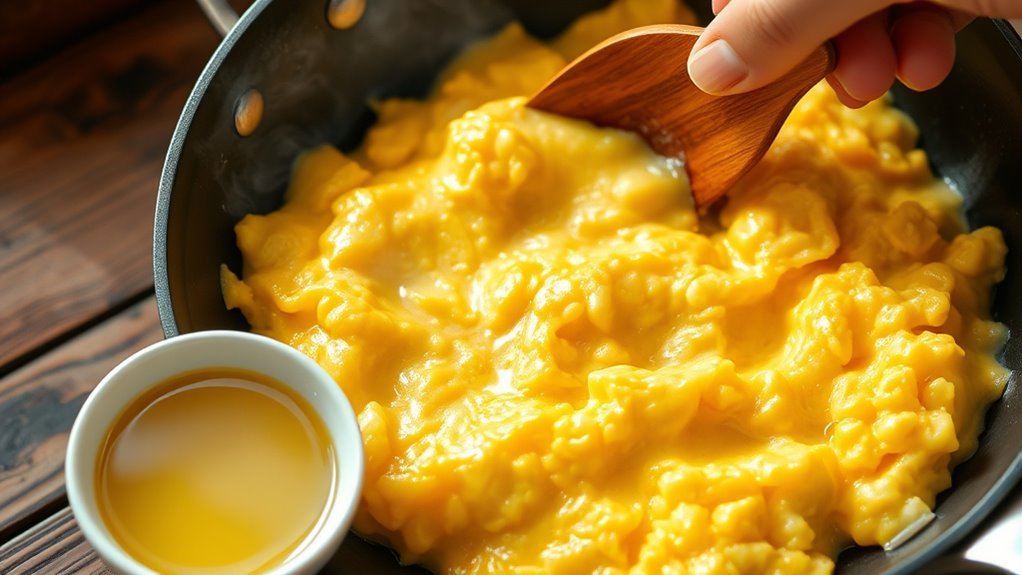
Whisking your eggs to trap air sets the foundation for fluffiness, but the next step is adding moisture and richness. Using butter or ghee is key—they provide the moisture and rich flavor your fluffy eggs need without milk.
Melt 2-3 tablespoons of butter or ghee in your skillet before adding eggs. This coats them evenly, preventing dryness and promoting a creamy texture. The high fat content not only enhances flavor but also helps achieve tender eggs with a glossy, cloud-like appearance.
Incorporating these fats supports gentle cooking at low heat, preserving the softness and fluffiness you want. So, rely on butter or ghee to boost moisture and flavor, giving your eggs that perfect balance of richness and tenderness every time.
Cook Eggs Gently On Medium-Low Heat
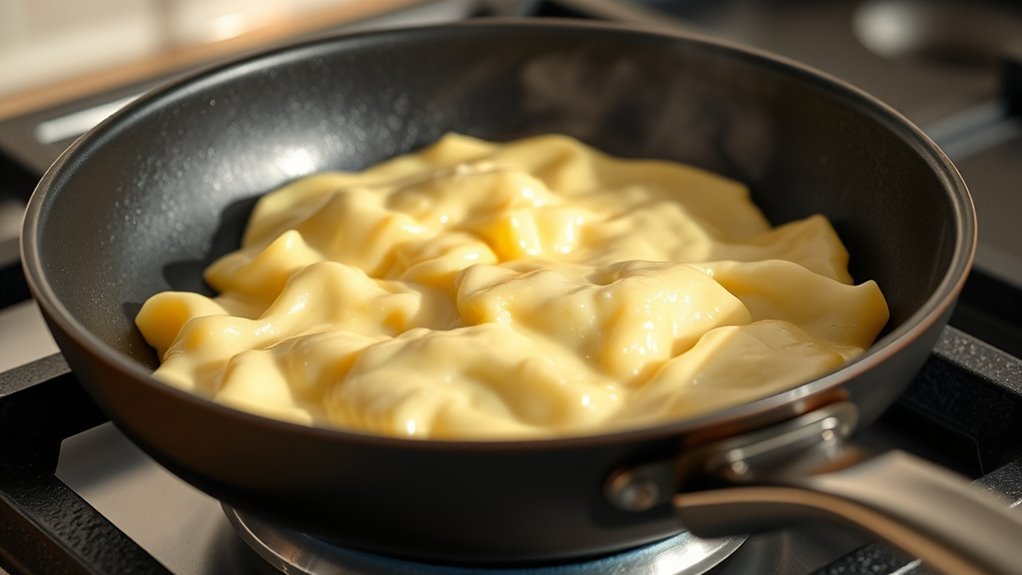
When you cook eggs on medium-low heat, you allow gentle, even warmth to slowly transform them into soft, fluffy curds. This gentle cooking guarantees even heat distribution, preventing overcooking and curdling.
By controlling temperature carefully, you promote slow cooking, which helps retain moisture and keeps your eggs tender rather than tough or rubbery. Medium-low heat reduces the risk of rapid evaporation of fats and liquids, essential for moisture retention and achieving that perfect fluffy eggs texture.
High heat might cook eggs too fast, causing them to toughen, but with medium-low heat, you maintain control to stop at just the right consistency. Embracing slow cooking on medium-low heat is key to making moist, tender eggs with soft curds every time.
Fold Eggs Gently To Form Soft Curds
To create soft curds, you need to fold the eggs gently as they begin to set but remain slightly runny. Gently folding eggs means using slow movements to lift and turn the cooked portions over the uncooked eggs.
Fold eggs gently with slow movements as they begin to set but are still slightly runny for soft curds.
This cooking technique helps form soft curds with an airy texture while preserving the delicate structure. Avoid stirring vigorously, as that can break the curds and deflate the air bubbles you worked to incorporate during whisking.
By folding carefully, you maintain a soft and moist consistency, enhancing the eggs’ fluffiness without milk. Remember, slow, deliberate folds prevent deflating and keep the curds tender.
This method ensures your scrambled eggs stay light, fluffy, and perfectly soft every time. Just take it slow and gentle!
Remove Eggs While Slightly Undercooked For Creaminess
Although it might be tempting to cook your eggs fully in the pan, pulling them off the heat just before they’re completely set locks in a creamy, moist texture. When you remove undercooked eggs at the right moment, residual heat continues gentle cooking, ensuring soft eggs with a slightly runny, glossy appearance.
Timing is everything—heat removal just as eggs begin to set guarantees a silky mouthfeel without overcooking. Letting your eggs rest briefly after takes advantage of finishing cooking evenly, preserving that luscious creaminess.
- Watch for slightly runny spots before heat removal
- Trust residual heat for gentle cooking
- Aim for soft eggs with a creamy texture
- Avoid overcooking to keep moist eggs
- Rest eggs briefly to finish cooking perfectly
Frequently Asked Questions
How to Make Fluffy Eggs With No Milk?
Whisk your eggs vigorously to incorporate air, then cook them slowly over low heat. Fold gently, avoid over-stirring, and remove from heat just before fully set. This keeps your eggs fluffy without needing milk.
What Can I Put in My Eggs if I Don’t Have Milk?
You can add water, dairy-free milk like almond or oat, or a splash of broth to your eggs. These keep them moist and fluffy without changing the flavor, especially when you whisk well and cook low and slow.
How to Make Fluffy Eggs Over Easy?
You cook eggs slowly over medium-low heat in butter or ghee until whites are set but yolks remain runny. Flip gently, cook 10-15 seconds more, then remove promptly to keep them fluffy and soft.
Can I Use Water Instead of Milk for Eggs?
You can use water instead of milk for eggs—it helps create fluffiness by adding air, with about 1 tablespoon per 4 eggs. Just whisk well and cook low to keep them moist and tender.
Conclusion
Now that you know how to whisk with whimsy, butter boldly, and cook carefully, you’re set to savor soft, silky eggs every single time. Remember to fold with finesse and remove just right for that perfect creamy consistency.
By blending these simple steps, you’ll breeze through breakfast, bringing bright, beautiful bites to your table without milk. So, get cracking and create your own fluffy egg feast with flair and flavor!
Making fluffy eggs without milk is easier than you think. With the right technique, you can enjoy light, airy eggs that taste just as rich and creamy. These tips help you master the art of fluffy eggs without needing any milk at all.
Give these steps a try, and soon you’ll be enjoying delicious, fluffy eggs that are perfect for any morning. Breakfast just got better—fluffy eggs, no milk needed!