How to Tell If Farm Eggs Are Still Good
You can tell if your farm eggs are still good by first checking their shells for cracks, stains, or powdery spots—any damage could mean contamination. It’s a simple step but super important for keeping your eggs safe to eat.
Then, try the float test: place the egg in water; fresh eggs sink and lie flat, while older ones float or stand upright. This is a classic trick that really works and helps you avoid using eggs that might be spoiled.
You can also gently shake the egg near your ear—any sloshing sound means it’s not as fresh. Fresh eggs don’t make noise because the inside is still firm.
Keeping eggs well-stored also helps preserve their quality. Store them in a cool, dry place or in the refrigerator to keep them fresh longer.
Keep exploring to learn even more ways to guarantee your eggs are safe and fresh. It’s worth it to know these simple tips for your health and delicious meals!
Key Takeaways
– Inspect eggshells for cracks, discoloration, or mold to detect damage or contamination before use.
It’s a quick way to spot if something’s off with your eggs.
– Perform the float test: fresh eggs sink and lie flat, while older eggs float or stand upright.
This one’s pretty handy if you’re unsure about their age.
– Use the shake test by gently shaking the egg; a quiet egg is fresh, while sloshing indicates age.
Try it out—you’ll get a feel for what fresh eggs sound like.
– Store eggs properly to slow air cell growth and maintain freshness longer.
Keeping them in the right spot really helps them last.
– Combine visual, float, and shake tests regularly to accurately assess farm egg quality and safety.
Using all these tricks together gives you the best idea if your eggs are still good.
Visual Inspection for Farm Egg Freshness
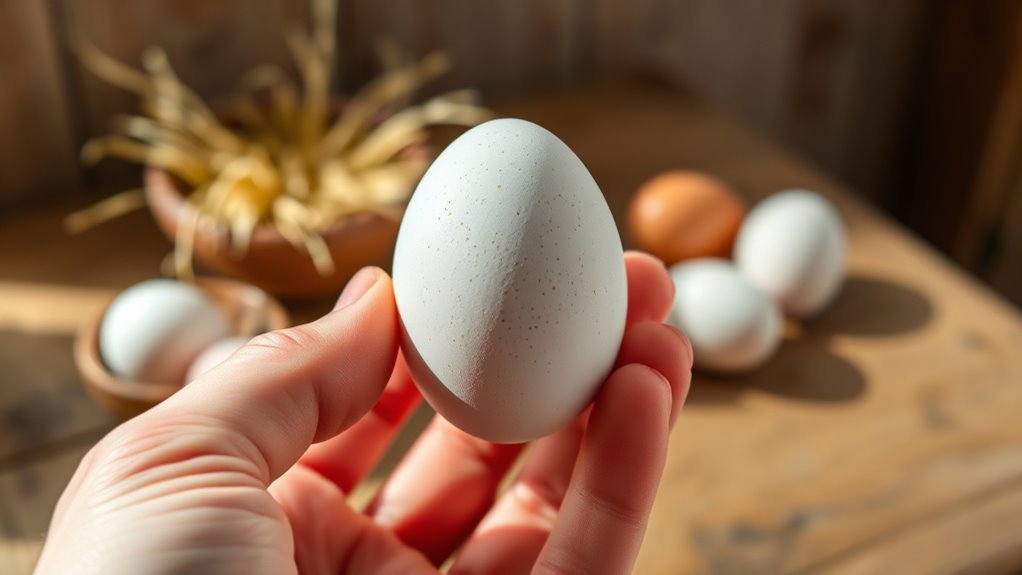
Before you crack open a farm egg, take a moment to inspect its shell carefully. Eggshell inspection is your first step to spotting freshness indicators.
Look closely for cracks, discoloration, or stains on the shell, as these visual cues often point to egg damage or contamination signs. A clean, intact shell guarantees better shell integrity, reducing the risk of bacteria entering the egg.
Avoid eggs with powdery or moldy spots, which signal deterioration. These subtle details help you judge the egg’s quality without opening it.
Float and Shake Tests for Farm Egg Freshness
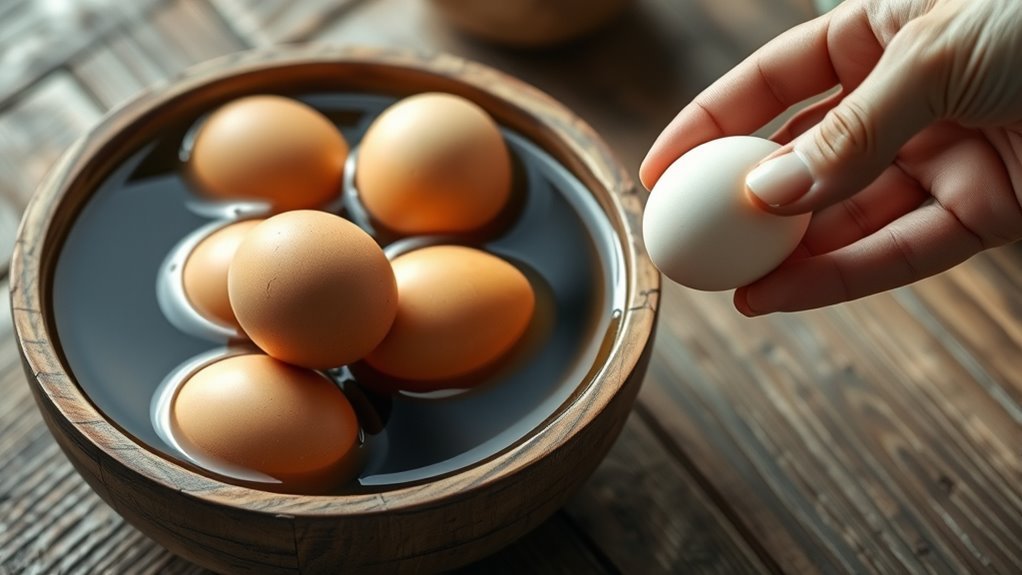
After checking the shell for cracks and stains, you can use simple tests like the float and shake methods to gauge an egg’s freshness. The float test involves placing farm eggs in a bowl of water.
Check for cracks, then use float and shake tests to easily determine an egg’s freshness.
If they sink and lie flat, they’re very fresh because the air cell inside is small. Eggs that stand upright or float indicate an increased egg age and larger air pockets. So, floating eggs are likely less safe to eat.
The shake test complements this by holding the egg near your ear; if you hear sloshing, the egg is older. Combining float and shake tests with visual inspection offers a reliable freshness test.
Proper egg storage slows air cell growth, helping maintain egg freshness longer. It’s a simple way to keep your eggs good for as long as possible!
Frequently Asked Questions
How to Know When Farm Eggs Go Bad?
You’ll know farm eggs go bad when they float in water, have cracks or slime, emit a foul or sulfuric smell, or show discoloration in the yolk or white. Always inspect them before use.
Can You Still Eat Eggs That Float?
Yes, you can eat eggs that float, but you shouldn’t rely on the float test alone. Always crack them open, check for foul odor, unusual texture, or appearance before using to guarantee they’re safe to eat.
What Is the 3 3 3 Rule for Eggs?
The 3-3-3 rule means you can keep farm eggs for 3 weeks at room temperature, 3 weeks in the fridge, and up to 3 months if stored properly. It helps you manage egg freshness safely.
Does the Egg Float Test Really Work?
Yes, the egg float test works as a quick way to estimate freshness, but it’s not foolproof. You should always double-check by cracking the egg and smelling it to be sure it’s safe to eat.
Conclusion
Now that you know how to check your farm eggs, you’ll never have to guess if they’re fresh again. With just a quick look, float, or shake test, you can avoid the heartbreak of a rotten surprise—like finding a needle in a haystack!
Trust these simple tricks, and your breakfast will always be egg-cellent. Remember, fresh eggs make every meal a little brighter and a lot more delicious!
By using these easy methods to tell if farm eggs are still good, you ensure your dishes stay tasty and safe. Knowing how to check farm eggs means less waste and more confidence in what you serve. So next time you grab eggs, take a moment to test their freshness—you’ll be glad you did! Fresh farm eggs truly make all the difference in your cooking and eating experience.