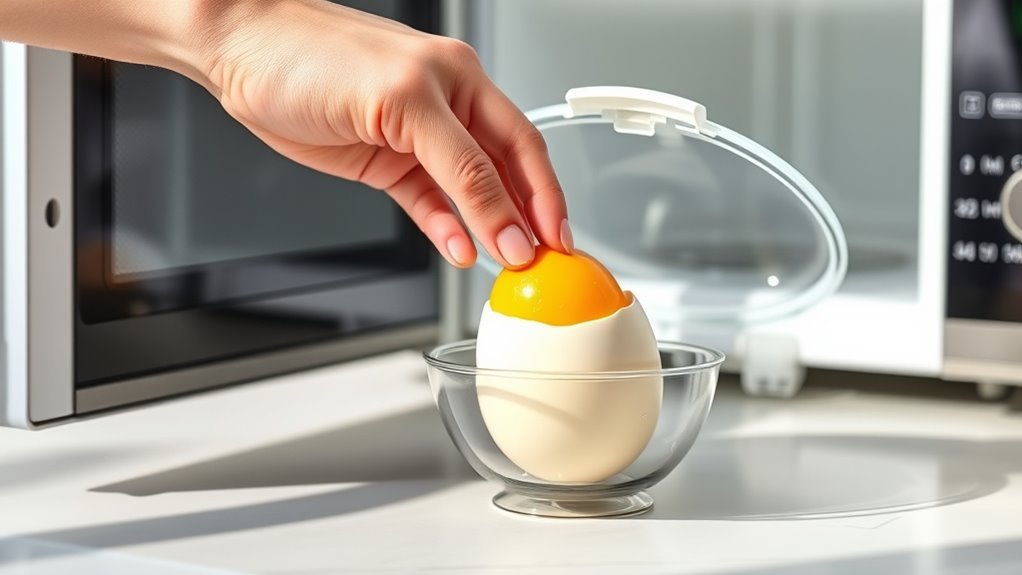
How to Use a Microwave Poached Egg Cooker in 7 Easy Steps
To use your microwave poached egg cooker, first gather your poacher and ingredients. This handy kitchen tool makes cooking eggs quick and easy, perfect for busy mornings or a simple snack.
Add one tablespoon of water to each cup, then crack in the eggs and pierce the yolks to avoid explosions.
Next, secure the lid tightly. Microwave based on your wattage and desired yolk firmness, starting with 30 seconds and adding time as needed.
Carefully check and adjust cooking times to get the perfect poached egg every time.
Once done, serve immediately with your favorite seasonings and toast. Enjoy the convenience and delicious results from your microwave poached egg cooker.
Keep going to discover tips for perfect results every time.
Key Takeaways
- Add 1 tablespoon of water to each poacher cup. This creates steam for even cooking and helps prevent sticking or dryness.
- Crack eggs into the cups and pierce each yolk with a fork. This step avoids any explosions during microwaving.
- Securely cover the poacher with its lid before microwaving. This ensures even heat distribution and keeps the steam inside.
- Microwave starting at 30 seconds, then add 5-second increments. Adjust the time based on your microwave wattage and how firm you want the yolk.
- Let the eggs rest briefly after microwaving. Then, serve immediately with your favorite seasonings and toast for the best flavor and texture.
Gather Your Microwave Egg Poacher and Basic Ingredients
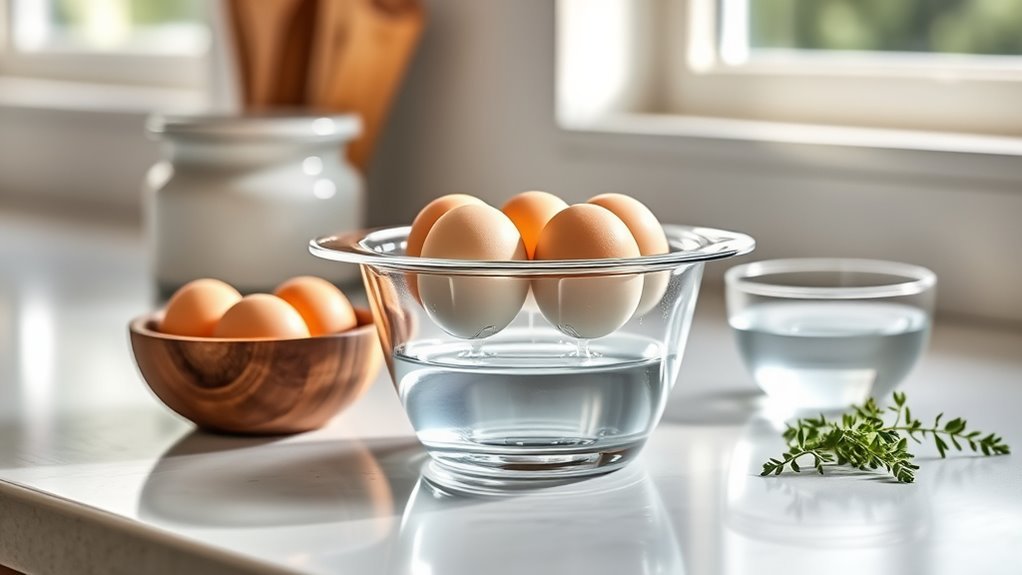
Before you start cooking, make sure you have a microwave-safe egg poacher that fits your needs. It could be one that holds a single egg or several at once.
Ensure your microwave egg poacher suits your needs, whether for one egg or multiple at once.
Choose a microwave egg poacher with individual compartments or multi-egg sections depending on how many eggs you want to poach at once. Also, check that your poacher is clean and dry to avoid contamination and guarantee even cooking.
Gather fresh eggs along with any optional seasonings or toppings you plan to add later. It’s a good idea to have a fork nearby just in case you need to prick the eggs to prevent them from exploding during cooking.
If you want to mix in extra flavors, prepare any additional ingredients like cheese or vegetables beforehand. Having everything ready will make the whole process smooth and efficient.
Add 1 Tablespoon of Water to Each Poaching Cup
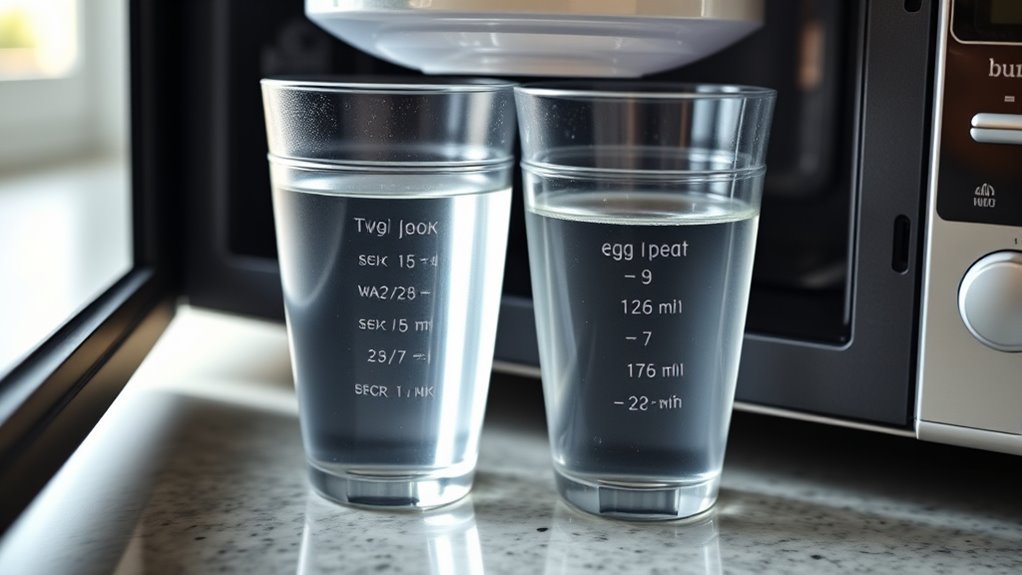
Add exactly 1 tablespoon of water to each poaching cup to guarantee your eggs cook evenly and stay tender. The water creates steam that gently cooks the eggs from all sides, preventing dryness.
Be careful not to add too much or too little, as the right amount is key for perfect results every time. Trust me, a little precision here makes all the difference!
Importance Of Water
Why does adding just 1 tablespoon of water to each poaching cup make such a difference? The water is key to evenly distributing heat during microwaving. It produces steam that gently cooks the egg, preventing it from drying out or sticking to the cup.
This small amount of water also maintains moisture, ensuring your egg doesn’t become rubbery or overcooked. By including water, you create the perfect environment for a tender white and a runny yolk if you want.
Plus, using the specified water amount helps you get consistent results no matter your microwave’s wattage or model. So, don’t skip the water—it’s essential for soft, perfectly poached eggs every time you use your microwave poached egg cooker.
Water Quantity Tips
How much water should you use when poaching eggs in the microwave? You should add exactly 1 tablespoon of water to each poaching cup. This precise amount helps distribute heat evenly, ensuring your eggs cook consistently without drying out or overcooking.
The water generates steam during microwaving, gently cooking the egg whites and yolks for tender results. Using too little water might lead to uneven poaching, while too much can cause splattering or sogginess.
Sticking to 1 tablespoon per cup is key to achieving perfectly poached eggs every time. So, measure your water carefully before microwaving to enjoy smooth, delicious poached eggs without any guesswork or mess.
Even Cooking Benefits
When you include exactly 1 tablespoon of water in each poaching cup, you help the microwave distribute heat evenly around the egg. This small amount of water creates steam that surrounds the egg, guaranteeing even cooking of both the white and yolk.
Without the proper water level, you risk uneven heating, which can leave parts of the egg undercooked or overcooked. The water acts as a thermal buffer, preventing rapid temperature changes that might cause the yolk to explode.
Crack Eggs and Pierce Yolks to Prevent Explosions
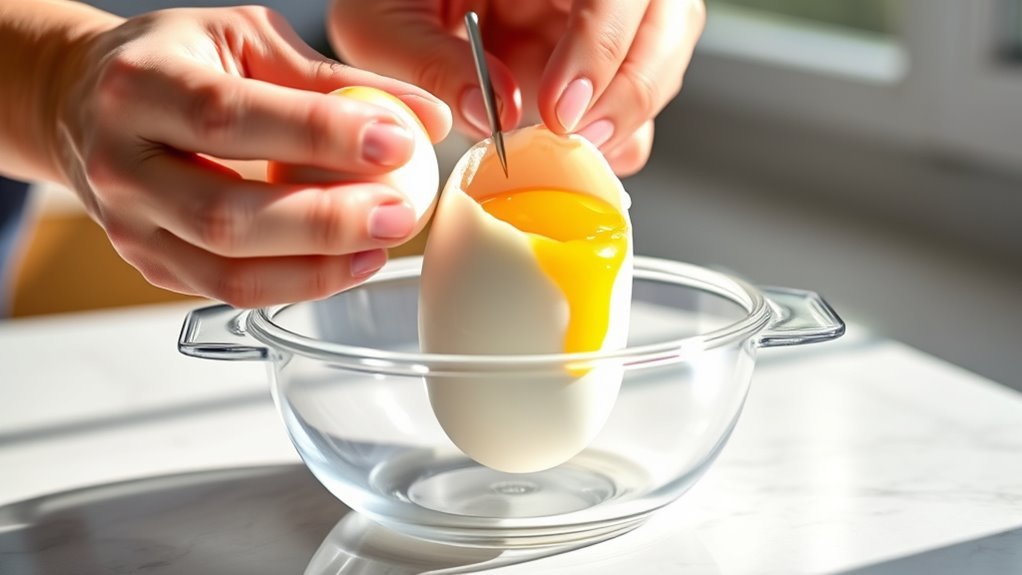
Although cracking eggs into the poacher compartments requires care to avoid shell fragments, the essential step is piercing each yolk with a fork before microwaving. This simple action allows steam to escape during cooking, preventing the pressure that causes explosions.
When you pierce the yolk gently but thoroughly, you guarantee the risk of bursts that can ruin your poached eggs and create a mess in the microwave. Failing to pierce the yolk traps steam inside, often leading to popped yolks or shell fragments flying around.
Cover the Microwave Egg Poacher Securely to Prevent Spills
Make certain you secure the lid tightly before microwaving to prevent spills and splatters. Engaging all clips or locks helps keep the cover sealed, which guarantees even cooking and protects your microwave.
Always check the fit to avoid messes and maintain safety. It’s a simple step, but it really makes a difference!
Importance Of Secure Closure
To prevent spills and keep your microwave clean, always secure the lid or cover of your microwave egg poacher firmly before cooking. A secure closure makes sure the hot egg contents stay inside, stopping any messy spills or splatters.
When the lid fits tightly, steam stays contained, which helps your eggs cook evenly without making a mess. Plus, this tight fit reduces the risk of eggs exploding or splattering, which can damage your microwave or even cause burns.
For safety and cleanliness, double-check that the lid snaps or sits firmly in place before microwaving. Taking this simple step protects you from hot liquids escaping and keeps your microwave spotless after each use.
Preventing Microwave Spills
When you secure the microwave egg poacher’s lid properly, you stop hot egg mixtures from spilling inside your microwave. Always cover the poacher tightly with its lid or a microwave-safe cover to contain any splatters and avoid messy microwave spills.
Make sure all parts of the poacher fit snugly together, minimizing leaks during cooking. Don’t overfill the compartments with water or eggs, as excess liquid can overflow and cause spills.
After microwaving, let the poacher cool for a moment before opening it. This prevents hot steam or liquid from escaping suddenly, which could lead to unexpected spills.
Taking these steps helps keep your microwave clean and your cooking safe. It’s a simple way to avoid mess and make your cooking experience more enjoyable.
Ensuring Even Cooking
Although it might seem simple, securely covering your microwave egg poacher plays an essential role in guaranteeing even cooking. When you cover the poacher tightly with its original lid or a microwave-safe cover designed for it, you trap heat inside, promoting uniform temperature distribution.
This even heat ensures your eggs cook consistently without parts remaining undercooked or overdone. Before microwaving, always check that all clasps or locking mechanisms are properly engaged to maintain a secure seal and prevent spills.
Proper covering also reduces the risk of egg explosions and messes inside the microwave. By focusing on securely covering your egg poacher, you’ll enjoy perfectly cooked poached eggs every time with minimal cleanup and no unexpected splatters.
Microwave Eggs According to Your Microwave’s Wattage and Yolk Preference
Since microwaves vary in wattage, you’ll need to adjust cooking times to get your poached egg just right. Microwave eggs in shorter bursts, starting around 30 seconds, then add 5-second increments until you achieve your preferred yolk consistency.
Higher wattage microwaves cook faster, so reduce times to avoid overcooking. It’s all about finding that perfect timing for your taste.
Use this table as a quick guide:
| Microwave Wattage | Runny Yolk (seconds) | Medium Yolk (seconds) | Firm Yolk (seconds) |
|---|---|---|---|
| 700W | 50-60 | 60-70 | 75-85 |
| 900W | 40-50 | 50-60 | 65-75 |
| 1100W | 30-40 | 40-50 | 60-80 |
| 1300W | 25-35 | 35-45 | 50-70 |
Just adjust times based on your microwave’s wattage and how you like your yolk. That way, you’ll get perfect microwave eggs every time.
Check Eggs and Adjust Cooking Time as Needed
To get the perfect microwave poached egg, you’ll want to verify it right after the initial cooking time and add 5-second increments if it’s not quite done. Since microwaves differ in wattage, cooking times vary, so always check eggs to avoid overcooking.
For runny yolks, start with 30-35 seconds, then check eggs and adjust as needed. Firmer yolks require longer cooking, but increase time gradually.
After microwaving, let the eggs rest in the cooker for a few seconds; this residual heat finishes cooking and helps achieve your preferred doneness. If you’ve had yolk explosions before, try piercing the yolk with a fork before cooking, but skip this step if you want a perfect intact yolk.
Checking eggs and adjusting cooking time ensures consistently great results every time.
Serve Poached Eggs With Seasoning and Toasted Muffins
When you’ve finished poaching your eggs, sprinkle them with freshly ground salt and black pepper to bring out their flavor. Toast English muffins or your favorite bread until golden brown, then serve the eggs on top or alongside.
Adding a pat of butter enhances richness and smoothness. For extra seasoning, consider a dash of hot sauce, paprika, or fresh herbs like chives or parsley.
Serve immediately to enjoy the best texture and taste.
| Seasoning Option | Flavor Profile |
|---|---|
| Salt & Pepper | Classic, balanced |
| Hot Sauce | Spicy, bold |
| Paprika | Smoky, mild heat |
| Chives/Parsley | Fresh, herbal |
This simple seasoning and toasted muffin combo elevates your poached egg experience effortlessly.
Frequently Asked Questions
How to Cook Poached Eggs in a Microwave Egg Cooker?
You crack an egg into the cooker, prick the yolk, add a tablespoon of water, cover it, and microwave on high for 60-80 seconds. Let it rest briefly, then check and serve your perfectly poached egg.
Do You Use Hot or Cold Water in a Microwave Egg Poacher?
You should use cold water in a microwave egg poacher. It helps cook the egg evenly and prevents overheating or splattering. Always check your cooker’s instructions, but cold water generally gives you the best, safest results.
How to Use Instructions for Microwave Egg Cooker?
You don’t need a PhD—just crack an egg, add water, poke the yolk, cover it, and microwave for about a minute. Easy, right? Then carefully open it and enjoy your perfectly poached egg.
How to Use an Easy Cook Microwave Egg Poacher?
You crack an egg into each compartment, prick the yolk, add water, then cover and microwave on high for about 60-80 seconds. Let it rest briefly before carefully removing and serving your perfectly poached eggs.
Conclusion
Now that you’ve mastered using your microwave poached egg cooker, you’re ready to enjoy perfectly poached eggs in minutes. Contrary to the myth that microwave eggs are rubbery or tasteless, when done right, they’re just as delicate and flavorful as stove-poached ones.
Give it a try—you’ll see how simple and quick breakfast can be without sacrificing taste. With practice, you’ll tweak the timing perfectly for your ideal yolk every time.
Using a microwave poached egg cooker is a game-changer for busy mornings. It saves time, is super easy to use, and delivers consistent results. Plus, it’s a healthier way to enjoy eggs since you’re not adding extra oil or butter. Once you get the hang of it, you’ll wonder why you ever poached eggs any other way!