How to Take Egg Off Car in 10 Easy Steps
To take egg off your car safely, start by gently lifting loose shells without scratching your paint. It’s important to be careful here because eggs can be messy and tough on your car’s surface.
Next, soften any dried residue by placing a damp microfiber cloth over the area for about 30 minutes. This helps loosen the egg without causing damage.
After that, prepare a mild soap and water mix. Spray it on the affected spot and let it sit for a few minutes to help break down the egg.
For tougher stains, try a vinegar and soap solution. Just wipe gently with a microfiber cloth to avoid scratching your car’s finish.
Once you’ve treated the area, rinse it thoroughly with water. Be sure to dry it promptly to avoid streaks or water spots.
Finally, inspect your car for any damage. If stains still persist, it might be best to seek professional help.
Keep going to discover more careful tips!
Key Takeaways
- Gently lift loose eggshells with your fingers or use a soft cloth. This helps avoid scratching the paint or grinding fragments into it.
- To soften dried egg residue, place a warm, damp microfiber cloth over the stain for about 30 minutes. Then, gently rub the area.
- Spray a mild soap solution or a vinegar and dish soap mix on the affected spot. Let it sit for 5 to 15 minutes, then wipe gently with a microfiber cloth.
- Rinse the area thoroughly with warm water to remove all residue and cleaning solutions. Make sure to focus on crevices and edges.
- Dry the area immediately with a soft microfiber cloth. This prevents water spots and helps keep a streak-free finish.
Carefully Remove Loose Eggshells to Avoid Scratches
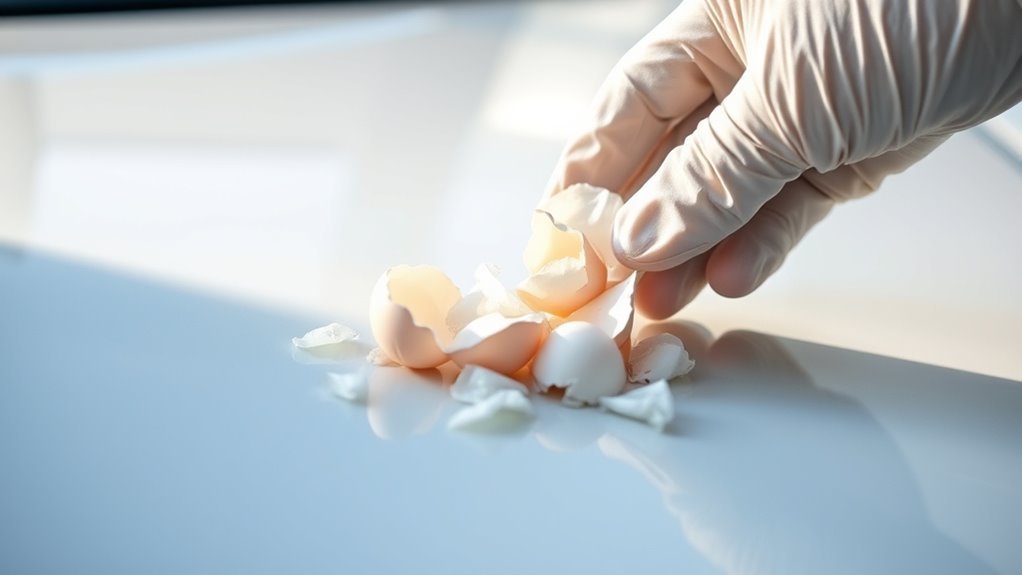
Before you begin scrubbing, gently lift any loose eggshells using your fingers or a soft cloth to avoid scratching your car’s paint. Start with gentle removal to prevent pressing sharp edges into the surface, which can cause scratches.
Use your fingers or a soft cloth for this delicate task, steering clear of abrasive tools or harsh chemicals that might damage the finish further. By carefully picking up the eggshells first, you reduce the risk of grinding fragments into the paint during cleaning.
Taking this simple step promptly helps protect your car’s surface and makes the next cleaning stages easier. Remember, a soft cloth and gentle removal are key to preserving your vehicle’s paint while dealing with eggshell debris.
Soften Dried Egg Residue Using a Damp Cloth
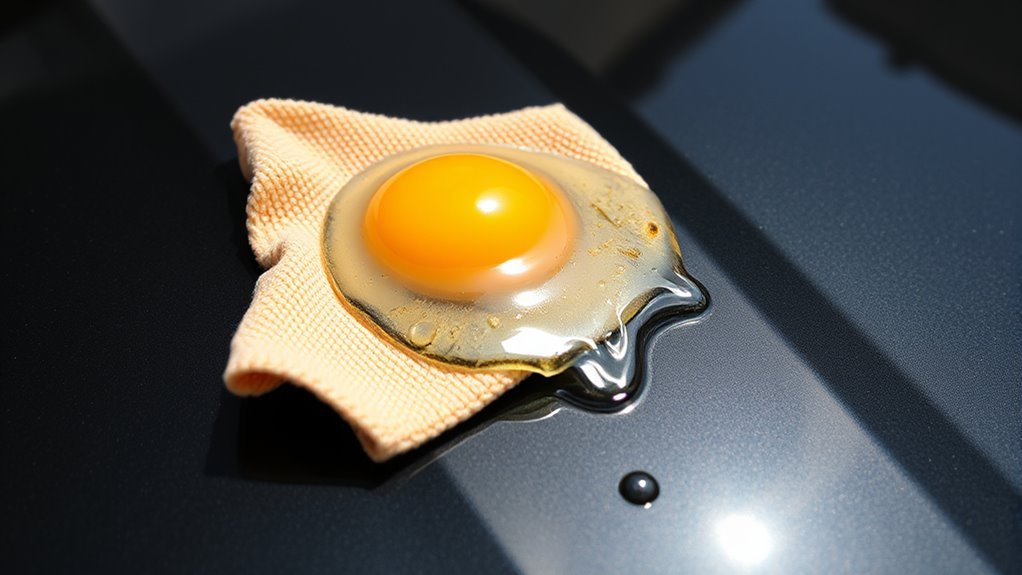
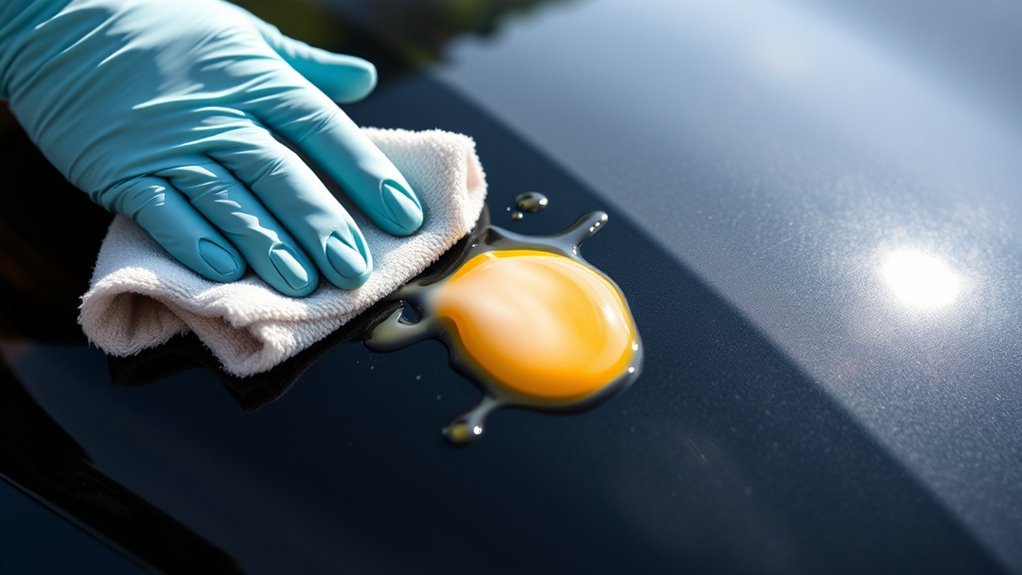
After carefully removing loose eggshells, the next step is to soften any dried egg residue stuck to your car’s surface. Dampen a soft microfiber cloth with warm water and place it gently over the dried egg stain.
Let the damp cloth sit for about 30 minutes to soften the dried egg debris. This rehydrates it, making removal much easier. Make sure to keep re-wetting the cloth to maintain moisture throughout.
Once the residue softens, use gentle rubbing with the damp cloth to lift it away. This helps remove the residue without damaging your car’s paint. Just take your time and be gentle—you don’t want to scratch the surface!
Prepare Mild Soap and Water Solution for Egg Removal
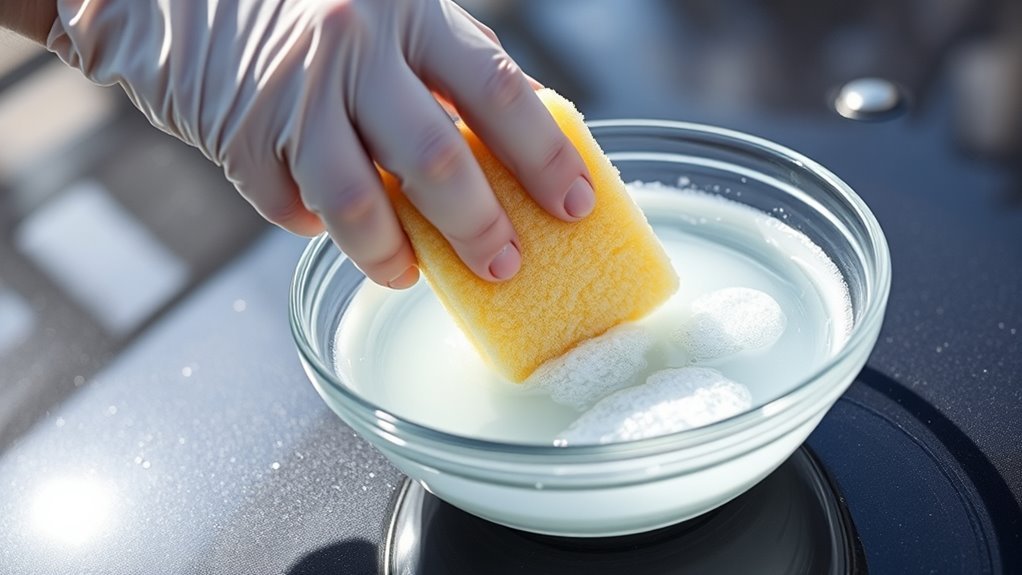
Start by mixing one tablespoon of dish soap with a cup of warm water to create a gentle cleaning solution. Make sure the soap dissolves completely to avoid streaks when you apply it.
Use a spray bottle to evenly coat the egg-stained area for the best results. It helps to cover the spots well without soaking the surface too much.
Soap And Water Ratio
When you mix 1 tablespoon of dish soap with 1 cup of warm water, you create a gentle cleaning solution that effectively removes egg without harming your car’s paint. This soap and water mixture strikes the right balance, providing a mild yet efficient way to break down egg residue.
Make certain to dissolve the soap completely in the water to avoid streaks or leftover soap on your car’s surface. If you have a larger area to clean, simply increase the amounts, keeping the same ratio of soap to water.
Maintaining this precise mixture ensures safety for your paint while maximizing cleaning power. Using this well-balanced soap and water solution prepares you for easy, safe egg removal from your car.
Mixing And Application
Although mixing soap and water seems simple, making sure the solution is well blended is key to effective egg removal. Start by mixing 1 tablespoon of dish soap with 1 cup of warm water. This creates a gentle cleaning solution that won’t harm your car’s paint.
Stir thoroughly until it’s fully combined for maximum effectiveness. For application, pour the solution into a spray bottle and evenly mist the affected area. Let it sit for 5 to 10 minutes to loosen dried egg residue.
Then, using a damp microfiber cloth, gently pat the surface to lift the egg without scratching. Proper mixing and careful application of this mild cleaning solution will make removing egg residue easier and safer for your car’s finish.
Apply Vinegar and Soap Solution to Loosen Tough Egg Stains
Start by mixing equal parts vinegar and water in a spray bottle, then add a few drops of dish soap to create a powerful cleaning solution. Spray it generously onto the egg stain and let it soak for 10 to 15 minutes to break down the residue.
After soaking, gently wipe the area with a soft cloth to lift the stain without damaging your car’s paint. It’s pretty simple, but super effective! Just be patient and let the solution do its magic.
Mixing Vinegar And Soap
To loosen tough egg stains on your car, mix equal parts vinegar and water in a spray bottle and add a few drops of dish soap to boost the cleaning power. This vinegar and soap solution creates an effective cleaner that breaks down stubborn egg residue without damaging your car’s paint.
Shake the spray bottle gently to blend the ingredients well. Spray the mixture liberally over the affected area, making sure you cover the entire egg stain. Let the solution sit for 10-15 minutes to soften the dried egg.
Using this simple combination in a spray bottle really saves time and effort. It makes it easier to remove those tough stains later on. Just remember to rinse the area thoroughly afterward to wash away any leftover vinegar and soap residue.
Soaking And Gentle Wiping
Once you’ve applied the vinegar and soap solution, let it soak on the egg stain for at least 10-15 minutes to break down the dried residue. This soaking softens the egg, making it easier to wipe away without scrubbing harshly.
Use a damp microfiber cloth to gently wipe the area, carefully removing loosened egg without damaging your car’s paint. After wiping, rinse with plain water to remove any leftover solution, then pat dry with a soft cloth.
Check for any remaining residue and repeat if needed. Just take your time—gentle wiping really works and helps avoid frustration. With a bit of patience, those egg stains will come right off!
Wipe Egg Residue Gently With a Microfiber Cloth
Although it might be tempting to scrub vigorously, you should gently wipe the egg residue with a clean, dry microfiber cloth to protect your car’s paint. Using a microfiber cloth is essential because it helps you wipe away debris without scratching.
Gently wipe egg residue with a clean, dry microfiber cloth to safely protect your car’s paint.
Fold the cloth to expose a fresh surface frequently. This prevents you from spreading residue back onto the paint. When wiping, use gentle cleaning motions—straight and smooth rather than circular—to reduce any risk of damage.
If the egg has softened, switch to a damp microfiber cloth and carefully lift the residue without pressing hard. Keep an eye on your cloth for trapped dirt and replace it if it gets dirty.
That way, your gentle cleaning remains effective and safe for your car’s finish.
Remove Stubborn Egg Spots Gently With Rubbing Alcohol
If gentle wiping with a microfiber cloth doesn’t fully remove the egg stain, you can try using isopropyl rubbing alcohol to tackle the tougher spots. Dab a soft cloth with the alcohol and gently apply it to the egg stain without scrubbing, as scrubbing can damage your car’s paint.
Let it sit for 4–5 minutes to dissolve stubborn egg residues effectively. Always test a small, hidden area first to ensure no discoloration occurs.
After treatment, rinse the area thoroughly with water to remove any leftover alcohol and debris.
| Step | Action |
|---|---|
| Test Area | Apply alcohol on a hidden spot |
| Application | Dab gently, avoid scrubbing |
| Rinse | Wash off residue with water |
Remove Egg Residue From Windshields and Glass
To remove egg residue from your windshield and glass, start by spraying a vinegar-based solution to loosen the mess. You can also sprinkle baking soda to absorb any leftover liquid and odors before wiping clean.
If the stains are stubborn, try applying WD-40. Just wait a few minutes, then wipe it away gently. It usually does the trick!
Vinegar-Based Cleaning Solution
When egg residue coats your windshield or glass, mixing equal parts vinegar and water creates a powerful yet gentle cleaning solution that loosens stubborn stains without damaging the surface.
To remove egg, pour this vinegar-based cleaning solution into a spray bottle and apply it liberally to the affected areas. Let it sit for at least 10 minutes to break down the egg residue.
Then, gently wipe the glass with a soft sponge or microfiber cloth, avoiding abrasive scrubbing that could cause scratches. If some stains persist, simply reapply the vinegar solution and allow it more time to work before wiping again.
Finally, rinse the glass thoroughly with plain water to remove any leftover residue and the vinegar smell, leaving your windshield clear and spotless.
Baking Soda Application
Although vinegar solutions work well, using baking soda offers a gentle yet effective way to tackle egg residue on your windshield or glass surfaces. Start by sprinkling baking soda directly onto the egg stain to absorb moisture and loosen the residue.
Let it sit for at least 15 minutes to fully absorb the egg liquid and neutralize odors. Next, take a damp microfiber cloth or sponge and gently wipe away the baking soda along with the loosened egg residue.
If some spots remain stubborn, simply reapply baking soda and repeat the process. Finally, always follow up with a clean, damp cloth to wipe away any leftover baking soda particles. This way, your glass stays clear and scratch-free while you effectively remove egg residue.
WD-40 For Stubborn Stains
Wondering how to tackle those stubborn egg stains that just won’t budge from your windshield or glass? WD-40 is a great solution for stubborn stains like dried egg residue. Spray WD-40 directly onto the affected area and let it sit for about 5 minutes.
This gives the product time to penetrate and break down the egg proteins, loosening the residue. Afterward, gently wipe the area with a soft cloth or sponge—avoid abrasive scrubbing to protect your glass.
Once the egg residue is removed, rinse the windshield thoroughly with water to wash away any leftover WD-40. For a streak-free finish, follow up with your favorite glass cleaner.
Using WD-40 this way is safe and effective, making stubborn egg stains much easier to remove.
Rinse Thoroughly and Dry to Prevent Water Spots
To prevent water spots from forming after cleaning egg off your car, you should rinse the area thoroughly with warm, plain water. Use a gentle stream to flush away any remaining residue and cleaning solution, especially around crevices and edges.
Rinse thoroughly with warm water using a gentle stream to remove all residue and avoid water spots.
This step is really important to reduce the risk of staining or damage. Once you’ve rinsed, dry the surface immediately with a soft microfiber cloth.
Drying right away helps minimize water spots caused by mineral deposits, especially if you live in an area with hard water. By rinsing thoroughly and drying quickly, you protect your car’s finish and keep it looking great.
This simple routine makes sure no leftover particles stick around to cause unsightly marks or damage. It’s an easy way to keep your car’s surface clean and shiny.
Inspect for Egg Damage and Residue After Cleaning
Once you’ve rinsed and dried the area, carefully inspect it under bright light to spot any remaining egg residue or damage. Use a magnifying glass to check edges and crevices where residue might hide.
Look for cracks, discoloration, or dull spots signaling paint or clear coat damage. Run your fingers gently over the surface to feel for roughness or imperfections.
Don’t forget to document any visible damage with photos for future reference or insurance. This thorough inspection makes sure you don’t miss hidden residue or subtle damage that could worsen.
| What to Check | Signs to Look For |
|---|---|
| Residue | White or yellowish spots |
| Surface Damage | Cracks, dullness, discoloration |
| Texture | Roughness or unevenness |
Call a Professional When Egg Damage Persists
If you still notice stubborn egg stains or damage after thoroughly cleaning and inspecting your car, it’s time to call in a professional.
Egg residue can cause hidden damage to your paint, clear coat, or glass that DIY methods might miss. Professional help ensures proper assessment and damage repair, preventing further deterioration.
Think about reaching out to an expert if you see deep scratches, cracks, or discoloration from egg stains. Or if there’s paint etching or clear coat failure.
Also, chemical damage or corrosion caused by egg residue is a big red flag. And if you’re unsure about how bad the damage is or what to do next, don’t hesitate to get professional advice.
A car detailer or body shop can provide the specialized care your vehicle needs. They’ll help restore its appearance and protect its value.
Frequently Asked Questions
What Is the Best Way to Get an Egg off Your Car?
The best way to get an egg off your car is to gently remove shells, soak the area with mild soap and water, then carefully wipe it clean with a soft cloth. Rinse and dry to avoid damage.
Will WD-40 Remove Eggs From Car?
Yes, WD-40 will remove eggs from your car. Don’t worry about damaging the paint if you test a small spot first. Just spray, wait a few minutes, then gently wipe and rinse thoroughly.
Does Egging a Car Take the Paint Off?
Egging a car doesn’t immediately take the paint off, but if you leave the egg on too long, the corrosive proteins and fats can damage the paint. Act quickly to avoid lasting harm to your car’s finish.
What to Do if Your Car Gets Egged?
If your car’s a canvas marred by careless strokes, don’t panic. You’ll gently cleanse the offense, like wiping away tears from a cherished portrait—softly, patiently, and with care—to restore its shining story.
Conclusion
Now that you’ve wiped away the egg like a gentle rain washing off morning dew, your car’s surface should shine clear and fresh. Remember, patience and care are your best allies—rushing can leave scratches like battle scars.
If stubborn stains stick around like unwelcome guests, don’t hesitate to call a professional. With these steps, you’ll keep your car looking spotless and ready for the road ahead.
Taking egg off your car doesn’t have to be a headache. Just follow these easy steps, and your vehicle will look as good as new in no time. Keeping your car clean not only protects the paint but also maintains its value and appeal. So next time you face an eggy mess, stay calm and tackle it with care—you’ve got this!