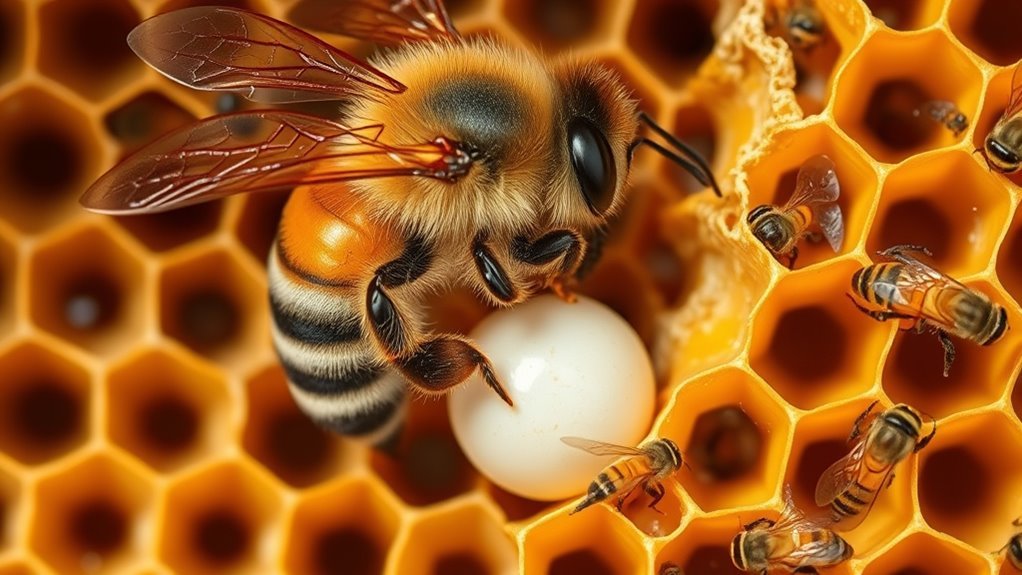
How Many Eggs Does a Queen Bee Lay Each Day?
A queen bee typically lays between 1,100 and 1,500 eggs each day, though under ideal conditions, she can reach up to 2,000. How many eggs she lays depends on the hive’s health, available space, and worker bees’ support.
If the hive is overcrowded or lacks empty cells, her egg-laying slows down. Maintaining a clean, spacious hive encourages maximum egg production.
Understanding these factors can help you keep your colony thriving and growing strong.
So, if you’re wondering how many eggs a queen bee lays each day, it really comes down to the environment and the hive’s overall condition.
Key Takeaways
- A queen bee typically lays between 1,100 and 1,500 eggs daily. Under ideal conditions, some queens can lay up to 2,000 eggs per day.
- Egg-laying rates depend on hive health and available space for eggs. So, if the hive is doing well, the queen can really keep busy.
- Consistent egg-laying is crucial for colony growth and sustainability. Without it, the hive wouldn’t survive for long.
- Worker bees help maintain hive conditions to support the queen’s egg-laying. They make sure everything stays just right for her to keep laying eggs.
How Many Eggs Does a Queen Bee Lay Each Day?
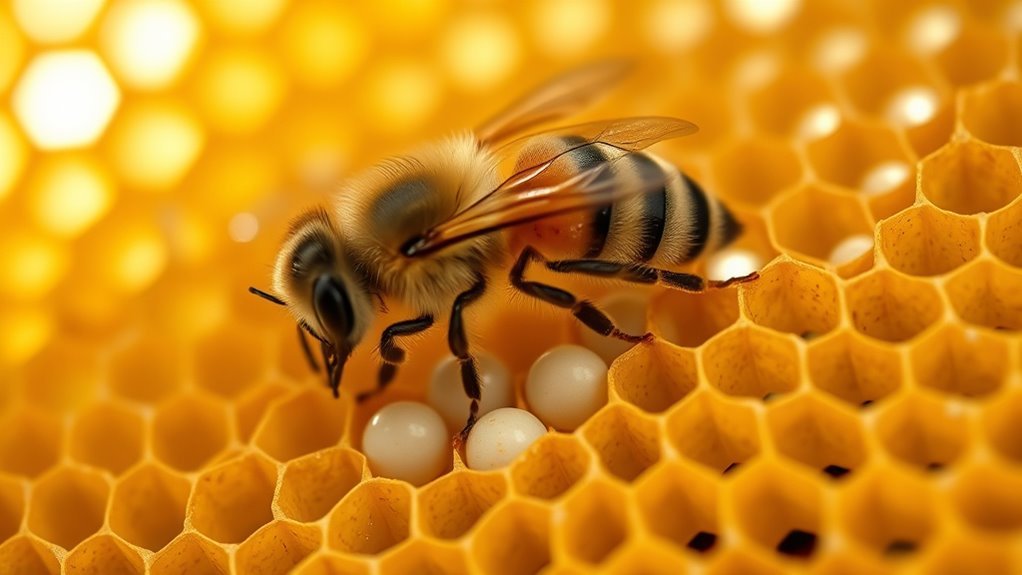
Although egg-laying rates vary, a queen bee typically lays between 1,100 and 1,500 eggs each day. In a healthy honey bee colony, the queen is the primary egg layer, responsible for producing the next generation of bees.
You’ll find that some queens can lay up to 2,000 eggs per day under *ideal* conditions in a well-managed apiary. Worker bees support the queen by maintaining the hive and caring for the eggs and larvae.
While the queen’s egg-laying rate can fluctuate, her ability to consistently lay thousands of eggs is *essential* for colony growth and survival. Understanding how many eggs a queen bee lays daily helps you appreciate the complex dynamics within a thriving honey bee colony.
Hive Conditions That Affect Queen Bee Egg Laying
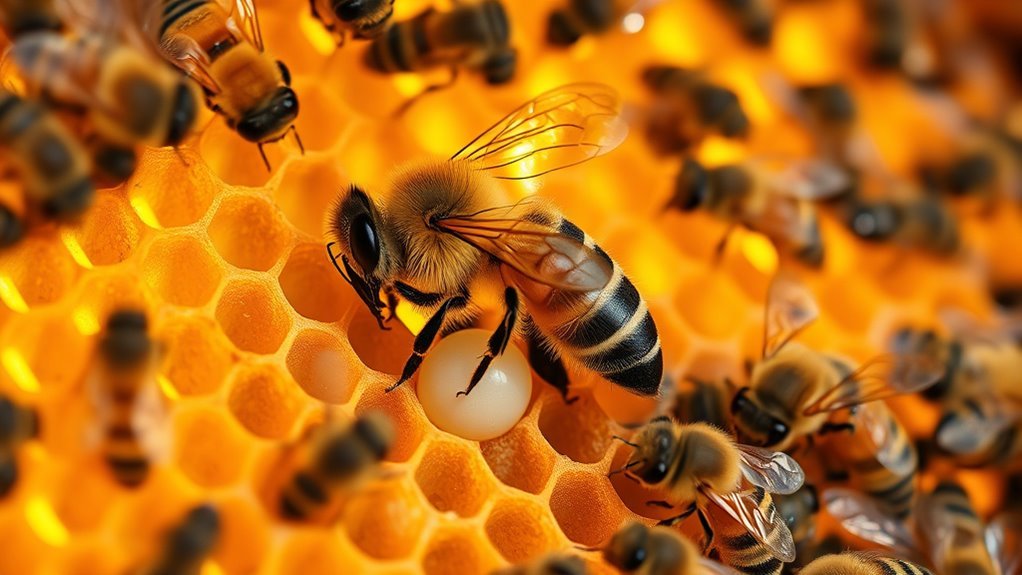
When hive conditions provide plenty of empty cells, the queen can maintain her impressive egg-laying pace. The queen bee’s egg-laying rate depends heavily on open cells in the brood chamber.
If space constraints arise due to overcrowding or limited comb construction, she’ll slow or stop laying eggs. Proper hive management plays a vital role here—you need to regularly remove filled comb and encourage worker bees to build new comb, ensuring enough room for the queen.
Overcrowding stalls egg-laying; remove filled comb and promote new construction to keep the queen laying.
Overcrowding reduces the number of available cells, directly impacting her egg-laying rate. By monitoring and managing hive conditions carefully, you help maintain a peak environment that supports the queen’s maximum egg-laying capacity.
This keeps the colony thriving and productive. So, staying on top of these details really makes a difference!
Frequently Asked Questions
What Is the Lifespan of a Queen Bee?
You’ll find that a queen bee usually lives between 2 to 4 years, though some can survive up to 7 years. Her lifespan depends on hive conditions, genetics, and disease resistance, so it can vary quite a bit.
What Happens if Two Queen Bees Are Born?
If two queen bees are born, they fight like rival knights, and usually, one kills the other. If both survive, they might swarm, but you’ll need to step in to keep your hive peaceful.
How Do You Tell if a Queen Bee Is Mated?
You can tell if a queen bee is mated by her larger, shiny abdomen, presence of worker bees surrounding her, drone activity near the hive, and detecting queen mandibular pheromone (QMP) through pheromone analysis.
How Many Times Does a Queen Bee Mate in Her Lifetime?
Imagine a queen bee named Bella; she mates about 10 to 20 times during a few days early in life. You’ll find most queens mate once or twice, storing enough sperm to last their whole lifetime.
Conclusion
You might think a queen bee would take it easy, but she actually lays up to 2,000 eggs a day—talk about a busy boss!
Ironically, while she’s pumping out future workers non-stop, her entire hive’s survival depends on how well you care for her environment.
So, if you ever thought royalty just lazes around, remember: in the bee world, the queen’s hard work is what keeps everything buzzing. The queen bee lays eggs every day, and this incredible productivity sustains the hive’s population. Without her laying thousands of eggs daily, the colony wouldn’t thrive. Caring for the queen’s environment ensures she stays healthy and continues laying eggs, which is essential for the hive’s survival. In short, the queen bee’s daily egg-laying is the heart of the hive, and supporting her role keeps the whole colony buzzing and strong.