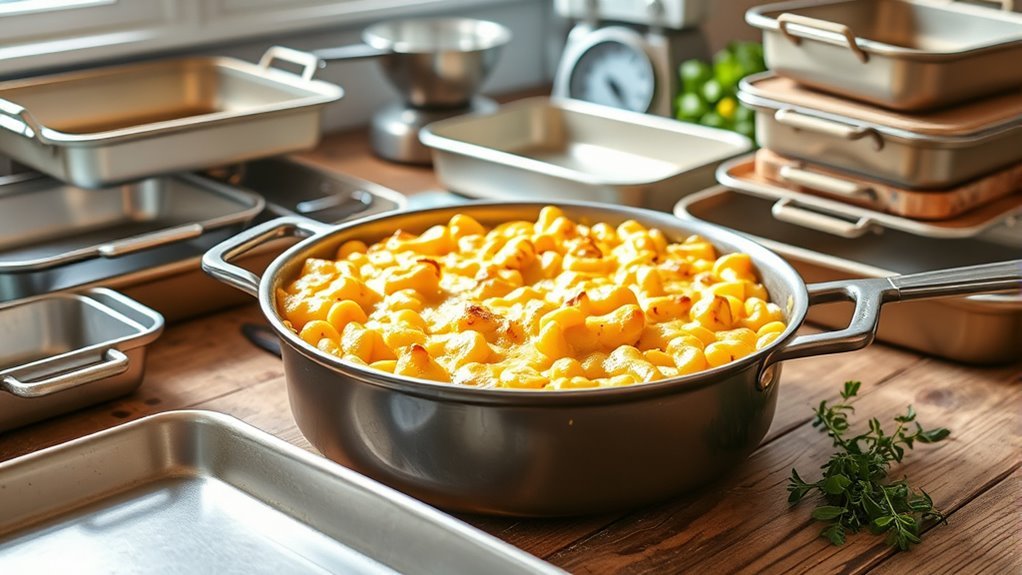
7 Tips for Choosing the Right Pan Size for Mac and Cheese
Choosing the right pan for mac and cheese is key to getting the texture just right and nailing the cooking time. Picking a pan that fits your portion size matters a lot—something like a 9×13 inch pan is perfect for about 12 servings.
Shallow pans are great if you want a crispy crust, while deeper pans help keep the mac and cheese creamy and gooey. Just remember to tweak your baking time depending on the pan size so you don’t end up with undercooked pasta or a dry dish.
If you don’t have the perfect pan on hand, no worries—using a few smaller pans can do the trick too.
When freezing leftovers, cover them tightly and thaw slowly before reheating.
There’s definitely more to mastering pan choice than meets the eye, but these tips will set you up for delicious results every time!
Key Takeaways
- Choose a pan size that matches your recipe yield to ensure proper portioning and avoid overcrowding. This way, every serving comes out just right.
- Use shallow pans if you want a crispier crust. But if you’re after creamy, moist mac and cheese, go with deeper pans.
- Adjust your baking time depending on the pan size. Larger or deeper pans need more time, while smaller, shallower ones require less.
- Pick pans with straight sides and flat bases. They help distribute heat evenly and make sure your mac and cheese cooks consistently.
- When it comes to storage, bigger pans are great for long-term freezing. Smaller pans work better for short-term use and reheating easily.
Why Pan Size Matters for Mac and Cheese
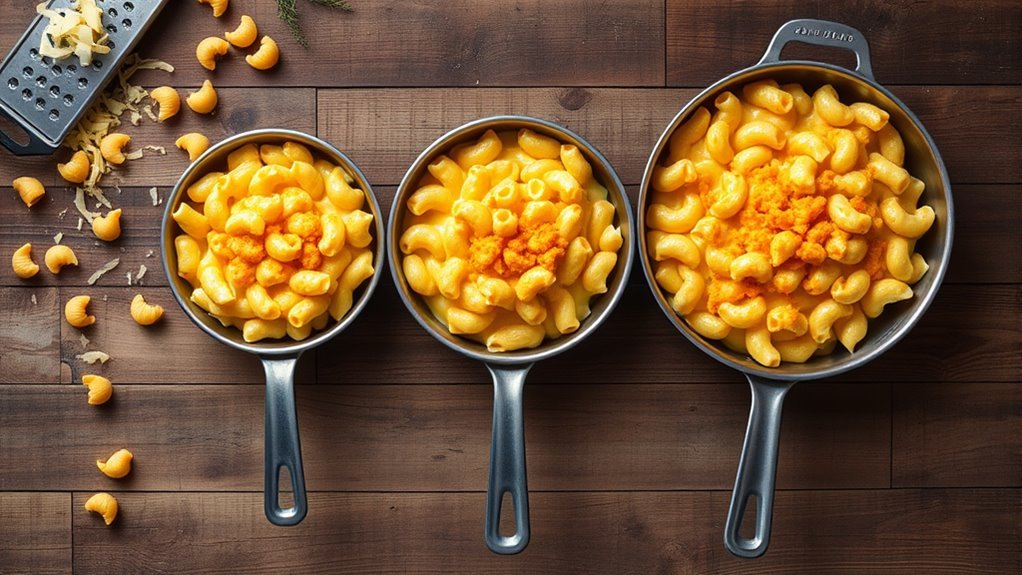
When you choose the right pan size for your mac and cheese, you control its texture and cooking quality. The pan size directly affects the dish’s thickness; larger baking dishes create thinner layers, which crisp up nicely around the edges.
If your pan is too small, you risk overcrowding, leading to uneven cooking and soggy spots. A proper baking dish ensures even cheese sauce distribution, preventing dry edges or overly moist centers.
Plus, a larger surface area allows more browning and caramelization, boosting flavor and visual appeal. Choosing the correct pan size also helps you manage baking time effectively, so your mac and cheese cooks through perfectly without drying out or burning.
Getting this right makes all the difference in your final dish. It’s a simple step that really elevates your mac and cheese game!
Estimating Pan Size by Recipe Yield
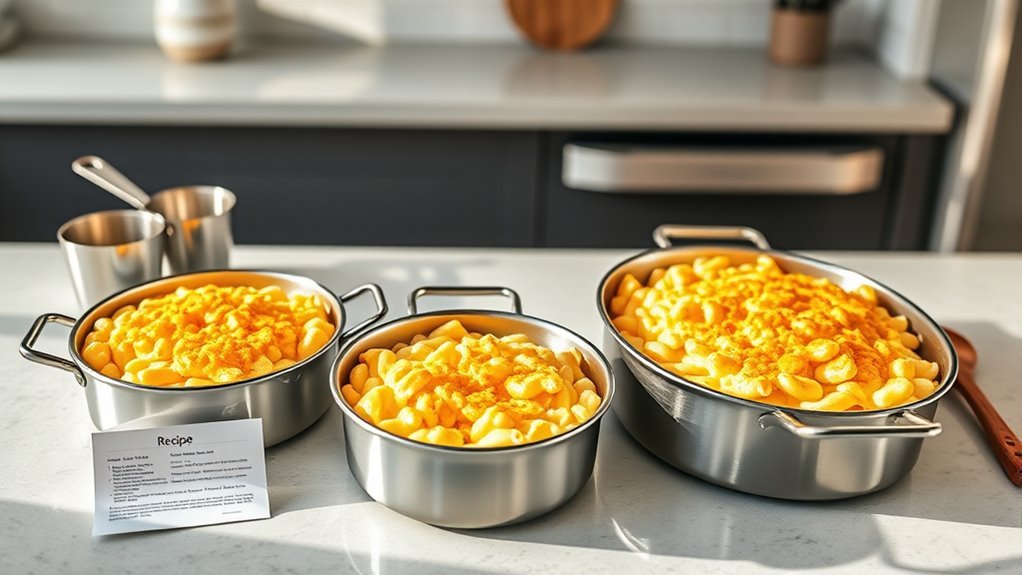
You’ll want to start by calculating how many servings you need based on your guest list and portion sizes. Then, match those numbers to pan dimensions, knowing a full 9×13-inch pan usually serves about 30 people.
This approach helps you pick the right combination of pans to guarantee everyone gets enough mac and cheese. It’s all about making sure no one goes hungry!
Calculating Portion Quantities
Calculating portion quantities lets you determine the exact pan size needed to serve your group without waste or shortage. Start by defining your portion sizes—typically 1 cup per person for mac and cheese.
Next, figure out your total servings based on your guest count. For example, serving 50 people means you’ll need about 50 cups.
Then, check the pan capacity: a full 9×13-inch pan yields roughly 12-15 servings, while half pans hold about 6-8 servings.
Using your recipe quantity and serving needs, multiply accordingly to find how many pans to prepare. Adjust if mac and cheese is a main course, requiring larger portions.
This method guarantees you pick the right pan size, matching your recipe yield perfectly. It makes planning so much easier!
Matching Pan Dimensions
Although choosing the right pan size can seem tricky, matching your pan dimensions to your recipe yield makes the process straightforward. To estimate the perfect pan size, consider these guidelines:
For 6-8 servings, use a 9-inch square or round pan—ideal for smaller gatherings. A 9×13-inch pan works well for about 12-15 servings, fitting roughly 1 pound of pasta with sauce.
For large groups of 30-50, a half-sheet pan around 13×18 inches offers ample serving capacity but may require longer baking time. Keep in mind that larger pan dimensions increase surface area, promoting crisping but potentially changing baking time.
Matching pan size to your recipe ensures even cooking and the perfect mac and cheese texture every time. It’s all about finding that balance so your dish turns out just right!
Shallow vs. Deep Pans: Impact on Creaminess and Crust
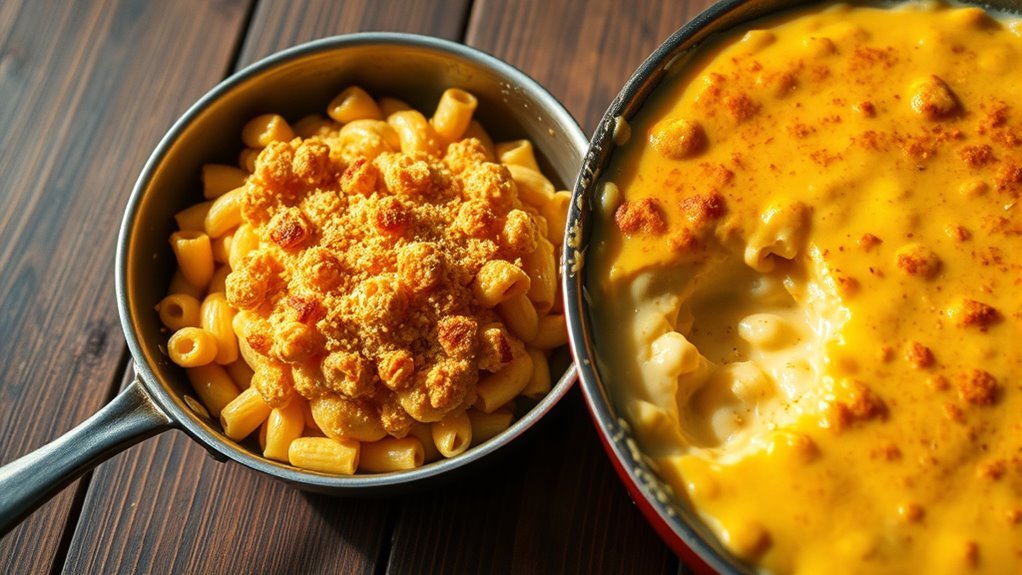
When choosing between shallow and deep pans for your mac and cheese, consider how each affects texture and moisture. Shallow pans increase surface area, promoting a crispier, more browned crust on the top and edges.
This makes them perfect if you want a crunchy topping without drying out the interior. On the other hand, deep pans hold more volume, which helps maintain moisture and enhances creaminess throughout the dish.
They allow the cheese and pasta to meld into a thicker, soufflé-like consistency. Keep in mind, deep pans usually need longer baking times to guarantee even heat penetration.
Best Pan Shapes for Even Heat With Different Pan Sizes
Choosing the right pan shape plays a vital role in how evenly your mac and cheese bakes. Different pan shapes influence heat distribution and the final texture.
Choosing the right pan shape ensures even baking and perfect texture in your mac and cheese.
Here’s what to keep in mind:
- Half-sheet pans offer a large surface area that promotes even heat, giving you a perfectly crispy topping.
- Pans with straight sides help contain the cheese sauce, preventing spills and ensuring consistent cooking.
- Opt for pans with a flat, even base and consistent depth to avoid hot spots and ensure uniform melting.
Avoid smaller or deeper pans, as they tend to cook unevenly. That can leave you with soggy edges or undercooked centers.
Adjusting Baking Time for Various Pan Sizes
Since pan size directly affects how heat penetrates your mac and cheese, you’ll need to adjust baking times accordingly to guarantee it cooks evenly. Larger pans, like an 11 x 17 sheet, require a longer baking time—usually adding 5 to 10 minutes—due to increased surface area and thickness.
On the other hand, smaller pans such as 9 x 9 or 9 x 13 reduce baking duration by 5 to 15 minutes because the food cooks faster. When you switch to a deeper or wider pan, increase baking time gradually and keep an eye out for bubbling and browning to avoid overcooking.
If you use a shallower or smaller pan, start checking your mac and cheese about 10 minutes before the original baking time ends. Adjusting baking time based on pan size ensures thorough cooking without drying out or burning, even if you keep the oven temperature the same.
Alternatives When Ideal Pan Size Is Unavailable
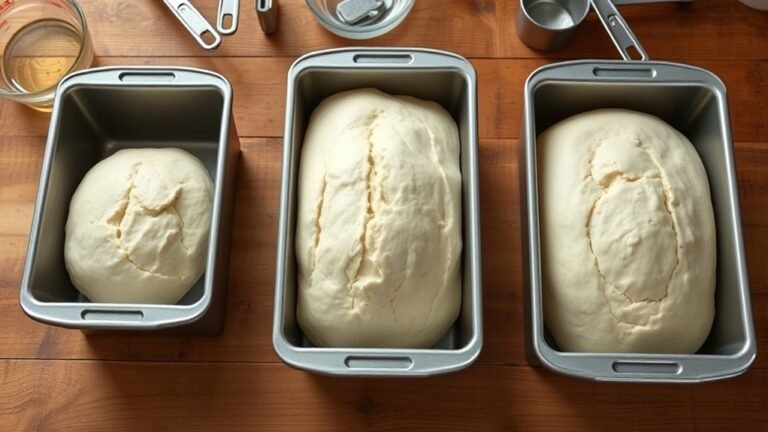
If you don’t have the ideal pan, try using multiple smaller pans or ramekins to spread out the mac and cheese evenly. Just remember to adjust cooking times since thinner layers will bake faster and can dry out.
You might also need to modify your recipe quantities to fit the different pan sizes you’re working with. It’s a bit of trial and error, but it usually works out fine!
Using Multiple Smaller Pans
What can you do when the perfect pan size isn’t on hand? Using multiple smaller pans is a smart alternative. This method helps you achieve even browning and crispiness, just like with a larger pan.
Plus, it offers great flexibility. Here’s why you should consider it:
- Smaller pans increase surface area, enhancing browning on the edges.
- You can bake multiple pans at once, saving overall baking time.
- Dividing mac and cheese allows for better portion control and prevents overcrowding, avoiding sogginess.
Keep in mind, while you don’t need to adjust baking time drastically here, keep an eye on your dishes to ensure perfect results. Using smaller pans is a practical way to maintain texture and flavor when the ideal pan isn’t available.
Adjusting Cooking Times
When you don’t have the ideal pan size for your mac and cheese, adjusting cooking times becomes crucial to get the perfect bake. If you use a smaller pan size, increase the baking time by 10-15 minutes to ensure the dish heats through and becomes bubbly.
With a larger pan, reduce baking time slightly to avoid over-browning or drying out the cheese topping. For irregular pans, check doneness with a food thermometer—165°F ensures safe, even cooking.
You might also need to tweak the oven temperature by about 25°F if heat distribution changes considerably. Covering the dish with foil can prevent excessive browning, especially in shallower or larger pans.
These adjustments help you achieve a perfectly cooked mac and cheese, regardless of pan size. It’s all about keeping an eye on things and making small changes as needed!
Modifying Recipe Quantities
Although you might not have the ideal pan size, you can still achieve perfect mac and cheese by adjusting the recipe quantities to fit your available dish. Proper recipe adjustment guarantees the texture and flavor stay consistent despite changes in pan size.
Here’s how to handle ingredient scaling and baking time effectively:
- Scale ingredients proportionally based on your pan’s surface area—reduce by 25-50% for smaller pans like 9×13, or increase for larger ones such as 11×17.
- Adjust baking time according to pan depth; shorten for shallower pans to avoid overbaking, and lengthen for deeper pans to ensure thorough cooking.
- Use precise measurements or a kitchen scale to maintain the cheese-to-pasta ratio, preventing the dish from being too dry or too saucy.
These steps make recipe adjustment straightforward when the ideal pan size isn’t available. Just a little math and attention, and you’re good to go!
Freezing and Storing Mac and Cheese by Pan Size
Since freezing mac and cheese depends on the pan size, choosing the right one can make storage and reheating much easier. A 9×13-inch pan suits long-term freezing, storing up to 6 months when wrapped tightly.
Smaller pans like 8×8-inch or ramekins work best for shorter storage and easier portioning. Always cover unbaked dishes tightly to avoid freezer burn.
Thaw in the fridge for 24 hours before baking, then reheat at 350°F with a splash of milk to keep it creamy.
| Pan Size | Storage Duration | Best For |
|---|---|---|
| 9×13-inch | Up to 6 months | Large batches |
| 8×8-inch | 1-2 months | Medium portions |
| Ramekins | 1 month | Individual servings |
| Covered Tightly | Prevents freezer burn | Quality retention |
| Proper Thawing | 24 hours fridge | Even heating |
Frequently Asked Questions
What Size Pan Is Best for Mac and Cheese?
You’ll want a 9×13 inch pan for perfectly baked mac and cheese. It offers enough space for even cooking and a crispy top. Use smaller pans for individual servings or bigger ones for thinner, crispier layers.
What Are Some Common Mac & Cheese Mistakes?
Mistakes in mac and cheese are like storm clouds—overcooking pasta, using too much or too little cheese, skipping proper shredding, and baking too hot or uncovered. You’ll keep your dish creamy and perfect by avoiding them.
How Many People Will a 9×13 Pan of Mac and Cheese Feed?
A 9×13 pan of mac and cheese usually feeds 12 to 15 people if served as a main dish. If you’re serving smaller portions or sides, it might stretch to more, but plan accordingly.
Can a Diabetic Have Macaroni Cheese?
You can enjoy creamy, comforting macaroni and cheese even with diabetes. Just swap in whole-grain pasta, use reduced-fat cheese, add veggies, and watch portions. These tweaks help keep your blood sugar steady while savoring every bite.
Conclusion
Choosing the right pan size for your mac and cheese is like picking the perfect stage for a play—it sets the scene for every delicious moment. By considering your recipe yield, pan depth, and shape, you’ll guarantee creamy layers and a golden crust bake evenly.
Even if you don’t have the ideal pan, smart adjustments will keep your dish on point. With these tips, your mac and cheese will always steal the show. Remember, the right pan size makes all the difference in texture and flavor.
So, whether you’re making a small family dinner or a big batch for a crowd, choosing the perfect pan ensures even cooking and that irresistible cheesy goodness. Follow these simple guidelines, and your mac and cheese will come out creamy, perfectly baked, and utterly delicious every time.