How to Get Burnt Oil Off a Non-Stick Pan in 5 Easy Steps
To get burnt oil off your non-stick pan, first make sure it’s completely cool. Then, soak it in warm, soapy water for about 15-20 minutes. This helps to loosen the burnt-on oil and makes cleaning easier.
Next, boil water mixed with dish soap or vinegar right in the pan. This step further loosens any stubborn residue.
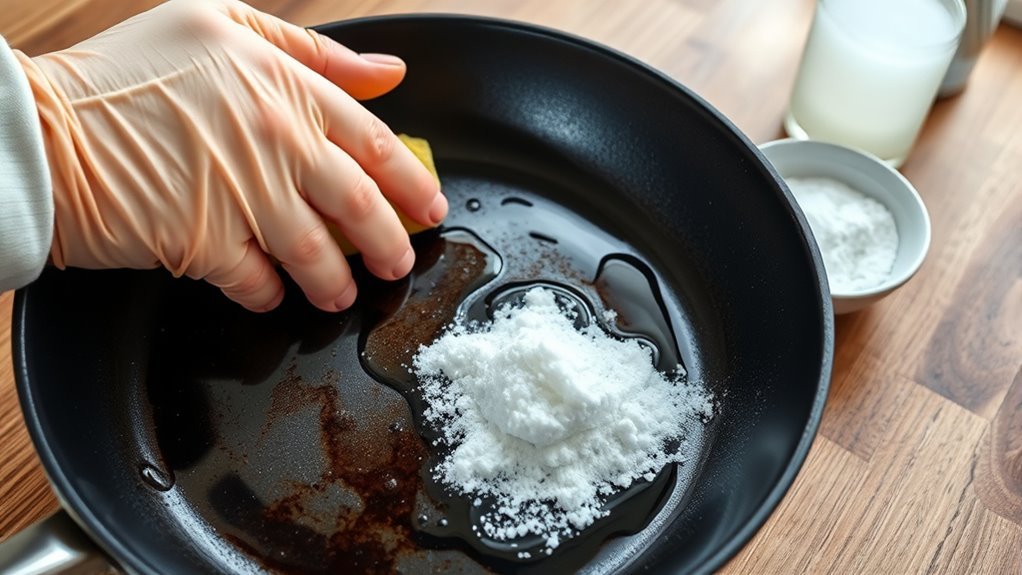
After that, apply a baking soda paste to the tough spots. Gently scrub with a soft sponge to avoid damaging the non-stick surface.
Finally, wash the pan with warm water and mild soap. Avoid using any abrasive tools that might scratch the coating.
Once it’s clean, dry the pan thoroughly and season it with a little oil to restore the surface. These simple steps will help keep your non-stick pan in great shape!
Key Takeaways
- Let the pan cool, then soak it in warm soapy water for 15-20 minutes to loosen burnt oil. This step helps make the cleanup easier.
- Next, boil water with dish soap or vinegar in the pan for 5-10 minutes. This softens the burnt residues so they come off more easily.
- After that, apply a baking soda paste on the burnt areas. Let it sit for 15-30 minutes, then gently scrub the spots.
- Use a soft sponge and mild dish soap to wash the pan gently. Be careful not to damage the non-stick surface while cleaning.
- Finally, dry the pan thoroughly. Then season it with a thin layer of high smoke point oil to protect the coating and keep it in great shape.
Prepare Your Non-Stick Pan for Burnt Oil Cleaning
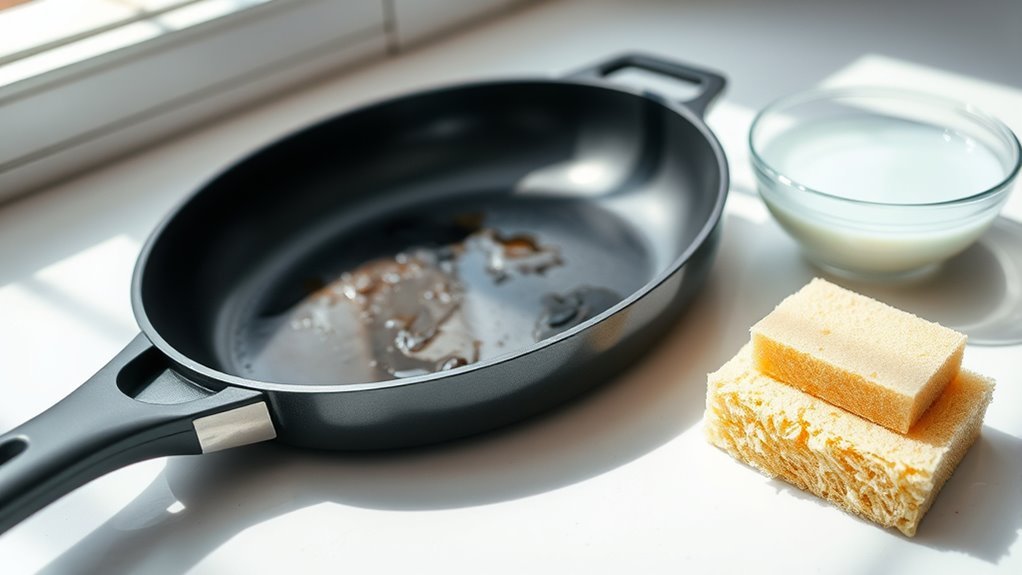
Before you start cleaning burnt oil off your non-stick pan, let it cool completely to avoid warping or damage. Once it’s cooled, fill the pan with warm water and add a few drops of dish soap. This helps loosen the burnt oil, making it easier to remove.
You can let the pan soak for 15-20 minutes to break down stubborn residue. After soaking, gently scrape off any excess burnt oil using a wooden spoon or silicone spatula. Just be sure not to scratch the non-stick surface.
Then, take a soft sponge or a non-abrasive brush to wipe away the loosened burnt oil carefully. This preparation step protects your pan’s coating while effectively tackling burnt oil buildup before moving on to deeper cleaning methods.
Loosen Burnt Oil by Boiling Soap or Vinegar in Your Pan
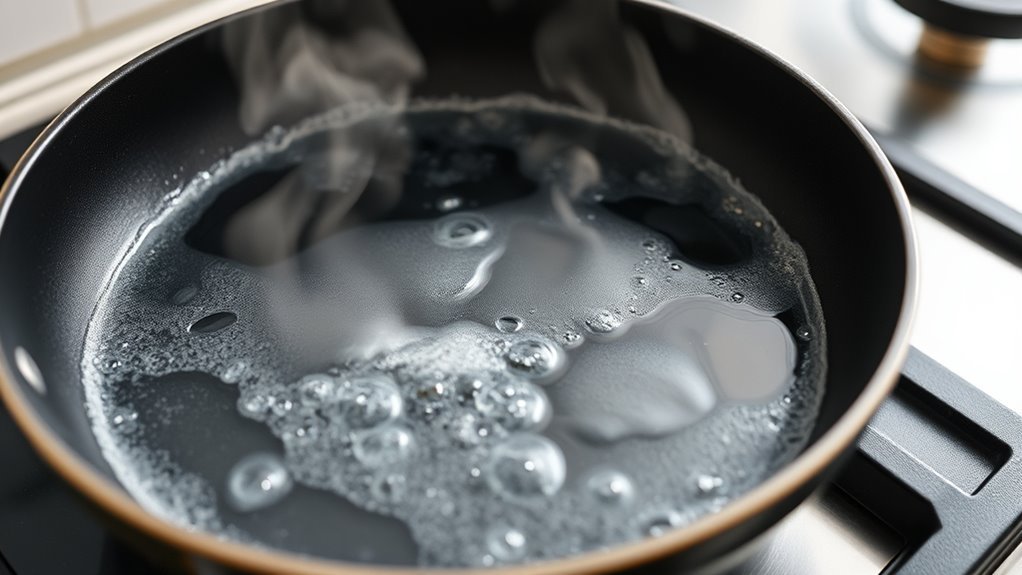
How exactly can you loosen burnt oil stuck on your non-stick pan without risking damage? Fill the pan with water, add a few drops of dish soap or vinegar, then bring it to a gentle boil on low to medium heat.
The boiling steam softens burnt oil residues, making them easier to wipe away. After 5-10 minutes, let the pan cool slightly and scrub gently with a non-abrasive sponge.
| Step | Method | Effect |
|---|---|---|
| Fill with water | Soap/Vinegar | Creates steam to loosen residues |
| Boil gently | Low/Medium heat | Prevents damage and warping |
| Boil for 5-10 min | Soap or vinegar | Softens burnt oil |
| Cool and scrub | Non-abrasive sponge | Removes loosened burnt oil |
Use Baking Soda Paste to Remove Stubborn Burnt Residue
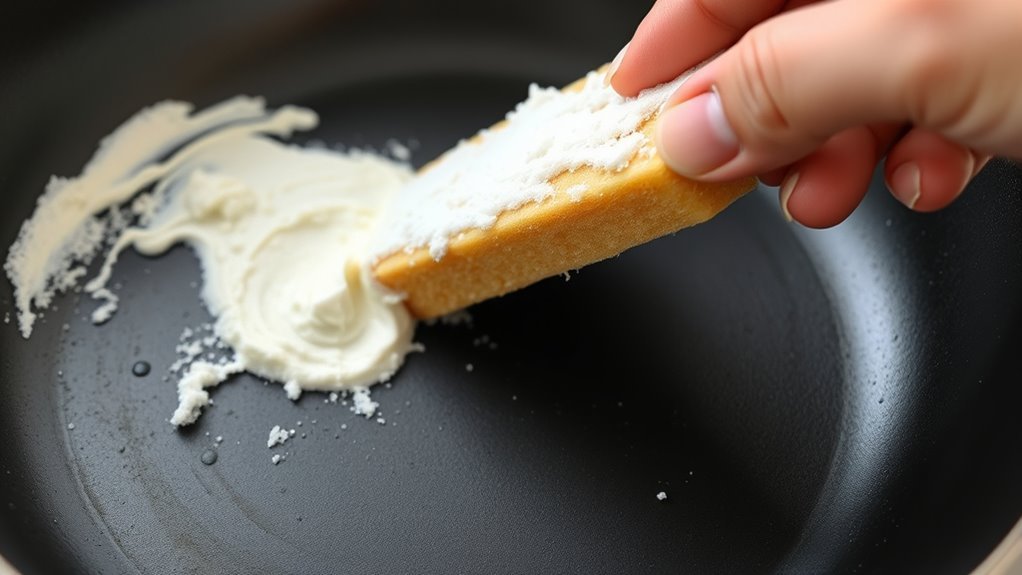
When burnt oil won’t budge with boiling soap or vinegar, applying a baking soda paste can break down stubborn residue without harming your non-stick pan. Mix baking soda with a small amount of water to create a thick paste.
Spread this paste over the burnt residue and let it sit for 15 to 30 minutes to loosen the burnt oil. Afterward, gently scrub the paste with a non-abrasive sponge or soft cloth, focusing on the affected areas to remove burnt residue without damaging the non-stick surface.
Rinse the pan thoroughly with warm water to wash away all baking soda and loosened grime. If any burnt spots remain, just repeat the process until the burnt oil is fully removed, making sure your pan stays intact and clean.
Gently Wash Non-Stick Pan With Warm Water and Soft Sponge
Although it might be tempting to scrub aggressively, you should gently wash your non-stick pan with warm water and a soft sponge to protect its delicate coating. Using mild dish soap along with warm water helps break down and lift burnt oil residues effectively without harming the surface.
Avoid abrasive scrubbers or steel wool, as these can scratch and damage your pan. After gently washing, rinse the pan thoroughly with warm water to remove any soap and loosened burnt oil particles.
This gentle wash guarantees your non-stick pan stays clean while preserving its integrity. Taking these careful steps lets you maintain a smooth, non-stick surface ready for your next cooking session.
Dry and Season Your Pan to Keep It Non-Sticky
Since moisture can cause your non-stick pan to deteriorate, make sure to dry it thoroughly before seasoning. Seasoning involves heating your pan over medium heat and applying a thin layer of oil with a high smoke point like canola. Then, wipe off the excess.
This process creates a protective coating that fills microscopic pores. It improves durability and reduces burnt food buildup.
Regular seasoning every few months or after cleaning helps maintain that non-stick surface. Plus, it minimizes oil splatters and makes cleaning easier.
| Step | Action | Benefit |
|---|---|---|
| Dry Pan | Thoroughly dry after washing | Prevents deterioration |
| Apply Oil | Thin layer of high smoke point oil | Creates protective coating |
| Heat & Wipe | Heat medium, wipe excess oil | Enhances durability, reduces burnt oil buildup |
Frequently Asked Questions
How to Clean Burnt Oil off a Nonstick Pan?
Fill your pan with hot soapy water, simmer for 10-15 minutes, then gently scrub with a soft sponge. Use baking soda paste or vinegar solution for stubborn spots, avoiding abrasive cleaners to protect the non-stick coating.
Does Vinegar Damage Non-Stick Pans?
Imagine you briefly heat vinegar to clean your HexClad pan; it won’t damage the non-stick surface. Just don’t soak it overnight, or the coating might degrade over time. Always rinse thoroughly afterward.
What Dissolves Burnt Oil?
You can dissolve burnt oil using white vinegar, baking soda, or a mixture of both. Hot water with dish soap also helps break down grease. Soaking the pan in these solutions loosens burnt residues effectively.
How to Revive a Burnt Non-Stick Pan?
Like a phoenix rising, you can revive your burnt non-stick pan by simmering water with dish soap, then gently scrubbing with a soft cloth. Finish with a baking soda paste to restore its former glory without damage.
Conclusion
Remember when you left a pan on the stove too long, and the burnt oil seemed impossible to remove? Cleaning your non-stick pan is like giving it a fresh start—just like wiping a foggy window to see clearly again.
By following these simple steps, you’ll restore its smooth surface without damage. With a little care, your pan will be ready to cook up delicious meals, shining like new every time you use it.
Getting burnt oil off a non-stick pan doesn’t have to be a nightmare. Just take your time and follow these easy steps, and you’ll keep your cookware in great shape. This way, your non-stick pan stays clean and functional, making every cooking session a joy. So, don’t stress about burnt oil—just get your pan sparkling again and enjoy cooking with confidence!