

What Do Flea Eggs Look Like on Dogs?
You’ll notice flea eggs on dogs as tiny, oval-shaped, white or off-white specks no bigger than grains of salt. These little eggs often cling to your dog’s thick fur, especially around the tail, lower back, and other hot spots.
Using a flea comb helps you sift through dense hair to catch these small clusters early. Regular checks and proper removal keep your dog comfortable and prevent reinfestation.
Keep exploring for tips on safe removal and prevention to protect your pet. It’s all about staying ahead of fleas and making sure your furry friend stays happy and itch-free.
Key Takeaways
- Flea eggs are tiny, oval-shaped, and white or off-white. They look a lot like grains of salt and are about 0.5 mm in size.
- You’ll usually spot them as small white specks scattered in your dog’s fur.
- Flea eggs tend to hang out around the base of the tail, the lower back, and other thick fur areas.
- The best way to find them is by using a flea comb along with a magnifying glass, especially when checking dense patches of hair.
- Regular grooming and checking those common flea spots can help you catch flea eggs early before they become a bigger problem.
How to Spot Flea Eggs on Your Dog: Appearance and Detection Tips

Although flea eggs are tiny and often hard to spot, you can identify them by their small, oval shape and white or off-white color, resembling grains of salt about 0.5 mm in size. These tiny white grains usually appear as white specks clustered around your dog’s hot spots like the base of the tail and lower back.
To detect flea eggs effectively, you’ll need a flea comb to carefully sift through hair shafts. Since flea eggs cling to fur but fall off easily, close inspection is essential.
Look closely for these small size clusters, especially where the fur is thickest. By regularly combing and checking these common areas, you can spot flea eggs early before they spread further.
Where Flea Eggs Hide and How to Remove These Eggs Safely
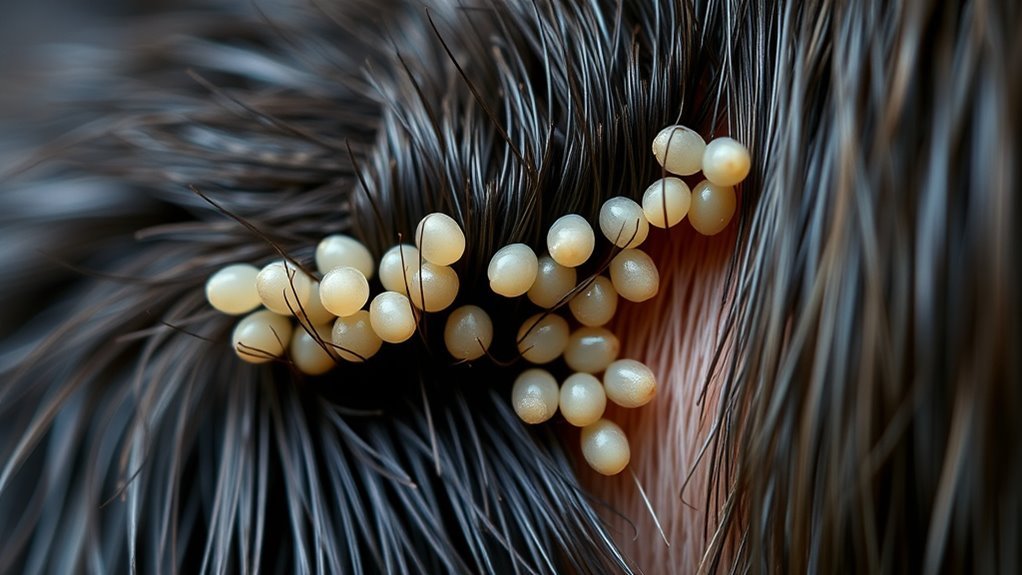
Once you’ve identified flea eggs on your dog, the next step is to understand where they tend to hide and how to remove them safely. Flea eggs often hide in warm, dense fur around the lower back, belly, and base of the tail—these are common flea hot spots.
Flea eggs hide in warm, dense fur by the lower back, belly, and tail base—key spots to check carefully.
For effective removal, follow these steps:
- Use a flea comb during grooming to catch eggs stuck in the fur.
- Conduct a thorough inspection, preferably with a magnifying glass, focusing on thick-haired areas.
- Remove eggs carefully from the comb and dispose of them to prevent reinfestation.
- Wash your dog’s bedding and clean the environment regularly to eliminate eggs that fall off during inspection and grooming.
This approach guarantees safe and effective flea egg removal while protecting your dog’s comfort. Just keep at it consistently, and you’ll help keep those pesky fleas away!
Frequently Asked Questions
What Kills Flea Eggs on Dogs Naturally?
You can kill flea eggs naturally by using diatomaceous earth on your dog’s coat, bathing them with neem shampoo, applying diluted essential oils like lavender, and keeping their bedding clean to prevent re-infestation effectively.
What Can Be Mistaken as Flea Eggs?
You might mistake dandruff, skin flakes, flea dirt, or dust for flea eggs. Remember, flea eggs are tiny, smooth, shiny, and oval, while these look larger, dull, irregular, or grainy. Keep a close eye!
What Month Will Fleas Go Away?
Fleas usually start to go away in late fall when temperatures drop below 50°F. You’ll notice fewer fleas by winter, but indoor heating can keep them active, so keep treating your dog and cleaning regularly to control them.
Does Dawn Dish Soap Wash Away Flea Eggs?
You can’t judge a book by its cover—Dawn dish soap won’t wash away flea eggs completely. It kills adults but leaves eggs behind, so you’ll need extra treatments to tackle those stubborn little pests effectively.
Conclusion
Just like tiny grains of sand scattered on a beach, flea eggs on your dog might seem harmless at first. But spotting these tiny white ovals early can save you from a bigger battle ahead.
Keep a close eye on your dog’s fur, especially around the neck and tail. These are common spots where flea eggs tend to hide.
Act quickly to remove any eggs you find. With patience and care, you’ll keep your furry friend flea-free and comfortable.
Remember, flea eggs on dogs are small but mighty when left unchecked. Regular grooming and inspection are key to stopping fleas before they multiply. By understanding what flea eggs look like and where to find them, you’re one step closer to protecting your pet from an infestation. Stay vigilant, and your dog will thank you with a happy, itch-free life!