When Do Chickens Start Laying Eggs After Winter: How to Guide
You can expect your hens to start laying eggs again in late winter or early spring when they get at least 12 hours of light daily. This increase in daylight resets their hormonal cycle and signals the start of egg production.
Look for signs like bright, swollen combs, squatting behavior, and interest in nesting boxes—these are clear indicators they’re ready to lay.
Proper lighting is key, but good nutrition and overall health also play important roles.
If you want your chickens to get back to laying after winter, supporting them through this shift is essential. Keep exploring to learn how to provide the right environment and care to encourage steady egg production.
Key Takeaways
- Chickens typically resume laying eggs in late winter or early spring as daylight exceeds 12 hours.
- Supplemental lighting mimicking longer days helps maintain egg production during short winter days.
- Physical maturity signs like bright combs and nesting behavior indicate readiness to lay again.
- Proper nutrition and good health support timely resumption of egg-laying after winter.
- Consistent exposure to 12-14 hours of light daily is crucial for restarting hens’ hormonal cycles.
How Daylight and Season Help Your Hens Start Laying Again
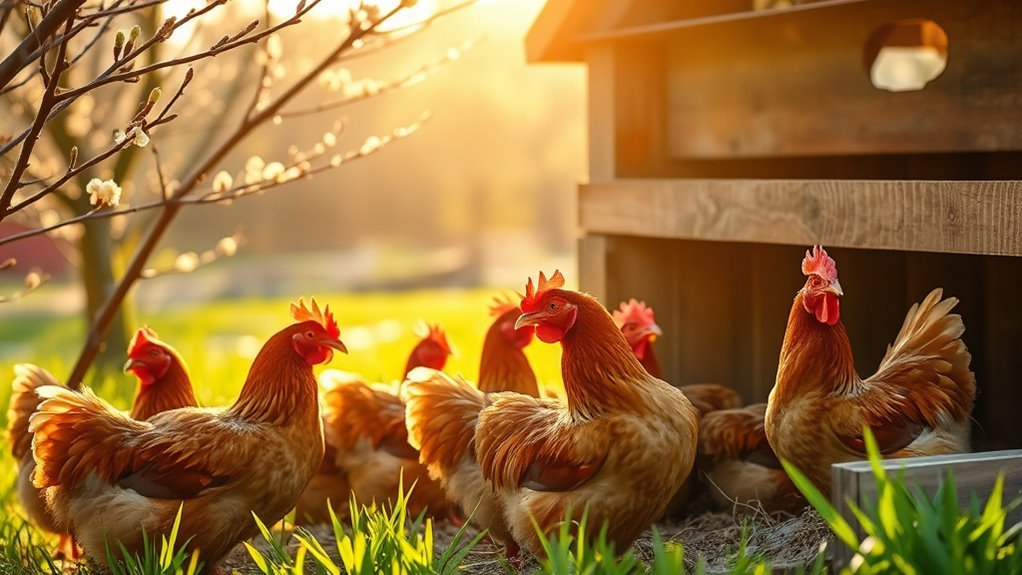
Although winter naturally shortens daylight hours, you can help your hens start laying again by ensuring they get at least 12 to 14 hours of light each day. During winter, natural sunlight declines, reducing light hours and slowing egg production.
To keep those eggs coming, supplemental lighting mimics longer summer days. This encourages hens to keep producing eggs despite the season.
The increase in daylight resets hens’ hormonal cycles, signaling their bodies to resume egg laying. Typically, hens start laying again when day length consistently exceeds 12 hours, usually in late winter or early spring.
How to Tell When Your Hens Are Ready to Lay Eggs
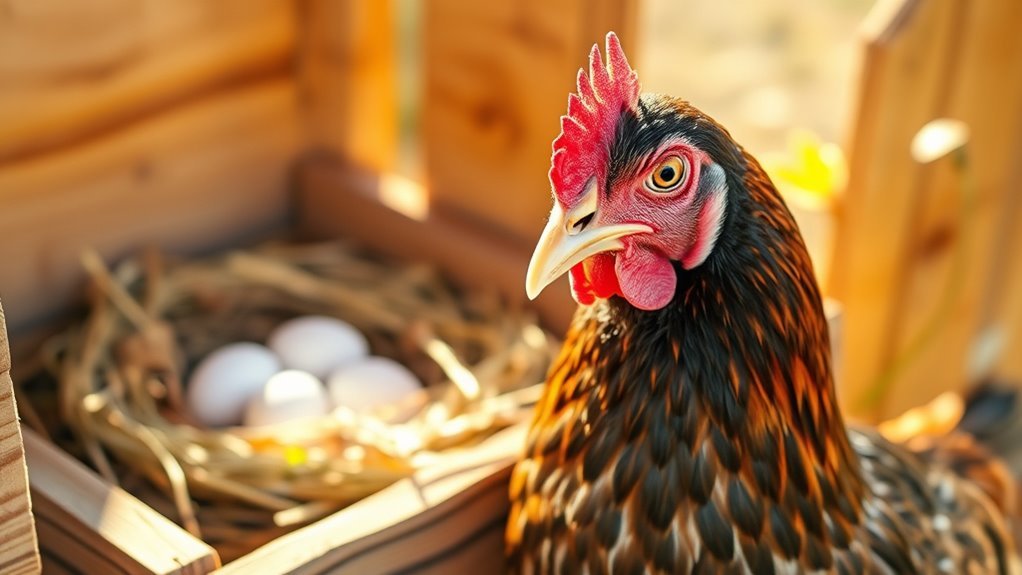
When your hens approach the age to start laying eggs, you’ll notice clear physical and behavioral changes that signal their readiness. Look for physical maturity indicators like bright, swollen combs and wattles.
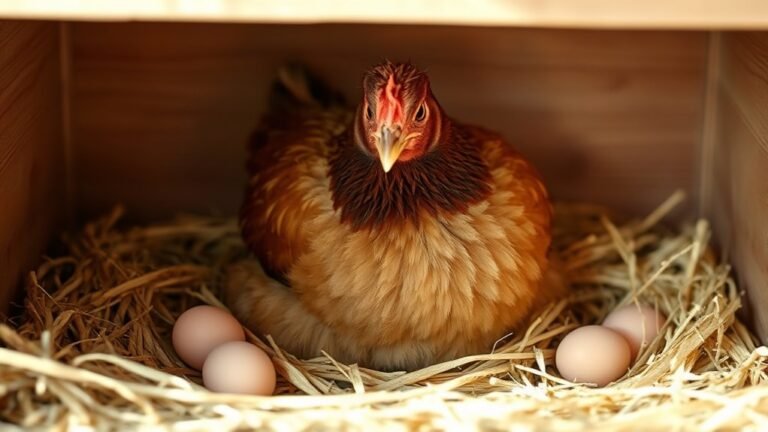
These signs hens are ready often appear alongside nesting behavior, such as squatting when you approach and increased interest in nesting boxes. Mature hens typically show consistent egg-laying behavior, including specific vocalizations and rooting around their nesting area.
Egg production usually begins within days or weeks after these signs of readiness become evident. Remember, proper light exposure, nutrition, and health influence how quickly hens start laying eggs.
Frequently Asked Questions
Do Chickens Stop Laying in October?
Yes, chickens often stop laying in October as daylight decreases. If you don’t provide supplemental light, you’ll notice their egg production drop because they naturally pause to molt or rest during shorter days.
How Do the Amish Keep Their Chickens Warm in the Winter?
Like wrapping a cozy blanket, the Amish insulate coops with straw, block drafts, and use heat lamps safely. You’ll see them provide fresh warm water, nutritious feed, and maximize sunlight to keep chickens snug all winter.
What Month Do Chickens Start Laying Eggs After Winter?
You’ll usually see your chickens start laying eggs again in February or March. Keep in mind, it varies by breed and conditions, so providing extra light and warmth can help them get back to laying sooner.
How to Get Chickens to Lay Eggs After Winter?
Don’t worry if your hens aren’t laying yet; you can get them back on track by gradually increasing daylight to 14-16 hours, feeding balanced nutrition, reducing stress, and providing a cozy nesting area.
Conclusion
As winter’s chill melts away and daylight stretches its golden fingers, your hens will awaken from their quiet slumber, ready to greet the world with fresh eggs. You’ll notice subtle signs—brighter eyes, gentle clucking—that whisper they’re prepared to lay again.
By tuning into these rhythms, you become the conductor of this natural symphony, guiding your flock from winter’s hush to the vibrant chorus of spring’s first eggs. Embrace this renewal—your patience will bloom.
Understanding when chickens start laying eggs after winter helps you care for your flock better. As the days grow longer and warmer, hens naturally respond by resuming egg production. So, keep an eye out for those early signs and provide plenty of light and good nutrition.
With a little care and attention, you’ll soon enjoy fresh eggs once again, marking the joyful return of your chickens’ laying season after winter.