How Many Eggs Will a Chicken Lay in Its Lifetime?
You can expect a healthy chicken to lay between 250 and 330 eggs in its lifetime. Most of these eggs are produced during the first two years when they hit their peak.
After that, egg production gradually slows down. Usually, it starts tapering off around six to seven years of age.
Factors like breed, environment, nutrition, and lighting play a big role in total egg output.
If you want to understand what influences these numbers and how to optimize egg laying, keep exploring. There’s a lot you can do to help your chickens lay more eggs and stay healthy longer.
Key Takeaways
- A chicken typically lays between 250 and 330 eggs over its lifetime under ideal conditions.
- Peak egg production happens during the first two years, especially around 30 weeks of age.
- After that, egg production slowly goes down, and many hens stop laying by the time they’re 6 or 7 years old.
- Things like breed, environment, nutrition, and health play a big role in how many eggs a chicken will lay overall.
- With the right lighting, diet, and care, you can help hens lay eggs for longer and boost their total egg count.
Lifetime Egg Production of Hens
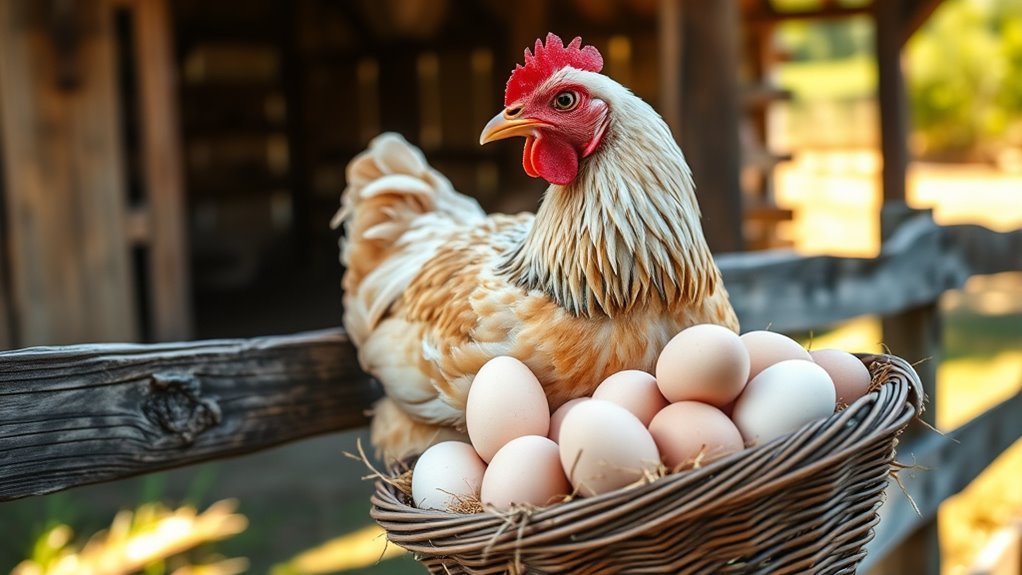
Although a hen’s egg production varies by breed and environment, you can expect a typical hen to lay between 250 and 330 eggs over her lifetime under ideal conditions. Most hens reach their peak production during the first two years of egg laying, when they produce the highest number of total eggs.
After this peak, you’ll notice a gradual decline in egg production as hens age. By the time hens are around 6 to 7 years old, many stop laying eggs entirely, though some may lay sporadically beyond that age.
The breed plays an essential role in lifetime egg production, with certain breeds producing more eggs under favorable conditions. Understanding these factors helps you anticipate how many eggs a hen will lay through her productive years.
Key Factors Affecting Hen Egg Production Over Time
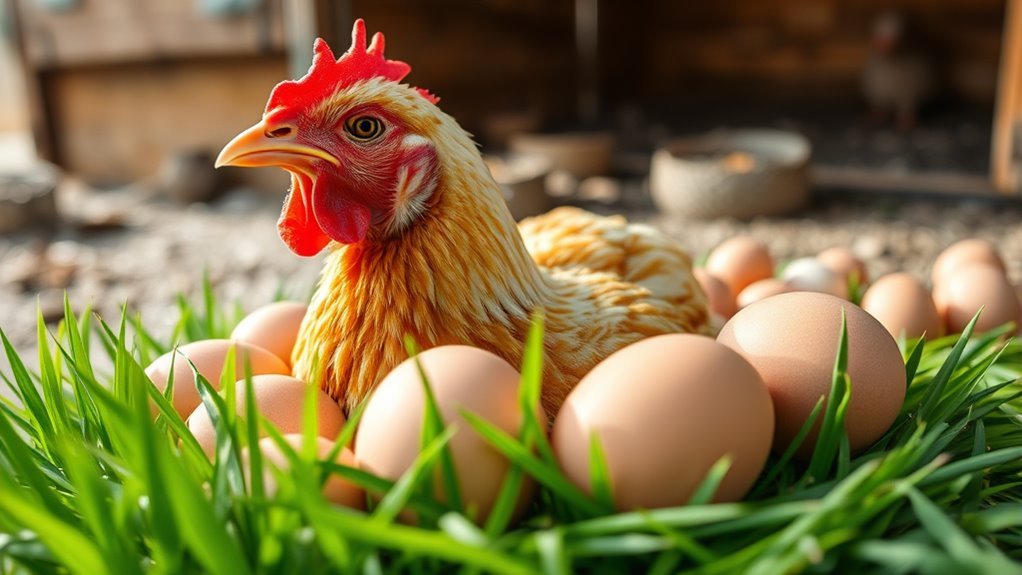
When you raise hens, you’ll notice their egg production changes over time due to several key factors. A hen’s laying cycle peaks around 30 weeks, then gradually declines throughout her layer lifespan.
Different breeds vary in how prolific layers they are and how long they maintain peak production. Environmental factors, especially light exposure, play a crucial role. Reduced daylight in winter lowers egg production, but artificial lighting can help sustain it.
Nutrition is essential—adequate calcium and protein keep hens laying consistently. Health issues and parasite infestations can severely reduce egg output and affect overall productivity.
Frequently Asked Questions
What Chickens Lay 365 Eggs a Year?
Black Australorp chickens lay 365 eggs a year, but it’s rare. You’ll need to provide ideal care, lighting, and nutrition to help them reach this record. Most hens lay slightly fewer eggs annually.
At What Age Do Chickens Stop Laying Eggs?
Chickens usually stop laying eggs around 6 to 7 years old, but you’ll see a significant drop after year three. Some hens keep laying sporadically into their teens, depending on breed and care you provide.
What Is the 90/10 Rule for Chicken?
Think of the 90/10 rule as a sprint and jog: you’ll get about 90% of a hen’s eggs in her first three years, then only 10% afterward, as her laying pace slows down considerably.
How Many Eggs Will 200 Chickens Lay a Day?
You can expect 200 chickens to lay about 57 to 80 eggs daily, depending on breed, age, and conditions. Keep their nutrition, lighting, and health optimized to maintain that steady, high egg production every day.
Conclusion
You might think a hen’s lifetime egg count is just a number, but it’s more like a delicate dance of nature and nurture. As you care for her, you’ll see how factors like breed, diet, and environment shape her egg-laying journey.
Each egg is a tiny triumph, a golden drop in a stream of life. So, cherish every clutch—because behind every shell lies a story waiting to be told.
Understanding how many eggs a chicken will lay in its lifetime isn’t just about numbers; it’s about appreciating the unique journey of each hen. From the moment she starts laying to the last egg, her lifetime egg production reflects a blend of genetics, care, and environment. So, whether you’re raising chickens for fresh eggs or simply curious, remember that every egg counts in the wonderful story of a hen’s life.