
What Does Flea Eggs Look Like on a Dog?
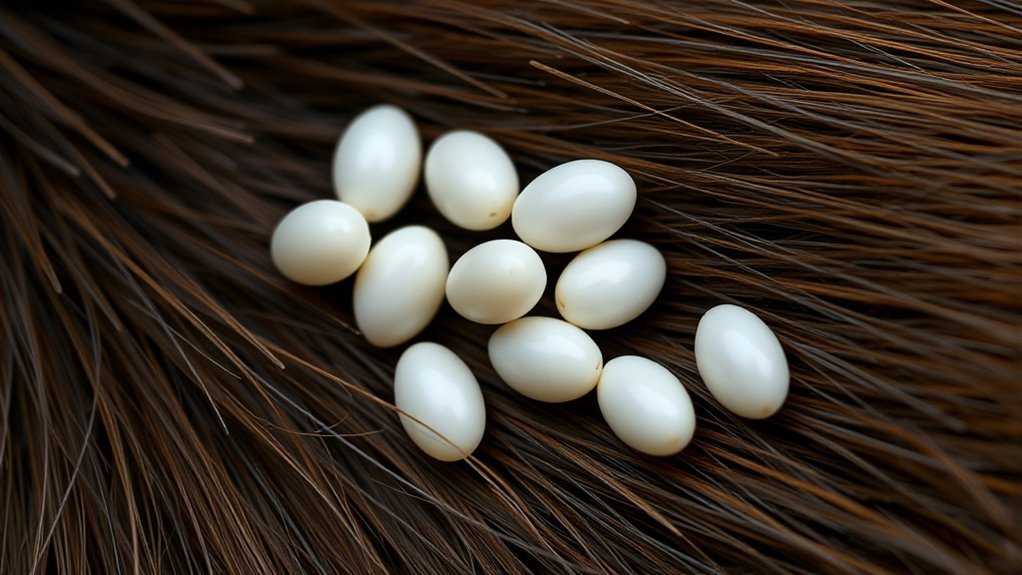
You’ll notice flea eggs on your dog as tiny, white, oval-shaped grains about 0.5 mm in size. They easily blend into their fur and often look like dandruff or dirt. Because they’re so small and light, spotting them can be pretty tricky.
These little eggs tend to hide in less dense fur areas like the belly, inner thighs, and base of the tail. That’s why you might miss them during a quick brush or pet.
Using a fine-tooth comb really helps catch these sneaky eggs.
Knowing where flea eggs cling on your dog can improve your chances of getting rid of them for good. There’s actually more to learn about why flea eggs are so hard to eliminate, but starting with where to look is a great first step!
Key Takeaways
- Flea eggs are tiny, white, oval-shaped grains about 0.5 mm in size that blend easily into a dog’s fur. They often look like dandruff or dirt, so spotting them can be tricky without a close look.
- You’ll usually find flea eggs in areas where the fur is less dense, like the belly, inner thighs, base of the tail, and behind the ears. These spots tend to be warmer and more protected, which fleas prefer.
- The eggs have a sticky texture that helps them cling tightly to the fur. This makes them hard to brush off, especially in those cozy little spots.
- To catch these tiny white specks, using a fine-tooth flea comb is super helpful. Parting the fur while grooming also makes it easier to spot the eggs hiding in there.
How To Spot Flea Eggs On Your Dog’s Fur
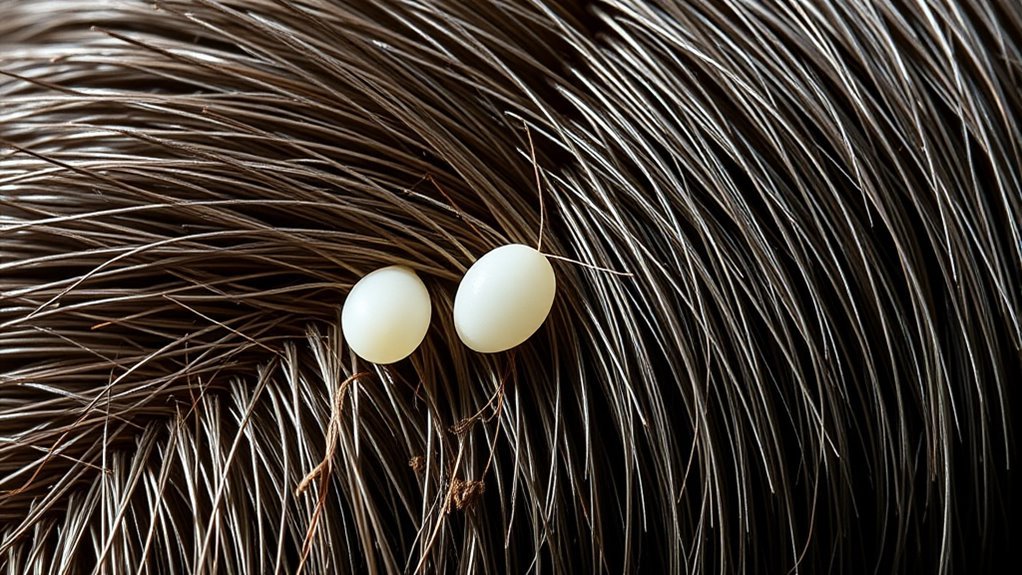
Although flea eggs are tiny and blend easily into your dog’s fur, you can spot them by focusing on less dense areas like the belly, inner thighs, and base of the tail.
Flea eggs on your dog’s fur appear as tiny white, oval-shaped grains about 0.5 mm in size. That makes them pretty hard to see without close inspection.
Flea eggs are tiny, white, oval grains about 0.5 mm, making them hard to spot without close inspection.
During grooming, use a fine-tooth flea comb to sift through these fur areas carefully. The comb helps you find flea eggs by catching white specks that might otherwise go unnoticed because of their small size and color.
To inspect thoroughly, part the fur and look closely for these white specks. Regular grooming with a flea comb really ups your chances of spotting flea eggs early before they spread.
Where Flea Eggs Hide On Your Dog: And Why They’re Hard To Remove
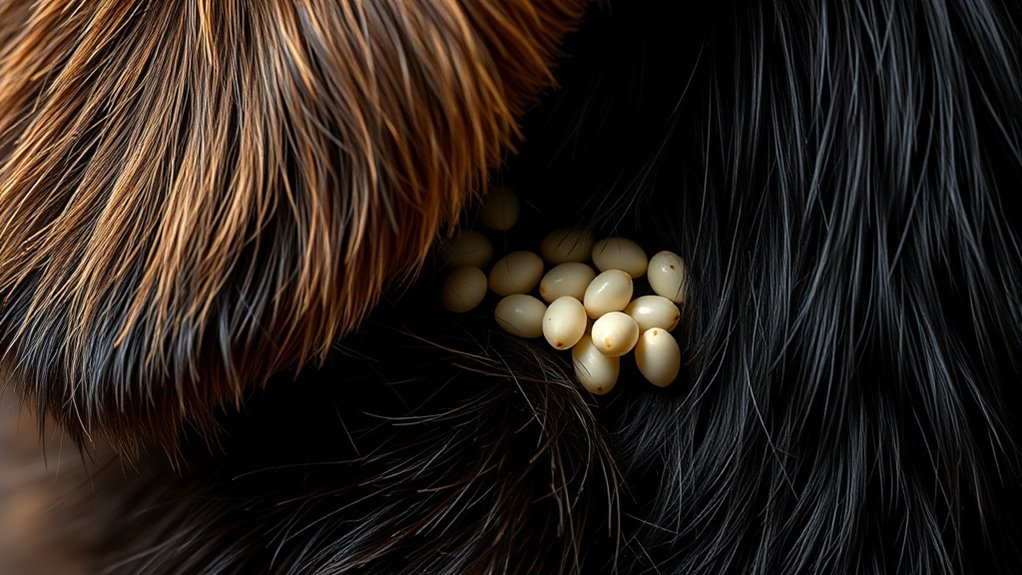
Because flea eggs cling tightly to your dog’s fur and often settle in warm, protected areas like the base of the tail, behind the ears, and skin folds, they can be incredibly hard to spot and remove.
These tiny white grains hide on your dog’s less dense fur areas, such as the belly and inner thighs. Their small size and smooth surface make them look a lot like dandruff or dirt.
Flea eggs have a sticky texture that causes them to stick temporarily to fur, which makes manual removal tricky. Plus, they often fall off onto bedding or carpets, so getting rid of them directly can be tough.
Knowing where flea eggs tend to hide on your dog helps you focus your inspection and treatment efforts better. That way, you can tackle these persistent pests more effectively, even though they’re pretty sneaky.
Frequently Asked Questions
What Will Kill Flea Eggs on a Dog?
You’ll kill flea eggs on your dog using vet-approved spot-on treatments, oral meds, and insect growth regulators. Regularly comb your dog, wash bedding, and vacuum surroundings to prevent re-infestation and stop flea eggs from hatching.
What Month Will Fleas Go Away?
Fleas vanish like leaves in late fall, usually by November when temperatures drop below 50°F. If you live somewhere mild, they might stick around year-round, so keep up treatments to keep your dog flea-free.
How Do You Know if Your Dog Has Flea Eggs?
You’ll know your dog has flea eggs if you spot tiny white specks in less dense fur areas or on bedding. Use a flea comb during grooming to catch these eggs and prevent a bigger infestation quickly.
Are the Black Dots on My Dog Flea Eggs?
No, those black dots aren’t flea eggs—they’re flea dirt. Flea eggs are tiny, white, and oval-shaped. You can check by dampening the area; flea dirt will leave a reddish-brown stain on a white cloth.
Conclusion
Think of flea eggs on your dog like tiny seeds scattered in a vast garden of fur. Though small and easy to miss, they’re the start of a stubborn weed patch that can quickly take over.
By spotting and removing these hidden eggs early, you’re not just tidying up—you’re protecting your furry friend’s comfort and health.
Stay vigilant, and keep that garden flea-free, so your dog can enjoy a happy, itch-free life.
Remember, flea eggs on a dog are tiny and often white, blending right into their coat. Catching them early means stopping fleas before they hatch and cause more problems. Regular checks and proper treatment help keep your dog safe from flea infestations and the irritation they bring. So, always be on the lookout for those tiny flea eggs on your dog’s fur—it’s the best way to ensure your dog stays healthy, comfortable, and flea-free.