
How Do You Incubate Chicken Eggs at the Perfect Temperature?
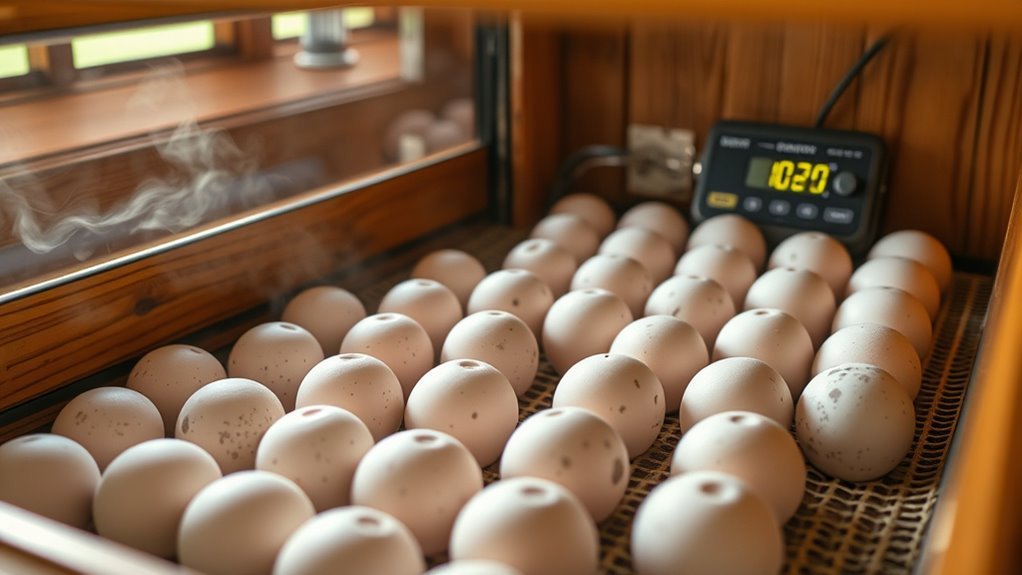
To incubate chicken eggs at the perfect temperature, keep your incubator steady at about 99.5°F (37.5°C). This temperature is key for healthy embryo development. Use a reliable and calibrated thermometer to monitor regularly, making small adjustments as needed.
Avoid letting temperatures rise above 103°F (39.4°C) to protect the embryos. It’s also important to turn the eggs several times daily. This helps the embryos develop evenly and increases your hatch success.
Don’t forget to maintain proper humidity levels throughout the process. Paying attention to these details will really boost your chances of a successful hatch.
There’s more useful information out there to help you master incubating chicken eggs, so keep learning and tweaking as you go!
Key Takeaways
- Maintain incubator temperature around 99.5°F (37.5°C) for optimal egg incubation. Use a reliable thermometer and calibrate it regularly to keep the temperature accurate within 0.2°F (0.1°C).
- If you’re using a still air incubator, set the temperature near 101.5°F (38.6°C) at the top of the eggs. This helps make sure the eggs get the right heat they need.
- Avoid letting the temperature go above 103°F (39.4°C) because that can damage the embryos. It’s important to keep the temperature steady.
- Keep an eye on the temperature consistently, and make small adjustments when needed. That way, you’ll help the eggs develop perfectly throughout incubation.
Setting and Maintaining Ideal Temperature for Chicken Egg Incubation
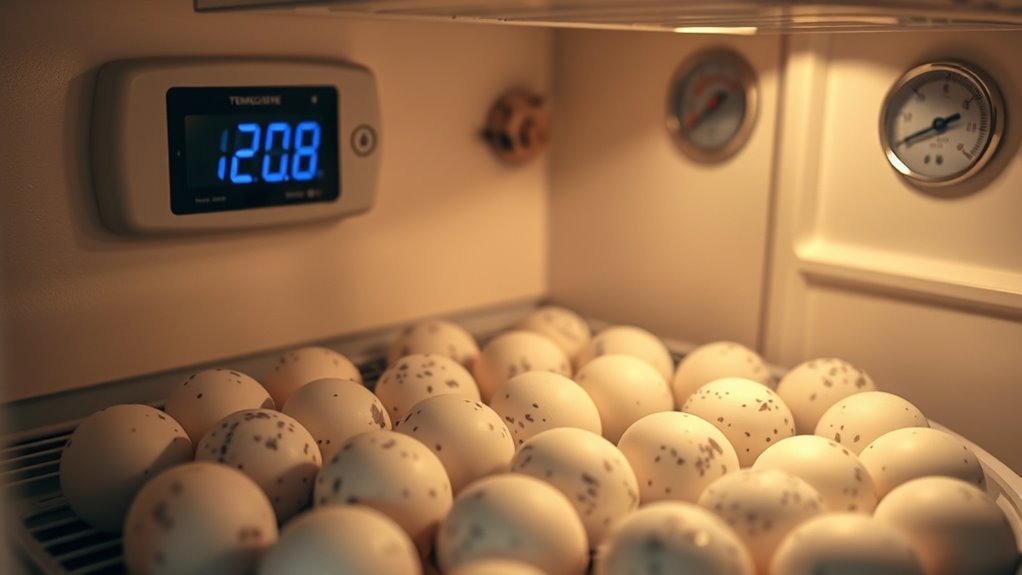
Although maintaining the perfect temperature can be challenging, you’ll need to keep your incubator steady at about 99.5°F (37.5°C) for the best results. When incubating chicken eggs, consistent temperature stability is crucial to maximize hatch rate.
Use a reliable thermometer to monitor the incubator temperature regularly and perform calibration to guarantee readings stay accurate within 0.2°F (0.1°C). If you’re using a still air incubator, set the temperature slightly higher—around 101.5°F (38.6°C)—measuring at the top of the eggs for precision.
Avoid temperature fluctuations above 103°F (39.4°C), as these can harm embryo development or cause death. Effective temperature control means making minor adjustments based on frequent checks.
Keep the ideal temperature steady throughout the incubation period to give your eggs the best chance at hatching successfully. It’s all about paying close attention and tweaking things as needed.
Managing Humidity and Turning Eggs for Successful Incubation
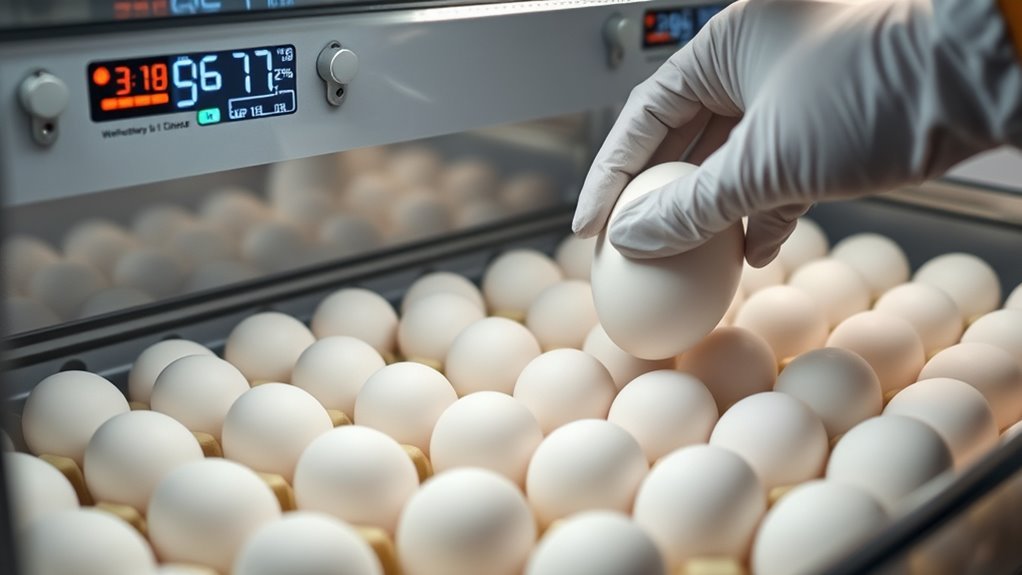
Maintaining the right temperature sets the foundation, but managing humidity and turning your eggs regularly also plays an essential role in successful incubation. You should turn eggs at least 3 to 5 times daily to prevent the embryo from sticking and ensure proper development.
Use a hygrometer to monitor humidity, keeping it around 50-55% during days 1-17. You can adjust moisture levels by adding water sources or damp materials to keep this balance steady.
During days 18-21, increase humidity to about 70% to support the hatching process. Also, stop turning the eggs to allow chicks to hatch safely.
Always position eggs with the large end up and mark them for consistent turning. Proper humidity and turning eggs are really vital for a healthy hatch and successful incubation.
Frequently Asked Questions
What Common Mistakes Ruin Egg Incubation?
You ruin egg incubation by letting temperatures stray too high or low, opening the incubator too often, skipping regular egg turning, ignoring humidity levels, and failing to calibrate your thermometer. Stick to consistent care for success.
How Cold Is Too Cold to Incubate Eggs?
You wouldn’t incubate eggs in a Victorian icebox—temperatures below 98°F (36.7°C) are too cold and can kill embryos or stunt growth. Keep it steady above 99°F to guarantee your chicks hatch healthy and strong.
How Many Times Should an Egg Be Turned a Day?
You should turn eggs about five times a day to maximize hatch rates. Be gentle, rotating them side to side on their long axis. Stop turning during the last three days before hatching to help chicks position properly.
What Temperature Kills Hatching Eggs?
You don’t want eggs exposed to scorching heat above 104°F, where life instantly perishes, or even 102°F for long, which slowly kills or deforms embryos. Keep temps steady below 101°F to protect fragile life inside.
Conclusion
You might worry that maintaining the perfect temperature feels too complicated, but it’s easier than you think. By setting your incubator to around 99.5°F and monitoring it regularly, you’ll create the ideal environment for your chicken eggs.
Remember to manage humidity and turn the eggs daily to boost hatch rates. These small steps make a big difference in the success of your incubation process.
With a little attention and care, you’ll be amazed at how successfully you can incubate healthy chicks right at home! Keeping the temperature steady, managing humidity, and turning the eggs are key to perfect incubation.
By following these simple tips, your chicken eggs have the best chance to hatch strong and healthy. Incubating chicken eggs at the perfect temperature isn’t as hard as it seems—it just takes a bit of patience and regular care.