

How to Tell If an Egg Is Fertile Before Incubation
You can tell if an egg is fertile before incubation by candling it in a dark room with a bright light. This method helps you see inside the shell without breaking it.
Look for a dark spot surrounded by blood vessels or a white ring—these signs show early embryo development.
If you crack the egg, a fertile one has a germinal disc with a bullseye pattern and visible blood vessels. Infertile eggs, on the other hand, lack these features and usually appear clear or solid white.
Keep exploring to discover more ways to identify egg fertility and get a better understanding of how to spot fertile eggs before incubation. It’s a handy skill whether you’re hatching chicks or just curious about egg development!
Key Takeaways
- Candle eggs in a dark room using a bright light to spot a dark embryo and blood vessels inside the shell.
- Check for a white ring around the embryo during candling, which shows early internal development.
- Try to do candling between days 4 to 7 for the most accurate fertility check before incubation.
- Fertile eggs will show a dark spot and a network of blood vessels.
- On the other hand, infertile eggs usually stay clear or look translucent.
- You can also crack eggs open to look at the germinal disc.
- If you see a bullseye pattern and blood vessels, that’s a good sign the egg is fertile.
How to Candle Eggs to Spot Fertility Before Incubation
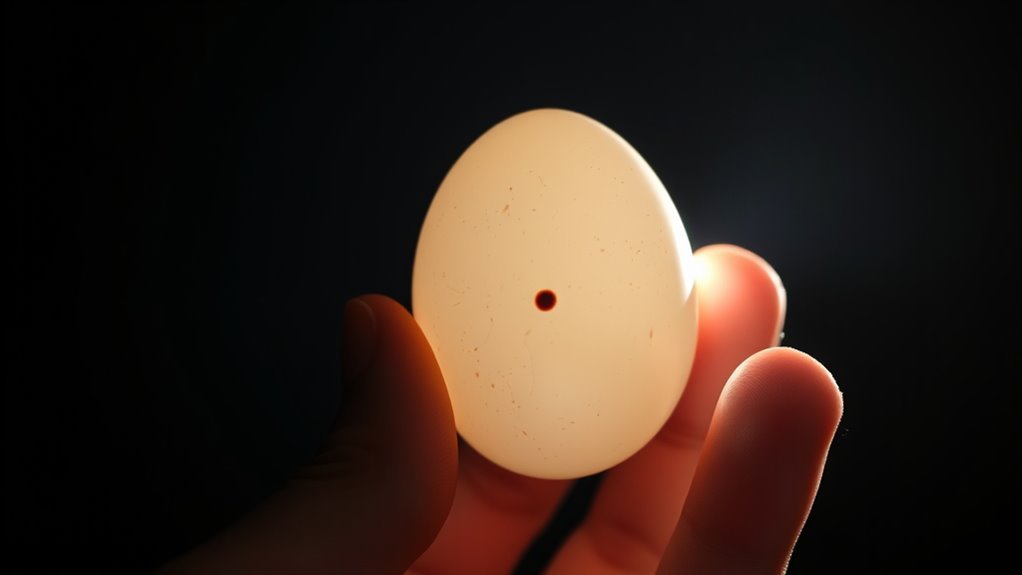
Although candling is commonly done during incubation, you can also use it before to spot fertile eggs. To candle, hold the egg in a dark room and shine a bright light through the shell.
Fertile eggs reveal a dark spot—the embryo—and a network of blood vessels branching out. You might also notice a white ring surrounding the embryo, indicating internal development.
Infertile eggs typically look clear or only show the yolk without these features. Candling before incubating helps you select viable eggs early, saving time and resources.
While candling is most effective between days 4 and 7 of incubation, using it beforehand gives you a preliminary look at fertility. This simple technique guarantees you focus on eggs with potential for healthy embryo growth.
How to Identify Fertile Eggs by Cracking Them Open

When you crack open an egg, you can quickly tell if it’s fertile by checking out the germinal disc on the yolk. In a fertilized egg, the germinal disc looks like a white spot with a bullseye pattern. This pattern shows cell division and embryo development.
If you notice blood vessels or a blood ring around the disc, that means fertilization has just started. On the other hand, an infertile egg will have a solid white spot without any signs of cell division or blood vessels.
Frequently Asked Questions
What Does a Fertilized Egg Look Like Before Incubation?
You’ll see a small, distinct white spot called the germinal disc on the yolk’s surface. In fertilized eggs, it’s larger and more defined, sometimes showing a bullseye pattern, indicating early cell development before incubation.
What Are Signs an Egg Won’t Hatch?
Don’t beat around the bush—if you see no veins, movement, or development after candling, or a blood ring during incubation, that egg won’t hatch. Cracks showing empty yolks also mean it’s a lost cause.
What Are the Signs of a Bad Egg When Candling?
When candling, you’ll spot a bad egg if you see no blood vessels, a clear interior, a blood ring, or cloudy contents. These signs mean the embryo’s dead or the egg’s spoiled, so you shouldn’t incubate it.
How Do Farmers Know if an Egg Is Fertilised?
Like finding a hidden treasure, you’ll spot a bullseye-shaped germinal disc on the yolk or see blood vessels when candling. Watching hens mate also clues you in that those eggs are likely fertilized.
Conclusion
So, you want to be sure your egg’s fertile before you commit to incubation? Just candle it or crack it open—because nothing says “exciting hobby” like peering into tiny orbs of potential life or smashing them to pieces.
Ironically, the more you want a chick, the more you’ll hesitate to break that shell. But hey, if you enjoy a little suspense and a bit of egg-citement, these methods have you covered!
Candle your egg by holding it up to a bright light in a dark room. Fertile eggs will show veins or a dark spot inside, which is the developing embryo. If you’re brave enough, cracking it open lets you see the embryo directly, but that’s a one-way ticket for that egg!
In short, to tell if an egg is fertile before incubation, candling is your go-to non-invasive method. It’s a simple, effective way to peek inside without damaging the egg, giving you peace of mind before you start incubating. Cracking the egg open confirms fertility for sure but sacrifices the egg. So, if you want to maximize your chances of hatching chicks, candling early on is your best bet to spot fertile eggs and plan your incubation accordingly.