
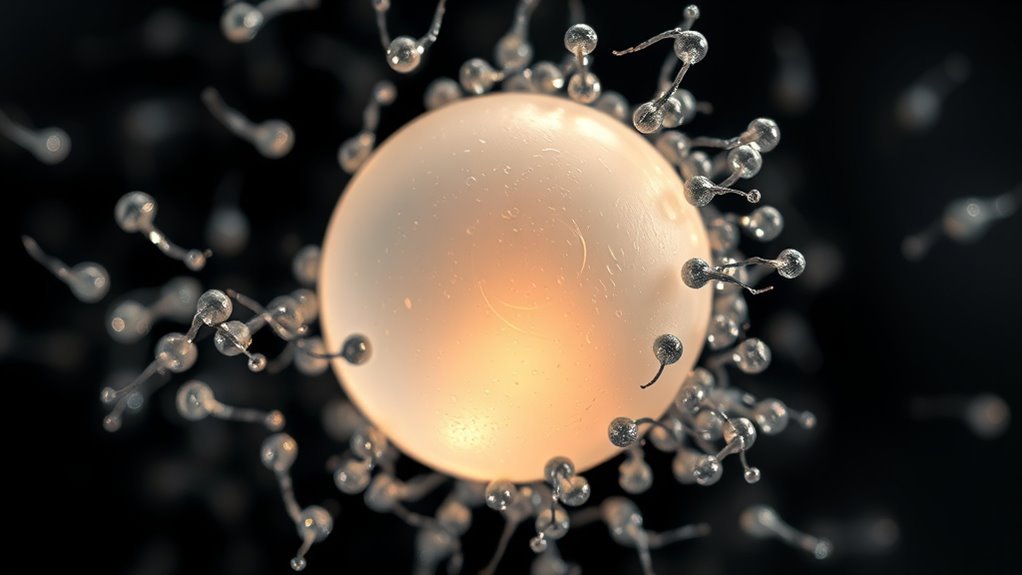
What Mechanism Does the Egg Use to Choose Sperm?
You use chemical signals, like progesterone, released by the egg to attract and guide sperm. These signals create a chemical map that influences sperm motility and swimming direction.
This helps select the most responsive and compatible sperm.
This selective attraction boosts your chances of successful fertilization by ensuring only certain sperm reach the egg.
Understanding this sophisticated interaction reveals how eggs subtly control reproductive success and sperm choice in remarkable ways.
It’s amazing how the egg plays an active role in choosing the best sperm, not just waiting passively.
Key Takeaways
- Eggs release unique chemical signals, such as progesterone, that selectively attract sperm through follicular fluid. These signals aren’t random; they play a key role in guiding the sperm.
- Chemo-attractants help sperm move in the right direction and boost their motility. This means sperm can swim more purposefully toward the egg.
- When sperm detect these chemical cues, they respond by speeding up and swimming straighter. It’s like the egg is giving them a GPS signal to follow.
- The variations in these chemical signals allow eggs to exercise what’s called cryptic female choice. In other words, eggs can influence which sperm get attracted and get a chance to fertilize them.
- This whole chemical signaling process improves fertilization success. By selectively facilitating sperm-egg interactions, the egg ensures the best possible match.
How Eggs Use Chemical Signals to Attract and Select Sperm
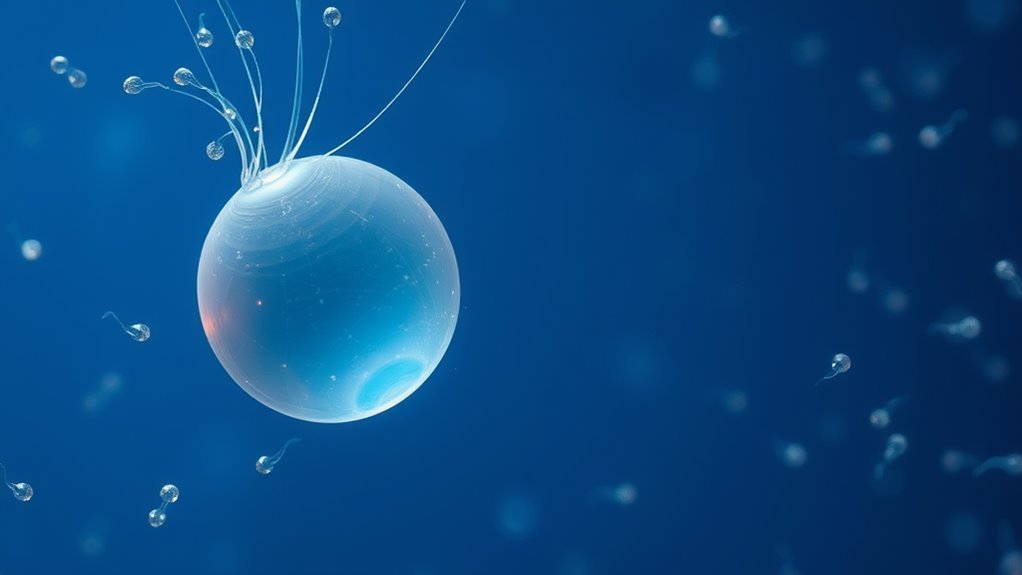
While you might think fertilization is a random process, eggs actually play an active role by releasing chemical signals like progesterone to guide sperm toward them. These chemo-attractants are secreted into the follicular fluid surrounding the egg, creating a chemical communication network within the reproductive system.
This signaling isn’t uniform; different eggs emit distinct follicular fluid signals that influence sperm attraction differently. This selective chemical interaction reflects cryptic female choice, where eggs subtly control which sperm succeed.
By varying chemo-attractants, eggs can attract or repel specific sperm, affecting sperm response such as motility and swimming direction. This dynamic ensures that fertilization isn’t just about sperm competition but also about female choice through chemical signaling.
In the end, it’s a clever way to boost reproductive success using sophisticated sperm attraction mechanisms. So, fertilization is way more than just luck—it’s a finely tuned biological dance between eggs and sperm.
How Sperm Respond to Egg Chemical Signals During Fertilization
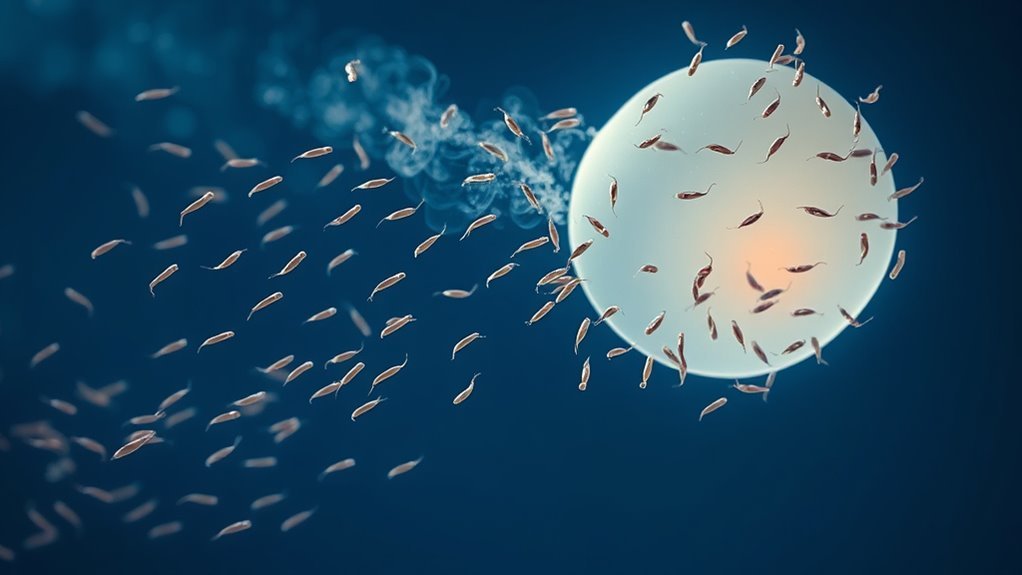
Eggs don’t just send out chemical signals—they also shape how sperm behave in response. When you encounter chemoattractants in follicular fluid, your sperm motility changes, swimming straighter and faster toward the egg through sperm chemotaxis.
These chemical signals guide you, enhancing sperm-egg interaction and increasing fertilization chances. Notably, sperm response varies with follicular fluid from different females, influencing sperm selection and reproductive signaling. This selective behavior means some sperm are more compatible, improving fertilization success.
| Chemical Signals | Sperm Behavior | Outcome |
|---|---|---|
| Chemoattractants | Increase motility | Directed movement |
| Follicular fluid | Change swimming | Closer accumulation |
| Progesterone-like | Straight trajectory | Enhanced fertilization |
| Variable signals | Differential response | Sperm selection |
| Reproductive cues | Chemotaxis | Successful fertilization |
Frequently Asked Questions
How Does the Egg Choose What Sperm?
You’ll find the egg chooses sperm by releasing chemical signals that attract and test them, letting compatible sperm reach it while rejecting others, ensuring fertilization favors the best genetic match through molecular interactions.
Why Can’t Two Sperm Fertilize an Egg?
You can’t have two sperm fertilize one egg because once the first sperm fuses, the egg quickly blocks others by hardening its outer layer, preventing multiple fertilizations and ensuring normal embryo development without abnormalities.
Is It Hard for Sperm to Penetrate the Egg?
You’ll find sperm face a tough but fair challenge getting through the egg’s protective gate. The egg’s layers and chemical signals make sure only the strongest swimmers earn their spot for fertilization.
Why Does the Female Body Reject Sperm?
Your body rejects sperm to guarantee only the healthiest and most compatible ones fertilize the egg. This selective process boosts your chances of a successful pregnancy and a strong, genetically fit offspring.
Conclusion
Think of the egg as a lighthouse, casting out chemical signals like beams of light through the dark sea. These signals guide the sperm safely to shore.
This delicate dance ensures that only the strongest and most compatible sperm reach their destination. The egg doesn’t just wait passively; it actively chooses, using these signals as a gatekeeper.
In this intimate moment of life’s beginning, nature’s silent conversation shapes the future with precision and hope. The mechanism the egg uses to choose sperm is a remarkable example of biological selectivity.
By releasing specific chemical cues, the egg influences which sperm can navigate toward it, effectively selecting the best candidate to fertilize and start new life. This process highlights how the egg’s active role in fertilization is critical for ensuring genetic compatibility and successful reproduction. Understanding this mechanism reveals the amazing coordination behind conception and the early stages of life.