

How to Check If a Chicken Egg Is Fertile in 3 Easy Steps
To check if a chicken egg is fertile in 3 easy steps, start by candling the egg in a dark room with a bright light between days 7 and 10 of incubation. Candling helps you see inside the egg without cracking it open.
Look closely for dark veins and a small moving embryo, which confirm fertility and healthy development.
Next, crack a fresh egg to examine the yolk. You’ll want to spot a white bulls-eye called the blastoderm—a clear sign the egg has been fertilized.
This step gives you a quick way to tell if the egg was fertile even before incubation.
Finally, remove any eggs showing no signs of growth. This boosts your chances of a successful hatch since non-fertile eggs won’t develop.
Keep exploring to uncover more helpful tips that make checking chicken eggs simple and effective!
Key Takeaways
- Hold the egg gently against a bright light in a dark room to look for visible veins between days 7 to 10 of incubation.
- You’re looking for a network of dark veins and a small moving embryo inside the egg to confirm fertility.
- Crack the egg open and check the yolk for a white bulls-eye called the blastoderm, which shows fertilization has occurred.
- Infertile eggs usually appear clear under the light or have a uniform yolk without a blastoderm or veins.
- It’s a good idea to regularly candle eggs during incubation.
- This helps you spot the viable ones and remove any infertile or non-developing eggs quickly.
How to Candle Eggs to Identify Fertility
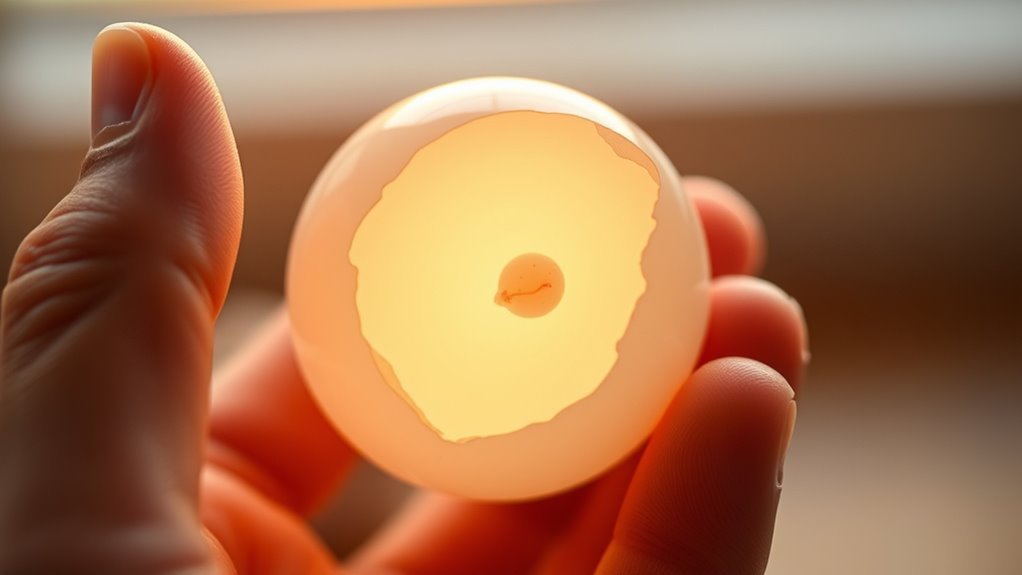
When you candle eggs, you shine a bright light through them to spot developing embryos and blood vessels. To do this effectively, work in a dark room and use a specialized egg candler or a strong flashlight.
Hold the egg gently against the light source, and carefully inspect its interior. Around days 7 to 10 of incubation, fertile eggs reveal a network of dark veins and a small, moving embryo.
Gently hold the egg to light; by days 7 to 10, veins and a moving embryo become visible.
These veins spread out clearly, indicating healthy development. Infertile eggs, by contrast, usually appear clear or only show the yolk without any veins.
Regular candling helps you monitor embryo progress and confirm which eggs are viable for hatching. That way, you can focus your care on fertile eggs that stand the best chance of developing fully.
Checking Egg Fertility by Examining the Yolk
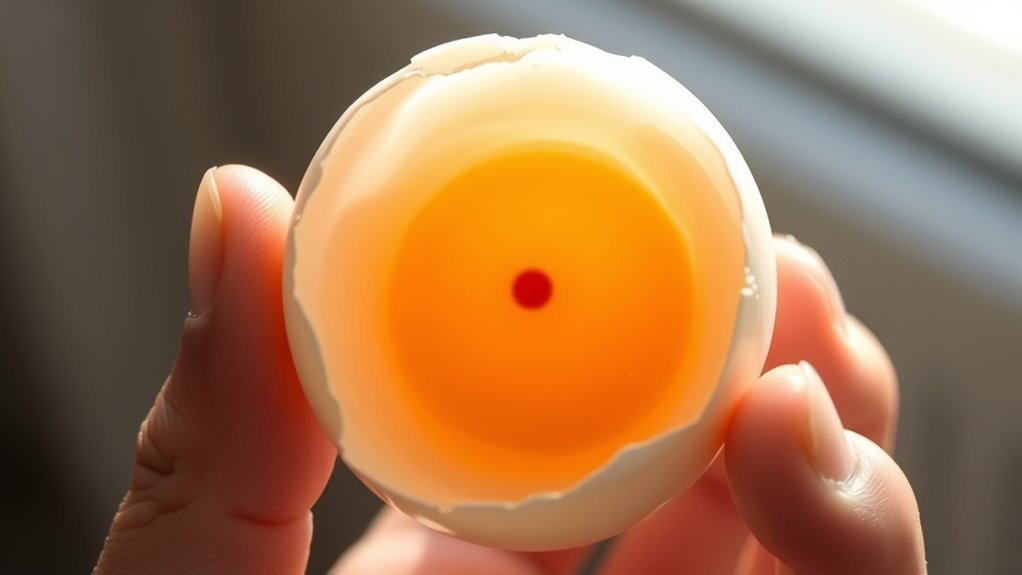
Although candling is a common method to check egg fertility, you can also crack the egg open and examine the yolk directly. When you do this, look for the blastoderm—a small white bulls-eye on the yolk.
This bulls-eye confirms you have a fertilized egg. A clear white ring typically surrounds the blastoderm, distinguishing it from an unfertilized egg, which has a uniform yolk without any ring. This visual cue helps you assess egg fertility with confidence.
Keep in mind that the blastoderm appears best when the egg is fresh and the yolk is centered. Identifying the blastoderm means the egg has potential for development during incubation, although not all fertilized eggs will hatch.
This method offers a straightforward way to verify if your eggs are fertilized. It’s pretty simple once you know what to look for!
How to Spot and Remove Eggs That Won’t Hatch

Since not all fertilized eggs develop properly, you need to regularly check your eggs during incubation and remove any that show no signs of growth. Use candling between days 7 and 14 to spot eggs without visible veins, embryo movement, or any signs of development.
These eggs won’t hatch and should be carefully discarded to avoid spoilage and odor in your incubator. Handle eggs gently during candling to protect any viable embryos.
Look out for eggs that remain unchanged across multiple candling sessions, signaling no embryo growth.
Also, watch for eggs that appear dark or cloudy inside, indicating non-viability. And if you see no veins or embryo movement, that’s a clear sign there’s no development.
Frequently Asked Questions
How to Check Fertile Chicken Eggs?
You crack the egg to spot a white bulls-eye on the yolk, then candle it in a dark room around days 4 to 7. If you see veins or movement, the egg’s fertile and developing well.
How to Check if an Egg Is Fertile at Home?
To tell if an egg’s truly fertile, take it to a dark room, shine a strong light, and spot spreading spiderweb-like veins. Or crack it carefully and check for a tiny white bulls-eye on the yolk.
How to Tell if Chicken Egg Is Fertilized Without?
You can tell if a chicken egg is fertilized by candling it in a dark room. Shine a bright light through the egg and look for veins or a dark spot, indicating embryo development inside.
How Soon Can You Tell if a Chicken Egg Is Fertile?
You can tell if a chicken egg is fertile about 7 to 10 days after incubation starts. By candling, you’ll see veins and an embryo spot if it’s fertile, so check then for clear signs of development.
Conclusion
So, if you’re enthusiastic to hatch a chick, don’t just guess—candle those eggs and check the yolk like a pro. Otherwise, you might be nurturing a future omelet instead of a fluffy friend.
Spotting and removing infertile eggs saves you time and heartache, even if it feels like you’re playing detective with a dozen little mysteries. Remember, knowing the difference between a potential chick and breakfast is half the battle won!
By learning how to check if a chicken egg is fertile, you can ensure your efforts are focused on eggs that will actually hatch. Candling is a simple, effective way to see inside the egg without cracking it open. So, before you get too excited, take a moment to candle those eggs and give your flock the best chance to grow. This small step makes all the difference in successful hatching!