
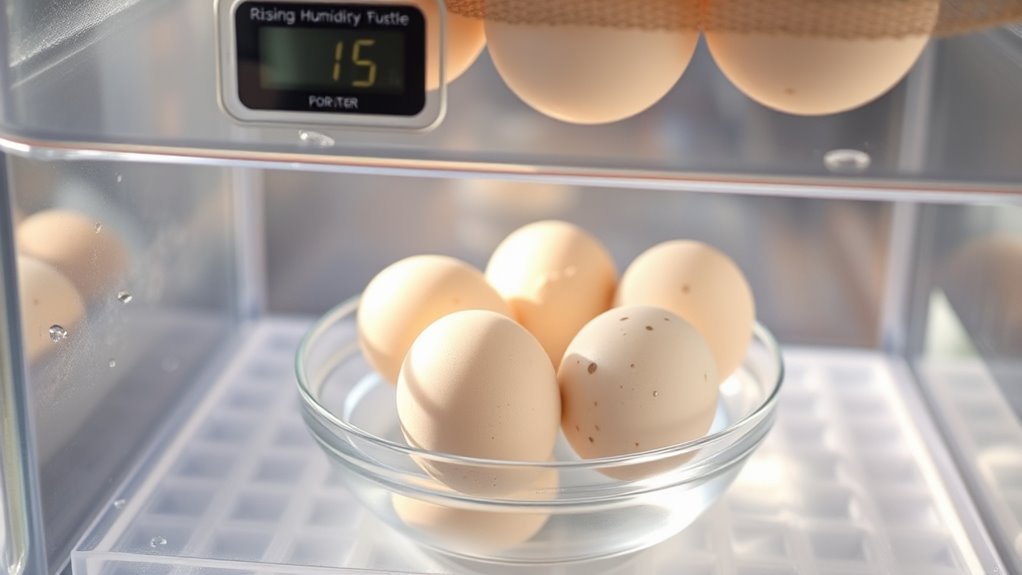
How to Increase Humidity in an Egg Incubator
To increase humidity in your egg incubator, start by filling all water channels and adding shallow trays. This helps maximize the water surface area for evaporation, which is key to boosting humidity levels.
You can also place damp cloths inside the incubator—just make sure they stay moist but not dripping wet.
Adjusting the vents is another way to control moisture. Opening them a bit will release excess humidity, while closing them helps retain it.
It’s important to keep an eye on water levels and cloth moisture, checking frequently to maintain consistency.
By combining these simple steps, you’ll create a steady, humid environment that’s perfect for successful hatching.
Want to get the best results? There are easy ways to optimize these methods and keep your incubator just right.
Key Takeaways
- Fill all water channels and add shallow trays to increase the exposed water surface area for natural evaporation.
- Place damp cloths inside the incubator, making sure they are moist but not dripping. Remember to re-wet them regularly.
- Keep water containers filled and sponges or towels moist. This helps maintain continuous evaporation and stable humidity.
- Adjust incubator vents to balance humidity. You can partially open them to release excess moisture or close them to keep it in.
- Use a hygrometer to monitor humidity levels frequently. Combining several methods usually gives you the best control.
How to Add and Maximize Water Surfaces to Boost Incubator Humidity
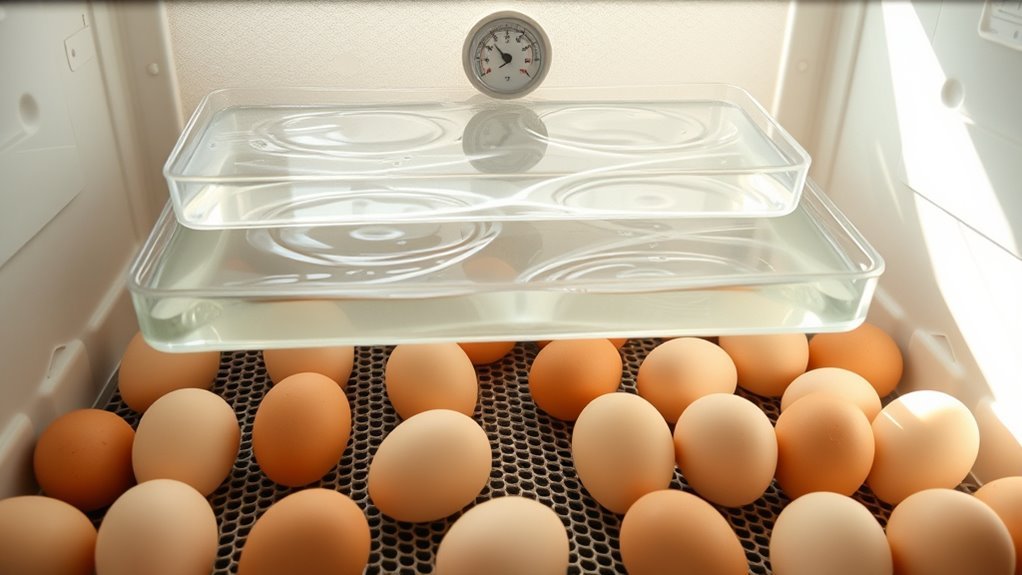
When you increase the exposed surface area of water inside your incubator, you considerably boost humidity through faster evaporation. To increase humidity effectively, fill all water channels and add shallow trays or water containers to maximize water surfaces.
Using moist surfaces like wet sponges or towels placed in water compartments also enhances evaporation. Just make sure to keep these surfaces clean and fully exposed without obstructions to maintain consistent humidity levels.
Spreading damp materials around the incubator further expands the surface area, promoting steady moisture release. Although a humidity pump can help, optimizing natural evaporation by increasing water surface area is key.
Regularly monitor humidity levels and adjust water surfaces as needed to create the perfect environment for your eggs. This way, you can ensure successful incubation every time.
How to Use Damp Cloths and Adjust Vents to Keep Incubator Humidity Stable
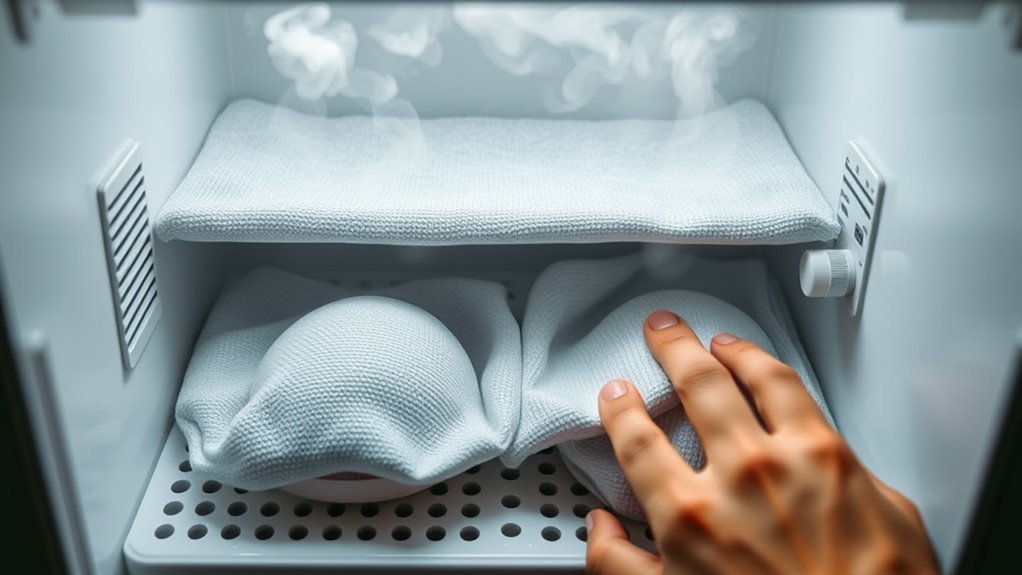
Adding damp cloths inside your incubator builds on maximizing water surfaces by providing extra moisture for evaporation, which helps boost humidity levels. Place a damp cloth—not dripping wet—inside to increase water retention and promote steady evaporation.
Keep the cloth moist by regularly re-wetting it to maintain consistent humidity. Use a hygrometer to monitor humidity levels closely, so you can fine-tune your approach.
Adjusting vents plays an essential role in moisture control: open incubator vents slightly to let excess humidity escape or close them partially to retain moisture. Balancing these adjustments ensures a stable incubator environment.
Frequently Asked Questions
How Do I Get 50% Humidity in My Incubator?
You get 50% humidity by filling water channels fully, placing damp cloths inside, and closing the lid tightly. Use a hygrometer to monitor levels, adjusting water or vent openings gradually to maintain steady moisture.
Is 30 Humidity Too Low for an Incubator?
Yes, 30% humidity is too low for an incubator. You’ll risk dehydration and poor hatch rates. Aim to keep humidity above 40%, increasing it further during lockdown to protect developing chicks and improve hatch success.
Can I Use a Sponge to Increase Incubator Humidity?
Yes, you can use a damp sponge to increase incubator humidity. Keep it moist but not dripping, place it near airflow, and re-wet regularly. Just watch for mold and clean or replace the sponge as needed.
What to Do if Incubator Humidity Is Low?
If your incubator’s humidity is low, don’t just add water; balance it by placing damp sponges or warm water dishes inside. You’ll boost moisture without flooding, ensuring eggs develop perfectly without risking mold or overheating.
Conclusion
Think of your egg incubator as a tiny rainforest, where every drop of water breathes life into the air. By adding water surfaces and draping damp cloths like morning mist, you create a nurturing environment that cocoons your eggs in gentle humidity.
Adjusting vents is like opening secret windows to balance the breeze, ensuring your little rainforest thrives. With these simple steps, you’ll cultivate the perfect climate for new life to flourish.
Increasing humidity in an egg incubator is all about creating the right balance of moisture and airflow. Adding water trays or damp cloths raises humidity levels naturally, while vent adjustments help maintain the ideal conditions. This nurturing, controlled environment supports healthy embryo development and improves hatch rates. By paying close attention to humidity, you’re giving your eggs the best chance to thrive, turning your incubator into a warm, humid haven where new life can grow strong and healthy.