
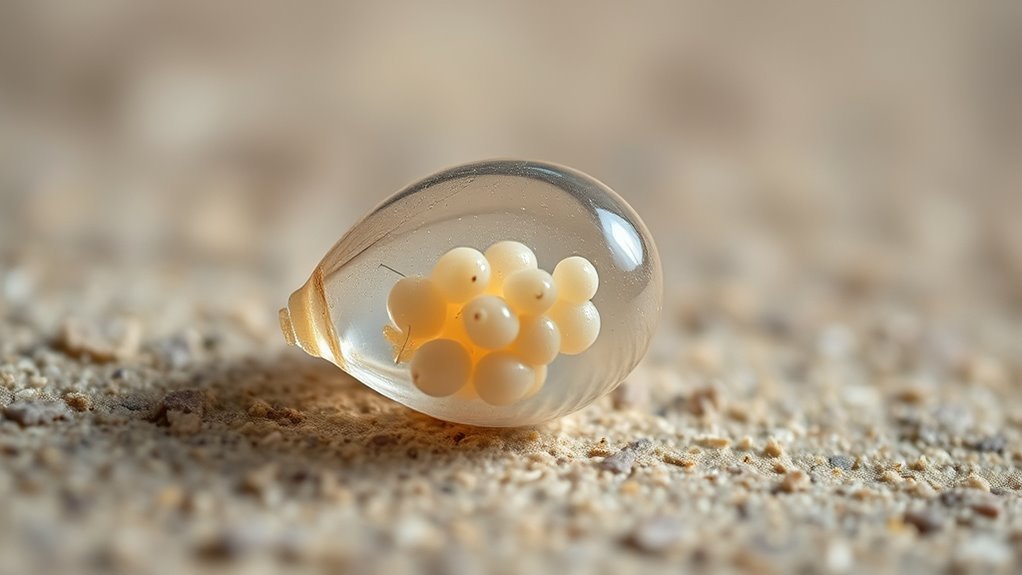
How Many Bed Bugs Are in One Egg?
You’ll find exactly one developing bed bug inside each egg. That tiny white, oval-shaped egg holds a single embryo nourished by yolk and protected by a transparent shell. Understanding how many bed bugs are in one egg helps us grasp why infestations can grow so quickly.
When the conditions are warm, the egg hatches within about a week. It releases a tiny nymph that’s ready to feed and grow.
Since each egg leads to just one bed bug, you might think infestations would be slow.
But nope, bed bugs multiply fast because they develop and reproduce quickly. Keep exploring to see how this cycle fuels rapid population growth and why catching them early is so important.
Key Takeaways
- Each bed bug egg contains only one developing embryo. No multiple bed bugs or nymphs are inside a single egg.
- The embryo inside the egg is visible through the transparent shell. One egg hatches into one tiny nymph ready to feed and grow.
- A single egg cannot contain more than one bed bug or offspring. It’s just one little bug waiting to come out!
What’s Inside a Bed Bug Egg?
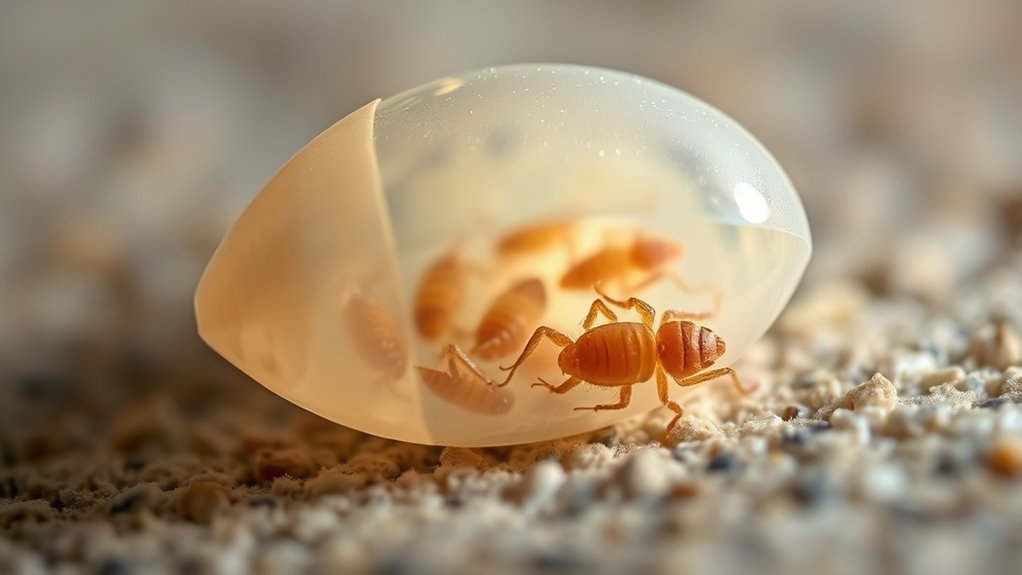
Although a bed bug egg looks tiny and simple, it holds a single developing embryo that will grow into an adult bed bug. When you examine a bed bug egg, you’ll notice it’s white, oval-shaped, and about the size of a grain of salt.
A tiny, white, oval-shaped egg hides a single embryo that will become an adult bed bug.
Inside a bed bug egg, the developing embryo is in the early stages, surrounded by yolk that provides essential nutrients. The embryo is protected by several protective layers, all enclosed within a transparent shell.
This shell lets you see some of the embryo’s development without opening it. It’s important to remember that each egg contains only one embryo—no multiple bugs or nymphs.
Understanding what’s inside a bed bug egg helps you grasp how these pests begin their life cycle. It’s pretty fascinating once you take a closer look!
How Bed Bug Eggs Hatch and Lead to Infestation Growth
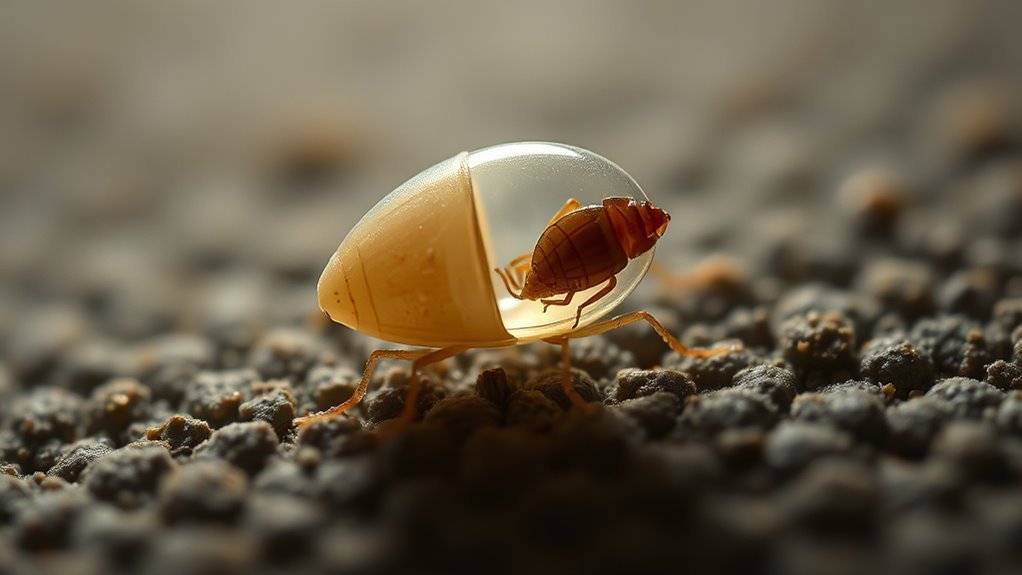
When bed bug eggs hatch, usually within 6 to 10 days in warm conditions, you’ll soon see tiny nymphs emerging and starting the cycle that leads to infestation growth. The egg hatch rate can reach 97% when environmental conditions are ideal, accelerating rapid infestation.
After hatching, nymphs begin seeking blood meals to progress through five molting stages before reaching adulthood. Female bed bugs lay multiple eggs per day, compounding population growth.
Here’s how the process fuels infestation growth:
- Bed bug eggs hatch into nymphs under favorable environmental conditions, ready to feed immediately.
- Nymphs undergo five molting stages, growing larger after each blood meal.
- Continuous egg production and high hatch rates turn one egg into many adults quickly.
Understanding this cycle helps you grasp how infestations explode from just a few eggs. It’s pretty amazing — and a little scary — how fast these little pests can multiply!
Frequently Asked Questions
What Stops Bed Bugs From Reproducing?
You stop bed bugs from reproducing by eliminating their blood meals, disrupting mating, and controlling temperature and humidity. Using heat treatments, insecticides, and removing hiding spots prevents egg laying and breaks their reproduction cycle effectively.
How Many Bed Bugs Are There if You Find One?
If you find one bed bug egg, you have at least one bed bug developing inside it. That single egg can quickly lead to many more, so you should act fast to prevent a growing infestation.
What Kills 100% of Bed Bugs?
You can’t kill 100% of bed bugs with one method alone, but using heat at 120°C for several minutes or freezing at -20°C for 72 hours, combined with professional treatments, gives you the best chance to eliminate them completely.
Can a 1 Bed Bug Lay Eggs?
Like a tiny factory, one bed bug can lay eggs, yes. You’ll see a single female producing 1 to 5 eggs daily, steadily building her army without needing a partner, turning your space into her kingdom.
Conclusion
When you think about a single bed bug egg, it might seem harmless, but inside, there’s just one tiny bed bug ready to hatch.
Imagine planting a single seed that quickly turns into a sprawling garden—just one egg can lead to hundreds of bugs in weeks.
So, don’t underestimate that tiny egg; it’s the start of a big problem waiting to grow if you don’t act fast.
Bed bug eggs may be small, but they hold the potential for a rapid infestation. Each egg contains one bed bug, which soon hatches and multiplies. This means that even a few eggs can quickly turn into a serious bed bug problem if left unchecked.
Understanding how many bed bugs are in one egg helps you realize why early detection and treatment are so important. Don’t wait until you see the bugs crawling around—target the eggs before they hatch to stop the infestation in its tracks.