
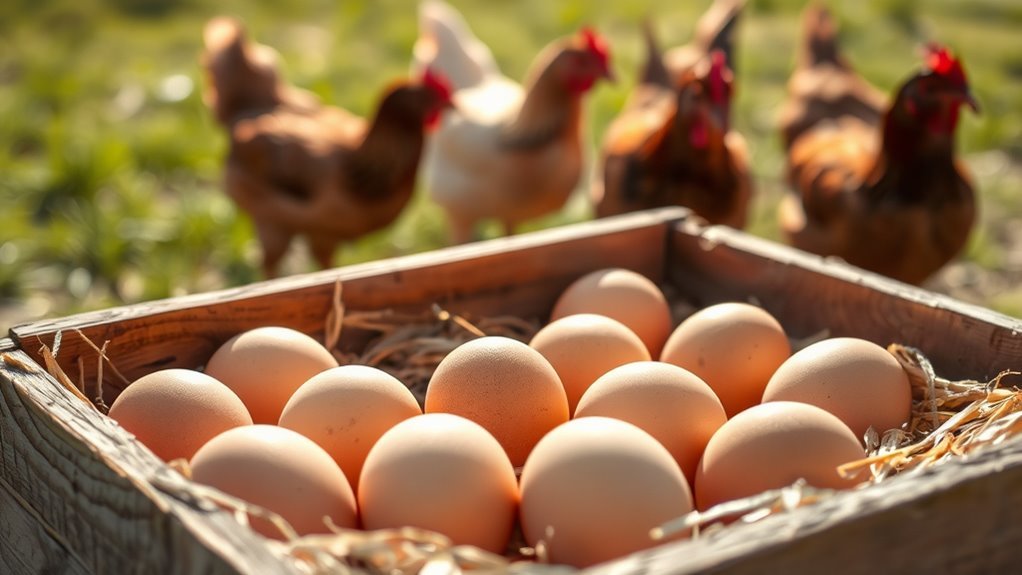
How Many Eggs Do Chickens Lay on Average?
You can expect healthy hens to lay about one egg every 24-26 hours, averaging around seven eggs per week. On average, chickens lay between 250 to 300 eggs per year, depending on several factors that influence their egg production.
Keep in mind, factors like breed, age, nutrition, and environment play big roles in how many eggs you get. For example, younger hens and breeds like Leghorns lay more eggs consistently, while older hens tend to slow down.
Winter light and stress can also slow things down quite a bit. There’s more to discover about what really affects egg production and how to optimize it for your flock.
So, if you’re raising chickens, it’s worth learning how to create the best conditions for them to lay their best!
Key Takeaways
- Most healthy hens lay approximately one egg every 24-26 hours, averaging about seven eggs per week.
- Egg production peaks when hens are between 1-2 years old and slows as they age.
- Breed influences egg quantity, with Leghorns laying over 300 eggs annually, while Silkies lay fewer.
- Seasonal changes, especially reduced daylight in winter, typically lower egg production rates.
- Proper nutrition, stress management, and optimal environmental conditions enhance laying frequency and egg quality.
How Many Eggs Do Hens Lay Each Day and Week?
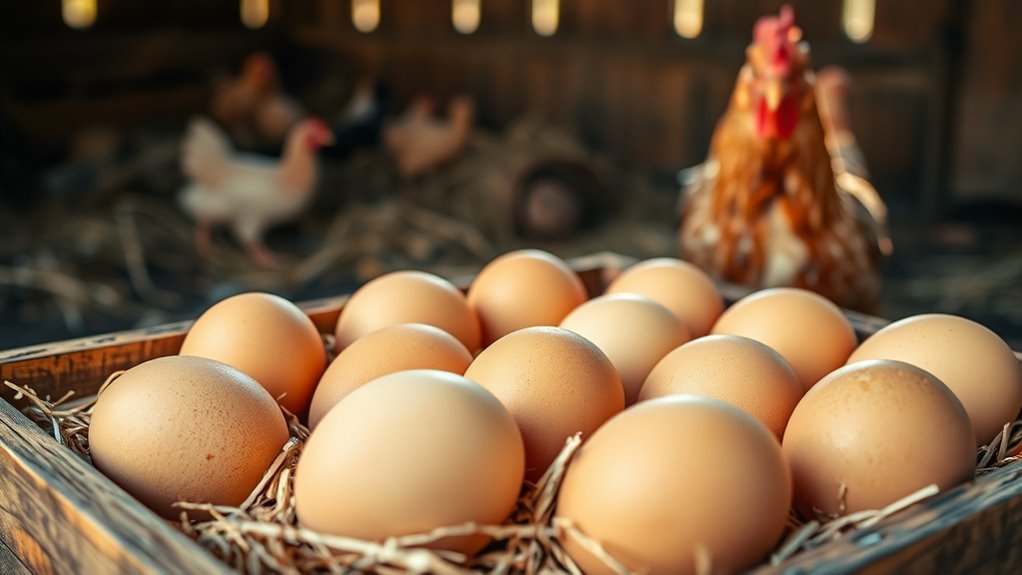
Although hens don’t lay eggs every single day, most healthy hens produce about one egg daily, averaging roughly seven eggs per week. You’ll notice laying hens have a natural egg laying frequency of about one egg every 24-26 hours, but this can vary.
Healthy hens typically lay one egg every 24-26 hours, averaging about seven eggs per week.
In the egg industry and among backyard chickens, daily egg production depends on breed differences, hen age, and seasonal variation. For example, younger hens typically lay more eggs, while older hens slow down.
Seasonal changes, like winter, often reduce egg output. Whether you keep a commercial flock or backyard chickens, understanding how many eggs per week hens lay helps you manage expectations and care routines effectively.
It’s fascinating how these factors influence the consistency of egg laying.
Factors That Affect Hen Egg Production
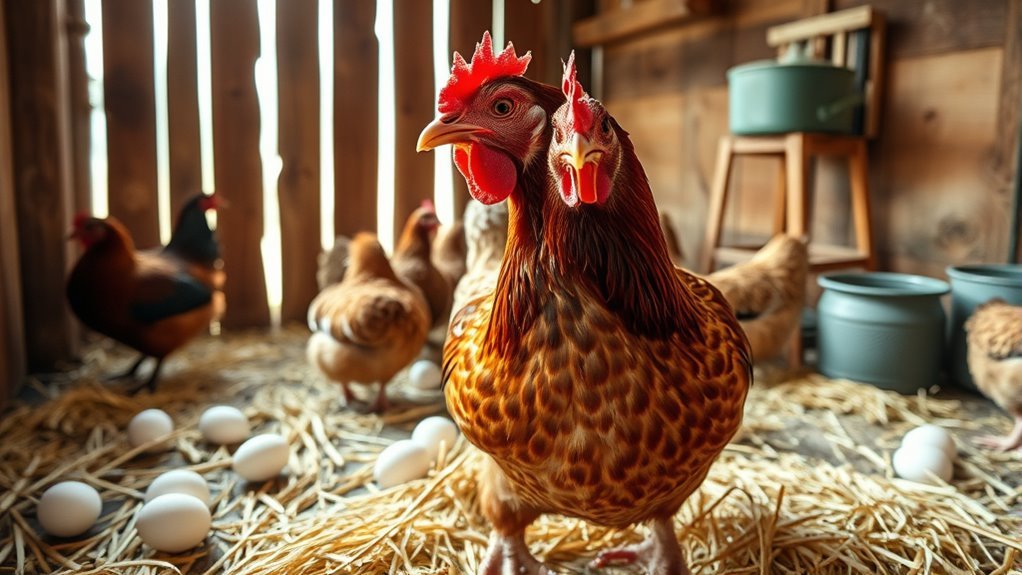
When you want to maximize egg production, understanding the factors that influence how many eggs your hens lay is essential. The breed plays a big role—Leghorns lay over 300 eggs annually, while Silkies produce fewer.
Age matters too; hens start laying around 5-6 months, reach peak production in the first 1-2 years, then gradually slow down. Lighting is critical—providing 14-16 hours daily helps maintain consistent laying frequency, especially in winter.
Nutrition impacts both egg quality and quantity, so a balanced diet rich in protein and calcium is indispensable. Finally, stress from environmental changes, poor coop conditions, or predators can substantially reduce egg production.
Frequently Asked Questions
How Many Eggs Will 100 Chickens Lay a Month?
You can expect 100 chickens to lay around 2,000 to 2,500 eggs per month if they’re healthy and well cared for. Keep in mind, factors like age and season can affect egg production.
Does a Chicken Lay One Egg per Day?
Yes, a chicken usually lays one egg every 24 to 26 hours. You won’t often see more than one egg per day because her body starts forming the next egg right after laying the previous one.
How Soon Can You Eat an Egg After a Chicken Lays It?
You can eat an egg immediately after a chicken lays it, as long as it’s clean and stored properly. Just rinse it with warm water before use to remove bacteria without damaging the protective coating.
What Is the Lifespan of an Egg-Laying Chicken?
You can expect an egg-laying chicken to live about 8 to 10 years. However, most hens slow down or stop laying eggs around 6 to 7 years, even though they often live several years beyond that.
Conclusion
You might think of hens like little egg factories, each laying about one egg a day or five to seven a week. But just like you might have off days, hens do too—factors like age, diet, and light affect their output.
Imagine expecting a steady stream of emails but sometimes getting only a trickle; that’s your hen’s egg schedule. It’s not always consistent, and that’s perfectly normal.
Understanding how many eggs chickens lay on average helps you appreciate every egg as a small, natural gift. Remember, the egg-laying process depends on many things, so each egg is a little win in your day!