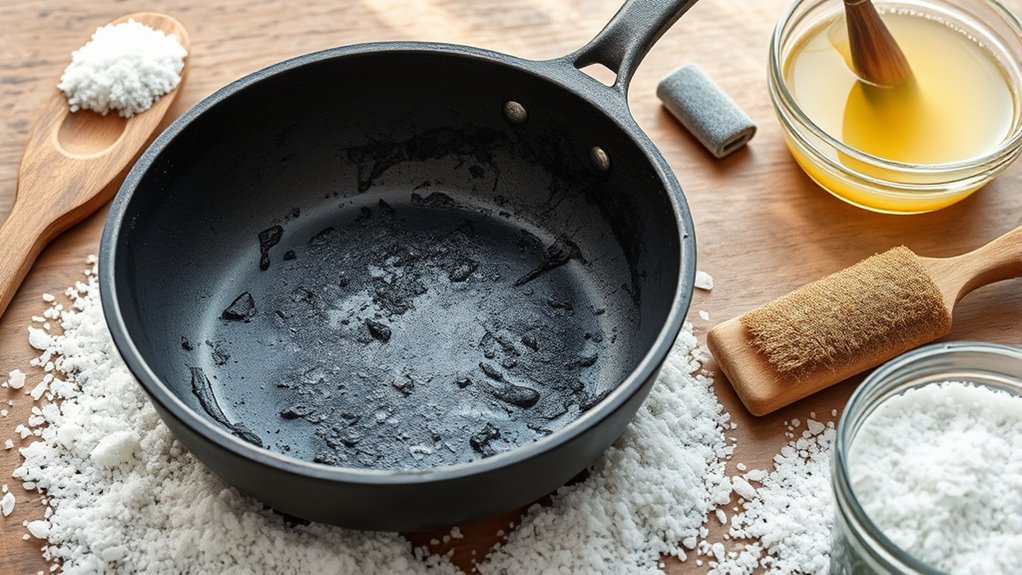
10 Steps to Clean a Burnt Carbon Steel Pan
First, let your burnt carbon steel pan cool completely—don’t plunge it in water. This is super important because sudden temperature changes can warp the pan or damage the seasoning.
Once cooled, gently remove loose debris with a soft brush or a damp sponge.
If you’ve got stubborn burnt bits, use fine steel wool with light pressure to tackle them.
After that, wash the pan with mild soap and rinse it well.
Don’t forget to dry it immediately to avoid rust—carbon steel is prone to it if left wet.
Next, apply a thin layer of high smoke-point oil.
Heat the pan until it starts to smoke—this helps restore the seasoning and keeps your pan non-stick.
You can repeat this seasoning process as needed to maintain the pan’s performance.
Keeping your pan well maintained prevents future buildup and extends its lifespan.
There’s definitely more to master when it comes to carbon steel pans for long-lasting performance, but these steps will get you started!
Key Takeaways
- Allow the pan to cool fully for at least 30 minutes before cleaning. This helps protect its structure and seasoning.
- Remove loose burnt debris gently using a dry brush or soft scraper. Just avoid using metal utensils to keep the surface safe.
- Clean the pan with mild dish soap and a soft sponge. Then rinse it thoroughly and dry immediately to prevent rust.
- For stubborn burnt residues, use fine (0000) steel wool with light pressure. Make sure to rinse and dry the pan promptly afterward.
- Re-season the pan by applying a thin layer of high smoke-point oil. Heat it until the oil smokes to restore that protective coating.
Cool Your Burnt Carbon Steel Pan Safely
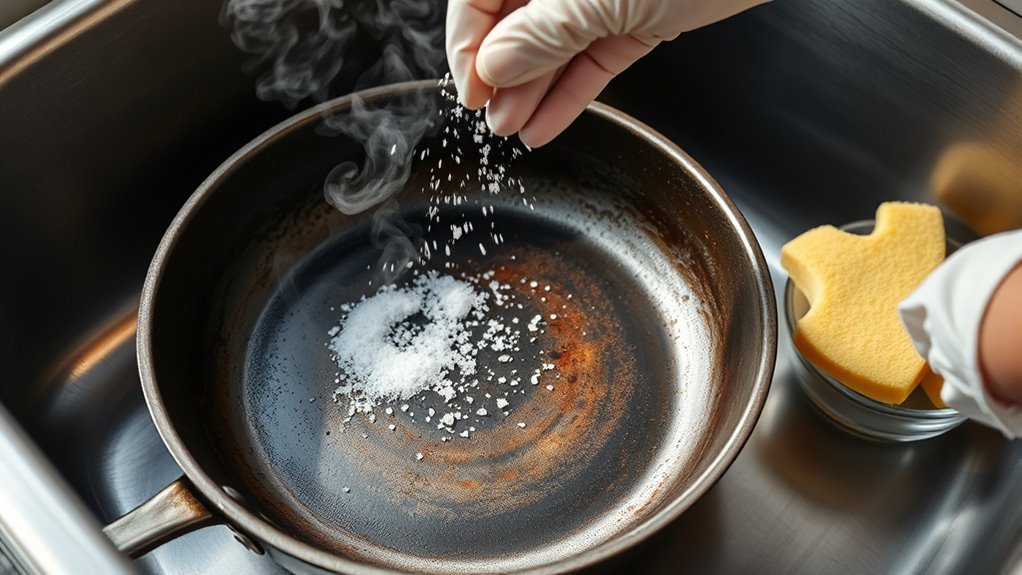
Before you start cleaning your burnt carbon steel pan, make sure it has cooled completely to avoid warping or cracking. Don’t rush this step—you’ll want to wait at least 30 minutes after cooking to let the pan cool gradually.
Always let your burnt carbon steel pan cool fully for at least 30 minutes before cleaning.
Avoid plunging a hot pan directly into water, as sudden temperature changes can damage its structure. Instead, let it sit on the stove or countertop until it reaches room temperature.
When it’s cool enough, use a towel or oven mitts to handle the pan safely. This careful cooling process not only protects your pan from damage but also helps maintain its seasoning.
Taking these precautions guarantees your carbon steel pan stays in great shape for many more meals. So, be patient—it’s worth it!
Remove Loose Debris From Your Burnt Carbon Steel Pan
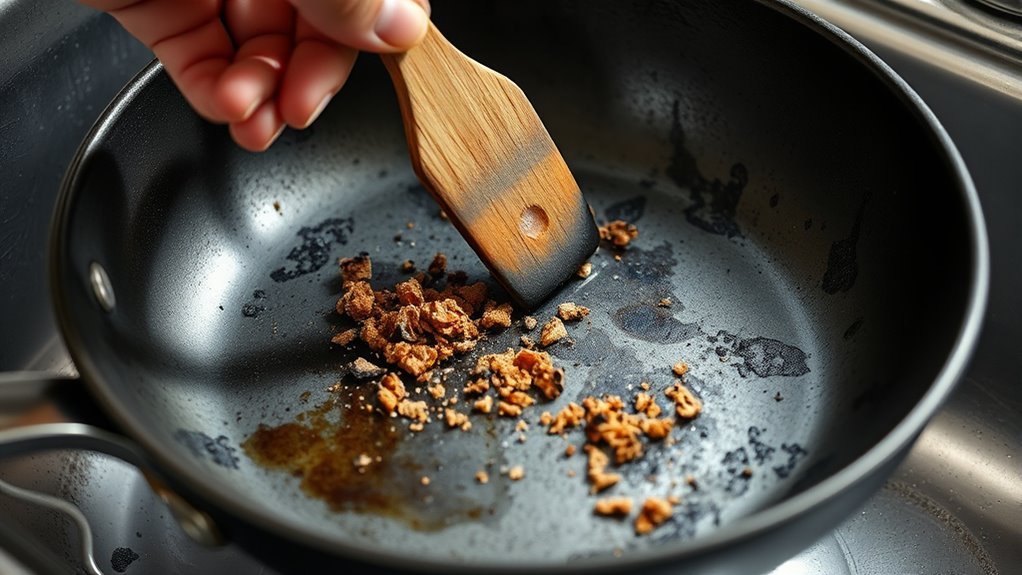
Once your pan has cooled completely, you can start removing any loose burnt food and debris. Use a dry brush or a soft scraper to gently sweep away loose debris without damaging the seasoning on your carbon steel pans.
Avoid metal utensils that might scratch the surface. If some debris sticks stubbornly, dampen a cloth or sponge and carefully wipe the area to loosen particles.
Ensuring all loose debris is removed helps prevent rust and keeps your pan easier to clean later.
| Tool Type | Purpose |
|---|---|
| Dry brush | Gently remove loose debris |
| Soft scraper | Sweep off charred food bits |
| Damp cloth | Loosen stubborn debris gently |
| Avoid metal | Prevent scratching seasoning |
Use Fine Steel Wool on Burnt Carbon Steel Pans Safely
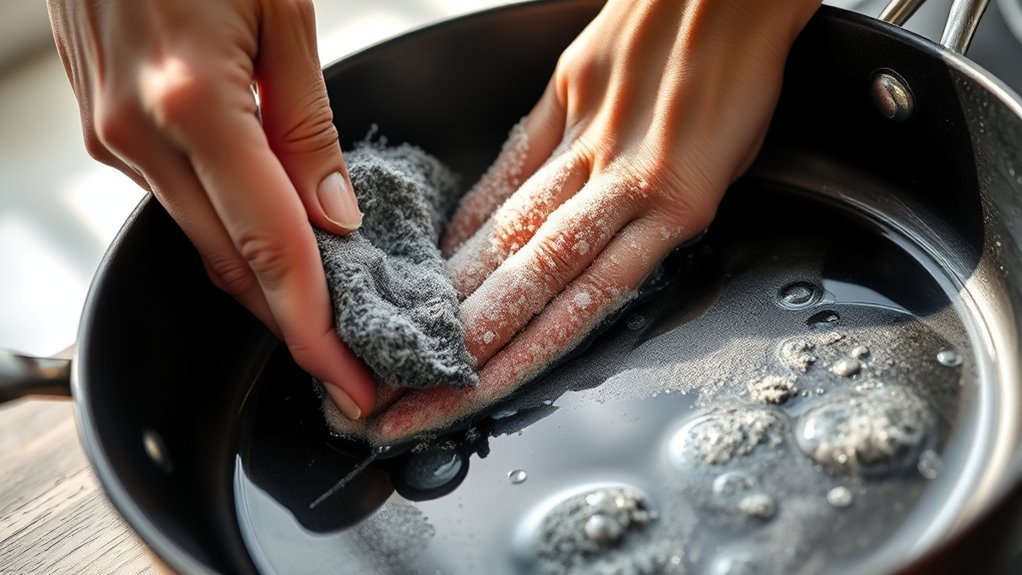
Make sure you choose fine (0000 grade) steel wool to avoid stripping the pan’s seasoning. Always dampen the pan with warm water before scrubbing and use light pressure to gently loosen burnt residues.
This technique helps protect your pan while effectively cleaning it. Just take your time and be gentle, and your pan will thank you!
Choosing The Right Steel Wool
Although it might be tempting to reach for any steel wool you have on hand, choosing the right grade is vital to protect your pan’s seasoning. Use 0000-grade, or extra fine, steel wool to clean burnt residue gently without damaging the surface.
This fine steel wool effectively removes stubborn stains while minimizing abrasion, preserving the pan’s seasoned patina. Before cleaning, test a small, hidden spot to confirm it doesn’t strip too much seasoning.
Slightly wetting the steel wool improves its cleaning power and reduces scratching risks. After you finish scrubbing, rinse the pan thoroughly and dry it well to prevent rust and maintain its protective coating.
Picking the right steel wool is key to a clean pan and preserving its long-lasting performance. It really makes all the difference!
Proper Technique For Scrubbing
To scrub burnt carbon steel pans safely, start with 0000-grade fine steel wool and apply light pressure in circular motions. This technique helps lift burnt residue without damaging your pan’s seasoning.
Before scrubbing, dampen the steel wool with water or a mild cleaning solution to boost its effectiveness and minimize scratching. Focus on stubborn areas gently, making sure you don’t wear down the protective layer.
After scrubbing, rinse the pan thoroughly to remove any steel wool particles and debris. Then, immediately dry it to prevent rust.
Finally, reapply a thin layer of oil to restore and protect the seasoned surface. By following this careful method, you’ll keep cleaning your carbon steel pans effective and safe, preserving their non-stick qualities and longevity.
Clean With Mild Soap Without Stripping Seasoning
When cleaning your burnt carbon steel pan, you can use a small amount of gentle dish soap with a soft sponge or brush without worrying about stripping the seasoning. Choose a mild soap that’s non-acidic and specifically safe for seasoned cookware to protect the valuable seasoning layer.
Harsh detergents or abrasive cleaners can damage this layer, so stick with mild soap to maintain your pan’s non-stick surface. Gently scrub away burnt bits without applying excessive force, ensuring you preserve the pan’s integrity.
This approach cleans effectively while keeping your seasoning intact. After washing, be sure to handle the pan properly to keep it in great condition for your next cooking session.
Using mild soap smartly helps extend the life and performance of your carbon steel pan.
Rinse Your Carbon Steel Pan Thoroughly
Once you’ve loosened the burnt bits, rinse your carbon steel pan with warm water to remove any loose debris. Using warm water helps break down stuck food without harming the seasoning.
Make sure to dry your pan immediately afterward. This step is super important to prevent rust from forming.
Remove Loose Debris
Start by rinsing your burnt carbon steel pan under warm running water to loosen any food residues and debris. Use your fingers or a soft brush to gently remove any remaining loose debris from the pan’s surface.
Be careful not to use hot water right after cooking, as the sudden temperature change can cause warping or cracking if the pan is still hot. Also, avoid soaking the pan for long periods since extended exposure to water increases the risk of rust.
Make sure all loose debris is thoroughly washed away before moving on to scrubbing or deeper cleaning steps. This initial removal of loose particles under warm water helps prepare your pan for effective cleaning without damaging its surface.
Use Warm Water
Rinsing your carbon steel pan thoroughly with warm water helps loosen stubborn burnt food particles while protecting the pan’s seasoning. When you clean the pan, avoid using hot water right after cooking to prevent thermal shock, which can warp the pan.
Warm water is the best choice because it reduces the risk of cracking or warping caused by sudden temperature changes. Be sure to rinse your pan promptly after use; this stops food from hardening and makes cleaning easier.
Thoroughly washing away residues with warm water prepares the surface for any gentle scrubbing you might need later. Using warm water effectively helps you clean the pan without damaging its seasoning, ensuring your carbon steel pan stays in great condition for many meals to come.
Dry Immediately Afterwashing
Although rinsing your carbon steel pan thoroughly is important, drying it immediately afterward is crucial to prevent rust and preserve its seasoning. After washing, use a clean, dry cloth or paper towel to wipe away every drop of water.
Don’t let your pan air dry, as leftover water can cause rust and corrosion. To be extra sure, place the pan on low heat for a few minutes; this will evaporate any remaining moisture.
Properly drying your pan not only keeps rust at bay but also helps maintain the seasoning, ensuring your pan stays non-stick and lasts longer. Always remember, the quicker you dry your carbon steel pan after rinsing, the better its condition will remain over time.
Dry Your Carbon Steel Pan Immediately to Prevent Rust
If you want to keep your carbon steel pan rust-free, dry it immediately after washing. Moisture is the main enemy here, and letting your pan air-dry can cause rust to form within minutes, especially if you live in a humid area.
To effectively dry your pan and prevent rust, follow these steps:
- Use a clean, soft cloth or paper towel to thoroughly dry the pan right after washing.
- Make sure to remove all visible water, paying close attention to edges and crevices.
For extra protection, briefly heat the pan on the stove. This helps evaporate any leftover moisture and keeps your pan in great shape.
Apply a Thin Layer of High Smoke-Point Oil to Restore Seasoning
Now that your pan is clean and dry, choose a high smoke-point oil like flaxseed or grapeseed to apply a thin, even layer. Use a cloth or paper towel to remove any excess oil, leaving just a light coating.
Then, heat the pan until the oil smokes to polymerize it. This helps restore a strong, nonstick seasoning layer. Easy, right?
Choosing The Right Oil
When restoring your burnt carbon steel pan, choosing the right oil plays a crucial role in rebuilding its seasoning. Using a high smoke-point oil ensures your cleaning efforts pay off by creating a smooth, durable layer.
Here’s what to keep in mind:
- Pick oils like flaxseed, grapeseed, or avocado—they handle high heat without burning, which is key for seasoning.
- Apply just a thin, even coat to avoid sticky buildup and ensure the oil polymerizes evenly.
- Avoid low smoke-point oils or thick layers; they can cause residue or uneven seasoning, undoing your cleaning work.
Selecting the right oil sets the foundation for a long-lasting, nonstick surface on your carbon steel pan. It really makes all the difference!
Heating To Polymerize Oil
Although applying a thin layer of high smoke-point oil is essential, heating the pan properly guarantees that the oil polymerizes and forms a strong, protective seasoning. After spreading the oil evenly with a paper towel, place the pan on high heat.
Heat it until the oil just starts to smoke, which usually takes a few minutes. This high heat triggers polymerization, turning the oil into a hard, durable layer that enhances nonstick properties and rust resistance.
For best results, repeat this process several times, allowing the seasoning to build up, fill imperfections, and darken the patina. By mastering this step, you’ll restore your carbon steel pan’s surface, ensuring it performs well and lasts longer.
Heat Your Pan to Set the New Seasoning
Since heating your pan helps burn off stubborn residue, you’ll want to preheat it over medium heat until it just starts to smoke. This step is essential for setting your new seasoning and creating a durable, non-stick surface.
Before heating, apply a thin layer of oil evenly across the pan’s surface. The heat will polymerize the oil, bonding it to the metal and forming a protective layer.
Follow these steps to set your seasoning properly:
- Apply a thin coat of oil to the clean pan.
- Heat the pan over medium heat, watching closely for light smoke.
- Maintain the heat briefly to allow the oil to bond, then remove from heat and cool.
This process locks in your new seasoning and improves your pan’s performance. It’s a simple step that makes a big difference!
Repeat Seasoning to Build a Durable Surface
Multiple seasoning cycles will strengthen your carbon steel pan’s surface, creating a durable, nonstick patina that resists rust and food sticking. To build this resilient layer, apply a thin coat of high smoke-point oil evenly over the pan, then heat it to bond the oil to the metal.
Repeating this seasoning process multiple times builds a thicker, more protective surface that evens out discoloration and repairs minor damage. Each new layer enhances the pan’s durability and nonstick properties, making cooking and cleaning easier.
Keep Your Pan Clean to Prevent Burnt Build-Up
Building a strong seasoning layer helps protect your pan, but keeping it clean is just as important to prevent burnt build-up. Carbon steel pans require regular care to maintain their performance and longevity.
Follow these steps to keep your carbon pan clean and free from burnt residue:
Essential tips to maintain your carbon steel pan’s cleanliness and prevent burnt residue buildup.
- Remove food residues promptly using warm water and a soft brush or sponge. This helps avoid damaging the seasoning.
- Avoid soaking your pan for long periods or using harsh detergents. These can weaken the seasoning and cause burnt build-up.
- For stubborn burnt food, boil water with a little baking soda in the pan. This loosens residues before you scrub gently.
After cleaning, dry your pan immediately. Then, apply a thin oil layer to preserve the seasoning and keep your carbon steel pan in top shape.
Frequently Asked Questions
What Does Vinegar Do to Carbon Steel?
Vinegar dissolves rust and mineral deposits on carbon steel by reacting with iron oxides. You’ll loosen burnt residues, but don’t let it soak too long, or it’ll strip your seasoning. Always rinse and re-season afterward.
What Dissolves Baked on Carbon?
Think of baked-on carbon as stubborn glue; vinegar’s acidity dissolves it gently, while baking soda and warm water act like a soft brush scrubbing away residue. Salt and oil paste also breaks down carbon without harming your pan’s seasoning.
How to Fix a Ruined Carbon Steel Pan?
You can fix a ruined carbon steel pan by thoroughly scrubbing burnt layers, rinsing well, drying completely, then reseasoning it with oil and heat. Repeat seasoning to restore its protective, nonstick surface and prevent rust.
How to Clean a Badly Burnt Steel Pan?
You won’t believe the grime stuck on that steel pan! Boil water with baking soda, scrub gently, and use a paste for tough spots. Rinse, dry, and oil it to bring your pan back to life!
Conclusion
Cleaning your burnt carbon steel pan doesn’t have to be a chore. Did you know that properly maintaining your pan can extend its life by over 20 years?
By following these simple steps—cooling, scrubbing gently, seasoning, and caring regularly—you’ll keep your pan in great shape and ready for countless delicious meals.
Remember, a well-maintained pan not only performs better but also enhances your cooking experience every time. Keep it clean and seasoned!
With the right care, your carbon steel pan can last for decades. Regular cleaning and proper seasoning prevent rust and build-up, ensuring optimal cooking performance. So, make these steps part of your kitchen routine to enjoy a durable, non-stick surface that improves with use. Trust me, a clean and well-seasoned pan truly transforms your meals and makes cooking more enjoyable every day.