
What Is the Ideal Temperature for Incubating Chicken Eggs?
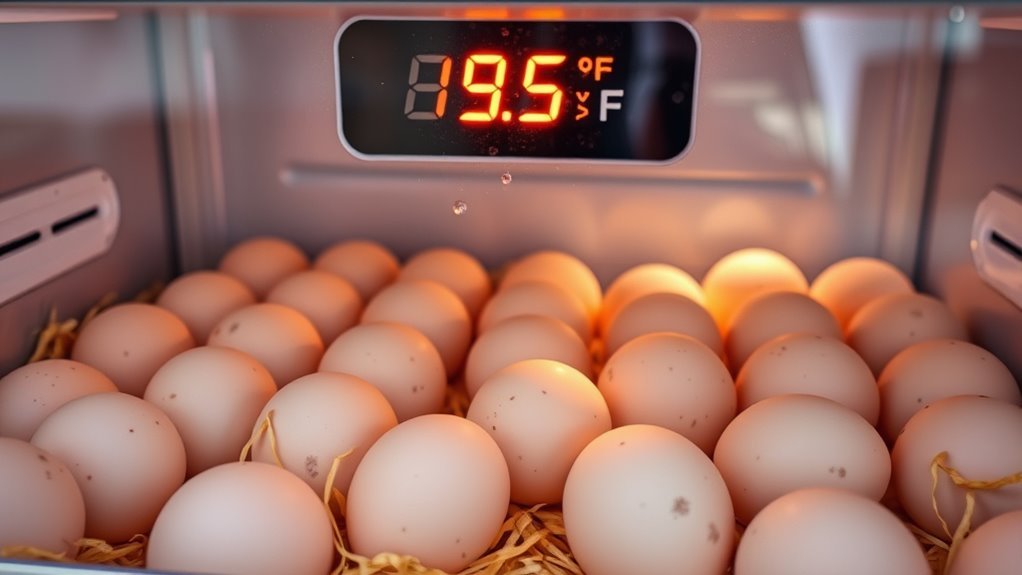
You’ll want to keep your incubator temperature steady around 99.5°F (37.5°C) for the best chance of hatching healthy chicks. This ideal temperature for incubating chicken eggs helps ensure proper embryo development and healthy hatch rates.
Ideal temperatures range between 99°F and 102°F (37°C to 39°C), but avoid fluctuations greater than 1°F to prevent harming embryo development. Temperatures too high or too low can cause early hatching, deformities, or embryo death.
Maintaining consistent warmth is key, and there are easy ways to guarantee your eggs stay in that perfect range. Keeping the temperature steady really makes all the difference when you want healthy chicks at the end of the incubation period.
Key Takeaways
- The ideal temperature for incubating chicken eggs is steady around 99.5°F (37.5°C) for optimal embryo development. Keeping it consistent really makes a difference.
- Maintaining temperature between 99°F and 102°F (37°C to 39°C) is recommended in forced-air incubators. This range helps the embryos grow strong and healthy.
- Avoid temperature fluctuations greater than 1°F (0.5°C) as they significantly reduce hatch rates. Even small changes can cause big problems.
- Temperatures above 101°F (38.3°C) can cause early hatching or deformities, while below 99°F (37.2°C) may delay development or kill embryos. So, it’s best to stay right in the sweet spot.
- Consistent temperature control using a calibrated thermometer at egg level ensures healthy embryo growth and better hatch success. Trust me, it’s worth the effort!
What’s the Best Temperature to Incubate Chicken Eggs?
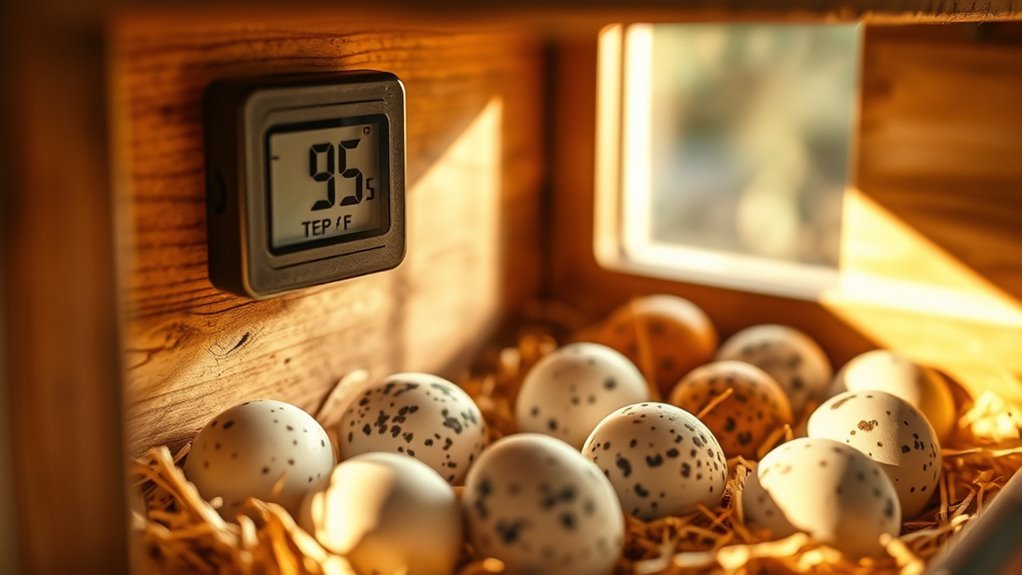
When you incubate chicken eggs, keeping the temperature steady around 99.5°F (37.5°C) is essential to healthy embryo development and a successful hatch. The ideal temperature for incubating chicken eggs in forced-air incubators falls between 99°F and 102°F (37°C to 39°C).
Maintaining a consistent temperature within this range is vital because fluctuations greater than 1°F (0.5°C) can markedly reduce hatch rates and harm embryos. If the incubator temperature rises above 101°F (38.3°C), it risks early hatching or deformities.
On the other hand, temperatures below 99°F (37.2°C) may delay development or cause embryo death. Using a reliable thermometer helps you monitor and fine-tune temperature control, ensuring the best conditions.
This consistent temperature balance directly influences hatch success and the overall viability of your incubating eggs. So, keeping it steady really makes all the difference!
How to Keep Your Incubator Temperature Steady for a Great Hatch
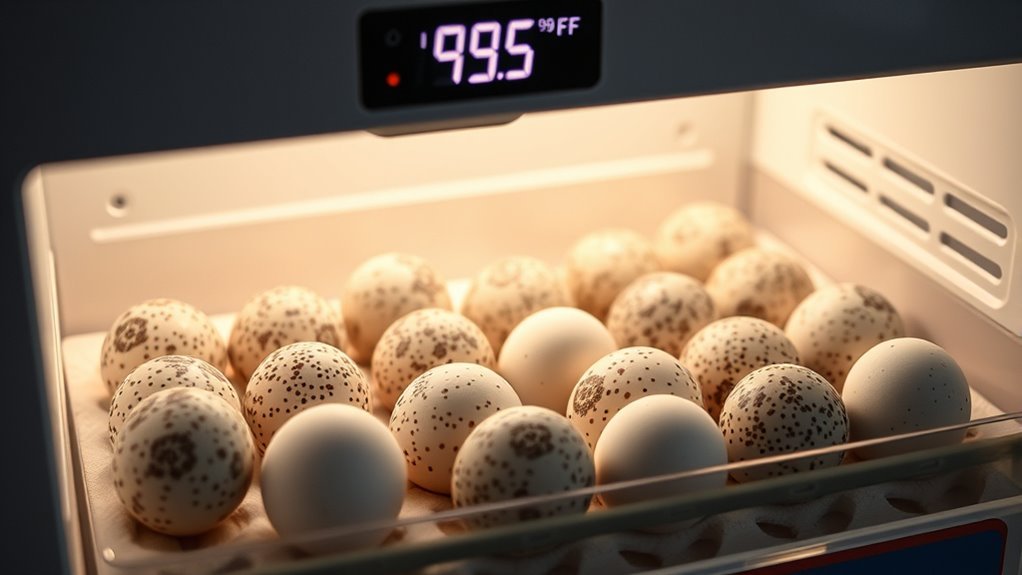
Although maintaining the ideal temperature is essential, keeping it steady throughout incubation takes careful attention and the right tools. To guarantee a consistent temperature, use a reliable thermometer—preferably a digital thermometer with a probe placed at egg level for accurate readings.
Before you place eggs inside, calibrate your incubator’s temperature settings to avoid surprises. Avoid opening the incubator frequently, as this causes temperature fluctuations that can harm embryo development.
Position your incubator in a location free from drafts and direct sunlight to maintain steady conditions. Good temperature control means keeping the incubator temperature steady at 99.5°F (37.5°C).
Frequently Asked Questions
What Are the Mistakes for Incubation Eggs?
You’re making mistakes if you don’t calibrate your thermometer, rely only on built-in displays, place thermometers near heat sources, allow temperature swings over 1°F, or ignore steady temperature control throughout incubation, risking poor embryo development.
What Temperature Do I Set My Incubator at for Chicken Eggs?
You set your forced-air incubator at 99.5°F and your still-air incubator at 101–102°F. You monitor the temperature daily and adjust it carefully to guarantee healthy embryo development and a successful hatch.
What Temperature Kills Hatching Eggs?
Temperatures above 104°F (40°C) kill hatching eggs quickly. Exposure over 102°F (39°C) drastically lowers hatch rates, and even brief spikes above 103°F (39.4°C) can cause embryo death or malformations. Avoid these to save your eggs.
How Cold Is Too Cold to Incubate Eggs?
If you drop below 97°F, you’re risking more than a slow hatch—you’re endangering embryo survival. Don’t let temperatures linger there; it’ll stunt development and could mean no chicks at all. Keep it warm!
Conclusion
To hatch healthy chicks, you need to keep your incubator at a steady 99.5°F (37.5°C). Did you know that even a 1-degree change can cut hatch rates by up to 20%? That’s why maintaining the right temperature is essential.
By monitoring closely and making small adjustments, you’ll give your eggs the best chance to develop properly. Stay consistent, and you’ll enjoy a successful hatch every time!
Remember, the ideal temperature for incubating chicken eggs is key to healthy development. Keeping your incubator steady at 99.5°F not only improves hatch rates but also ensures the chicks grow strong and healthy. So, whether you’re a beginner or a seasoned poultry keeper, paying close attention to temperature will make all the difference in your incubation success.