
What Is the Oil Pan on a Car and Where Is It Located?
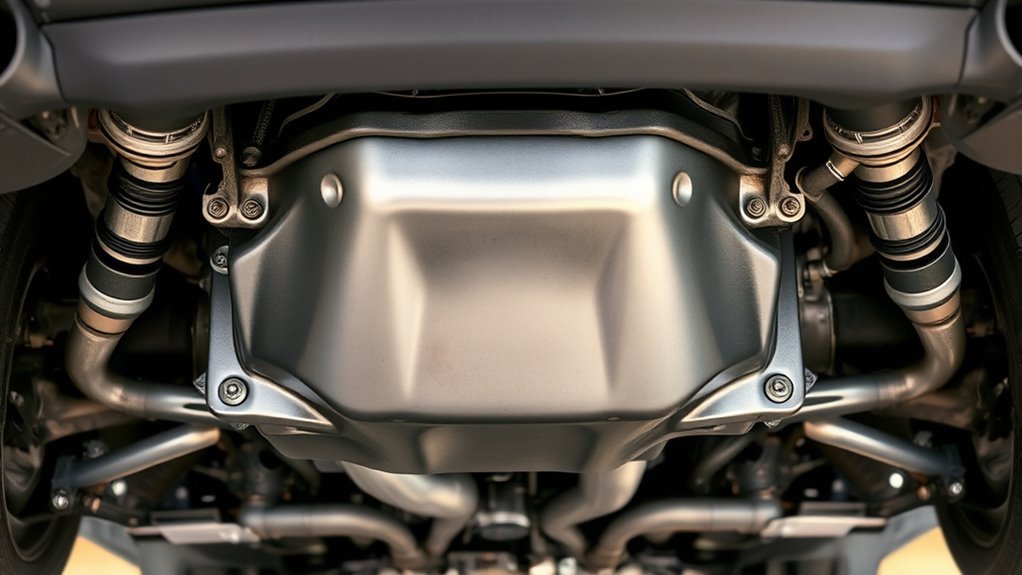
The oil pan on your car is a metal container attached to the bottom of the engine. It holds the engine oil, which lubricates and cools moving parts. This oil pan is a crucial part of the car’s lubrication system, helping to keep the engine running smoothly.
You’ll find the oil pan below the engine block, usually accessible from underneath your vehicle. It’s designed with baffles inside to keep the oil steady while you’re driving. These baffles prevent the oil from sloshing around too much, ensuring consistent oil supply.
The oil pan also supplies oil to the pump, which then circulates it throughout the engine. If you want to understand how it works and how to safely remove it, there’s more to explore ahead.
Knowing this can help you with basic car maintenance or troubleshooting.
Key Takeaways
- The oil pan stores and circulates engine oil to lubricate engine parts. It plays a key role in keeping your engine running smoothly.
- You’ll find it located at the bottom of the engine block, right underneath the vehicle. It’s kind of like the engine’s oil reservoir.
- Inside the oil pan, there are baffles that prevent the oil from sloshing around when the car moves. This helps maintain steady oil flow.
- The oil pan is sealed with a gasket to prevent any oil leaks from the engine. That seal is super important to keep everything clean and efficient.
- You can usually access the oil pan from beneath the vehicle, and it’s often visible if the car is lifted up. This makes it easier for maintenance and oil changes.
How the Oil Pan Holds and Circulates Engine Oil
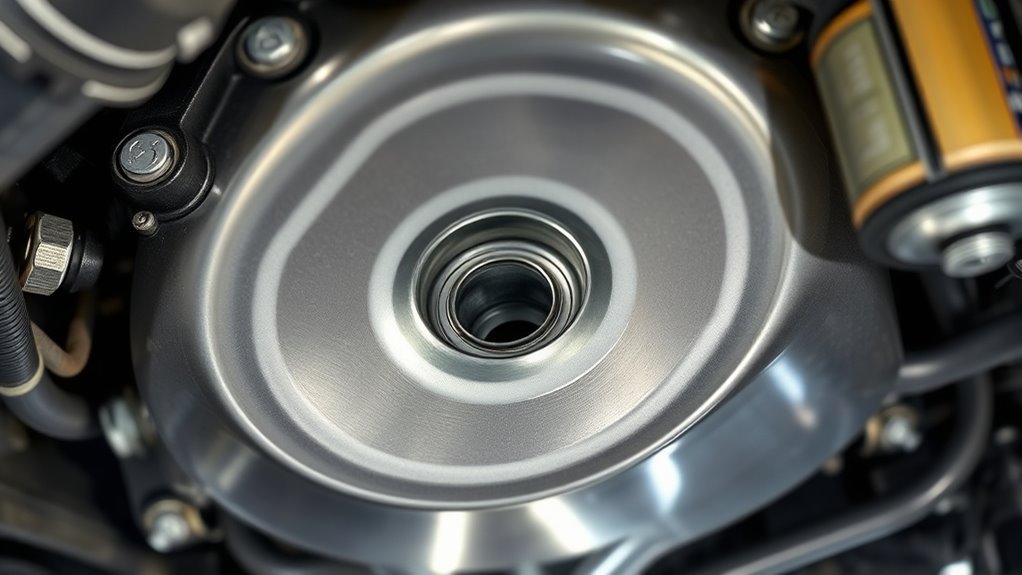
Although you might not see it, the oil pan plays a crucial role in your car’s engine by storing and circulating engine oil. The engine oil pan sits at the bottom of the engine block, acting as a reservoir that holds enough oil to lubricate essential engine parts.
Thanks to its design, including baffles and windage trays, the oil pan prevents oil from sloshing and aerating, even during sharp turns or acceleration. The oil pump draws oil from the pan through the oil pickup tube, maintaining consistent oil pressure to protect moving components.
The oil pan gasket seals the connection between the oil pan and engine block, preventing leaks and ensuring that oil stays where it belongs. Without properly functioning oil pans, your engine’s lubrication system would fail. So yeah, it’s definitely something you don’t want to overlook!
Where to Locate the Oil Pan and Remove It Safely
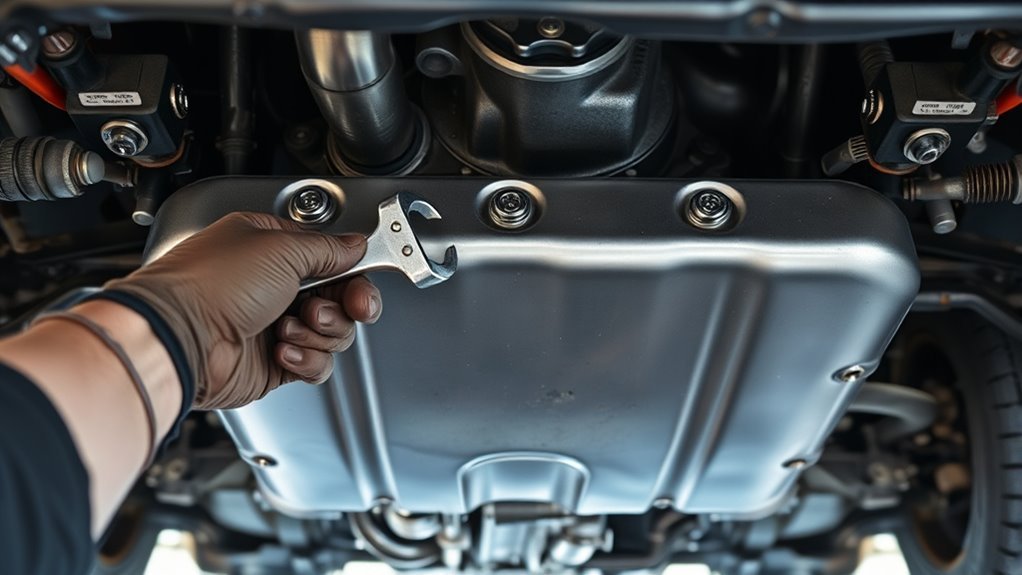
When you need to locate the oil pan, look underneath your vehicle at the bottom of the engine, right below the crankshaft and engine block.
To remove the oil pan safely, follow these steps:
To remove the oil pan safely, follow these clear and simple steps for a smooth process.
- Lift your vehicle securely using jack stands or a lift to access the oil pan’s location.
- Drain the engine oil completely to avoid spills before loosening any bolts.
- Apply WD-40 to the bolts to prevent stripping and use a socket wrench to remove them carefully.
- Watch for obstacles like exhaust pipes that could block your access.
If you’re unsure or lack the tools, it’s best to visit a repair shop. Let the professionals handle the oil pan removal safely and efficiently.
Frequently Asked Questions
How Much Does an Oil Pan Cost to Replace?
Replacing your oil pan usually costs between $200 and $1000, depending on your car’s make and model. Labor, parts type, and additional repairs like gasket replacement can raise the price, especially for luxury or high-performance vehicles.
What Happens if an Oil Pan Goes Bad?
If your oil pan goes bad, you’ll likely experience oil leaks, causing low oil levels and poor engine lubrication. This can lead to engine overheating, misfires, or even severe damage, so you shouldn’t ignore any signs of trouble.
Can I Drive My Car if the Oil Pan Is Leaking?
You shouldn’t drive with an oil pan leak; 75% of engine failures start from low oil. Even a small leak risks severe damage, fire hazards, and expensive repairs. Get it fixed promptly to protect your car.
Is It Worth Fixing an Oil Pan?
Yes, it’s usually worth fixing your oil pan if the damage is minor because it prevents costly engine repairs. But if it’s severely cracked or rusted, replacing it might save you more in the long run.
Conclusion
Now that you know the oil pan holds and circulates engine oil, you might wonder if it’s just a simple container. The truth is, it’s vital for keeping your engine lubricated and cool.
Located beneath your car’s engine, the oil pan collects oil before it’s pumped through your engine parts.
Next time you check under your car, you’ll see why this component is essential for your engine’s health and longevity. The oil pan plays a crucial role in maintaining proper engine function by storing oil and helping regulate its temperature. Without a well-functioning oil pan, your engine could suffer from poor lubrication, overheating, and increased wear and tear. So, understanding what the oil pan is and where it’s located helps you appreciate its importance in keeping your car running smoothly for years to come.