Where Is the Oil Pan Located on a Car?
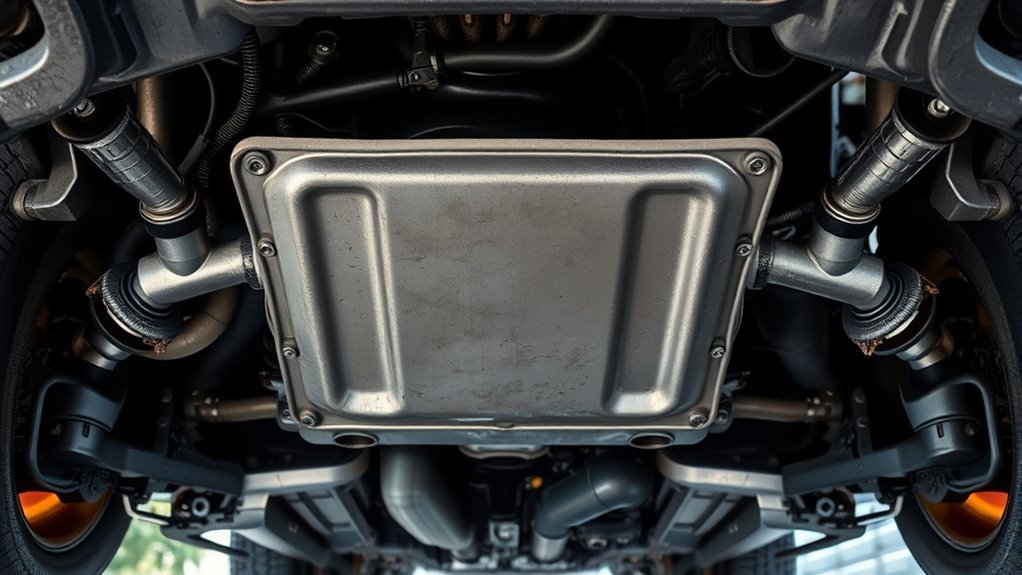
You’ll find the oil pan securely attached at the very bottom of your car’s engine, directly beneath the engine block and crankcase. This oil pan is a large, pan-shaped component that holds the engine oil, which is essential for lubricating your engine’s moving parts and keeping everything running smoothly.
When you look under your vehicle, the oil pan is usually visible, making it easier to locate.
Before you try to access it, you’ll need to raise your car safely and make sure the engine is cool to avoid burns. The oil pan is fastened tightly around the edges with bolts, so you’ll need the right tools to remove it.
Keep going, and you’ll discover how to locate and safely access the oil pan step-by-step.
Key Takeaways
- The oil pan is located at the very bottom of the engine, attached to the crankcase. It’s a large, pan-shaped component that you can see from underneath the vehicle.
- You’ll find the oil pan bolted around its edges directly beneath the engine block. Sometimes, parts like exhaust pipes might cover it a bit, so you’ll need to look closely.
- To access the oil pan, you’ll have to look under the vehicle, right below the crankshaft and oil pump area. It’s not always easy to spot at first glance, but it’s definitely down there.
Where to Find the Oil Pan Under Your Engine
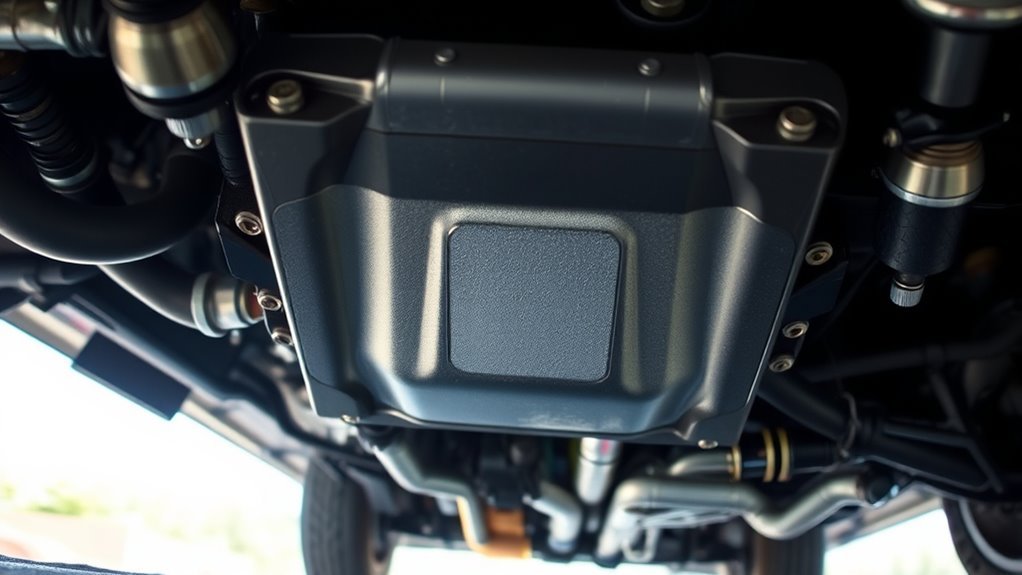
Although other components might partially hide it, you can find the oil pan at the very bottom of your engine, attached securely to the crankcase. To locate the oil pan, look underneath the engine for a large, pan-shaped part positioned directly beneath the engine block.
It’s usually accessible from the underside of your vehicle, making inspection easier. The oil pan is fastened to the bottom of the engine with bolts around its perimeter.
Sometimes, other parts like the exhaust system might cover it partially, so a careful inspection is necessary to identify it accurately. Knowing where to find the oil pan helps you understand your vehicle better and prepares you for future maintenance tasks.
How to Locate and Access Your Oil Pan Safely
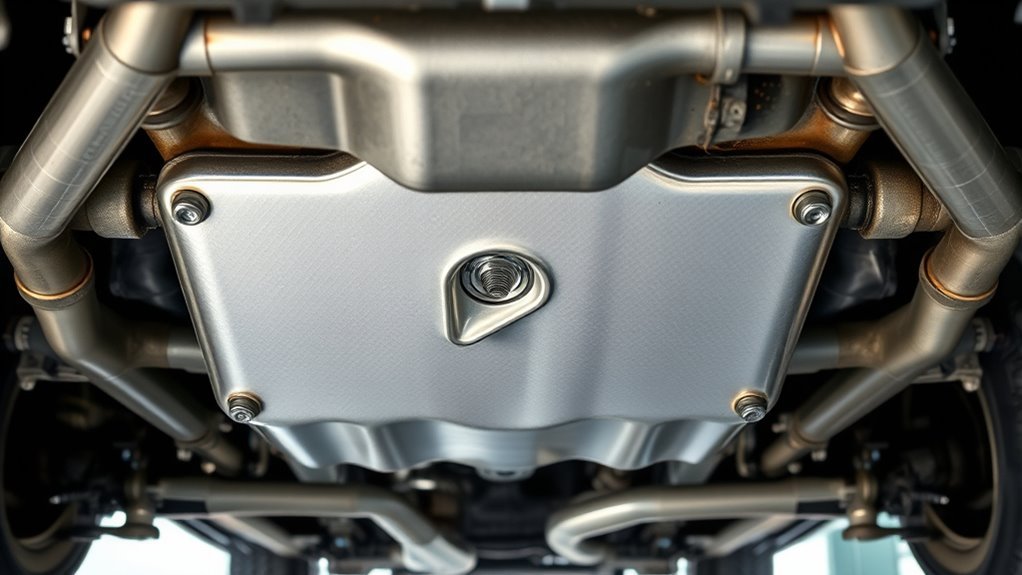
Before you start working on your oil pan, make sure you raise your vehicle securely on level jack stands and allow the engine to cool completely.
Always lift your vehicle securely on level jack stands and wait for the engine to cool before starting work.
To locate the oil pan, look at the bottom of the engine, directly beneath the crankshaft and oil pump. For safe access, inspect for any obstructions like exhaust pipes or suspension parts that could block your way.
The oil pan is fastened to the engine block with several bolts you’ll need to remove. To drain the engine oil properly, loosen the drain bolt first.
Use proper tools and consider applying WD-40 to bolts to prevent stripping. Following these safety steps guarantees you can access and remove the oil pan smoothly without damaging components or risking injury.
Frequently Asked Questions
How Much Does an Oil Pan Cost to Replace?
You’ll typically pay between $200 and $600 to replace an oil pan, including parts and labor. Costs vary by vehicle, with labor around $100 to $300 and the pan itself costing $50 to $200.
How Do I Tell if My Oil Pan Is Bad?
If you see oil leaking like Niagara Falls beneath your car, your oil pan’s likely bad. Check for dents, cracks, or low oil levels. Don’t ignore warning lights, engine noise, or overheating—you’ve got a problem.
Is the Oil Pan Underneath the Engine?
Yes, the oil pan sits right underneath your engine. You’ll need to lift your car to see it easily since it’s mounted at the engine’s bottom, holding the oil before it circulates through your engine.
Is Replacing an Oil Pan Easy?
They say, “measure twice, cut once.” Replacing an oil pan isn’t easy; you’ll face stubborn bolts and gasket cleanup. With the right tools and patience, you can do it, but expert help can save headaches.
Conclusion
Now that you know where the oil pan hides beneath your engine, you might think the job’s done—but wait. Before you reach under your car, make sure you’ve got the right tools and a safe spot to work.
One wrong move, and you could make a mess or worse. So, take a deep breath, double-check your setup, and get ready to tackle this important part of car maintenance with confidence.
Remember, the oil pan is a critical component that holds the engine oil, so handling it properly is essential. Having the proper tools and a safe workspace helps you avoid spills and ensures a smooth oil change.
Taking your time and being prepared makes servicing the oil pan much easier. With the right approach, you’ll keep your engine running smoothly and extend its life.