5 Easy Steps to Get Rid of Mold Between Window Panes
You can get rid of mold between window panes by first removing the window sash carefully. Make sure to protect yourself with gloves and a mask before you start. Safety first!
Next, loosen the seal using a hairdryer. Gently pry apart the panes to access the mold without damaging the glass.
Now, clean the area thoroughly using a mold remover or a bleach solution.
After cleaning, dry everything completely to stop mold from coming back.
Finally, reseal the window with a professional-grade sealant. This step is crucial to prevent moisture from returning and causing more mold.
Keep following along to explore how to handle persistent mold issues or when it might be best to call a professional for help.
Key Takeaways
– Remove the window sash or frame carefully following manufacturer instructions to access the moldy area between panes.
It’s important to be gentle here so you don’t damage the window.
– Wear protective gloves and a mask to avoid inhaling mold spores during cleaning.
Safety first, right? You don’t want to breathe that stuff in.
– Apply a mold remover or bleach-water solution generously and let it sit for at least 10 minutes.
This gives it time to work its magic on the mold.
– Gently scrub the affected glass with a soft brush or cloth to remove mold residue completely.
Take your time and be thorough.
– Dry the area thoroughly and reseal the window with professional-grade sealant to prevent future moisture buildup.
Sealing it up well will keep mold from coming back.
What Causes Mold Between Double Window Panes?

One common cause of mold between double window panes is a failed seal that lets moisture sneak inside. When the seal fails, the gas between the panes leaks out, allowing condensation and moisture to build up.
You’ll notice this condensation creates a humid environment perfect for mold growth. Over time, high humidity levels and temperature changes speed up seal failure, making the problem worse.
As the seal deteriorates, airborne mold spores can enter the space between the panes, feeding on the moisture. If you see foggy or dirty spots inside your window, it’s likely due to this moisture trapped by seal failure.
Understanding this helps you recognize why mold forms and why fixing the seal is vital to preventing further growth.
How to Safely Access Mold Between Window Panes
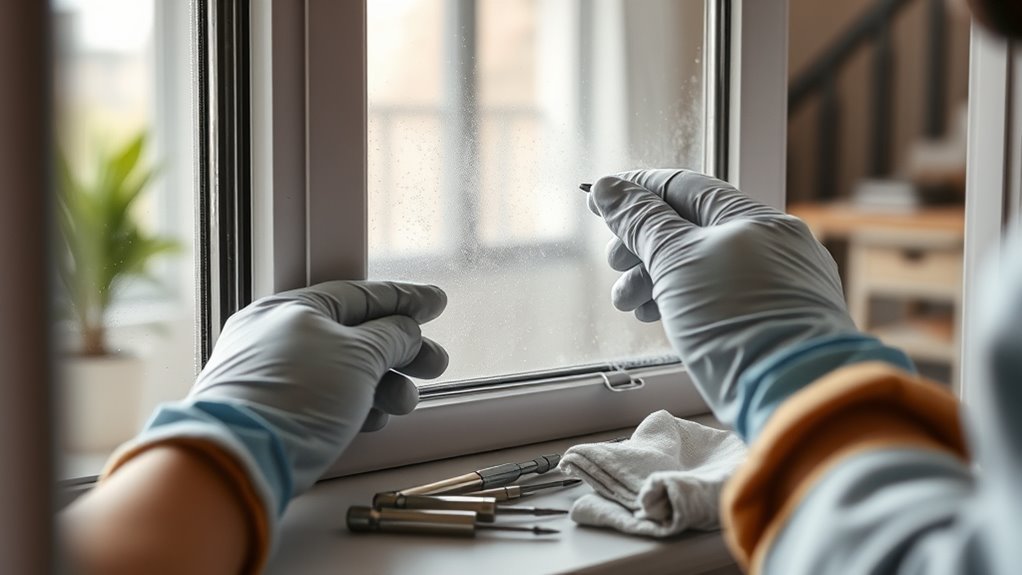
Before you can tackle mold between window panes, you’ll need to access the sealed space carefully to avoid damage or exposure to spores. Start by removing the window sash or frame, following manufacturer instructions for proper window repair.
Use a flat-head screwdriver or putty knife to gently pry apart the glazing beads or frame, exposing the glass surfaces without cracking them. Wear protective gloves and a mask to prevent inhaling mold spores during this process.
If the sealant is tough, apply heat with a hairdryer to soften it, making it easier to open. For silicone or putty seals, carefully cut or scrape them away to reach the mold safely.
Taking these precautions guarantees you access the mold without causing damage or releasing spores into your home. It’s all about being gentle and staying safe while you work.
Best Ways to Clean and Remove Mold Between Panes
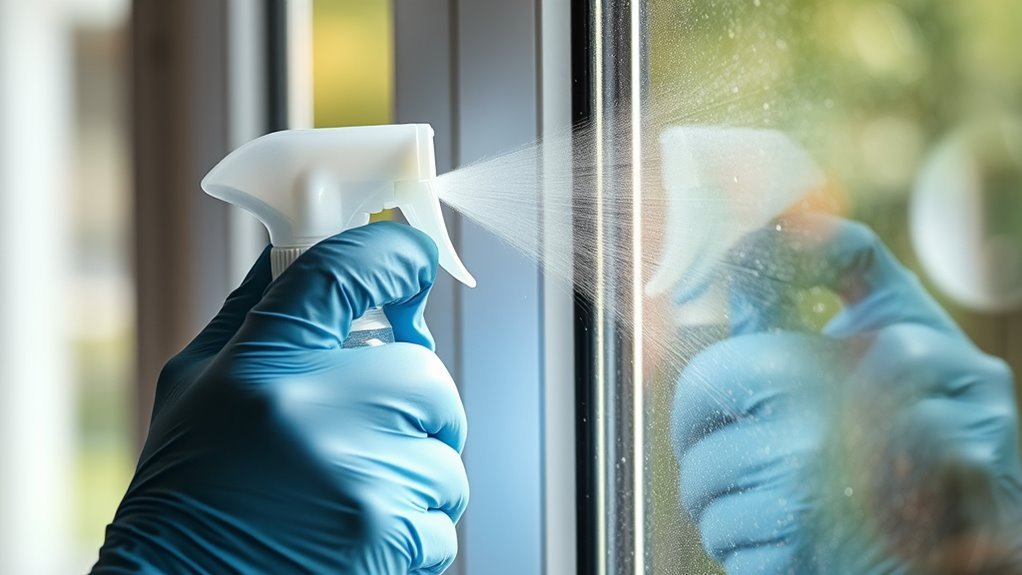
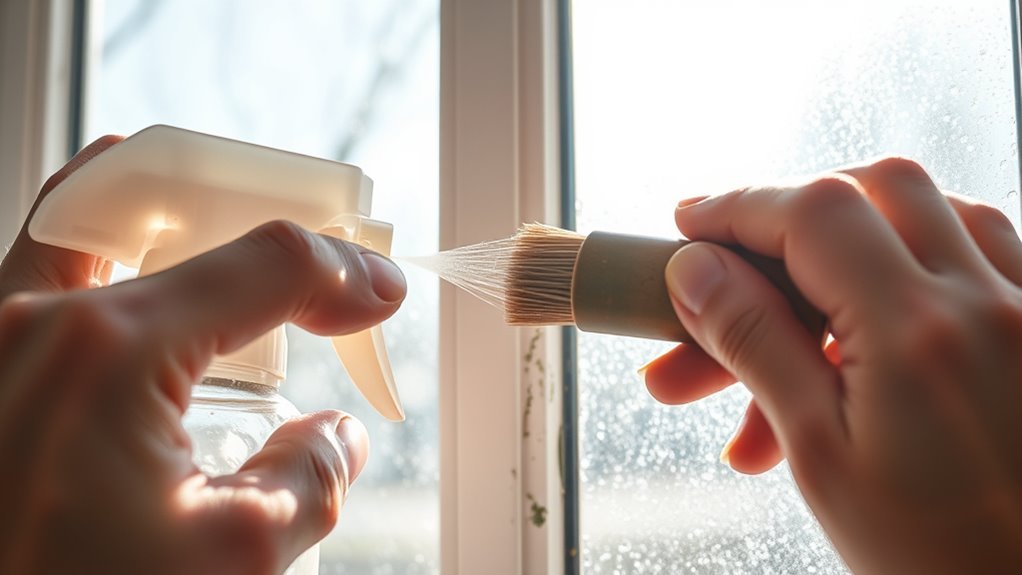
Once you’ve carefully accessed the mold between the window panes, the next step is to clean it thoroughly to prevent it from spreading or returning. Use a specialized mold remover or a bleach-and-water mixture for effective cleaning.
Make sure the area is well-ventilated, and wear gloves and protective eyewear to avoid exposure to mold spores and harsh chemicals. Apply the solution generously, letting it sit for at least 10 minutes to kill mold spores.
Then, gently scrub the mold-affected glass panes with a soft brush or cloth to remove all visible mold and residue. After cleaning, dry the area completely to stop future mold growth.
Proper cleaning is essential for restoring the clarity of your glass panes and maintaining a healthy living environment. So, take your time and be thorough!
How to Properly Reseal Window Panes After Mold Removal
Although removing mold between window panes is essential, properly resealing the window is just as important to prevent moisture from returning.
Before resealing, make sure all mold removal is complete, as any leftover mold can cause future problems. Clean the window frame thoroughly and let it dry completely to guarantee the sealant adheres well.
Use a professional-grade sealant designed specifically for insulated glass units to restore the airtight seal. Apply the sealant evenly around the glass pane’s perimeter, creating a secure, moisture-proof barrier.
If you’re unsure about doing this yourself, consider hiring a professional for resealing. This will guarantee proper installation and help maintain your window’s insulation and longevity.
This step is vital to keep mold from coming back.
When to Call a Professional for Repair or Replacement?
If you notice that mold keeps coming back despite your cleaning efforts or the window looks foggy and damp inside the panes, it’s time to call a professional. Persistent mold between window panes often signals seal failure, which compromises insulation and invites moisture.
If DIY resealing or cleaning doesn’t solve the problem, a licensed window specialist can assess whether repair or professional replacement is best. You should also consider replacement if the frame or sash is damaged or rotted, or if the seal has been broken for a long time.
A professional will help you decide on the most durable, energy-efficient solution. This way, you can be sure the mold problem won’t come back and your windows stay clear and safe.
Frequently Asked Questions
What Kills Black Mold Immediately?
You can kill black mold immediately by using bleach or commercial mold removers with fungicides. Applying hydrogen peroxide also works fast. Just wear gloves, spray directly, and let it sit for quick, effective mold elimination.
Can I Just Spray Vinegar on Mold and Leave It?
You can’t just spray vinegar on mold and leave it; vinegar kills surface mold but doesn’t reach mold inside sealed spaces. You need proper removal or professional help to fully eliminate mold and prevent it from returning.
Is There a Way to Clean in Between Window Panes?
You can’t effectively clean between window panes yourself since they’re sealed tight. Your best bet is to contact a professional who can reseal or replace the unit, preventing damage and ensuring clear, mold-free glass.
Can Moisture Between Window Panes Be Repaired?
You can’t repair moisture between window panes effectively—90% of seal failures need full replacement. Don’t waste time with temporary fixes; replacing the window restores insulation, stops mold growth, and keeps your home comfortable and safe.
Conclusion
Dealing with mold between window panes might feel like steering through a foggy maze, but following these steps will clear your view and protect your home. You can safely clean and reseal the panes yourself, restoring clarity and freshness.
Just remember, if the mold keeps coming back or the damage is extensive, don’t hesitate to call a professional. Taking action now guarantees your windows stay bright and mold-free for years to come.
By tackling mold between window panes early, you prevent further damage and avoid costly repairs. Cleaning and resealing your windows not only improves their appearance but also helps maintain a healthy indoor environment. So, follow these easy steps to get rid of mold effectively and keep your windows looking crystal clear. If you encounter persistent mold or severe issues, reaching out to a mold remediation expert is the best choice for lasting results.