How Long Will a Duck Sit on Eggs
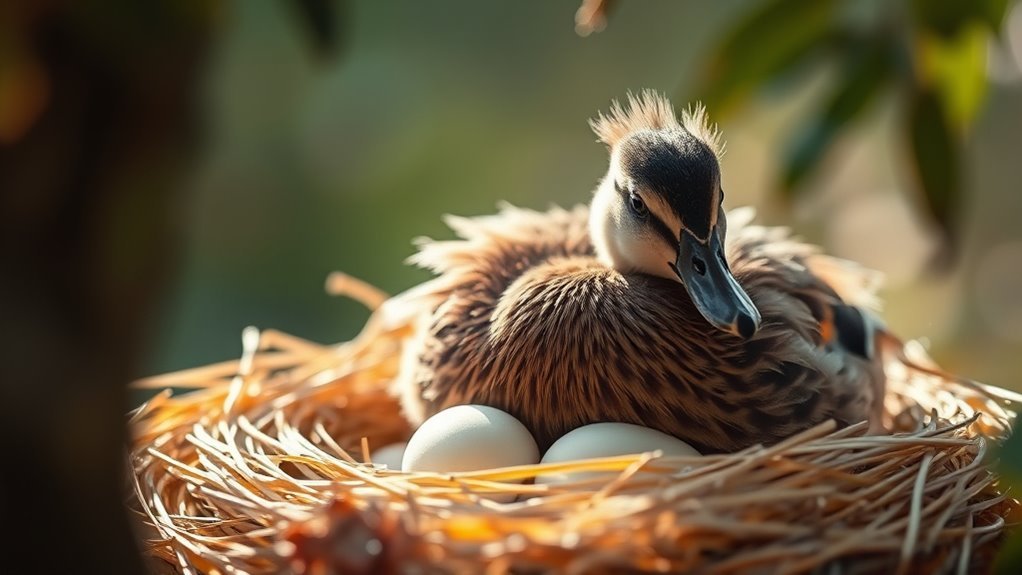
A mother duck usually sits on her eggs for about 21 to 31 days, sometimes up to 35 days depending on the species. This incubation period is crucial because it ensures the eggs stay warm and humid, which helps healthy hatchlings develop.
She stays on the nest almost all the time, only leaving briefly to eat or preen.
Factors like temperature, humidity, and disturbances can change how long she incubates. These conditions really matter since they affect the success of the eggs hatching.
If you want to understand what affects this essential period and why it matters, you’ll find more details ahead. It’s pretty interesting to see how nature takes care of new life!
Key Takeaways
- Ducks typically sit on their eggs for about 21 to 31 days until hatching begins. Incubation starts after the full clutch of eggs is laid for consistent warmth.
- Mother ducks stay on eggs almost constantly, leaving briefly only to feed or preen. It’s pretty amazing how dedicated they are!
- Environmental factors like temperature and humidity can influence the exact incubation length. So, the timing isn’t always the same.
- Also, disturbances or nesting conditions can delay hatching and extend the sitting period. Ducks are pretty sensitive to their surroundings when nesting.
How Long Do Ducks Incubate Their Eggs?
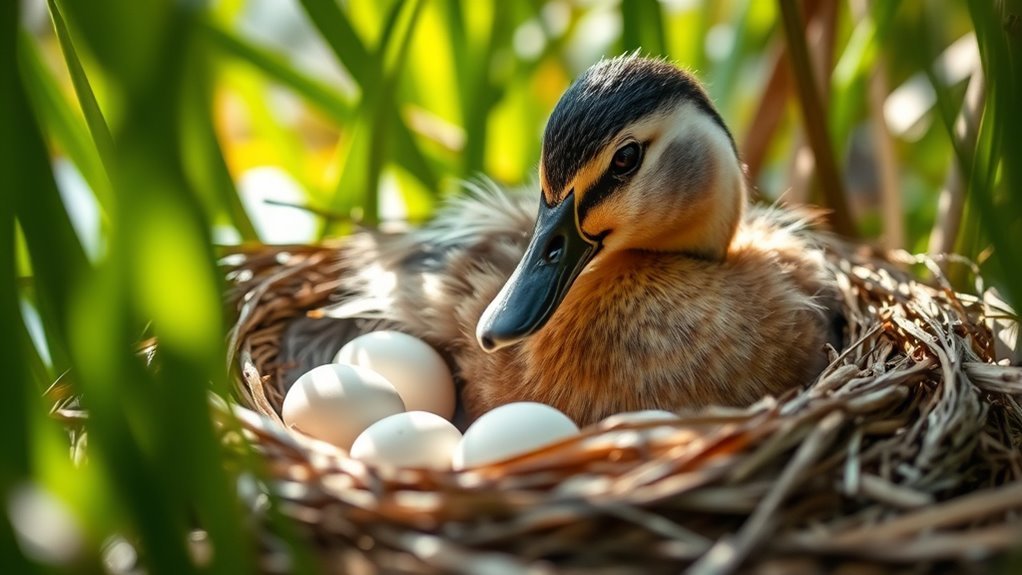
While incubation periods vary among species, ducks typically sit on their eggs for about 21 to 31 days. This duck incubation duration starts after the mother duck completes laying her entire clutch.
Ducks incubate their eggs for 21 to 31 days after laying their full clutch.
During this nesting period, she stays on the duck eggs almost constantly, only leaving briefly to feed or preen. The incubation process guarantees the eggs maintain the right warmth and humidity, which is vital for healthy hatchlings.
In some cases, like certain waterfowl crosses, incubation can extend to 35 days. If incubation is delayed or disturbed, some eggs may hatch later than usual.
Understanding this natural cycle helps you appreciate the mother duck’s dedication. It also supports wildlife protection efforts by minimizing disturbances during this sensitive time.
Key Factors That Influence Duck Egg Incubation Time
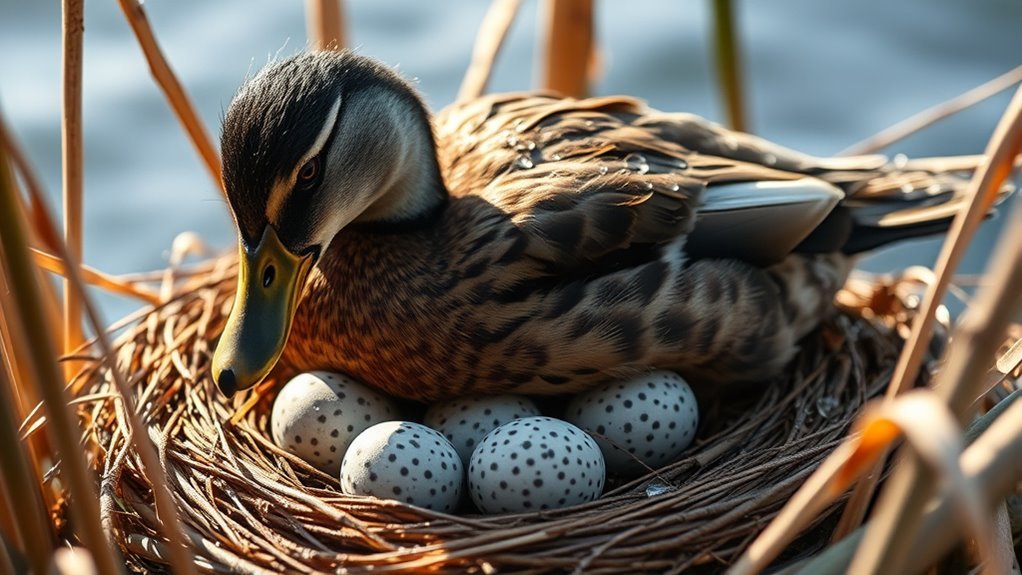
Because several factors impact how long duck eggs take to hatch, understanding these influences helps you better care for nesting ducks or manage incubation. The incubation period for duck eggs usually ranges from 21 to 31 days but varies with species variation—some breeds like Pekin or Muscovy may take up to 40 days.
Temperature plays a critical role; maintaining ideal warmth ensures proper development. Humidity also affects hatchability by influencing egg moisture and embryo growth.
Environmental conditions, including nesting duration and brooding behavior, can extend or shorten incubation time. If a hen remains broody beyond the typical period, it signals changes in incubation factors or environmental stress.
Frequently Asked Questions
Will a Duck Sit on Her Eggs Constantly?
Yes, you’ll find a duck sits almost constantly on her eggs, only leaving briefly to eat, drink, or preen. She stays close to keep them warm, especially during cold or bad weather conditions.
What Month Do Ducks Usually Lay Eggs?
You’ll usually see ducks laying eggs from March through June, with the peak in April and May. In warmer areas, they might start earlier, while colder regions delay laying until later spring or early summer.
Should I Feed a Duck Sitting on Eggs?
Don’t feed a duck sitting on eggs, don’t disturb her routine, don’t offer human food. Instead, provide fresh water nearby, let her feed naturally, and trust her instincts to care for herself and her eggs properly.
How Long Can a Duck Leave Her Eggs Unattended?
A duck can leave her eggs unattended for about 15 to 30 minutes at a time. If she’s gone longer than a few hours, you should worry, as it may harm the eggs’ development and hatch success.
Conclusion
You’ll find that duck egg incubation is a delicate dance dictated by nature’s nuances. While you wait, watch for warmth, weather, and well-being to work wonders.
Remember, rushing won’t rewrite the rhythm—patience plays a pivotal part in perfect hatching. So, stay steady, stay supportive, and savor the silent symphony of sitting ducks.
Your careful care creates a cozy cradle, crafting new life with calm commitment and consistent care. When it comes to how long a duck will sit on eggs, understanding this natural timing helps you provide the best environment for successful hatching.
By being patient and attentive throughout the incubation period, you’ll help ensure the duck eggs stay warm and safe. In the end, your steady support and dedication are key to nurturing healthy ducklings ready to hatch and thrive.