
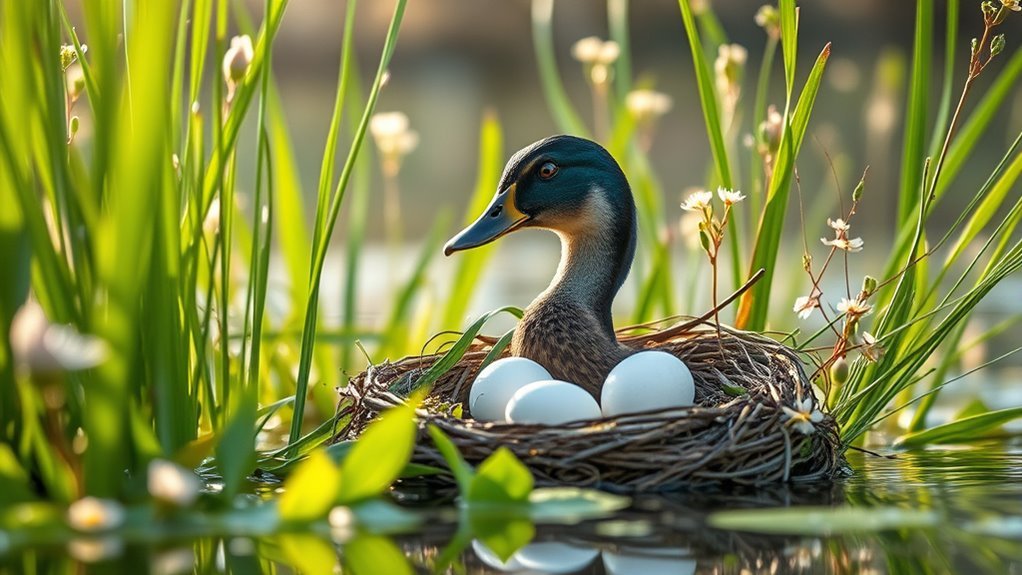
What Time of Year Do Ducks Lay Eggs?
You’ll usually see ducks start laying eggs in early spring, when increasing daylight and warmer temperatures kick off their natural breeding cycle.
This time of year is perfect for ducks because the longer days and milder weather create ideal conditions for nesting and raising ducklings.
Most ducks begin laying eggs between 16 and 24 weeks old, with lighter breeds often starting a bit sooner.
Longer days and comfortable nesting spots really encourage them to lay.
As the seasons shift to fall and winter, egg production slows down or even stops unless you provide extra lighting.
So, if you want to keep those eggs coming through the colder months, a little help with lighting can make a big difference.
Keep exploring to understand how seasonal changes shape their laying patterns and management.
Key Takeaways
- Ducks typically begin laying eggs in early spring when daylight hours increase to around 12-14 hours daily.
- Egg production peaks in late spring and early summer due to warmer temperatures and longer days.
- Most ducks reduce or stop laying eggs during fall and winter as daylight shortens and temperatures drop.
- Breed differences affect laying patterns, with some domesticated ducks capable of year-round egg production.
- Supplemental lighting can extend egg-laying into winter by mimicking longer daylight conditions.
When Do Ducks Usually Start Laying Eggs?

Although the exact timing can vary, ducks typically start laying eggs between 16 and 24 weeks of age, depending on their breed and environment. When ducks start laying often depends on duck maturity and specific duck breeds—lighter breeds like Khaki Campbell may begin as early as 16 weeks, while heavier breeds might wait until 20 to 24 weeks.
Most backyard ducks start laying in early spring, triggered by environmental cues such as increasing daylight hours, usually around 12 to 14 hours daily. These longer daylight hours signal the start of the egg-laying season.
Providing a comfortable nesting area also encourages your ducks to lay eggs consistently. Paying attention to these factors helps you understand when your ducks will begin laying eggs and how to support them effectively.
How Seasonal Factors Affect Duck Egg Production

Since daylight and temperature shift throughout the year, you’ll notice that duck egg production changes with the seasons.
Seasonal factors like increasing daylight hours and warmer temperature signal the start of the breeding season, prompting ducks to begin nesting and laying eggs, usually in early spring.
Increasing daylight and warmer temperatures trigger the breeding season, leading ducks to start nesting and laying eggs in early spring.
Egg production peaks in late spring and early summer when natural cycles create ideal conditions for raising ducklings.
As daylight shortens and temperatures drop in fall and winter, most ducks reduce or stop laying eggs altogether.
However, breed variations exist—some domesticated ducks can maintain winter laying if you provide supplemental lighting and a controlled environment.
Understanding how these seasonal factors influence egg production helps you anticipate and manage your ducks’ laying patterns effectively throughout the year.
Frequently Asked Questions
What to Do if a Mallard Duck Lays Eggs in Your Yard?
If a mallard lays eggs in your yard, don’t disturb the nest. Let her finish laying, avoid moving eggs, and contact a wildlife rehabilitator if relocation’s necessary. Remove nesting materials daily to prevent future nests.
Why Don’t We Eat Duck Eggs Instead of Chicken Eggs?
You might wonder why duck eggs aren’t your go-to. It’s because their strong flavor and larger size can surprise you, plus they’re less available and pricier, making chicken eggs easier and more familiar for everyday meals.
What Time of Year Do Ducks Nest?
You’ll find ducks nesting mainly from late March to June, but in warmer areas, they start as early as February and may continue through August. They choose this time when food is plenty and days are longer.
How Many Months Does It Take for a Duck to Mature?
You know what they say, “Rome wasn’t built in a day.” It takes ducks about 4 to 8 months to mature, depending on breed and conditions. So, patience is key when waiting for them to start laying.
Conclusion
Now that you know ducks usually start laying eggs in early spring, you can see how seasonal changes play a big role in their egg production. Just like they say, “the early bird catches the worm,” getting familiar with these patterns helps you anticipate when ducks will lay their eggs.
So, keep an eye on the changing seasons, and you’ll be ahead of the game when it comes to understanding your feathered friends. Knowing the time of year ducks lay eggs is key to spotting those nesting moments.
By paying attention to the signs of spring, you can better predict when ducks begin their egg-laying cycle. This helps if you’re caring for ducks or just curious about their behavior. Remember, ducks are influenced by daylight and temperature, which makes early spring the perfect time for eggs. So, next time you’re out, watch for those early signs—knowing when ducks lay eggs will make your experience more rewarding and connected to nature.