Is It Ok to Eat Frozen Eggs?
You can eat frozen eggs safely as long as their shells stay intact and undamaged. This is important because unbroken shells prevent bacteria from getting inside and contaminating the eggs.
Before freezing, always check for cracks. Only freeze eggs with unbroken shells to keep them safe.
When thawing, do it gradually in the fridge or use cold water. Never leave eggs out at room temperature because that can promote bacterial growth.
Use thawed eggs within a day or two for the best quality and safety.
Keep following these simple steps, and you’ll guarantee safe, good-tasting eggs every time.
Key Takeaways
- Frozen eggs with intact, uncracked shells are safe to eat after proper thawing.
- Cracked or damaged shells after freezing pose a contamination risk and should be discarded.
- Thaw frozen eggs gradually in the refrigerator or under cold water, avoiding room temperature.
- Use thawed eggs within 1-2 days and keep them refrigerated to maintain safety.
- Egg whites may change texture after freezing, but properly handled eggs remain safe for consumption.
Key Signs Frozen Eggs Are Safe to Eat
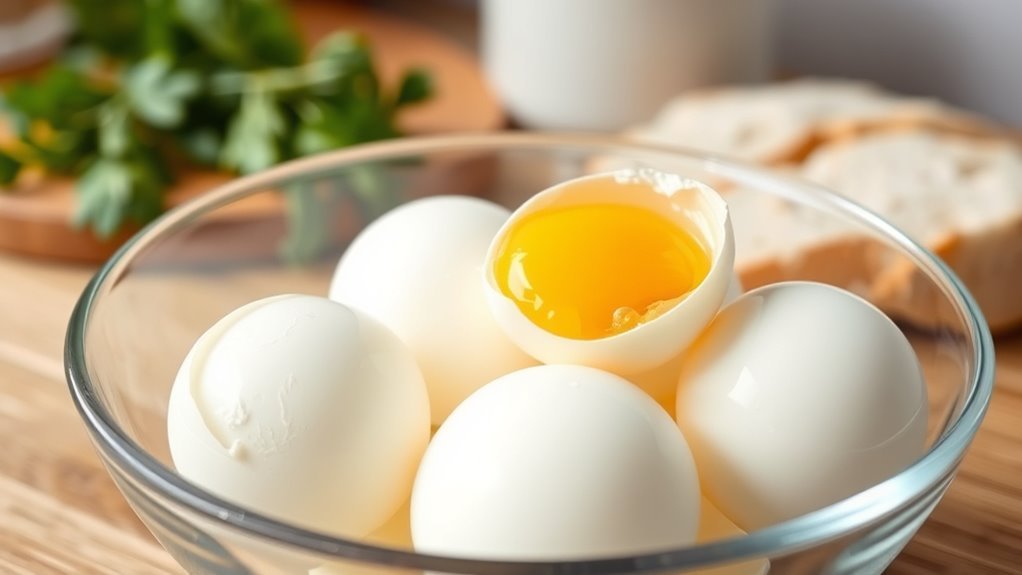
Although freezing eggs can be tricky, you can safely eat them if their shells stay intact. When you freeze eggs, it’s essential to check the egg shells for any cracks or damage.
Eggs with unbroken shells maintain their shell integrity, which helps prevent bacterial contamination and guarantees food safety. If you notice cracks or damage after the eggs have been stored in the freezer, it’s best to discard them because they might not be safe to eat.
Unbroken eggshells protect against bacteria, ensuring safety; discard any cracked eggs after freezing.
Eggs that show no visible signs of shell damage can remain frozen until you’re ready to use them. Properly stored and intact eggs can be safely thawed later without worry.
Just be sure to always inspect the shells carefully before thawing to confirm they’re safe to eat. It’s a simple step that helps keep you safe!
How to Thaw and Use Frozen Eggs Safely
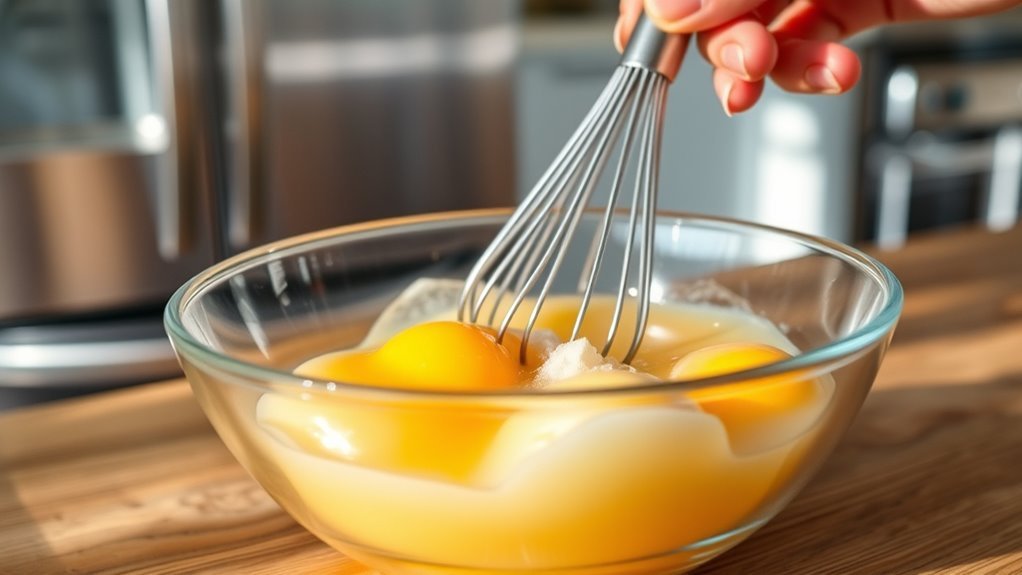
When you’re ready to use frozen eggs, thaw them gradually in the refrigerator to keep their quality and safety intact. Avoid thawing eggs in their shells at room temperature because that can encourage bacterial growth.
If you need to speed up thawing, you can submerge the frozen eggs (preferably out of the carton) in cold water. Just remember to change the water every 30 minutes.
Once thawed, use the eggs promptly within 1-2 days and keep them refrigerated. Keep in mind, the egg white might change texture after freezing.
Frequently Asked Questions
Is an Egg Ruined if It Freezes?
An egg isn’t necessarily ruined if it freezes, as long as its shell stays intact. You’ll notice texture changes, but it’s still safe. However, if the shell cracks, you should toss the egg to avoid contamination.
What to Do if Your Eggs Froze in the Fridge?
About 20% of eggs crack when frozen. If yours froze, check for cracks, discard damaged ones, and thaw intact eggs slowly in the fridge or cold water. Don’t refreeze them to keep things safe and fresh.
Are Eggs Still Good if They Were Frozen?
Yes, your eggs are still good if frozen with intact shells. Just thaw them properly, check for cracks, and cook thoroughly. Texture might change, but they remain safe and edible when handled correctly.
Is There a Downside to Freezing Eggs?
Yes, freezing eggs can change their texture, especially the yolk, making them less ideal for some recipes. Cracked shells increase contamination risk, so you should handle, freeze, and thaw them carefully to avoid foodborne illness.
Conclusion
So, you’ve bravely frozen your eggs—congratulations, you’re basically a kitchen scientist now! Just remember, if they don’t look like they’ve survived a blizzard, they’re probably safe to eat.
Thaw them gently, avoid any suspicious smells, and cook them well—because no one wants a surprise omelet with a side of food poisoning.
Trust your instincts (and your freezer’s mercy) to keep breakfast both adventurous and edible. When it comes to eating frozen eggs, safety is key. Proper thawing and cooking ensure that your frozen eggs remain delicious and safe to eat. So go ahead, enjoy your frozen eggs with confidence, knowing you’ve taken the right steps to keep your meal tasty and safe. Bon appétit, freezer pioneer!