How to Treat an Egg Bound Hen Step by Step
If your hen shows signs like straining, vent swelling, or lethargy, she may be egg bound. This condition happens when an egg gets stuck inside her, which can be really uncomfortable and even dangerous. It’s important to act quickly to help her feel better and avoid complications.
Gently soak her in warm water for 15-20 minutes to relax her muscles. This can make it easier for the egg to move along.
Then, apply a water-based lubricant around the vent to help things along.
Massage her abdomen in gentle circular motions to encourage the egg’s passage. Keep her calm, warm, and stress-free throughout recovery.
Offering calcium supplements can also strengthen her muscles and support the process.
Following these steps can relieve discomfort and help your hen safely pass the egg. You can uncover more ways to assist if needed.
Key Takeaways
- Soak the hen gently in warm water for 15-20 minutes to relax muscles and soften the egg. This helps make things a bit easier for her.
- Apply a water-based lubricant around the vent to ease the egg’s passage. It’ll reduce friction and discomfort.
- Massage the abdomen gently in circular motions to stimulate muscle contractions. Be careful and gentle while doing this.
- Keep the hen in a calm, warm, and dark environment to reduce stress and aid recovery. A quiet space really helps her feel safe.
- Provide calcium supplements and monitor closely for signs of egg passage and improved health. Keep an eye on her to catch any changes early.
How to Spot an Egg-Bound Hen: Key Symptoms to Watch For
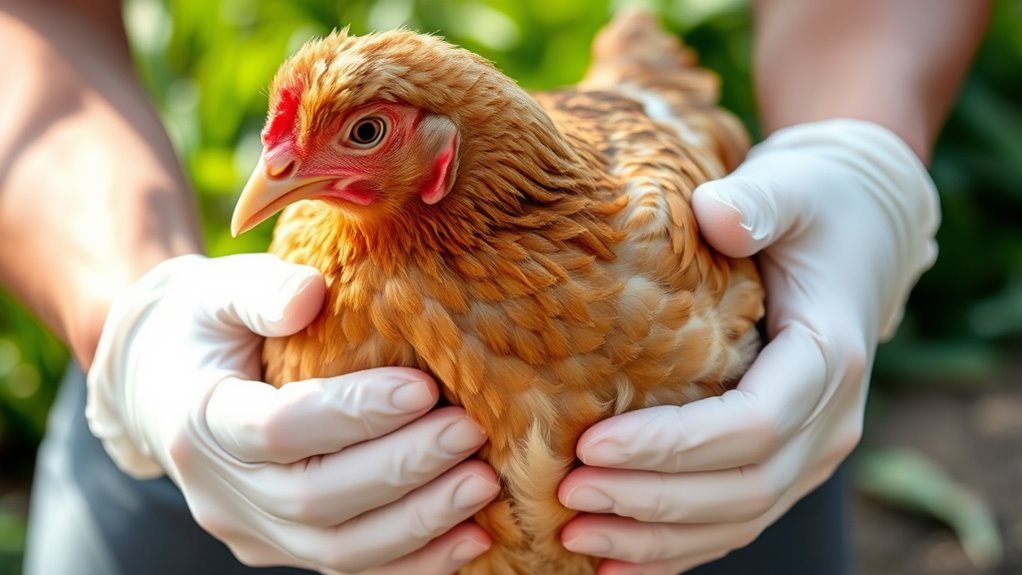
If you notice your hen straining or sitting in the nest box for a long time, she might be egg-bound. Recognizing the signs of egg binding early is crucial for her reproductive health.
Look for vent swelling or a hardening in the abdomen, which often signals difficulty passing an egg. Abdominal swelling and a distended vent are clear symptoms of egg binding, indicating an egg stuck inside.
Vent swelling and abdominal hardening often signal an egg stuck inside, indicating egg binding.
You may also observe lethargy, loss of appetite, and general hen discomfort. Some hens show unusual vocalizations or a penguin-like gait due to pain.
These symptoms of egg binding highlight that your hen needs prompt attention to avoid serious complications. Monitoring these signs helps you support her well-being and prevent further distress.
How to Help an Egg-Bound Hen Pass the Egg Safely and Comfortably
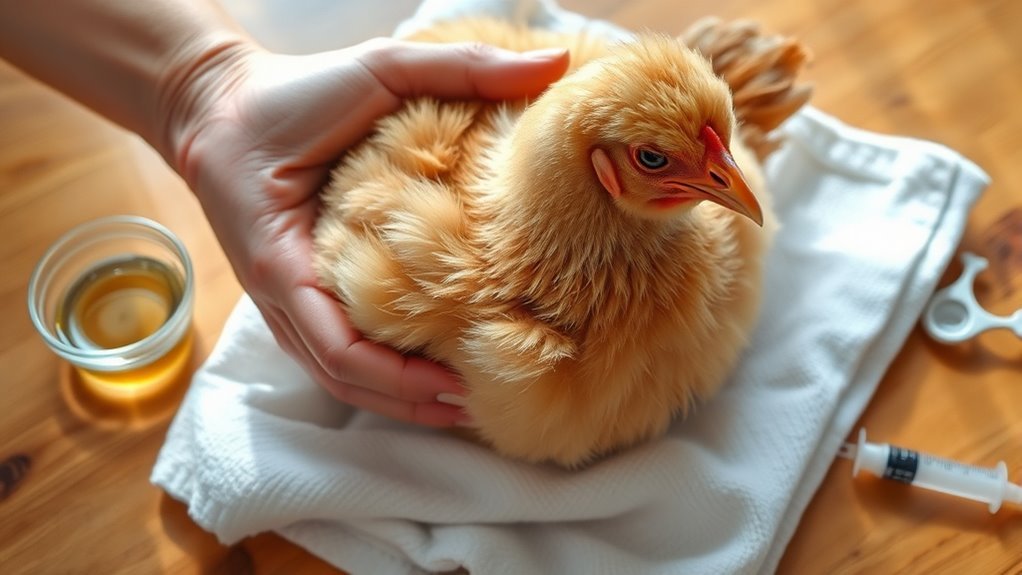
When your hen struggles to pass an egg, you can help by creating a calm and supportive environment that encourages natural muscle relaxation and movement. Start by gently soaking her in warm water for 15-20 minutes. This warm bath helps relax muscles and promotes egg passage.
Apply a water-based lubricant like petroleum jelly around the vent to ease the egg shell’s movement during expulsion. Then, gently massage her abdomen in circular motions to encourage the egg toward the vent.
Offering calcium supplements or calcium-rich foods strengthens muscle contractions, which is crucial for overcoming egg binding. Make sure to keep your egg-laying hens in a quiet, warm, and dark space during and after treatment.
This helps reduce stress and supports recovery. Following these steps will help the hen pass the egg safely and comfortably.
Frequently Asked Questions
How to Relieve an Egg-Bound Hen?
You can relieve an egg-bound hen by applying warm compresses, gently massaging her abdomen, using lubricant around the vent, and carefully assisting the egg’s passage. Always handle her gently and seek veterinary help if needed.
How Long Does It Take for a Hen to Recover From Egg-Bound?
If you act fast, your hen can start feeling better within 24 to 48 hours. Full recovery usually takes a few days to a week, so keep a close eye on her to prevent complications.
Will an Egg-Bound Chicken Resolve Itself?
No, an egg-bound chicken usually won’t resolve itself, especially with larger eggs. You need to act quickly to help her, or she risks serious complications and might not survive without intervention within 36-48 hours.
Can You Cure an Egg-Bound Chicken?
You absolutely can cure an egg-bound hen if you act fast! With warm baths, gentle vent lubrication, and calcium, you’ll help her pass the egg safely—like a miracle in your hands—before it becomes life-threatening.
Conclusion
Just like a river needs to flow freely, your hen needs to pass her egg without strain. By spotting the signs early and acting with care, you become the gentle guide, helping her navigate this moment.
Remember, your calm hands and steady heart can turn her struggle into release, allowing new life to move forward. Trust your instincts, stay patient, and watch as she blooms again, unburdened and bright.
Treating an egg bound hen requires patience and gentle care. When you notice signs like straining or lethargy, step in calmly and help her with warmth and support. With your careful attention, you can ease her discomfort and encourage a safe passage for the egg.
By staying vigilant and acting promptly, you give your hen the best chance to recover quickly. This simple, caring approach can transform her struggle into relief, helping your hen get back to her healthy, happy self.