
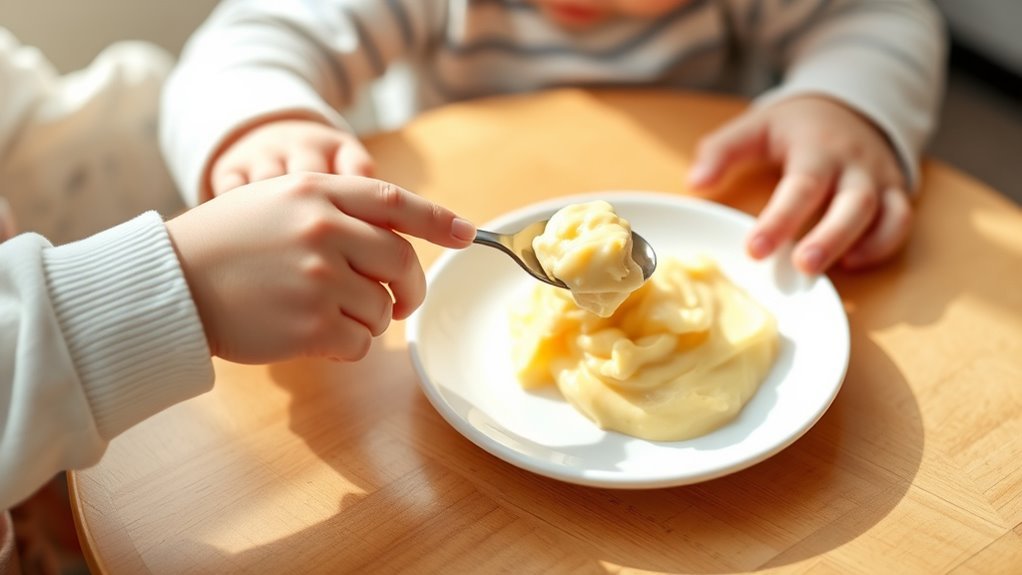
How to Serve Eggs to a 7 Month Old in 5 Simple Steps
You can start serving fully cooked eggs to your 7-month-old once they’re developmentally ready and can sit up well. Eggs are a great source of protein and other nutrients that support your baby’s growth and development.
Make sure to cook the eggs thoroughly by boiling or scrambling them until they are firm. Then, let them cool down to a safe temperature before offering them to your baby.
Start with simple textures like smooth purees or small, soft pieces. This encourages chewing and helps with self-feeding skills.
Keep a close eye on your baby for any allergic reactions or feeding issues. It’s always better to be cautious early on.
Following these easy steps will help your baby enjoy eggs safely and confidently.
Plus, you can adjust the texture as they grow and develop new eating skills.
Key Takeaways
- Start offering fully cooked eggs around 7 months when your baby can sit upright and handle solid textures. It’s a good time to introduce this new food.
- Prepare eggs by boiling, scrambling, or baking until fully set. This helps keep things safe and reduces any choking risks.
- Serve eggs in soft, manageable textures like purees, mashed eggs, or small scrambled pieces. These are easier for your baby to swallow.
- Gradually introduce firmer egg textures. You can move from purees to small chunks to help your baby practice chewing and self-feeding.
- Keep a close eye on your baby for any allergic reactions or feeding difficulties. And if you notice anything concerning, don’t hesitate to consult a healthcare professional.
When Should You Start Offering Eggs to Your Baby?
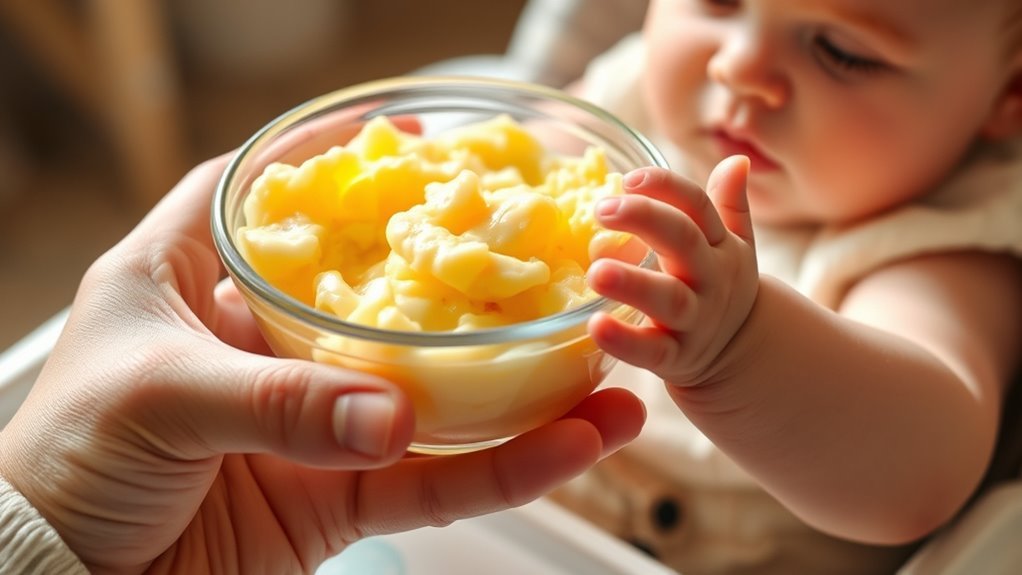
Although every baby develops at their own pace, you can start offering eggs around 6 to 7 months, once your little one can sit upright and has good head control. At this stage, your baby shows developmental readiness for solid foods with age-appropriate textures.
Introducing fully cooked eggs early, around 7 months, aligns well with key feeding milestones and supports egg allergy prevention. The American Academy of Pediatrics highlights that early introduction of eggs can reduce the risk of developing food allergies.
When you start offering eggs, make sure they’re fully cooked and served in manageable pieces that suit your baby’s chewing abilities. By recognizing your baby’s readiness and following these guidelines, you’ll introduce eggs safely and confidently as part of a balanced diet during this important feeding phase.
How to Cook Eggs Safely for Your 7-Month-Old
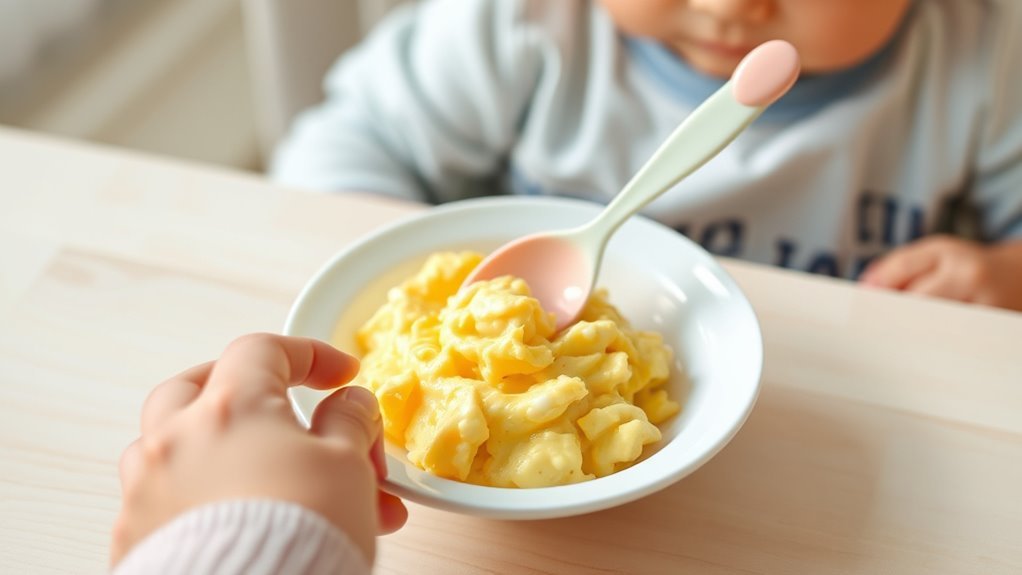
Once your baby is ready to try eggs, the next step is to prepare them safely. Focus on safe egg preparation by cooking well-cooked eggs until they’re fully set. Boiling, scrambling, or baking are great methods to guarantee 7-month-old eggs meet egg safety standards, eliminating risks like Salmonella.
Avoid soft or runny eggs, which increase the egg choking hazard and may contain undercooked proteins. After cooking, cool the eggs to a safe temperature and serve them in age-appropriate egg textures, such as egg puree or small, manageable pieces.
This approach supports egg allergy prevention while matching your baby’s developmental stage. Prioritizing cooked egg textures and fully set eggs ensures you’re providing nutritious, safe egg options for your little one.
Simple Ways to Serve Eggs to Your Baby
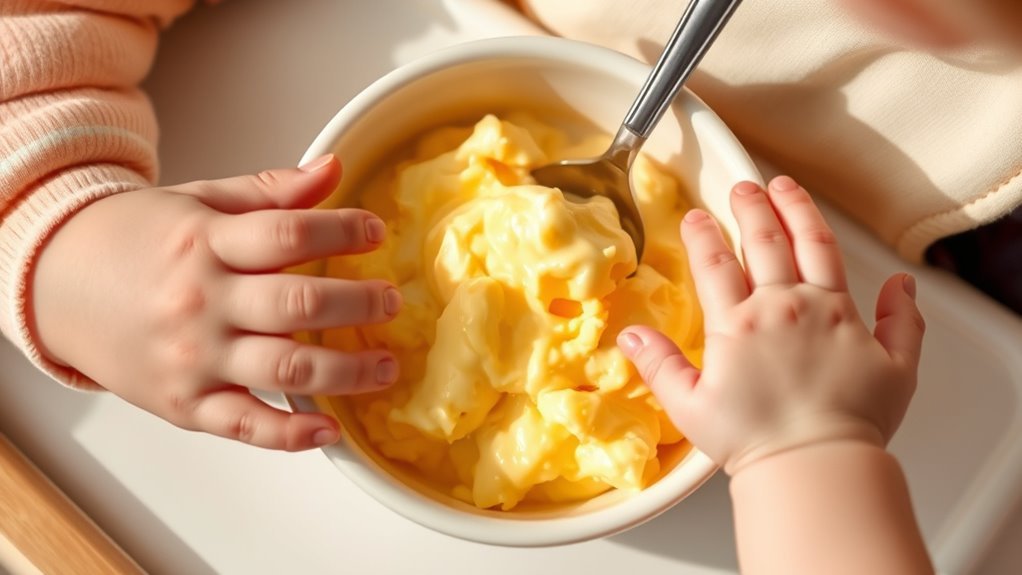
When you introduce eggs to your 7-month-old, serving them in simple, safe ways helps your baby enjoy this nutritious food while developing essential eating skills. Start with cooked eggs in soft textures like mashed eggs or egg purees mixed with familiar fruit or vegetable purees to enhance flavor.
Scrambled eggs are great too—serve them in small pieces to encourage self-feeding and support baby-led weaning. You can also offer chopped eggs or egg strips as finger foods, perfect for your baby to grasp and explore.
Always guarantee eggs are fully cooked and served in manageable sizes to minimize choking risks. By offering these varied but simple preparations, you’ll help your baby build confidence in eating while enjoying the benefits of eggs.
How to Introduce Different Egg Textures Gradually
Introducing different egg textures gradually allows your baby to develop chewing and swallowing skills safely while enjoying new flavors. Start with smooth egg purees at 7 months, then move to mashed eggs or finely chopped scrambled eggs to build chewing skills.
As your baby gains confidence, introduce textured eggs like small cooked egg chunks to encourage baby self-feeding and pincer grasp. Always guarantee firm egg consistency to reduce choking risks.
Here’s a gradual texture progression to guide you:
| Stage | Egg Texture | Feeding Focus |
|---|---|---|
| 1 | Smooth egg purees | Introducing egg textures, swallowing |
| 2 | Mashed eggs | Developing chewing skills |
| 3 | Chopped scrambled eggs | Textured eggs, chewing skills |
| 4 | Cooked egg chunks | Baby self-feeding, pincer grasp |
Watch your baby’s cues and adjust accordingly.
Signs of Allergies and Feeding Problems to Watch For
As you offer your baby different egg textures, keep a close eye on how they respond to each new bite. Watch for allergic reactions like swelling, rash, or vomiting—these are key signs of allergy you shouldn’t overlook.
Feeding problems may appear as gagging, vomiting during feeding, or fussiness, which could signal feeding difficulties with texture. Food allergy symptoms don’t always show immediately; delayed vomiting or diarrhea hours after eating eggs could mean FPIES, a serious allergy warning.
Persistent fussiness or swelling around the mouth also deserves attention. If you notice any signs of allergy or feeding difficulties, consult a healthcare professional promptly. Being vigilant helps guarantee your baby’s safety as they explore new foods.
Frequently Asked Questions
How to Serve Eggs to a 7 Month Old for the First Time?
Start with a small amount of fully cooked, mashed egg yolk or scrambled egg. Serve it smooth and soft to avoid choking. Watch closely for any allergic reactions or gagging during the first feeding.
What Is the 5 5 5 Rule for Eggs?
The 5-5-5 rule means you start with 5 grams of eggs, then increase by 5 grams every 5 days. This gradual increase helps you spot allergic reactions early and safely build your baby’s tolerance.
How Do You Make Egg for 7 Month Old Baby?
You’ll want to fully cook the egg, then mash or puree it smooth. Mix it with veggies or fruits if you like. Serve at a safe temperature, and always supervise your baby while eating.
How to Serve 7 Month Old Scrambled Eggs?
You’ll want to serve fully cooked scrambled eggs in small, soft pieces or mashed smooth. Avoid seasonings, offer them on a spoon or as finger food, and always supervise your baby while eating to guarantee safety.
Conclusion
Now that you know when and how to serve eggs safely, start slowly, savoring each small serving. Switch up textures to stimulate your baby’s senses and stay sharp for any signs of allergies or adverse reactions.
Serving eggs can be simple, satisfying, and safe when you stay steady and sensible. So, step confidently into this exciting stage. Support your little one’s strong start with scrumptious, soft, and safe egg servings!
Remember, introducing eggs to your 7-month-old doesn’t have to be complicated. By following these easy steps, you ensure your baby enjoys nutritious, delicious eggs while staying safe. Keep the servings small, watch for reactions, and vary the texture to make mealtime fun and engaging. With patience and care, serving eggs can be a joyful part of your baby’s healthy eating journey.