7 Key Differences Between Flat and Point Corned Beef Brisket
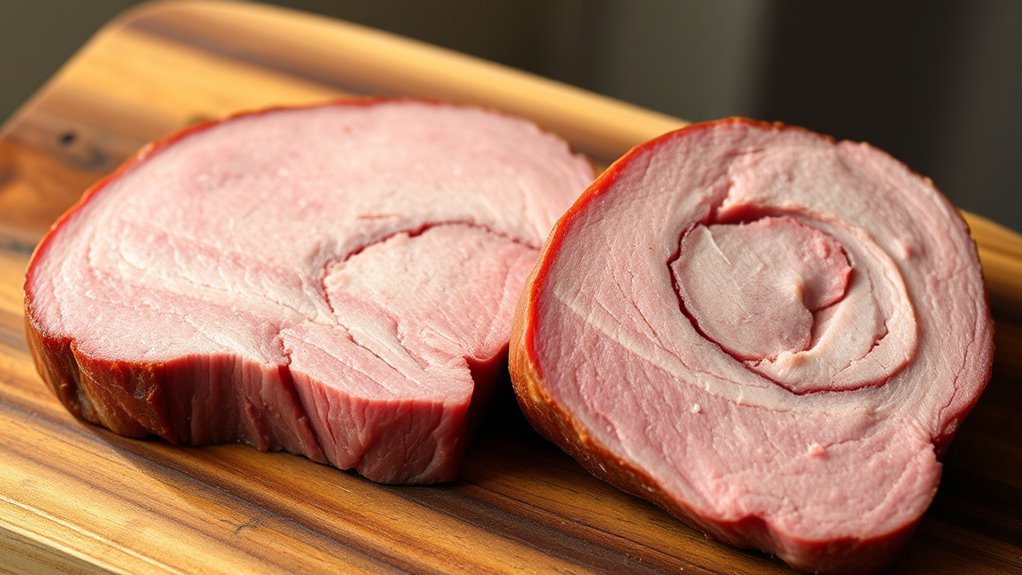
You’ll notice the flat brisket is leaner, rectangular, and slices neatly, making it perfect for sandwiches or plated dishes.
The point cut is fattier, more irregular in shape, and juicier, ideal for slow cooking to enhance tenderness and flavor.
Flat cooks faster and holds seasoning well, while the point benefits from gentle, slow heat.
Choosing between them depends on your recipe and presentation needs.
Keep exploring to uncover which cut suits your next meal best.
Whether you prefer lean and tidy or rich and juicy, understanding these differences helps you cook corned beef brisket just right.
Key Takeaways
- The flat cut is leaner, uniform in shape, and easier to slice evenly, while the point cut is fattier with an irregular shape.
- Point cut offers richer flavor and juiciness due to higher marbling, whereas flat cut has a milder taste and firmer texture.
- Flat cut suits faster cooking methods like roasting, while point cut requires slow cooking to tenderize fat and collagen.
- Flat cut is ideal for dishes needing neat presentation, such as sandwiches, while point cut excels in slow-cooked, shredded recipes like stews.
- Point cut tends to be more affordable and better for shredding, while flat cut is preferred for consistent seasoning absorption and plating.
Which Corned Beef Brisket Cut Should You Choose?
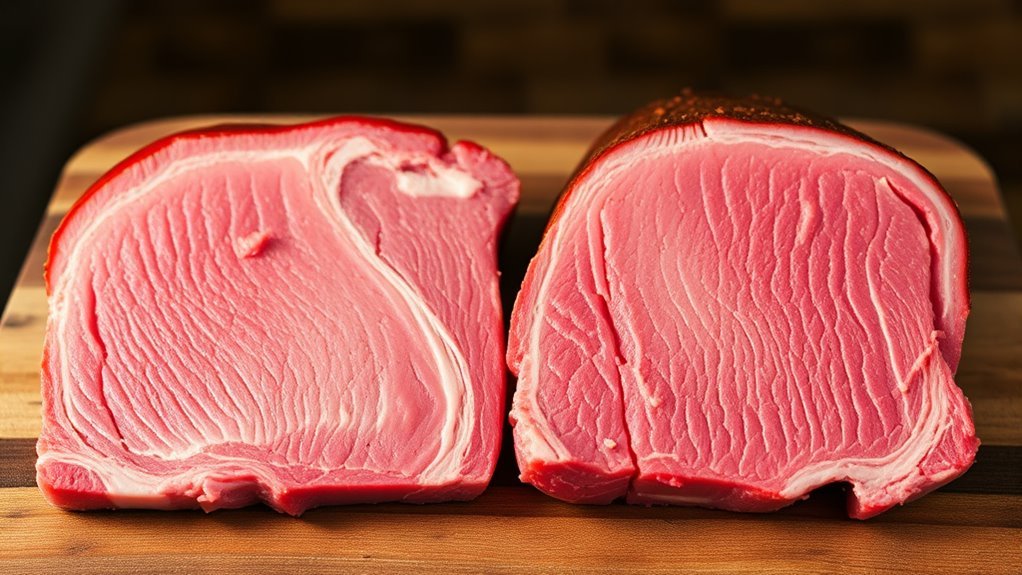
When deciding which corned beef brisket cut to choose, consider how you’ll use it. If you want a leaner option that’s easier to slice and looks great for sandwiches or presentation, the flat cut is your best bet. Its uniform thickness helps with even cooking and neat slicing.
On the other hand, if you prefer a more flavorful, tender cut packed with marbling, the point cut is ideal. This fattier section shines in slow cooking, breaking down beautifully to create juicy, rich dishes. While the point cut tends to be more affordable, it offers a depth of taste that’s hard to beat.
Ultimately, your choice between flat cut and point cut depends on whether you value leaner meat or a more flavorful, slow-cooked experience. It really comes down to what you’re craving and how you plan to cook it.
Flat vs. Point Brisket: Differences in Shape and Fat
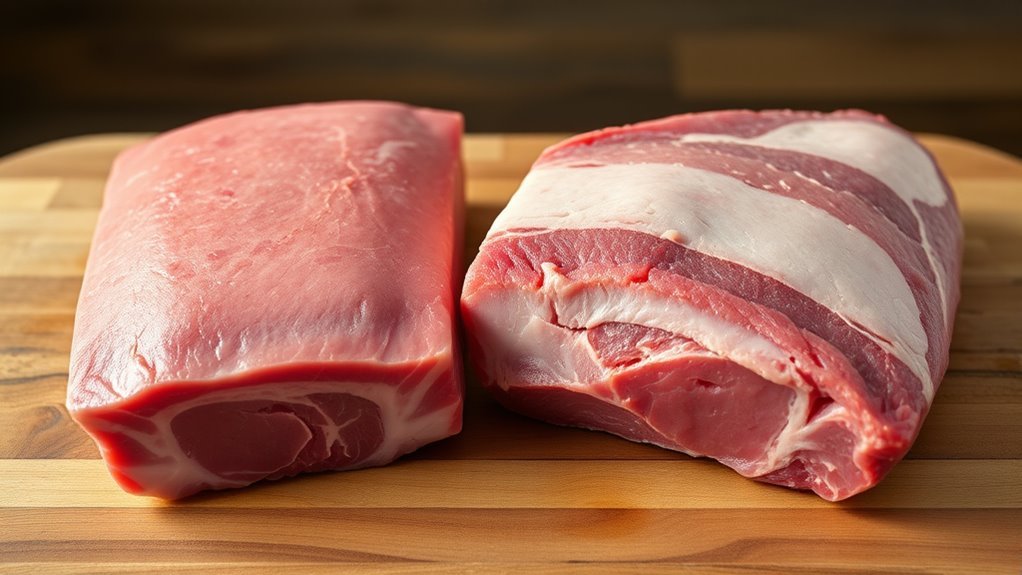
When you pick up a point brisket, you’ll notice its thicker, irregular shape and more marbling compared to the flat’s uniform, rectangular cut.
That extra fat in the point not only adds flavor but also affects how it cooks and feels on your plate.
Understanding these differences helps you choose the best cut for your recipe and desired texture.
Shape And Thickness
Although both cuts come from the brisket, you’ll notice the flat and point differ markedly in shape and thickness. The flat cut has a uniform, rectangular shape with consistent thickness, making it easier for you to achieve uniform slices. Its thinner, flatter profile allows for even cooking and a neat presentation.
On the other hand, the point brisket has a rounded shape, thicker at one end, due to its uneven marbling distribution. The fat cap on the flat cut runs along the top, while marbling throughout the point cut contributes to its varying thickness and irregular shape.
Knowing these differences really helps you pick the right cut for your cooking style and the kind of presentation you want.
Fat Content Differences
The differing shapes of the flat and point cuts also influence their fat content, which plays a big role in flavor and texture. The point cut boasts higher fat content and more marbling due to its thicker, rounder shape.
This increased intramuscular fat makes the point cut juicier and more flavorful. In contrast, the flat cut is leaner, with less intramuscular fat and a thinner fat layer. It offers a milder taste and firmer texture.
| Cut Type | Fat Content | Marbling Level |
|---|---|---|
| Point Cut | Higher fat content | More marbling |
| Flat Cut | Lower fat content | Leaner, less fat |
| Shape | Thicker, rounder | Flatter, thinner |
Understanding fat content helps you pick the right brisket for your taste.
Cooking Impact On Texture
Because the flat and point cuts differ in shape and fat content, you’ll notice distinct effects on their texture after cooking. The flat cut, being thinner and more uniform, cooks evenly with consistent moisture retention, especially using quicker cooking methods like oven roasting or braising.
Its lean profile means less marbling, so you’ll get a firmer texture with good tenderness if not overcooked. On the other hand, the point cut’s higher marbling and thicker shape can make cooking a bit tricky, requiring slower methods to guarantee even heat distribution.
That extra fat helps lock in moisture, resulting in a juicier, more tender texture. Understanding these differences lets you choose the right cooking methods to optimize the texture and tenderness of each cut.
How Fat Affects Flavor and Juiciness in Each Cut
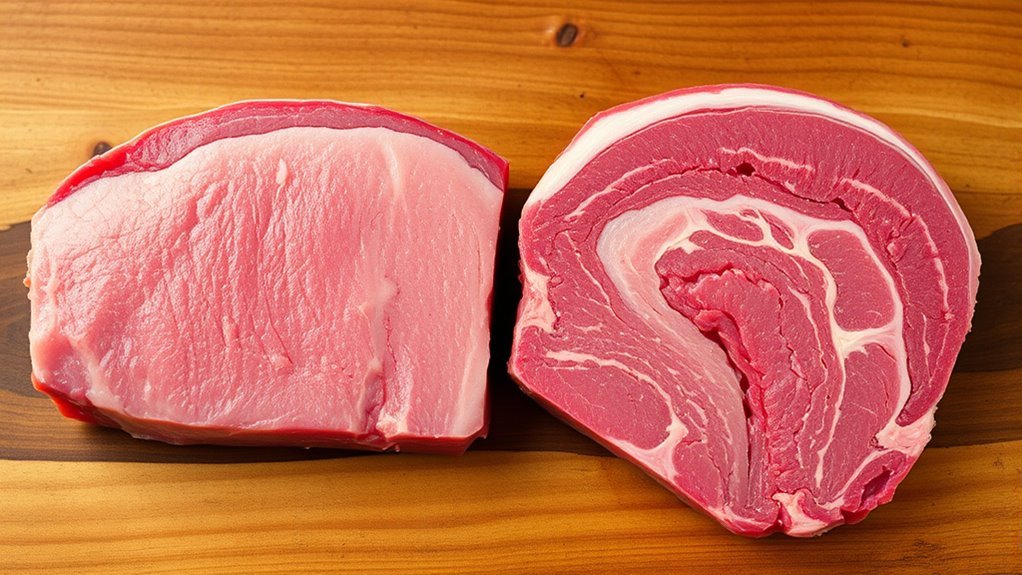
You’ll notice the point cut has more fat marbling, which really boosts its flavor and juiciness as it cooks. That fat melts slowly, keeping the meat tender and rich.
Compared to the leaner flat cut, the point offers a bolder taste and more moisture. But you’ll want to watch the cooking time to avoid greasiness.
Fat Content Comparison
One key factor that sets the point cut apart from the flat cut is its higher fat content, which directly impacts flavor and juiciness. The point cut contains more intramuscular fat, making it richer and more tender.
In contrast, the flat cut is leaner with less fat, offering a milder taste and firmer texture.
Consider these points about fat content differences:
- Point cut’s fat melts during cooking, enhancing moisture and depth of flavor.
- Flat cut’s lower fat content makes it easier to slice and leaner in appearance.
- Intramuscular fat in the point cut boosts juiciness and richness.
- Flat cut’s leaner profile suits those preferring less fatty meat.
Understanding these differences helps you choose the cut that best matches your flavor and texture preferences. So, whether you like it rich and juicy or lean and firm, there’s a cut for you!
Impact On Juiciness
While both cuts come from the same brisket, the fat content in the point cut plays a vital role in keeping it juicy and flavorful. The point cut’s higher marbling means fat melts during cooking, locking in moisture and enhancing flavor.
This fat acts as an insulator, making the point cut juicier and more tender even after long cooking times. On the other hand, the leaner flat cut has less fat, so you’ll need to cook it carefully to avoid dryness.
| Cut Type | Fat Content | Juiciness & Flavor |
|---|---|---|
| Point | High | Juicier, more tender |
| Flat | Low | Leaner, drier if overcooked |
| Both | Moderate | Flavor depends on cooking |
Why Flat and Point Cuts Need Different Cooking Methods
Because the flat and point cuts have distinct fat and connective tissue levels, they demand different cooking approaches to bring out their best qualities. You’ll want to tailor your cooking methods to match each cut’s structure for ideal results.
The flat cut is leaner with less connective tissue, so it cooks well with faster methods like roasting or boiling. It’s perfect when you want a quicker meal without sacrificing texture.
The point cut contains more marbling and connective tissue, which requires slow cooking to break down collagen and fat. This slower process is what makes the meat tender and flavorful.
Slow cooking enhances the point cut’s tenderness and flavor by gently rendering fat. It’s worth the wait if you want a rich, juicy bite.
On the other hand, overcooking the flat cut leads to dryness, so aim for medium doneness to maintain juiciness. Keep an eye on it, and you’ll get the best results every time.
Which Cut Slices Easier for a Better Presentation?
If you want clean, uniform slices that look great on a plate or sandwich, the flat cut is your best bet. Thanks to its leaner profile and uniform thickness, it’s easier to slice evenly, resulting in neat slices that elevate your presentation.
The dense muscle fibers in the flat cut let you cut through smoothly without tearing, so each slice maintains a consistent shape and thickness. On the other hand, the point cut’s higher fat marbling makes it less uniform and more challenging to slice cleanly.
Its thicker, marbled texture often creates irregular slices, which can detract from a polished look. For a better presentation with neat, uniform slices, the flat cut clearly makes slicing easier and more reliable.
How Flat and Point Cuts Perform in Popular Recipes
Now that you know the flat cut offers cleaner slices for a polished presentation, it’s worth exploring how each brisket cut performs in popular recipes. When choosing between flat cut and point cut for your corned beef recipes, consider how each shines in different cooking methods.
Choosing between flat and point cuts can elevate your corned beef with the right cooking method.
The flat cut’s uniform shape and lean profile make it perfect for precise slicing in sandwiches and roast beef.
The point cut’s higher fat content boosts tenderness and juiciness, which is ideal for slow cooker meals like stews and braises.
Flat cut absorbs seasonings evenly, enhancing flavor consistency in presentation-focused dishes.
Point cut’s richness really shines when shredded, adding depth to pastrami and hash recipes.
Understanding these differences helps you pick the right cut to maximize tenderness and slicing ease in your favorite corned beef recipes.
Key Factors to Consider When Buying Flat or Point Brisket
When selecting corned beef brisket, you should feel the meat to guarantee it’s firm and not mushy, as this indicates quality. If you prefer leaner meat with clean slicing and a neat presentation, the flat cut is your best bet.
It’s ideal for sandwiches and recipes where appearance matters. On the other hand, if you want more fat content and richer flavor for shredding or slow cooking, go with the point cut.
Consider whether you need a whole brisket combining both cuts or just one based on your recipe. Also, keep in mind that point cuts are usually more affordable due to higher fat content.
Prioritize meat quality and your cooking style when choosing between flat cut and point cut brisket.
Frequently Asked Questions
Which Is Best, Point or Flat Corned Beef?
You’ll want the point cut if you crave rich, tender flavor, especially for shredded dishes. But if you prefer leaner, easier-to-slice meat that looks great in sandwiches, the flat cut’s your best bet.
Which Is Better Brisket Point or Flat?
You’ll prefer the point brisket if you want juicier, more flavorful meat from its fat and marbling. Choose the flat if you want leaner, easier-to-slice brisket that’s great for sandwiches and presentation.
What Cut of Corned Beef Is Considered the Best?
You’ll find the flat cut is considered the best because it’s leaner, easier to slice, and looks great on the plate. It’s perfect if you want neat, uniform pieces for traditional dishes like corned beef and cabbage.
Is Corned Beef Ok for Diabetics?
You know what they say, “Everything in moderation.” Corned beef can be okay for diabetics if you watch your portions, choose lean cuts, and pair it with low-carb veggies to keep your blood sugar and sodium in check.
Conclusion
Choosing between flat and point corned beef brisket comes down to your taste and cooking style. The flat cut offers lean, neat slices perfect for impressive presentations. Meanwhile, the point cut bursts with rich, juicy flavor thanks to its marbling.
Knowing these differences will make your meals unforgettable—like a flavor explosion that could wake the entire neighborhood! So, pick the cut that suits your recipe and get ready to impress everyone at the table.
When deciding between flat and point corned beef brisket, consider what you value most: the lean, tidy slices of the flat cut or the flavorful, juicy richness of the point cut. Each has its place in cooking, depending on your desired texture and taste. Understanding these cuts ensures your corned beef brisket turns out just right, making your meals truly memorable and delicious every time.