
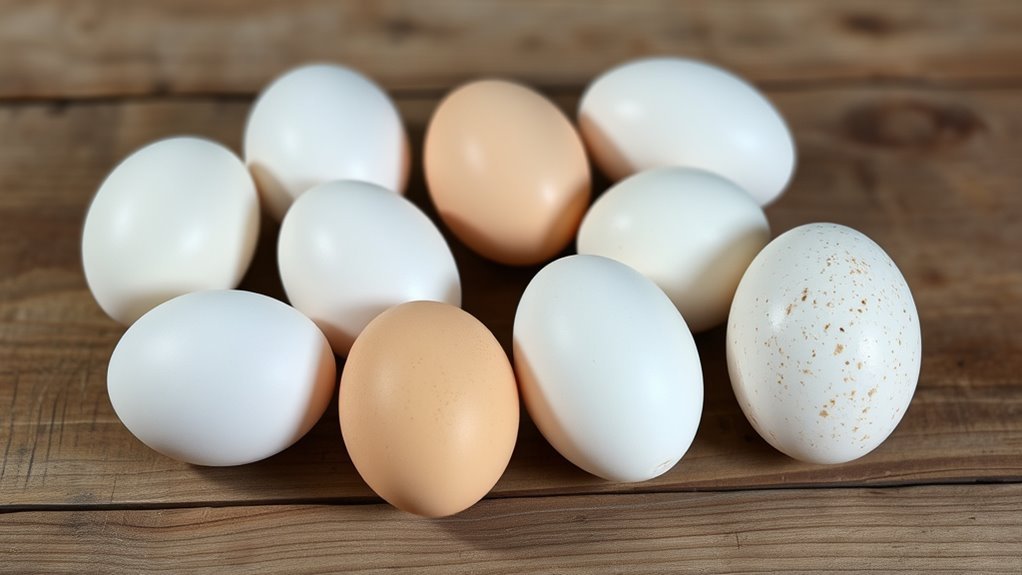
7 Key Differences Between Duck Eggs and Chicken Eggs
You’ll notice duck eggs are bigger with thicker, colorful shells and richer, creamier yolks compared to chicken eggs. They pack more protein, omega-3s, and vitamins but have higher cholesterol.
Ducks lay eggs more steadily year-round, though duck eggs usually cost more and are less common.
Duck eggs also improve baking with denser whites and stronger foams. If you want to understand how these differences affect taste, nutrition, and cooking, there’s plenty more to uncover.
Let’s dive into what makes duck eggs stand out from chicken eggs in your kitchen!
Key Takeaways
- Duck eggs are larger, with thicker, more water-resistant shells. They also come in various colors, unlike typical chicken eggs.
- Duck eggs have a richer, creamier flavor and a denser texture. This is because they have larger yolks and thicker, more opaque whites.
- Nutritionally, duck eggs pack more protein, omega-3s, vitamins, and cholesterol compared to chicken eggs.
- Ducks tend to lay eggs more consistently throughout the year. Chickens, on the other hand, have seasonal laying patterns and produce fewer eggs annually.
- Duck eggs usually cost more and are less accessible. You’ll mostly find them in specialty markets, while chicken eggs are widely available and cheaper.
Size, Shell, and Appearance Differences of Duck and Chicken Eggs
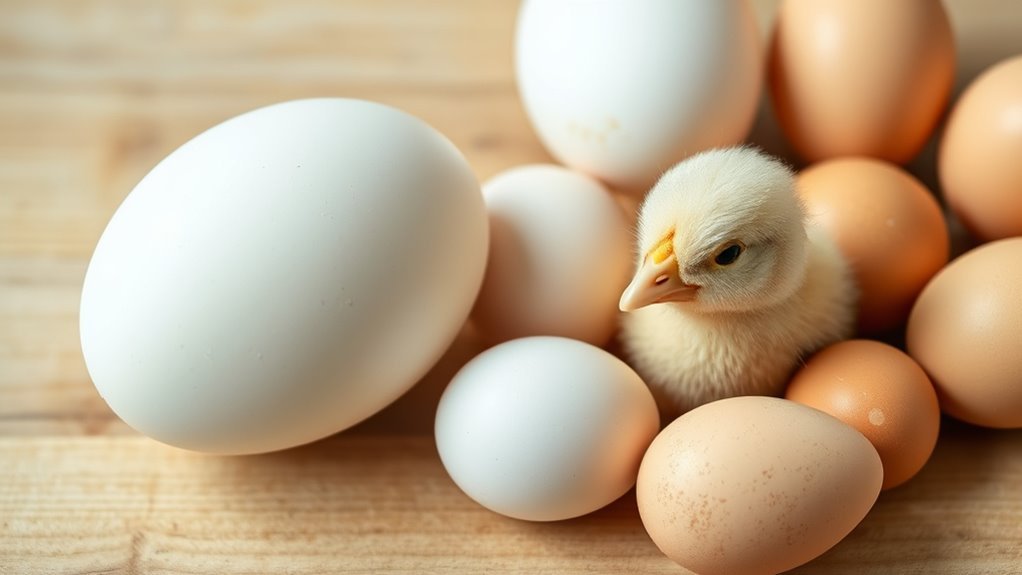
When you compare duck eggs to chicken eggs, one of the first things you’ll notice is the size difference—duck eggs are 50 to 100 percent larger, roughly equal to one and a half to two chicken eggs.
Their shells are thicker and more textured, making them more water-resistant than the smoother, thinner shells you find on chicken eggs.
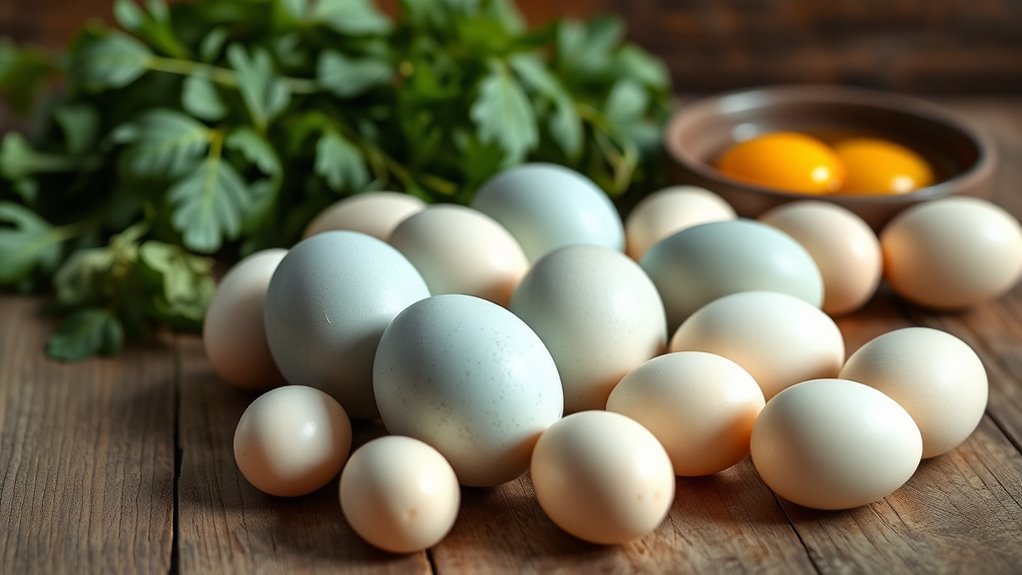
In terms of appearance, duck eggs come in a wider range of shell colors including white, gray, green, black, and blue, whereas chicken eggs usually stick to white or brown.
The white of duck eggs is thicker and more opaque, and their yolk is larger, more vibrant orange, and boasts a higher yolk-to-white ratio, giving you a distinct visual contrast compared to chicken eggs.
Flavor and Texture Differences Between Duck and Chicken Eggs
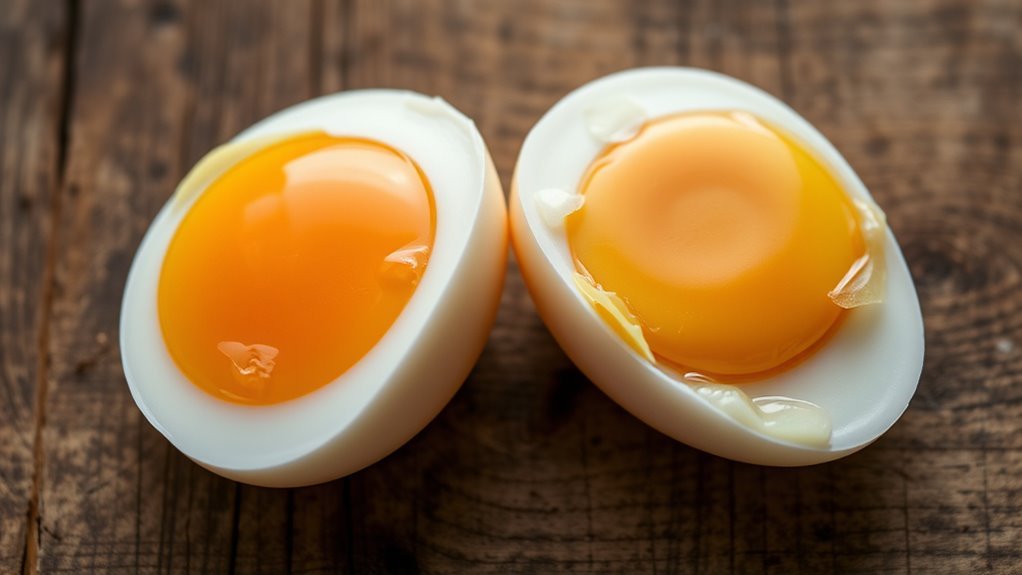
Although both duck and chicken eggs serve as versatile ingredients, duck eggs pack a richer, creamier flavor that stands out in your dishes. You’ll notice duck eggs have a more intense, eggy taste, sometimes described as slightly gamey or earthy, thanks to their natural diet.
Their larger yolk adds vibrant flavor and enhances richness, giving your recipes a creamier texture. In contrast, chicken eggs offer a milder, more neutral flavor that works well in everyday cooking.
When it comes to texture, duck eggs have thicker, more opaque whites, providing a denser consistency that boosts the richness of baked goods and custards. So, if you want to elevate flavor and texture, duck eggs bring a robust experience beyond what chicken eggs usually offer.
Why Duck Eggs Are More Nutritious Than Chicken Eggs
Beyond their richer flavor and creamier texture, duck eggs offer impressive nutritional benefits that set them apart from chicken eggs. You’ll find their nutritional content much higher, with about 30% more protein content, making duck eggs particularly more nutrient-dense.
The larger yolk boosts vitamin levels, including vitamins A, D, B12, and E, supporting overall health. You also get nearly double the omega-3 fatty acids compared to chicken eggs, which promote heart and brain health.
The bigger yolk provides extra choline and iron, essential for brain function and oxygen transport. Plus, duck eggs’ thicker shells help preserve this nutrient density longer, ensuring you get fresher, more wholesome eggs every time you use them.
How Duck Eggs Make Baking and Cooking Better
Because duck eggs have larger yolks and higher fat content, they add richness and creaminess to your baked goods like cakes, cookies, and custards. Their thicker egg whites whip into more stable foams, giving you fluffier meringues and lighter soufflés.
Plus, the higher protein helps improve structure and rise, resulting in a richer texture overall. The duck eggs’ thicker shell also makes them durable for decorative baking projects.
| Feature | Duck Eggs | Benefit in Baking |
|---|---|---|
| Yolk Size | Larger | Adds richness and creaminess |
| Egg Whites | Thicker | Creates stable, fluffy foams |
| Shell Thickness | Thicker | Ideal for durability in use |
Using duck eggs really elevates your baking with enhanced flavor and texture. It’s a simple swap that makes a big difference!
Price and Availability of Duck vs. Chicken Eggs
You’ll find that duck eggs usually cost between $6 and $12 per dozen, which is considerably higher than the $2 to $4 per dozen price range for chicken eggs. This difference in price reflects variations in availability and production.
Duck eggs have a higher cost due to their larger size and limited supply. You’ll notice duck eggs are less accessible, often found in specialty or organic markets.
Chicken eggs offer greater availability, stocked year-round in most supermarkets. The scarcity and regional farming practices influence the accessibility and price of duck eggs.
Egg Laying Patterns and Productivity of Ducks and Chickens
You’ll notice ducks and chickens lay eggs at different rates, with ducks often producing more eggs annually. Ducks can keep laying through winter, while chickens usually slow down or stop.
Understanding these patterns helps you plan for steady egg availability year-round. So, if you want eggs even in the cold months, ducks might be your best bet!
Laying Frequency Comparison
When comparing egg-laying frequency, ducks often outpace chickens in consistency and annual output. You’ll notice key differences in their laying patterns and frequency:
Ducks typically lay 300-340 eggs yearly, while chickens lay around 290-320. Ducks start laying at 6-7 months old and maintain a more continuous laying pattern.
Chickens usually lay eggs in the morning, with some seasonal variation affecting frequency. Ducks lay early in the day and continue through winter under proper conditions, reducing breaks.
If you want steady production, duck eggs tend to offer more reliable frequency and less seasonal variation than chicken eggs. This difference in continuous laying makes ducks a strong choice when consistent egg availability matters.
Year-Round Egg Production
Ducks can lay eggs nearly year-round, often producing 300-340 eggs annually, while chickens typically reach 290-320 eggs. But chickens mostly lay in spring and summer.
This difference comes down to their laying pattern. Chicken eggs follow a strong seasonal cycle, with production dropping sharply in colder months unless you provide supplemental light.
Duck eggs, however, come from breeds like Khaki Campbell and Indian Runner. These ducks lay consistently regardless of season.
Ducks rely less on light changes and more on breed and environment. So, you’ll enjoy more steady egg production throughout the year.
If you want eggs continuously, duck eggs offer a more reliable supply. Chicken eggs are more seasonal unless you intervene with controlled lighting.
Health and Safety Tips for Duck and Chicken Eggs
You’ll want to handle both duck and chicken eggs carefully to avoid Salmonella by cooking them thoroughly and washing hands and utensils.
It’s also smart to choose eggs from trusted sources to minimize heavy metal contamination risks. Plus, keeping an eye on cholesterol levels is important if you’re concerned about heart health.
Salmonella Prevention Measures
Both duck and chicken eggs can harbor Salmonella bacteria, so it’s crucial to handle and cook them properly to keep yourself safe. To prevent contamination, follow these key salmonella prevention measures:
First, practice careful egg handling by rinsing eggs before cracking to remove surface bacteria. It might seem simple, but this step can really help reduce the risk.
Next, make sure to refrigerate eggs properly at or below 40°F (4°C). This slows down bacterial growth and keeps your eggs safe for longer.
When cooking, always cook eggs thoroughly to an internal temperature of at least 160°F (71°C). This ensures any Salmonella present is killed.
Finally, avoid eating raw eggs, especially if you’re pregnant, elderly, very young, or immunocompromised. These groups are more vulnerable to infection, so it’s better to be safe than sorry.
Heavy Metal Contamination Risks
Several heavy metals, including lead, cadmium, and arsenic, can contaminate eggs depending on their environment. Both duck and chicken eggs may contain heavy metals if poultry are raised in polluted areas where environmental contamination is high.
This risk highlights the importance of egg safety when selecting your eggs. Cooking won’t remove these metals, so your best defense is sourcing eggs from reputable farms that regularly test for contaminants.
By choosing eggs from clean environments, you reduce your exposure to heavy metal contamination. Also, consuming eggs in moderation and varying your protein sources can help minimize potential health risks.
Staying informed about where your eggs come from plays a vital role in protecting yourself from the dangers linked to heavy metals in eggs. So, it really pays to know your source!
Cholesterol And Heart Health
One large duck egg packs over 600 mg of cholesterol—more than twice the amount found in a chicken egg. When thinking about how egg consumption affects your heart health, there are a few things to keep in mind.
First, high dietary cholesterol from duck eggs can raise blood cholesterol levels, but this varies depending on your genetics and overall diet. So, it’s not the same for everyone.
Eating eggs in moderation is a good idea. Pairing them with fiber-rich foods can also support better heart health and keep things balanced.
When it comes to cooking, go for methods like boiling or poaching. These reduce harmful compounds that can form with frying, which is better for your heart.
If you have existing heart conditions or high cholesterol, it’s smart to check with your healthcare provider. They can guide you on egg nutrition and what amounts are safe for you.
Balancing egg nutrition with your diet helps you enjoy eggs without risking your heart health. It’s all about making smart choices that work for you.
Frequently Asked Questions
Are Duck Eggs Better for You Than Chicken Eggs?
Duck eggs can be better for you because they pack more protein, vitamins, and minerals. But you should watch your cholesterol intake and consider your health needs before choosing them over chicken eggs regularly.
Why Do Chefs Prefer Duck Eggs?
You prefer duck eggs because their richer yolks and thicker whites create fluffier baked goods and stable foams. Their intense flavor and vibrant color elevate dishes, while their durability guarantees consistent results in your culinary creations.
Does 1 Duck Egg Equal 2 Chicken Eggs?
You can think of one duck egg as a generous helping—yes, it usually equals about two chicken eggs. When you cook or bake, swapping one duck egg for two chicken eggs works seamlessly, keeping your dish rich and balanced.
Why Are Duck Eggs Not Sold in Stores?
You won’t find duck eggs in most stores because they’re harder to produce, cost more, and need special handling. Plus, regulations and limited supply keep them mostly in farmers’ markets or specialty shops.
Conclusion
Now that you know the key differences between duck and chicken eggs, you can choose the perfect egg for your needs with confidence. Duck eggs, with their richer flavor and superior nutrition, can elevate your cooking to legendary status.
While chicken eggs remain a pantry staple, duck eggs offer unique benefits worth exploring. Just remember to handle both types safely, and you’ll crack open a world of culinary possibilities like never before!
Whether you’re baking, scrambling, or making omelets, understanding the differences between duck eggs and chicken eggs helps you make informed choices. So next time you shop, consider trying duck eggs for a richer taste and added nutrition. It’s a simple way to boost your meals and enjoy the best of both eggs!