How to Find Out If Eggs Are Fresh Simply
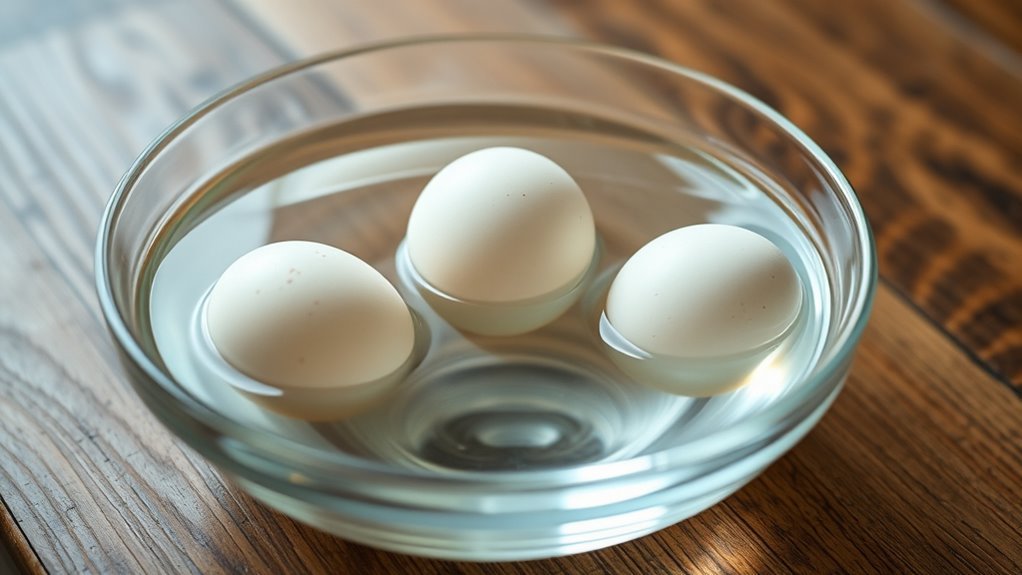
You can quickly check if your eggs are fresh by gently placing them in a bowl of cold water. The fresher eggs lie flat on the bottom, while older ones stand or float. This simple water test is a great way to start.
Next, hold an egg close and shake it gently; if you hear sloshing, it’s likely old. This little shake test can save you from cracking a bad egg later.
For the best check, crack the egg into a bowl to inspect its appearance and smell for any off odors.
Keep going to uncover more easy ways to guarantee egg freshness. These simple tips will help you always use fresh eggs in your cooking and baking!
Key Takeaways
- Place the egg in a bowl of cold water; fresh eggs lie flat at the bottom. If it stands upright or floats, it’s older or possibly bad.
- Gently shake the egg near your ear to detect any sloshing sounds indicating age. If you hear liquid moving around, that’s a sign the egg isn’t fresh.
- Crack the egg onto a plate and check for clear, thick whites and firm, round yolks. Fresh eggs hold their shape well and don’t spread out much.
- Smell the cracked egg for any foul or rotten odors indicating spoilage. If it smells off, trust your nose and don’t use it.
- Combine float, shake, visual, and smell tests for the most accurate freshness check. Using all these tricks together gives you the best idea of how fresh your eggs really are.
How to Do the Float and Shake Tests to Check Egg Freshness
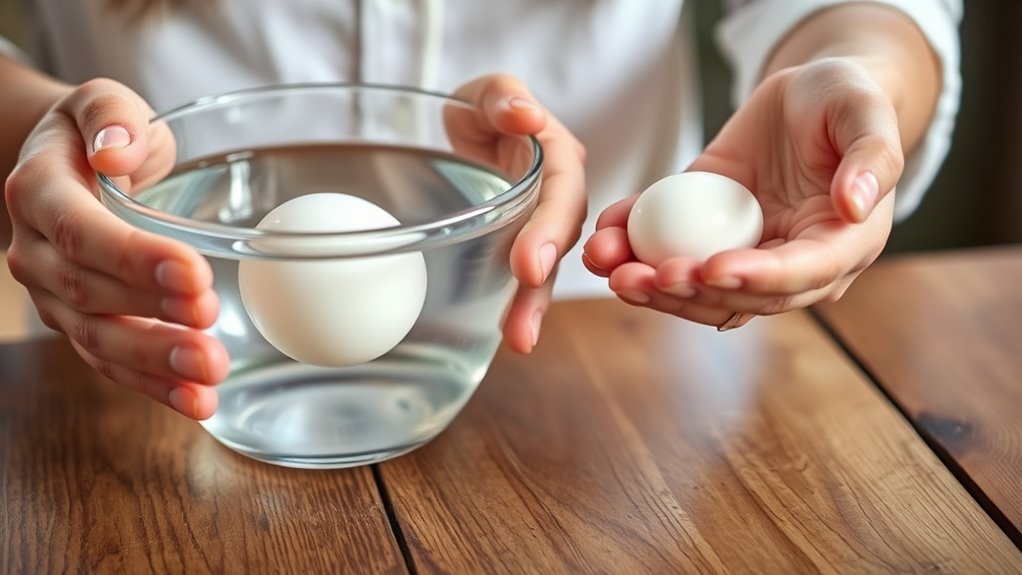
Although it may seem simple, the float and shake tests are effective ways to check your eggs’ freshness before using them. To do the float test, gently place an egg in a bowl of cold water.
If it lies flat on the bottom, you’ve got fresh eggs. If the egg stands upright or tilts, it means the air cell inside has grown larger, indicating an old egg that’s still safe to eat. But if the egg floats, it’s likely bad and should be discarded to guarantee food safety.
For the shake test, hold the egg close to your ear and gently shake it. A sloshing sound signals an old or spoiled egg.
Combining both tests helps you confidently store eggs and avoid using ones that may compromise food safety.
How to Crack and Smell Eggs to Spot Spoilage
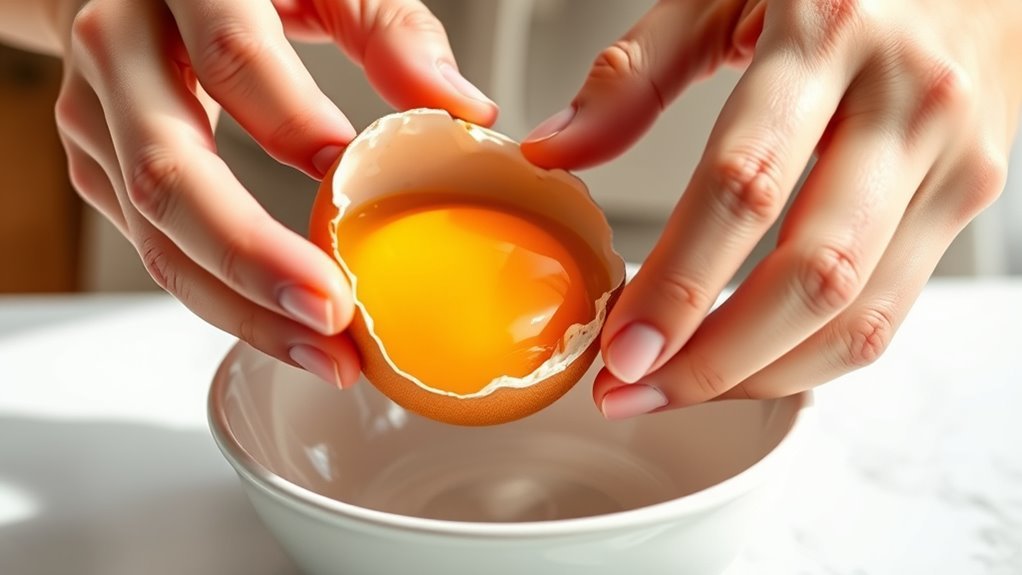
Before using an egg, crack it into a clean bowl or plate so you can check for any unusual smells or discoloration. When you crack the egg, inspect the white and yolk carefully.
A fresh egg’s white should be clear and thick, while the yolk is firm, round, and sits high. If you notice discoloration, a runny or cloudy white, or a flattened yolk, the egg may be spoiled.
Next, smell the egg. A fresh egg has a neutral or slightly sulfuric odor.
If you detect any foul smell or rotten odor, discard the egg immediately. Always crack eggs separately to avoid contamination.
This way, you can be sure to accurately inspect each egg’s freshness through its appearance and smell.
Frequently Asked Questions
What Is the 3 3 3 Rule for Eggs?
The 3-3-3 rule says you should check eggs within three weeks, make sure they don’t float, smell bad, or look off. If they fail any test, toss them to keep your food safe and fresh.
Are Eggs Good for Muscle Recovery?
Like a knight’s trusty sword, eggs deliver all nine essential amino acids to fuel your muscle recovery. Their leucine content kickstarts protein synthesis, so you’ll bounce back stronger after every workout.
Does the Egg Float Test Really Work?
Yes, the egg float test works well to indicate freshness. If your egg sinks and lies flat, it’s fresh. If it floats, it’s older and might be unsafe, so always double-check by cracking and smelling it.
Can You Still Eat Eggs That Float?
If your egg floats like a lone boat adrift, you can still eat it—just crack it open and trust your senses. If it smells fresh and looks normal, it’s safe to enjoy, no matter the float.
Conclusion
Now that you know how to float, shake, and sniff your eggs, you’re like a detective uncovering their secrets. Don’t let a bad egg sneak into your kitchen and spoil your day.
With these simple tests, you can crack open confidence every time, turning your cooking into a breeze. So go ahead—trust your senses, and let freshness be your guide in the egg-citing world of breakfast!
Finding out if eggs are fresh doesn’t have to be complicated. By using easy methods like floating, shaking, and sniffing, you can quickly tell whether your eggs are good to use. These simple tricks help you avoid bad eggs and keep your meals safe and delicious. So next time you’re in the kitchen, remember these easy freshness tests and enjoy cooking with confidence!