7 Facts About How Many Eggs a Chicken Will Lay in a Year
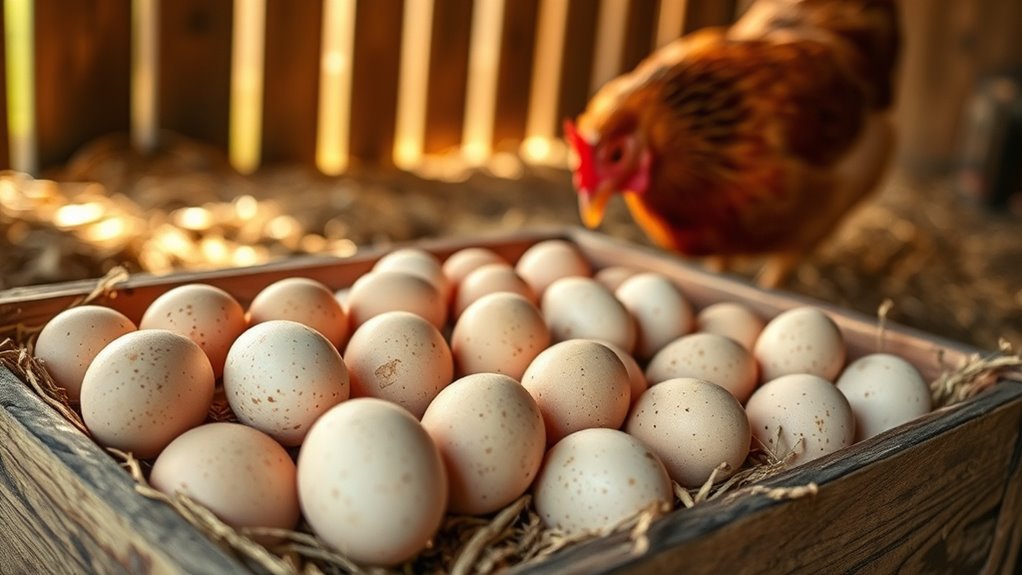
You can expect a healthy hen to lay between 250 and 350 eggs per year, depending on her breed, age, and environment. Most hens start laying around 18 weeks old, hitting peak production near 30 weeks.
Light exposure and good nutrition play big roles in how many eggs she’ll produce.
While aging naturally slows laying after 3-4 years, many factors still influence egg counts.
If you want to understand how different factors influence egg counts, there’s plenty more to explore.
From environment to diet, every detail matters when it comes to how many eggs a chicken will lay in a year.
Key Takeaways
- High-producing hens can lay between 250 to 300 eggs annually under ideal conditions.
- Egg production peaks around 30 weeks of age and is nearly daily during the first year.
- Breed significantly affects egg count, with hybrids like ISA Browns producing up to 350 eggs per year.
- Longer daylight hours (14-16 hours) and artificial lighting increase and maintain egg production year-round.
- Egg laying declines after 2-3 years and usually stops between 5-7 years due to aging.
How Many Eggs Can a Chicken Lay Each Year?
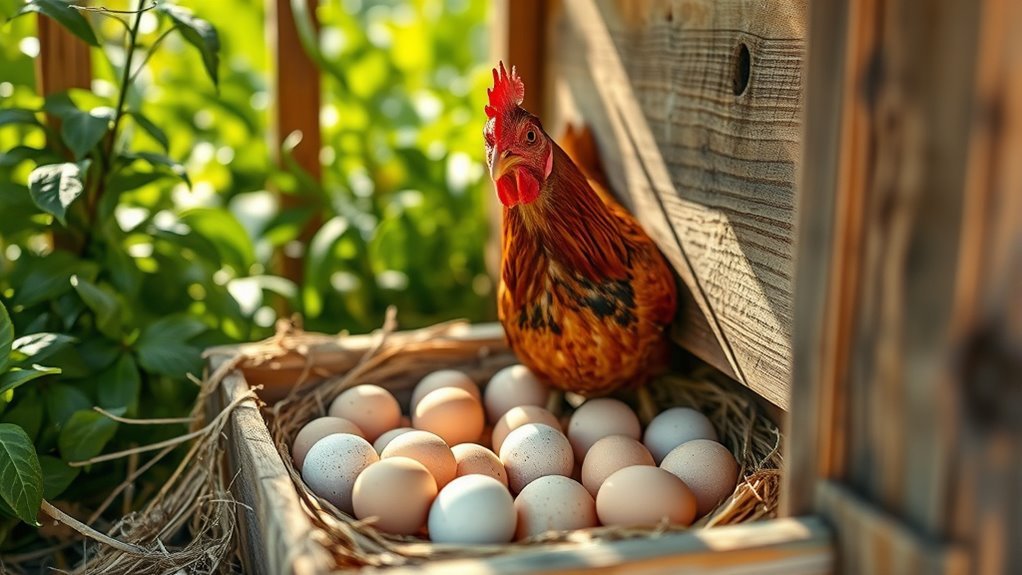
Although the number of eggs a chicken lays each year varies, a high-producing hen can typically lay between 250 and 300 eggs under ideal conditions. When you manage laying hens, you’ll notice breed differences greatly affect egg count—some breeds produce over 350 eggs per year, while others lay fewer than 200.
Peak production usually happens around 30 weeks of age, with many hens laying nearly one egg daily during their first year. As the age of hens increases past 2-3 years, egg production drops to about 70-80% of their initial output.
Environmental factors like light exposure, temperature, and nutrition also influence how many eggs per year your chickens will lay. Understanding these variables helps you optimize egg production for your flock.
When Do Hens Start and Stop Laying Eggs: And Why?
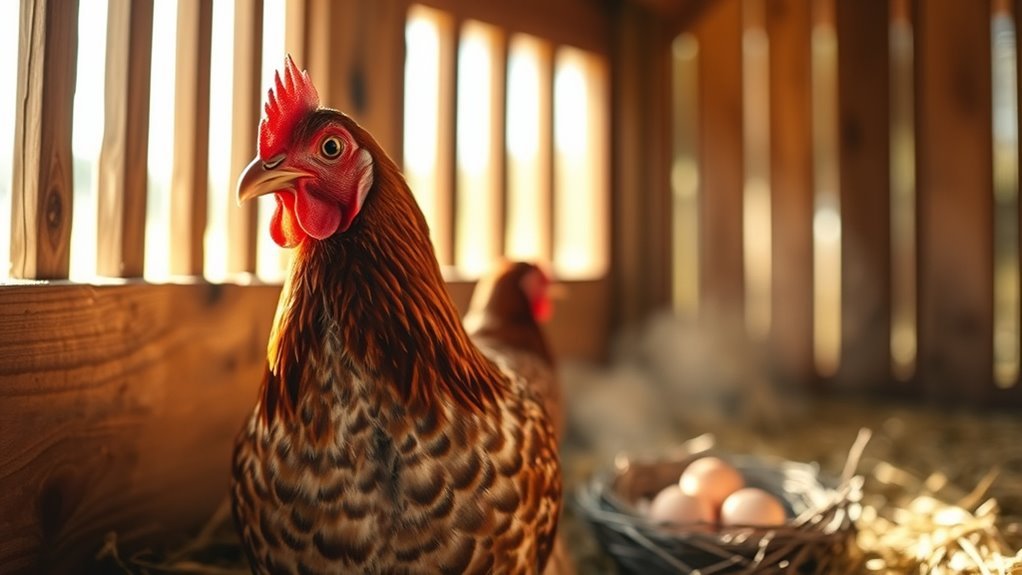
You’ll notice hens usually start laying eggs around 18 weeks old, though this can vary by breed. Their egg production peaks near 30 weeks, then slowly declines each year.
Eventually, most hens stop laying eggs between 5 to 7 years of age due to natural aging and environmental factors. It’s just part of their natural cycle.
Egg-Laying Onset Age
When hens reach about 18 weeks old, they typically start laying eggs, though some breeds begin as early as 16 weeks or as late as 28 weeks. You’ll notice a hen laying her first egg around this time, marking the start of her egg production journey.
The age when a hen starts laying eggs varies due to breed, light exposure, and overall health. Once a hen begins laying, she’ll gradually increase her output, reaching peak egg production at about 30 weeks.
During this phase, hens tend to lay more eggs, maximizing their productivity. Understanding when your hens start laying helps you anticipate how many eggs a chicken can provide.
That way, you can manage your flock effectively and enjoy a steady supply of fresh eggs.
End of Laying
Since hens typically start laying eggs around 18 weeks, you can expect their production to peak near 30 weeks before gradually slowing down.
The end of laying usually occurs after 2-3 years as hens age, with an age-related decrease in egg production. By 5 or 6 years of age, many hens stop laying or lay very infrequently due to physiological changes and the natural egg decline.
Factors like breed, nutrition, environmental conditions, and molting influence this egg-laying cycle. Molting temporarily pauses egg production, but repeated cycles contribute to the overall decline.
While some hens live up to 10-15 years, their ability to lay an egg steadily diminishes after peak years, signaling the natural end of laying in their lifespan.
How Do Chicken Breeds Affect Annual Egg Production?
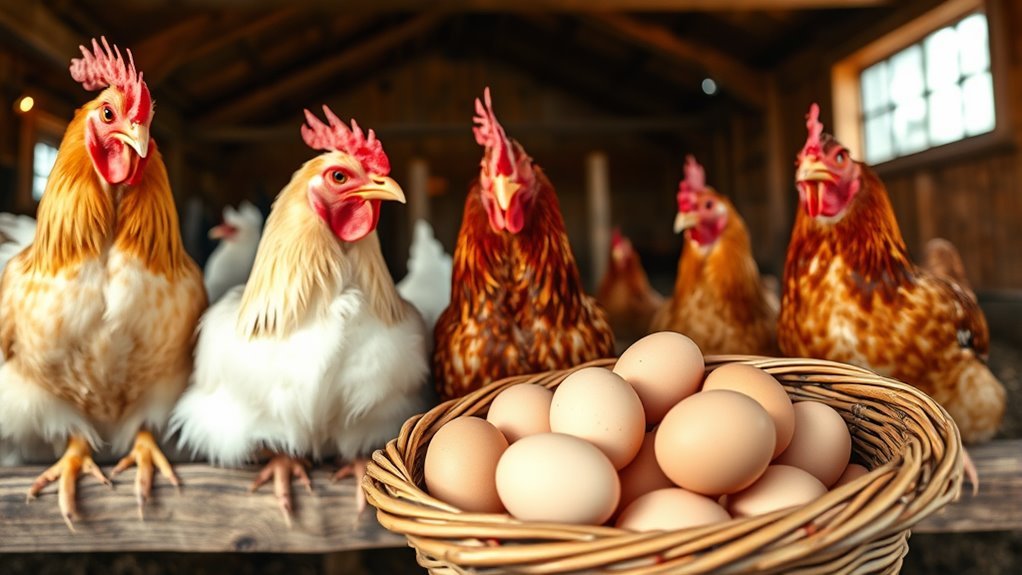
Although many factors influence how many eggs a chicken lays each year, breed plays a crucial role in determining egg production rates. Different chicken breeds vary widely in annual eggs laid due to breed genetics.
High-producing hybrids like ISA Browns can give you up to 350 eggs annually, making them ideal if you want maximum egg production. Pure breeds such as Rhode Island Reds typically lay between 200-250 eggs yearly, balancing good egg size and a longer productive laying lifespan.
Smaller or ornamental breeds, like Bantams, usually produce fewer eggs—around 120-150 per year—because of their size and purpose. Keep in mind that breeds like Leghorns reach peak egg production around 1.5 years old, but their egg-laying lifespan can decline markedly after three years.
Choosing the right breed helps match your egg production goals effectively. So, think about what you want from your chickens before picking a breed!
How Daylight and Environment Influence Egg Laying
Breed choice sets the foundation for how many eggs your chickens can lay, but the amount of daylight and their environment also have a big impact on egg production.
Longer daylight hours, around 14-16 hours, stimulate reproductive hormones, boosting egg production. During winter days, natural light decreases, slowing hormone activity and reducing egg laying.
Seasonal changes trigger molting, a period when hens stop laying to renew feathers. Environmental factors like artificial lighting help extend daylight hours, maintaining consistent egg production year-round on commercial farms.
Adequate light exposure also supports calcium absorption, essential for strong eggshells and reproductive health. By managing daylight hours and environmental conditions, you can help your hens lay eggs more consistently despite natural seasonal fluctuations.
How Does Nutrition Impact Egg Quantity and Quality?
When you provide your hens with proper nutrition, you’ll see a noticeable difference in both the number of eggs they lay and their overall quality. A diet rich in calcium, such as oyster shells, is essential for strong shell strength and prevents soft-shelled eggs.
Ensuring your hens get adequate protein—around 16-18%—supports healthy egg production and overall well-being. Balanced nutrition that includes essential vitamins and minerals enhances egg quality, size, and consistency.
Nutritional deficiencies can cause irregular laying or weak shells, reducing egg quantity and quality. Don’t forget to supply fresh, clean water daily, as hydration plays a key role in maintaining steady egg production.
Why Does Egg Production Drop As Hens Get Older?
Proper nutrition can boost your hens’ egg production, but even with the best care, their output naturally decreases as they age. As hens get older, their reproductive system becomes less efficient. This causes a steady decline in egg production.
You’ll notice a drop in laying frequency, egg output, and shell quality, especially after 3-4 years. By the time they reach 5 or 6 years, the decline is significant due to aging ovaries and oviducts.
| Age (Years) | Egg Production Decline (%) | Shell Quality |
|---|---|---|
| 1 | 0 | High |
| 2 | 15 | Slightly Reduced |
| 3-4 | 30 | Noticeably Weaker |
| 5-6 | 50 | Poor |
| 7+ | 70+ | Very Poor |
Understanding this helps you manage expectations for your hens’ laying patterns as they get older. It’s just part of the natural aging process.
How Commercial Farming Practices Affect Egg Production
Although commercial farming methods boost egg output considerably, they often come at a cost to hen welfare and health. You’ll find that intensive farming uses artificial lighting to extend daylight hours, pushing hens to lay eggs year-round and raising egg production to 250-300 eggs per hen annually.
Selective breeding focuses on maximizing egg-laying efficiency, but it can cause calcium deficiencies and shorten hens’ lifespans. Battery cages and crowded housing restrict their movement, increasing stress and harming both welfare and productivity.
While specialized diets aim to improve shell quality and quantity, mismanagement can worsen health problems. Ultimately, commercial practices prioritize output over hen welfare, leading to early culling once hens reach peak production.
It really shows there’s a trade-off between high egg production and the well-being of the birds.
Frequently Asked Questions
How Many Eggs Did Chickens Lay 100 Years Ago?
A hundred years ago, chickens laid about 80 to 150 eggs yearly. You’d notice they produced fewer eggs because selective breeding and modern farming techniques hadn’t yet boosted their yearly egg-laying capacity like today.
How Many Eggs Will 100 Chickens Lay a Month?
You might be surprised, but 100 chickens can lay between 2,000 and 2,400 eggs a month. Keep in mind, factors like their age and health will affect this number, so it isn’t always exact.
How Many Eggs Will 200 Chickens Lay a Day?
You can expect about 200 eggs a day from 200 chickens if conditions are ideal. Since each hen usually lays one egg daily, keeping them healthy and comfortable helps you maintain that steady production.
What Breed of Chicken Lays 300 Eggs a Year?
Imagine a golden sunrise of eggs daily—Leghorns, ISA Browns, Welsummers, and Golden Comets lay about 300 eggs yearly. If you choose these breeds and care well, you’ll harvest a steady, shining supply for your nest.
Conclusion
You might be surprised to learn that a single hen can lay up to 300 eggs in a year under ideal conditions. Knowing this, you can better appreciate how factors like breed, age, environment, and nutrition impact egg production.
Whether you’re raising chickens for fresh eggs or just curious, understanding these details helps you make informed choices. Keep these facts in mind to get the most out of your flock and enjoy a steady supply of eggs year-round.
Remember, egg production isn’t just about the number of eggs a chicken lays. It’s about creating the right environment, feeding them well, and choosing the right breed. By paying attention to these factors, you’ll maximize your chicken’s egg-laying potential and enjoy fresh eggs consistently throughout the year.