
How to Know if a Chicken Egg Is Fertile
You can tell if a chicken egg is fertile by candling it around day four of incubation. When you hold the egg up to a light, look for dark spots and spider-like vein patterns. These indicate embryo development, which is a sure sign the egg is fertile.
Sometimes, people crack the egg open to check. If it’s fertile, you’ll see a white bulls eye on the yolk. But be careful—do this sparingly because it destroys the egg.
Fertility starts with active roosters mating regularly to guarantee sperm transfer.
Curious about how rooster behavior affects fertility? Or want more tips on spotting fertile eggs? Keep exploring these signs, and you’ll become an expert in no time!
Key Takeaways
- Fertile eggs show spider-like vein patterns and embryo development when candled around day four of incubation.
- Unfertilized eggs appear clear without dark spots or visible veins during candling.
- Cracking a fertilized egg reveals a white bulls eye on the yolk, which helps tell it apart from infertile eggs.
- Just looking at the eggs isn’t always reliable. So, combining candling with selective cracking gives you a better chance at spotting fertilized eggs.
- Having a rooster mate regularly with hens boosts the chances of fertilization. This means you’re more likely to find fertile eggs in your clutch.
How Rooster Mating and Behavior Affect Egg Fertility
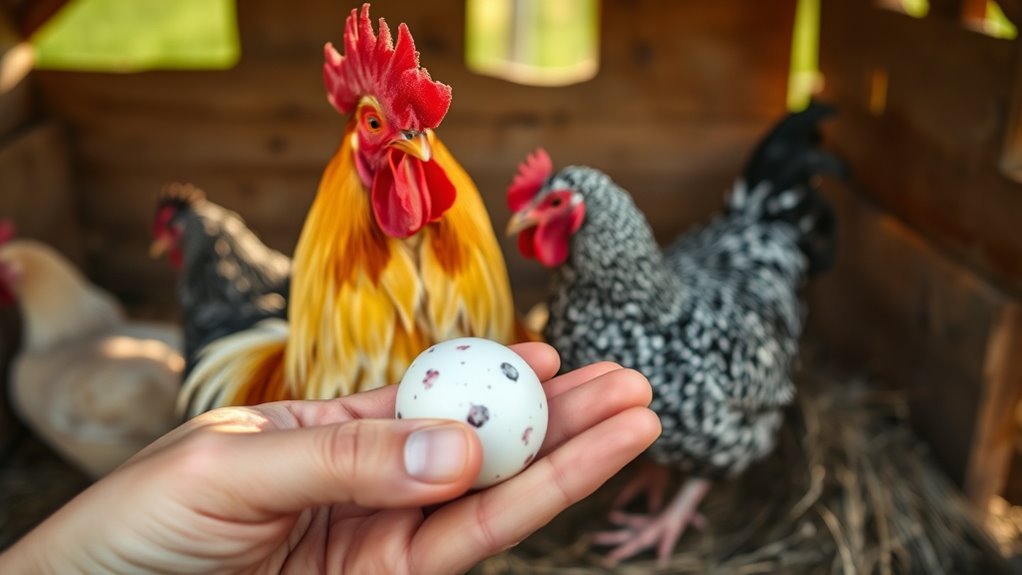
Because a rooster’s mating behavior directly impacts egg fertility, understanding how he interacts with hens is vital. Rooster mating involves cloacal contact, transferring sperm that leads to fertilized eggs.
The rooster’s activity and mating frequency play a fundamental role in breeding success, as frequent attempts increase egg fertilization chances. You’ll notice hens’ behavior changes with an active rooster around, signaling higher fertility indicators.
Even one rooster can fertilize eggs for multiple hens over weeks, thanks to sperm storage within the hens. Consistency in rooster mating is key to maintaining fertility levels.
In chicken breeding, monitoring rooster activity and mating frequency helps guarantee you get fertilized eggs regularly, making your breeding efforts more effective and predictable.
How to Identify Fertile Eggs Using Candling and Cracking

When you want to determine if an egg is fertile, candling and cracking provide reliable methods. During candling, usually around day four of incubation, you’ll notice a vein pattern and dark spots indicating embryo development—clear fertilization indicators.
Fertilized eggs show spider-like veining and developing embryos, unlike infertile ones that appear clear. Cracking the egg open reveals a definitive sign: a fertilized egg displays a white bulls eye on the yolk, while an unfertilized egg only has a clear germinal disc.
Although cracking confirms fertility, it destroys the egg, so use it sparingly. Visual inspection alone won’t reliably tell you if the egg’s fertilized, so combining candling and cracking gives you the best chance to identify fertile eggs accurately.
Frequently Asked Questions
What Are Signs an Egg Won’t Hatch?
You’ll know an egg won’t hatch if it stays translucent, shows no veins or movement by day 7-10, has a large or irregular air cell, smells foul, develops mold, or has a cracked shell.
How Long Does It Take to See if a Chicken Egg Is Fertile?
Think of the egg as a tiny sunrise—by day 4, you can candle it and see veins like sunrays spreading. You’ll know if it’s fertile then, as those signs mean life is starting inside.
How Do Farmers Know if an Egg Is Fertilized?
You’ll know an egg is fertilized by cracking it open to spot the germinal disc or by candling it between days four and seven to see veins or embryo development inside the shell.
Do Hens Know if Their Eggs Are Fertile?
You shouldn’t expect hens to know if their eggs are fertile. They don’t sense fertilization through behavior or appearance, so they lay eggs regardless. Only external methods, like candling, can reveal fertility to you.
Conclusion
You’ve watched the rooster’s dance and learned to spot fertile eggs by their subtle glow when candled. Now, imagine holding a warm egg, feeling its promise of life inside—a tiny world waiting to hatch.
With these simple steps, you’re not just collecting eggs; you’re witnessing nature’s quiet magic. Trust your eyes, trust the process, and soon you’ll see new life pecking its way into the sunlight.
Knowing how to tell if a chicken egg is fertile opens up a whole new connection with nature. It’s more than just farming or collecting eggs—it’s about understanding the miracle of life. When you recognize fertile eggs and monitor them carefully, you play a vital part in nurturing new chicks. So keep practicing, and you’ll soon enjoy the rewarding experience of watching healthy chicks hatch from eggs you knew were fertile all along.