
How to Know If a Chicken Is Egg Bound
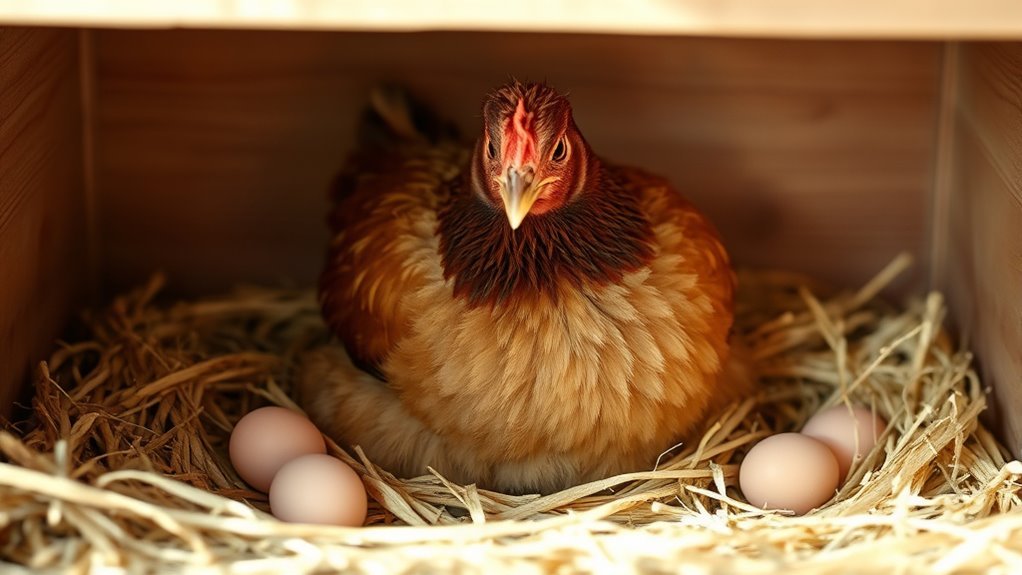
You’ll know your chicken is egg bound if she spends long periods in the nesting box without laying. She might show repeated straining with tail bobbing or have noticeable vent swelling.
She could also seem lethargic and reluctant to move. Sometimes, she may show signs of discomfort when you gently check her vent area.
These signs mean an egg is stuck inside, which needs your prompt care to prevent serious issues. Keep going to find out how to safely help her.
Key Takeaways
- A chicken spending long periods in the nesting box without laying may be egg bound. Repetitive straining with tail bobbing or vent swelling signals a stuck egg.
- Lethargy, reluctance to move, and visible discomfort during palpation indicate egg binding. If there’s no egg felt during palpation but the chicken is still distressed, it might mean there’s an internal blockage.
- Extended nesting and repeated straining efforts are behavioral signs of egg binding. Keep an eye out for these signs to help your hen quickly.
How to Spot Key Signs of Egg Binding in Your Chicken
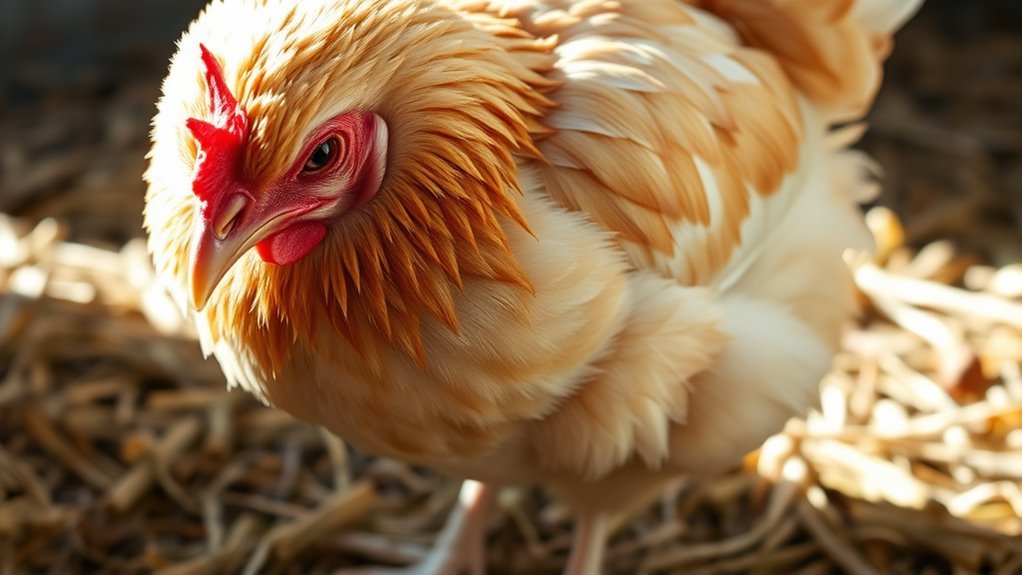
If your chicken spends long stretches in the nesting box without laying, it might be egg bound. You’ll notice changes in chicken behavior like lethargy or reluctance to move.
Straining is common, often seen as repetitive tail bobbing or pumping as she tries to force the egg passage. Check for vent swelling, a key sign of an egg stuck inside.
Straining often shows as repetitive tail bobbing or pumping, signaling an egg stuck inside with vent swelling.
During palpation, you may feel the egg causing discomfort. Sometimes, shell difficulty or calcium deficiency contributes to the problem, making it harder for the egg to pass smoothly.
If no egg is detected during palpation but your hen shows distress and straining, she’s likely egg bound. Recognizing these signs early helps you respond appropriately to your chicken’s needs.
How to Help an Egg Bound Chicken Safely and Effectively
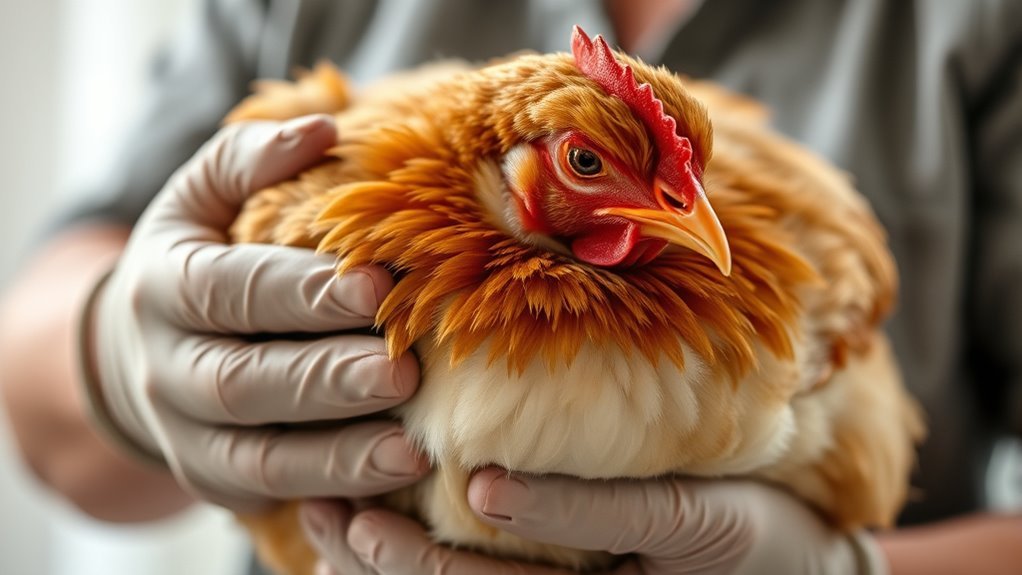
Wondering how to safely help your egg bound chicken? Start by gently lubricating the vent with petroleum jelly or olive oil to ease the egg’s passage.
Then, place her in a warm, quiet chicken coop to help her relax and reduce stress. Administer calcium supplements like crushed Tums to stimulate the muscle contractions needed for egg-laying.
A warm water soak (75-80°F with Epsom salts) can relax her muscles and encourage the egg to move. If you can feel the egg inside the vent, carefully check if it’s intact.
For manual egg removal, gently make a small hole in the shell to avoid damaging internal tissue. Keep an eye out for a prolapsed vent, which needs immediate veterinary care.
These steps can effectively help your hen and prevent complications. Just take it slow and be gentle!
Frequently Asked Questions
How Do You Fix an Egg-Bound Chicken?
You fix an egg-bound chicken by lubricating her vent, giving calcium supplements, and soaking her in warm water to relax muscles. If needed, carefully reduce egg size, then monitor her closely and seek a vet if problems persist.
How Long Can a Chicken Survive Being Egg-Bound?
Imagine a ticking clock; your chicken can survive egg binding around 24 to 48 hours. If you don’t act fast, her chances drop sharply, risking severe complications. You’ve got to intervene quickly to save her life.
What Can Be Mistaken for Egg-Bound Chicken?
You might mistake tumors, abscesses, or bloating for egg binding. Straining could be respiratory issues, and lumps near the vent might be infections, not eggs. Don’t confuse broody behavior or reproductive problems with egg binding.
Can You Cure an Egg-Bound Chicken?
You can’t just watch her suffer—you can cure an egg-bound chicken with warm baths, gentle vent lubrication, and calcium. Act quickly, and you’ll save her life, restoring hope and health to your beloved hen.
Conclusion
If you suspect your chicken is egg bound, act quickly—about 10% of laying hens face this issue at some point. Noticing signs like straining, lethargy, or swelling is vital to prevent serious complications.
You can help by providing a warm, quiet space and gently assisting if you’re comfortable. Remember, prompt care can save your hen’s life and keep your flock healthy and happy.
Don’t hesitate to consult a vet if needed! Recognizing the signs of an egg bound chicken early and taking immediate action is key to ensuring your hen recovers safely. Keeping a close eye on your chickens during their laying cycles helps you spot problems fast. With the right care, your chicken can get through egg binding without lasting harm, and your whole flock will stay strong and thriving.