How You Soft Boil an Egg in the Microwave in 10 Steps
To soft boil an egg in the microwave, start by bringing your eggs to room temperature. This helps them cook more evenly.
Next, pierce the wider end of each egg several times to prevent any explosions during cooking.
Add water to a microwave-safe bowl along with some salt and a pinch of baking soda. Then, bring this mixture to a boil in the microwave.
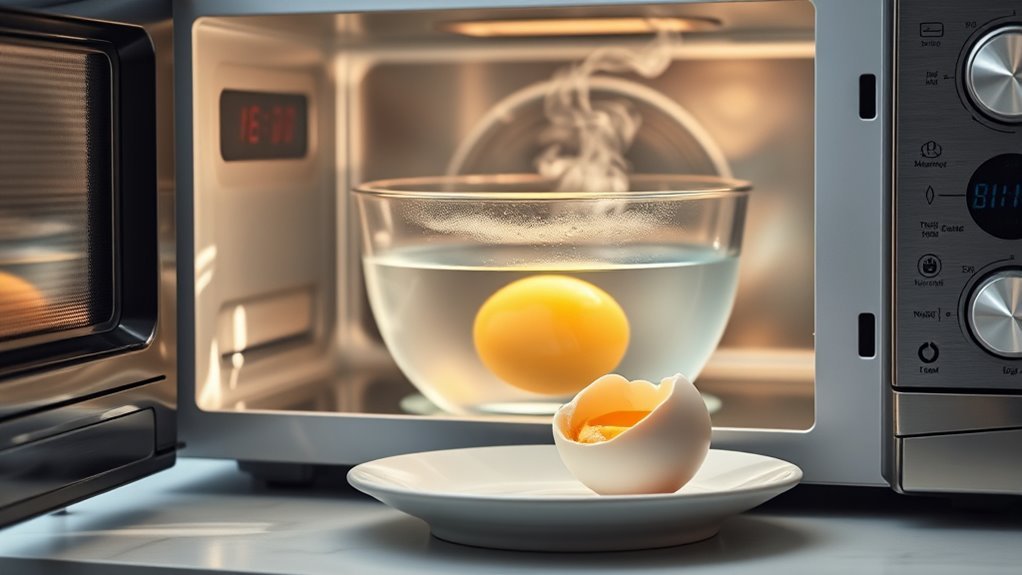
Once boiling, carefully submerge the eggs in the hot water, cover the bowl with a vented lid, and microwave at medium power for about 3 minutes.
After microwaving, immediately transfer the eggs to an ice bath. This stops the cooking process and makes peeling easier.
Finally, peel the eggs gently under cold running water.
Follow these simple steps, and you’ll enjoy perfectly soft, tender yolks every time. There’s definitely a bit more to perfecting this method, but this is a great place to start!
Key Takeaways
- Pierce the wider end of the egg 4-5 times with a fork to prevent explosions during microwaving.
- Submerge eggs fully in a microwave-safe bowl with boiling salted water and a pinch of vinegar.
- Cover the container with a vented lid or plastic wrap to allow steam to escape.
- Microwave at medium power (around 60%) for 3 minutes, adjusting time for egg size and microwave wattage.
- Immediately transfer eggs to an ice bath for at least 2 minutes to stop cooking and ease peeling.
Get Your Ingredients and Tools Ready
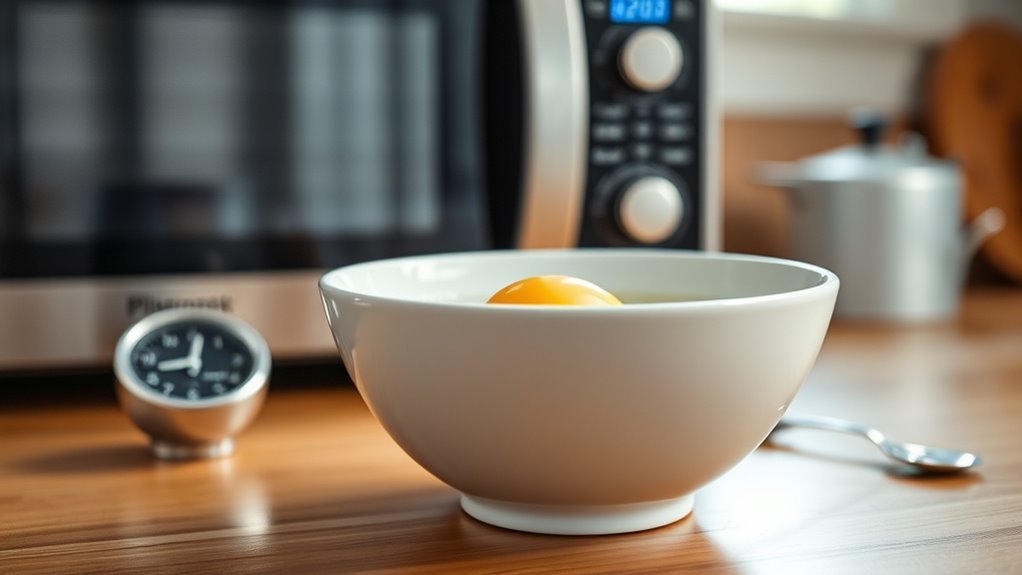
Before you start cooking, gather two large eggs at room temperature, a microwave-safe bowl or ramekin, about a cup of water, and a pinch of salt. Using eggs at room temperature helps guarantee even cooking.
Choose a microwave-safe container large enough to fully submerge the eggs in water. Pour in approximately one cup of water, then add a pinch of salt to prevent the eggs from cracking and to enhance their flavor.
Before placing the eggs in the water, use a fork to pierce the wider end of each egg 4 to 5 times. This releases trapped air, reducing the chance of an explosion while microwaving.
Having all your eggs, water, and microwave-safe tools ready sets you up for a smooth cooking process. It just makes everything easier when you get started!
Warm Eggs and Prepare Them Safely
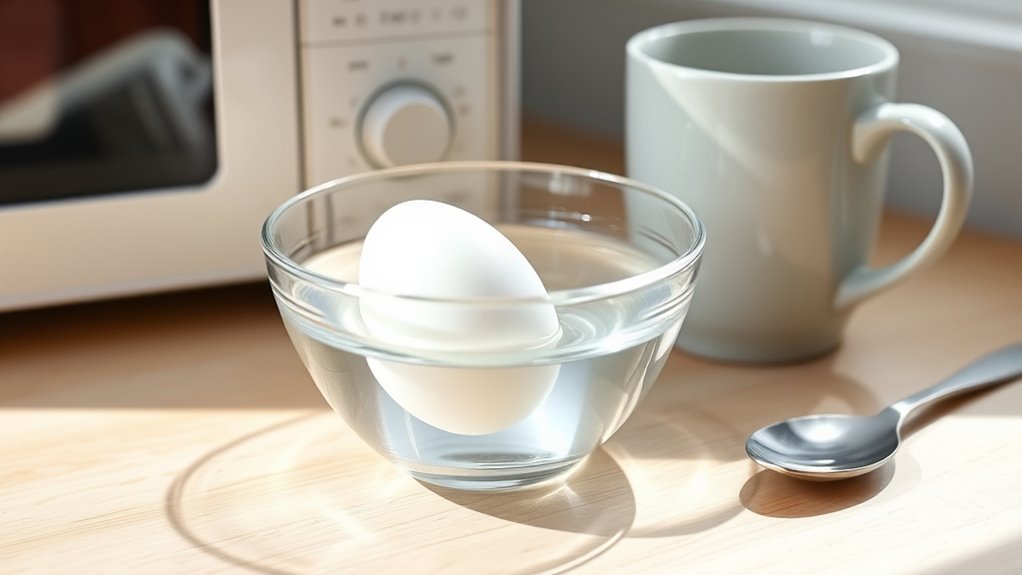
When you place cold eggs into a bowl of warm water, you reduce the risk of cracking caused by sudden temperature changes. This simple step helps warm eggs gradually, which is vital to prevent cracking during cooking.
Make sure your eggs are fully submerged in the warm water so they heat evenly. This promotes a consistent soft-boiled texture.
Fully submerge eggs in warm water for even heating and a perfectly consistent soft-boiled texture.
Warming eggs gently like this not only prevents cracking but also supports safe microwave cooking by minimizing the chance of breakage inside the microwave. Taking the time to prepare your eggs this way guarantees they cook evenly and safely.
It makes your soft-boiled egg experience hassle-free and delicious. Remember, gradual warming is key to achieving perfect results every time.
Pierce Eggs to Prevent Explosions
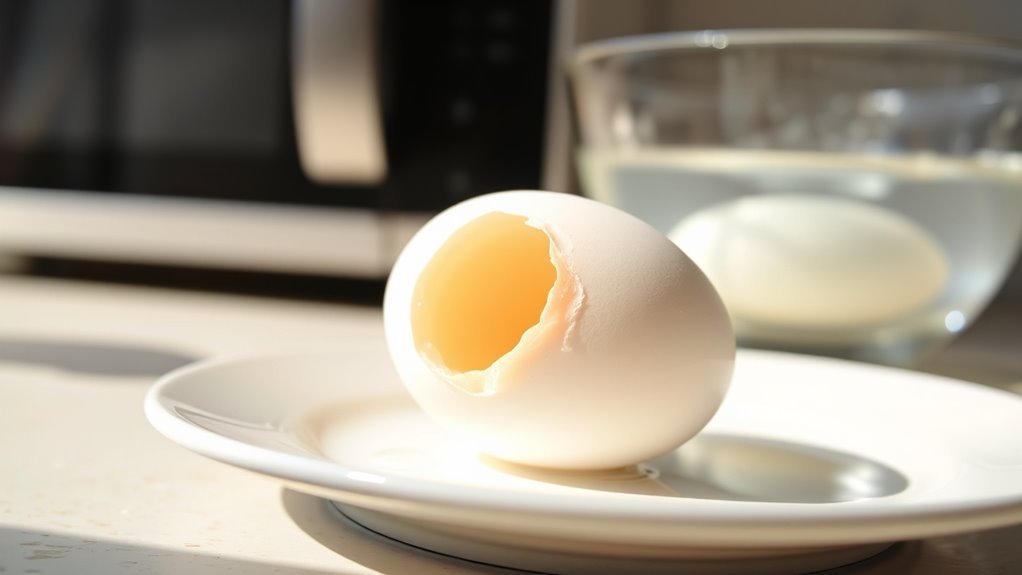
To prevent your eggs from exploding in the microwave, you need to puncture them several times with a fork or pin. Puncturing eggs allows steam to escape, preventing pressure buildup that causes dangerous explosions.
Use a sharp tool to make 4-5 small holes at the broad end, piercing both yolk and whites for even heat distribution. Just be careful not to over-pierce, as it weakens the shell and may cause cracking.
This step is essential for microwave safety and a mess-free cooking experience.
| Step | Tool Needed | Reason |
|---|---|---|
| Pierce 4-5 holes | Sharp fork or pin | Release steam to prevent explosions |
| Target broad end | Fork or pin | Area with most air space |
| Pierce yolk & whites | Fork or pin | Ensure even heating |
| Avoid over-piercing | N/A | Maintain shell integrity |
Add Salt and Baking Soda to Water
Although it might seem like a small detail, adding salt and baking soda to the water makes a big difference in your soft-boiled eggs. When you add salt, it raises the boiling point of the water slightly, helping the eggs cook more evenly and thoroughly.
Salt also strengthens the shell, reducing the chance of cracking during rapid temperature changes. Meanwhile, a pinch of baking soda increases the water’s alkalinity, which loosens the eggshell for easier peeling once cooked.
Together, salt and baking soda create a more stable cooking environment, minimizing the risk of eggs exploding in the microwave. These simple additions improve the overall process, ensuring your soft-boiled eggs come out smooth, intact, and perfectly cooked every time.
Boil Water in Microwave for Soft-Boiled Eggs
Adding salt and baking soda to your water sets the stage for perfect soft-boiled eggs by stabilizing the cooking environment. Next, fill a microwave-safe bowl with water and add a pinch of salt.
Microwave the water on high for 1 to 1.5 minutes until it reaches a rolling boil. Make sure the water is very hot before adding your eggs to prevent cracking. Use oven mitts or a towel to carefully remove the bowl—hot water can cause burns.
| Step | Details |
|---|---|
| Fill bowl | Use microwave-safe bowl |
| Microwave water | 1 to 1.5 minutes on high |
| Remove carefully | Use oven mitts or towel |
This hot water is now ready for your soft-boiled eggs.
Gently Submerge Eggs for Even Cooking
You’ll want to gently lower your eggs into warm water to prevent cracking from sudden temperature changes. Make certain the bowl is large enough to fully submerge the eggs without crowding them.
This careful approach helps ensure even cooking and reduces the risk of explosions. It’s really all about being gentle and patient here.
Prevent Cracking Risks
When you gently submerge eggs in warm water before cooking, you help them adjust gradually to temperature changes, considerably reducing the risk of cracking. Using warm or room temperature water prevents thermal shock that cold or boiling water can cause. This protects your egg from sudden stress.
Handle eggs carefully—avoid dropping them—to keep the shell intact.
Here’s a quick guide to prevent cracking:
| Action | Purpose |
|---|---|
| Use warm water | Minimizes thermal shock |
| Submerge gently | Prevents impact damage |
| Pierce egg shell tip | Releases trapped air pressure |
Following these steps helps you achieve perfectly cooked eggs without cracks or mess in your microwave. Easy, right?
Ensure Full Submersion
How deeply should you submerge your eggs for the best microwave results? Full submersion is key to achieving even cooking and preventing cracks.
Start by gently placing your eggs into warm water in a deep, small bowl. Make sure the water coverage is sufficient—your eggs should be submerged by at least an inch. This ensures heat distributes evenly and maintains the eggs’ shape.
Follow these steps for perfect water coverage:
- Choose a deep bowl to hold enough water.
- Gently place eggs to avoid cracks.
- Confirm eggs are fully submerged by an inch.
- Adjust water level before microwaving for consistent results.
Microwave Eggs at Medium Power for Recommended Time
Although microwaving eggs can be tricky, setting your microwave to 60% power and cooking for about 3 minutes will give you a perfect soft-boiled texture. Microwave eggs at medium power to prevent overcooking or bursting, which often happens at higher settings.
Use a vented lid or plastic wrap to cover the container, trapping steam for even cooking. If you’re cooking more than one egg, add 30 seconds of cooking time per additional egg to guarantee uniform doneness.
Keep an eye on the cooking time because microwave wattages vary, and small adjustments might be necessary. By following these tips and carefully managing cooking time at medium power, you’ll consistently achieve delicious soft-boiled eggs without the mess or risk of explosions.
Cool Soft-Boiled Eggs Quickly in Ice Bath
To stop the cooking process immediately and preserve the perfect soft-boiled texture, transfer your hot eggs straight into a bowl of ice water. This ice bath helps cool soft-boiled eggs quickly and prevent overcooking, locking in that creamy yolk and tender white you want.
Transfer hot eggs into ice water to halt cooking and keep the yolk creamy and the white tender.
Follow these steps:
- Place eggs gently into the ice bath right after microwaving.
- Let them sit for at least 2 minutes to thoroughly cool.
- The cold water rapidly lowers the internal temperature, stabilizing the texture.
- Cooling also loosens the shell, making peeling easier without damaging the egg.
Peel Eggs Easily and Serve Your Soft-Boiled Eggs
Once your eggs have cooled in the ice bath, gently tap and crack the shell all over to make peeling easier. Start peeling from the wider end where the membrane loosens more quickly.
You can use running water to wash away any stubborn bits. When serving, handle the eggs carefully to keep the soft yolk intact.
Enjoy them right away for the best taste. It’s definitely worth it!
Tips For Easy Peeling
When you want to peel soft-boiled eggs quickly and without frustration, start by choosing older eggs since their thinner shells come off more easily. Proper peeling depends on effective cooling and shell removal techniques.
Follow these tips:
- Immediately cool eggs in an ice bath after cooking to contract the shell and loosen it from the egg white.
- Add a teaspoon of white vinegar to the cooking water to help break down shell membranes, simplifying peeling.
- Gently tap and roll the cooled egg on a hard surface to create cracks that ease shell removal.
- Peel eggs under running cold water, which washes away shell fragments and prevents sticking.
Give these a try, and peeling your eggs will be a breeze!
Serving Suggestions
Peeling your soft-boiled eggs smoothly sets you up for a delicious presentation. After cooking, immediately cool your eggs in an ice bath to loosen the shell, making peeling easier.
Gently tap and roll each cooled egg on a hard surface to create cracks, then peel under running water to wash away tiny shell fragments. For best results, use slightly older eggs, as their shells come off more cleanly due to pH changes.
You can also add a teaspoon of white vinegar to the cooking water to help break down the shell. Once peeled, serve your soft boiled eggs in egg cups or halved atop toast.
Enjoy them with salt, pepper, or a sprinkle of herbs for a simple, satisfying meal.
Troubleshooting Common Microwave Egg Problems
Although microwaving eggs might seem straightforward, you can easily run into problems like cracking, exploding, or uneven cooking if you don’t modify for your microwave’s wattage or properly pierce the egg.
To troubleshoot common issues, keep these tips in mind:
To troubleshoot common issues, follow these simple tips for perfectly cooked microwave eggs every time.
- Avoid exploding eggs by gently piercing the shell or yolk to release trapped steam.
- Adjust cooking times based on your microwave’s wattage and the egg’s size to prevent overcooking.
- Use a microwave-safe cover with vents to allow steam to escape, avoiding mess and pressure buildup.
- Cook at medium power to ensure even heating and reduce the risk of cracking or rubbery texture.
Following these steps will help you achieve the perfect soft-boiled egg every time without frustrating mishaps.
Frequently Asked Questions
How to Cook a Soft Boiled Egg in a Microwave?
You fill a microwave-safe bowl with water, add salt, and heat until boiling. Gently pierce the egg’s wider end, submerge it, cover, and microwave at 60% power for 3 minutes. Then cool in ice water.
What Is the Easiest Way to Soft Boil an Egg?
You might expect soft boiling eggs to take ages, but the easiest way is popping an egg in hot water inside a microwave-safe bowl, microwaving it on medium for 3-4 minutes, then chilling it quickly in ice water.
How to Cook a Hard Boiled Egg in the Microwave Easily?
To cook a hard-boiled egg in the microwave, pierce the shell, submerge it in water inside a microwave-safe container, heat for 5-6 minutes, then cool it in an ice bath before peeling carefully.
How Do You Microwave a Boiled Egg Without Exploding?
You’ll prevent an egg from exploding by piercing its shell to release air, submerging it fully in water, covering it with a vented lid, microwaving in short intervals on medium power, and cooling it quickly in ice water.
Conclusion
You might think soft boiling eggs belongs on the stove, but with your microwave and a few simple steps, it’s surprisingly quick and easy. While traditional methods take patience and watchful eyes, your microwave method saves time without sacrificing that perfect, runny yolk.
With just a pinch of salt, a careful poke, and a quick ice bath, you’re all set to enjoy soft-boiled eggs in a flash—no pots, no fuss!
Microwaving soft-boiled eggs is a total game-changer. It’s perfect for busy mornings or whenever you want that deliciously runny yolk without waiting around. Plus, you don’t need any special equipment, just your microwave and a few simple tricks. So go ahead, give this quick and easy method a try, and enjoy perfectly soft-boiled eggs every time!