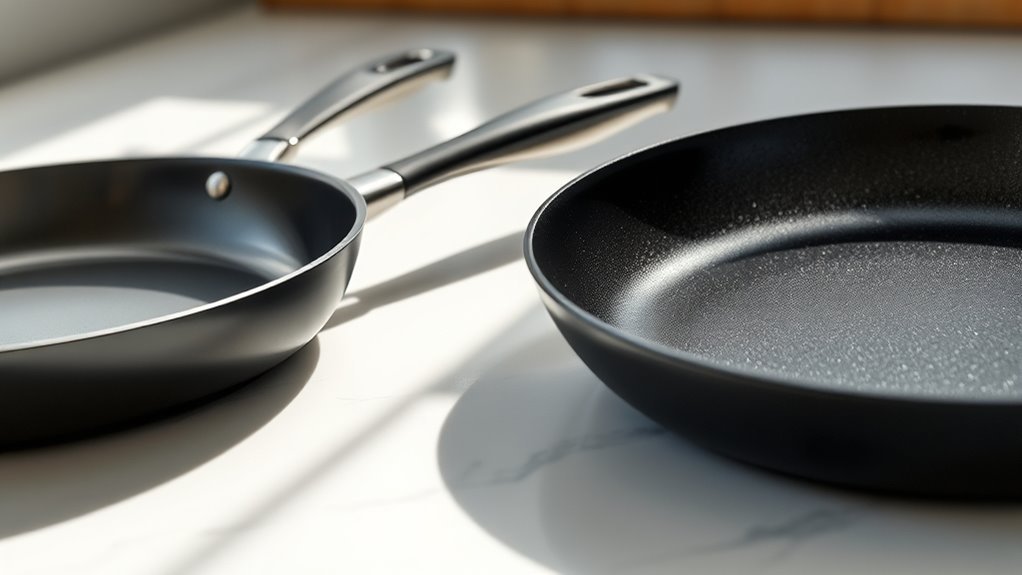
Are Ceramic Pans Better Than Non-Stick?
If you want safer, chemical-free cookware, ceramic pans are a great choice since they’re PTFE- and PFOA-free and won’t release harmful fumes when overheated. Ceramic pans are known for being more eco-friendly too, producing less CO2 during manufacturing.
So, if health and sustainability matter to you, ceramic cookware definitely deserves a spot in your kitchen.
That said, traditional non-stick pans usually last longer and handle frequent cooking better. They’re built for durability and performance, which might be exactly what you need if you cook often.
Your decision really depends on what you prioritize—health and eco-friendliness or long-lasting performance. Keep exploring to find which option perfectly fits your kitchen needs.
Key Takeaways
- Ceramic pans are safer because they don’t have PTFE or PFOA, which means less exposure to toxic chemicals and harmful gases.
- They’re also better for the environment, producing about 60% less CO2 during manufacturing compared to traditional non-stick pans.
- Plus, ceramic cookware can handle higher heat—up to 600°F—so you can try out different cooking techniques without worry.
- On the other hand, traditional non-stick pans usually keep their non-stick surface longer. Ceramic coatings tend to wear out in 1 to 3 years.
- So, if you want something healthier and more eco-friendly, go for ceramic. But if you’re after durability and reliable non-stick performance, traditional non-stick might be the way to go.
Why Ceramic Cookware Is Safer and More Eco-Friendly Than Traditional Non-Stick
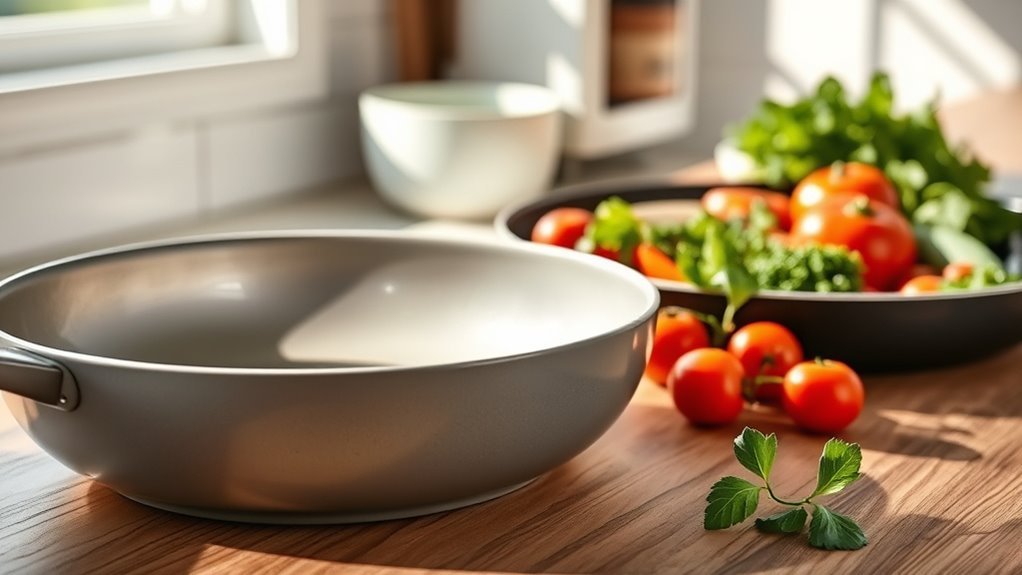
Although traditional nonstick pans are popular for their convenience, ceramic cookware offers a safer and more eco-friendly alternative that you should consider. Ceramic cookware features a PTFE-free, nonstick coating made from silica, which means it’s non-toxic and PFOA-free, reducing chemical leaching and off-gassing risks.
Unlike traditional pans coated with PTFE, ceramic pans don’t emit harmful gases when overheated, making them safer for your health. Plus, ceramic coatings generate about 60% less CO2 during manufacturing, so they’re more environmentally friendly.
Choosing ceramic cookware means opting for a product that offers health benefits without sacrificing convenience, all while being kinder to the planet. You get a nonstick option that’s both safer and eco-friendly, supporting your well-being and sustainability goals.
How to Choose Between Ceramic and Traditional Non-Stick Cookware for Your Kitchen
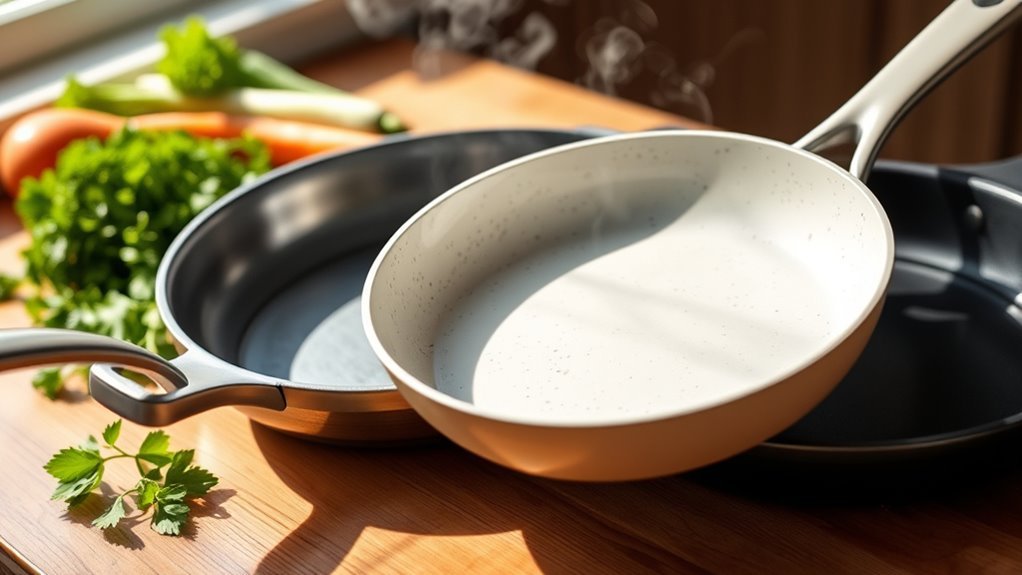
When deciding between ceramic and traditional non-stick cookware, it helps to weigh factors like safety, durability, and cooking style. Ceramic cookware is PTFE-free, offering greater safety and higher heat resistance—up to 600°F—making it ideal for versatile cooking techniques.
Choosing between ceramic and traditional non-stick cookware involves considering safety, durability, and your preferred cooking methods.
However, its non-stick performance tends to decline after 1-3 years, which can affect its longevity. On the other hand, traditional non-stick cookware provides superior durability and longer-lasting non-stick surfaces if you follow proper maintenance.
It’s best suited for moderate heat, usually below 480°F. To choose the right option, think about whether you prioritize chemical-free materials and heat tolerance or longer-lasting, reliable non-stick performance.
Balancing these factors guarantees your cookware fits your kitchen needs perfectly.
Frequently Asked Questions
What Is Healthier, Ceramic or Nonstick?
You’ll find ceramic pans healthier because they’re free from PTFE and toxic chemicals. They reduce harmful fumes risk when heated, making them safer. Just avoid overheating and watch for wear to keep cooking safe.
What Is the Downside of Ceramic Cookware?
The downside of ceramic cookware is it chips and cracks easily, losing its nonstick ability. You’ll need more oil over time, and damaged coatings might release harmful particles. Handle it gently and avoid metal utensils.
Why Don’t Chefs Use Ceramic Pans?
Imagine your favorite chef tossing a pan, only for its ceramic surface to chip mid-flip—that’s why you don’t see them using ceramic pans. They just can’t handle the heat or last long enough for your kitchen hustle.
What Is the Healthiest Pan to Cook In?
The healthiest pan you can use is one with a non-toxic, chemical-free coating, like ceramic or stainless steel. Just avoid overheating and metal utensils to keep your cookware safe and durable for cooking.
Conclusion
When choosing cookware, you want something safe and eco-friendly. Ceramic pans offer a healthier option without harmful chemicals found in some traditional non-stick coatings.
Imagine cooking your morning eggs in a ceramic pan that heats evenly and cleans up easily. Plus, you’ll feel good knowing you’re reducing your environmental impact.
If you value durability and a toxin-free kitchen, ceramic might just be the smarter choice for you. Give ceramic pans a try and see the difference yourself! They’re not only better for your health but also a great eco-friendly alternative to regular non-stick pans. Switching to ceramic cookware can make your cooking experience safer and more enjoyable every day.