
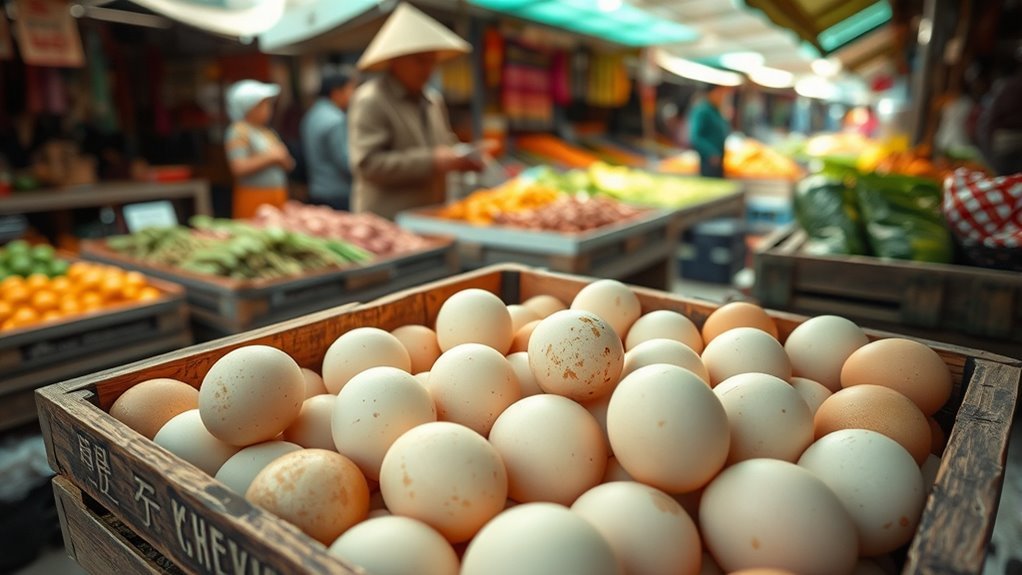
Five Factors Influencing Egg Prices in China
You’re seeing egg prices in China fall mainly because bigger farms with automation pump out a large supply, driving prices down.
At the same time, slower household income growth means consumers buy fewer eggs, reducing demand.
Food safety fears also shake shopper confidence, further cutting demand and causing supply chain disruptions.
These factors create market volatility and price unpredictability.
If you want to understand how each of these forces shapes the market, there’s more to explore.
It’s a mix of supply, demand, income trends, and safety concerns all playing a role in egg price changes.
So, let’s take a closer look at what’s really influencing egg prices in China right now.
Key Takeaways
– Large-scale farms and automation increase egg production, lowering costs and causing price declines.
This means more eggs are available at cheaper prices, which is good news for buyers.
– Market surplus from high egg supply drives prices down due to oversupply.
When there are too many eggs in the market, sellers have to reduce prices to sell them all.
– Falling household incomes reduce consumer demand, contributing to lower egg prices.
People tend to buy fewer eggs when their budgets are tight, which affects prices.
– Food safety scandals decrease consumer trust and demand, impacting prices negatively.
If buyers don’t trust the eggs, they’ll buy less, and prices can drop as a result.
– Supply chain disruptions and demand shifts cause market volatility and price unpredictability.
This can make egg prices go up and down unexpectedly, which can be frustrating for both sellers and buyers.
Why Bigger Farms and Automation Are Pushing Egg Prices Down in China
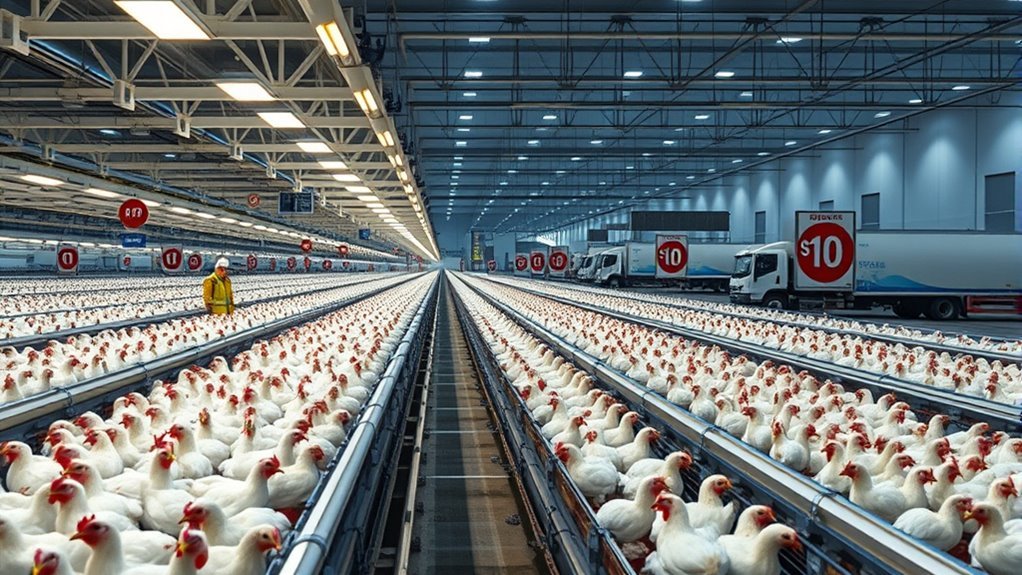
Although many smallholders still operate independently, bigger farms equipped with automation have dramatically boosted egg production in China. Large-scale farms use advanced automation to lower production costs, allowing them to produce eggs more efficiently and in larger volumes.
This surge in egg production has triggered a significant supply increase, causing a market surplus that pushes egg prices down. As the egg industry transforms, many smallholders find it hard to compete, leading to farm consolidation and further concentration of production in large, automated operations.
This shift accelerates the industry transformation, reinforcing the downward pressure on egg prices. If you watch the market closely, you’ll see how these changes in scale and technology shape the egg industry, making eggs more abundant but less costly.
How Falling Incomes and Food Safety Fears Are Changing Egg Prices
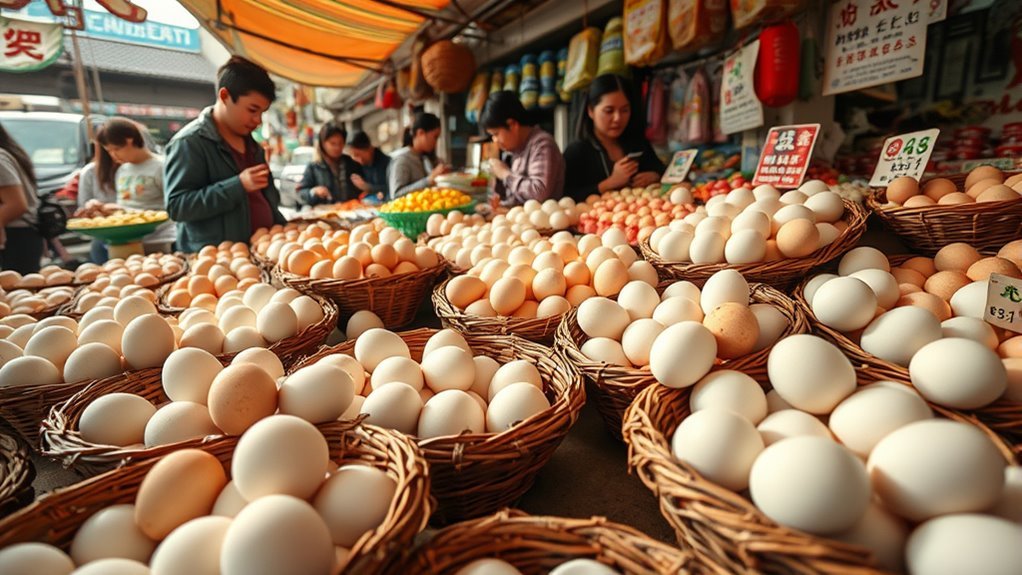
As household incomes fall amid China’s economic slowdown, you’ll notice consumers tightening their budgets and cutting back on egg purchases. Falling incomes reduce consumer demand, causing a clear price decline in egg prices.
With incomes shrinking, consumers cut back on eggs, driving prices down amid China’s economic slowdown.
Food safety fears, fueled by recent food safety scandals involving antibiotics in eggs, further dampen egg consumption. These fears also trigger supply chain disruptions and market volatility, making prices unpredictable.
Here’s how these factors impact the market:
- Consumers switch to cheaper food options, avoiding premium eggs.
- Stricter regulations and recalls disrupt supply chains.
- Consumer trust declines, lowering overall demand.
Frequently Asked Questions
What Factors Influence Egg Prices?
You’ll find egg prices influenced by feed and chicken costs, pork price shifts, income changes, seasonal demand, and unexpected events like disease or supply disruptions, all driving fluctuations you’ll notice in the market.
How Much Do 12 Eggs Cost in China?
You’ll find 12 eggs in China typically cost between 12 and 20 yuan, though prices can swing like a pendulum. In 2024, prices dropped sharply by about 40%, making eggs more affordable than before.
Is Chalaza Chicken Sperm?
No, chalaza isn’t chicken sperm. You’ll find it’s a natural, spiral-shaped protein structure inside the egg that holds the yolk in place. It’s completely normal and unrelated to fertilization or sperm.
What Are the 5 Quality Indicators for Eggs?
You’ll want to check shell integrity, yolk color, albumen thickness, freshness using the Haugh unit, and guarantee the egg’s free from contaminants like Salmonella. These five indicators help you judge egg quality confidently.
Conclusion
You might think egg prices in China are climbing to the moon, but bigger farms and automation are actually pushing them down. These advancements help produce eggs more efficiently, which can lower costs for consumers.
However, don’t underestimate how falling incomes and food safety fears are shaking things up. When people earn less, they often cut back on spending, and worries about egg safety can make buyers cautious.
These factors create a delicate balance that directly impacts what you pay at the market. So next time you crack open an egg, remember—it’s not just breakfast; it’s a complex dance of economics and trust shaping your meal. Egg prices in China are influenced by farm scale, technology, income levels, and consumer confidence, all working together to determine the cost of this everyday staple.