

What Does a Termite Egg Look Like?
You’ll spot termite eggs as tiny, smooth, oval shapes that look like translucent grains of rice, about 1 millimeter long. These termite eggs are usually pale yellow or white and have shiny, dent-free shells.
Termites lay them in clusters deep inside nests, often in moist, hidden spots like underground chambers or wooden beams. Recognizing these eggs early can help you catch an infestation before it grows.
Keep exploring to understand where these termite eggs hide and why that matters. Knowing what termite eggs look like and where they’re found is key to preventing serious damage to your home.
Key Takeaways
- Termite eggs are about 1 mm long, oval-shaped, and look like tiny grains of rice.
- They have a translucent white or pale yellow color with a smooth, shiny shell.
You’ll usually find these eggs laid in clusters within the termite colony.
And honestly, you’ll need a magnifying glass to see them clearly.
Their surface is smooth with no dents or dips, which shows they’re developing healthily.
Typically, these eggs are hidden deep in nests, inside soil chambers, or within moist wooden structures.
What Do Termite Eggs Look Like?
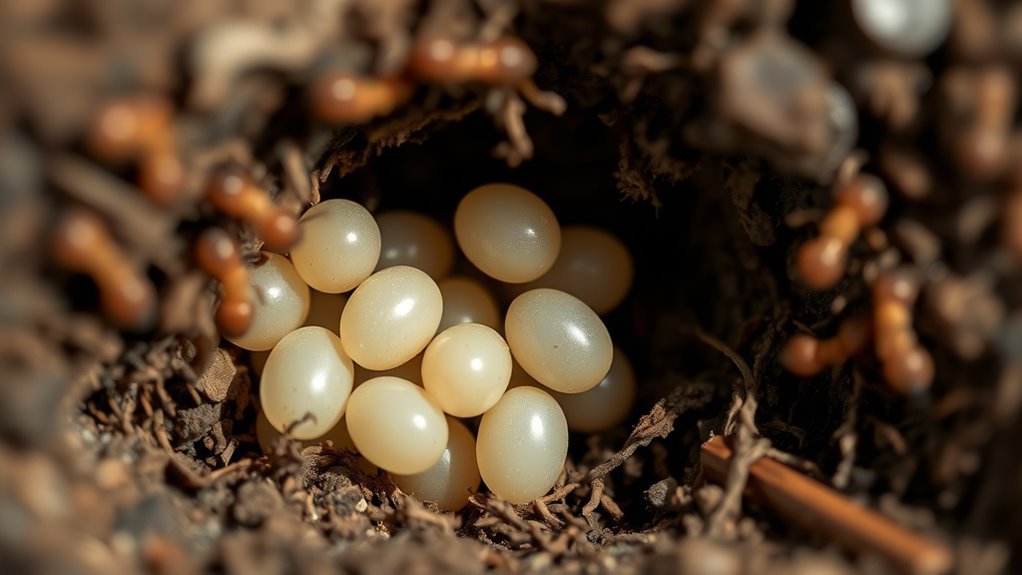
Although termite eggs are incredibly small—only about 1 millimeter long—you can spot them if you look closely. These termite eggs resemble tiny grains of rice, with a translucent white or pale yellow color that makes them distinct.
Their egg appearance is oval-shaped and smooth, with no dents or dips on the shell. Because of their tiny egg size, you might need a magnifying glass to see them clearly.
The eggs look shiny and are typically laid in clusters within the termite colony. When these eggs hatch, they give rise to new termites, helping the nest grow and thrive.
Understanding what termite eggs look like helps you identify early signs of an infestation in a nest. So, keep an eye out for these little clues if you suspect termites nearby!
Where Are Termite Eggs Found?

Because termite eggs are so vulnerable, worker termites usually lay them deep within the nest where they can stay protected. Subterranean termites typically place eggs 4 to 18 inches below soil level in underground chambers.
Drywood termites, on the other hand, lay their eggs inside wooden structures like beams or furniture. You’ll often find eggs in moist environments that support colony development, such as behind walls or inside decayed wood.
Since termite eggs are hidden, you need routine inspections to catch any early signs.
| Termite Type | Eggs Location |
|---|---|
| Subterranean Termites | Underground chambers, soil |
| Drywood Termites | Inside wooden structures |
| General | Moist, sheltered areas |
Frequently Asked Questions
How to Identify Termite Eggs?
You identify termite eggs by spotting tiny, smooth, oval clusters in hidden, moist areas like basements or wood. They’re translucent white and soft, often needing magnification since they blend with debris or dust around them.
What Is the Biggest Enemy of Termites?
The biggest enemy of termites is the termite queen’s reproductive ability, which you can target to control colony growth. You’ll also find ants, parasitic nematodes, and environmental changes naturally disrupt termite populations effectively.
Who Feeds Termite Queen?
You’ll find worker termites feeding the queen by regurgitating digested wood and plant material. They use trophallaxis, sharing food mouth-to-mouth, ensuring she gets the nutrients needed to lay eggs and keep the colony thriving.
Where Do Termites Lay Eggs in a House?
Like secretive architects, termites lay eggs hidden in your home’s wood beams, wall panels, or furniture. You’ll find them tucked away in cracks or crevices, where worker termites carefully tend their nursery, out of your sight.
Conclusion
Now that you know what termite eggs look like, you can spot them early, act quickly, and protect your home. You’ll recognize their tiny, smooth, and translucent appearance.
You’ll locate them hidden in dark, damp places, and you’ll understand why catching them matters. Stay alert, stay informed, and stay proactive.
Because the sooner you identify termite eggs, the better you can prevent damage and save your space from these silent invaders. Remember, termite eggs are the starting point of an infestation, so early detection is key.
Keep an eye out for these tiny signs, and don’t wait until you see the damage. Protect your home by acting fast when you notice termite eggs, and you’ll be one step ahead in keeping your property safe.