
What Do Mosquito Eggs Look Like in Water?
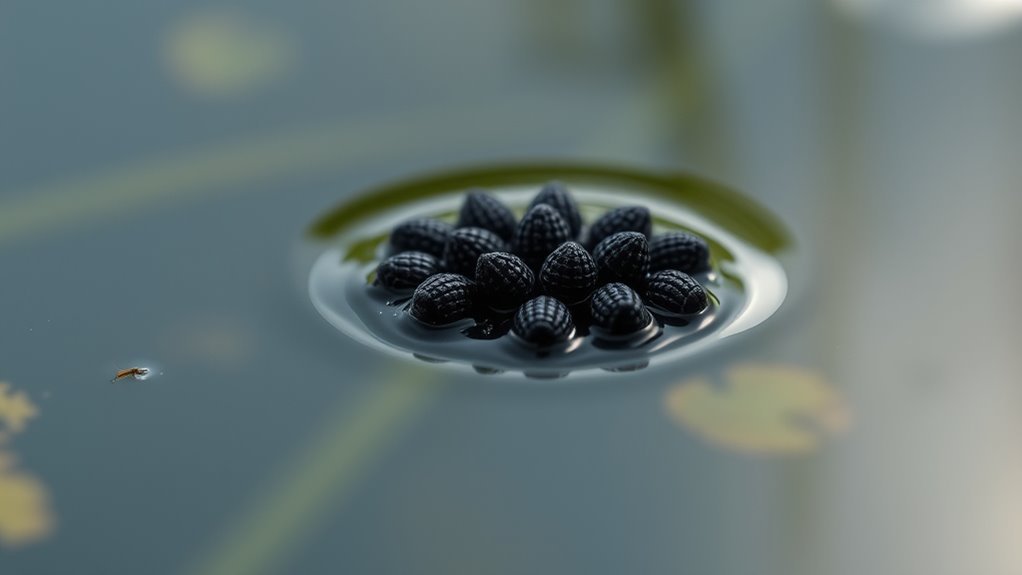
You’ll find mosquito eggs as tiny, dark, oval-shaped specks clustered together in floating rafts on stagnant water. These mosquito eggs in water form rafts that hold 100 to 300 smooth, shiny eggs packed tightly, each roughly 1 millimeter in size.
The clusters look like small patches of soot, floating due to surface tension.
Spotting these rafts signals mosquito eggs ready to hatch soon. It’s fascinating how their size, shape, and texture play a role in their survival.
If you want to understand more about what mosquito eggs look like in water and why they cluster this way, keep exploring the details ahead.
Key Takeaways
- Mosquito eggs form floating rafts that look like tiny, dark specks or soot on stagnant water surfaces. Each raft contains 100 to 300 small, oval-shaped, dark eggs about 1 millimeter in size.
- Eggs are tightly packed in clusters that are roughly 1/4 inch long and float due to surface tension. The smooth, shiny texture of eggs helps them stay afloat and maintain raft structure on water.
- If you spot these small, oval, soot-like clusters, it usually means mosquito eggs are ready to hatch within 24-48 hours. They’re pretty easy to miss unless you know what you’re looking for!
Mosquito Eggs in Water: Rafts and Clusters Explained

When mosquito eggs land on water, they often form floating rafts that look like tiny specks of soot. These egg rafts are basically clusters containing 100 to 300 tiny eggs, all stacked closely together on the water surface.
Mosquito eggs cluster in floating rafts of 100 to 300, resembling tiny specks of soot on water.
Each mosquito egg is small, dark, and oval-shaped, about 1 millimeter in size. That makes them pretty hard to spot unless you look really closely.
Some mosquito species lay their eggs directly on water, while others prefer damp soil. Interestingly, the eggs laid in soil have a remarkable resistance to drying out.
Once water covers these egg rafts, the eggs usually hatch within 24 to 48 hours. This is a key step in the mosquito life cycle.
Knowing about these egg rafts and clusters helps you understand how mosquitoes reproduce and survive in watery environments. It’s pretty fascinating once you think about it!
How to Identify Mosquito Eggs by Shape, Size, and Texture
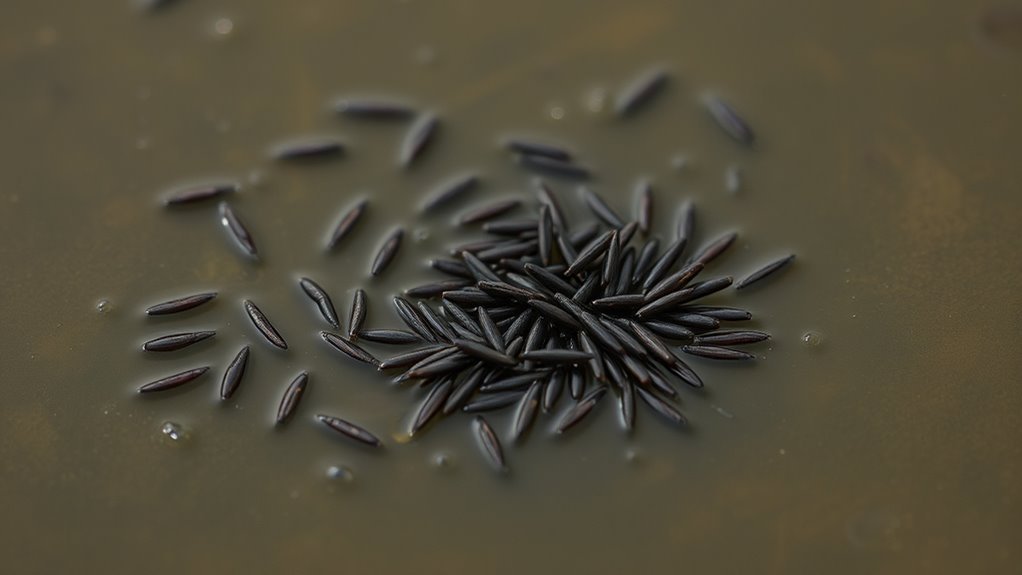
Recognizing mosquito eggs starts with understanding their shape, size, and texture. You’ll notice that mosquito eggs are tiny, oval-shaped, and about 1mm in size, often appearing as dark specks floating on stagnant water.
These eggs rarely lie alone; they form raft formations—clusters of 100 to 300 eggs—creating a floating mass roughly 1/4 inch long. The smooth, shiny texture of each egg helps it stay afloat and stable on the water’s surface.
While different mosquito species might slightly vary in size and raft formation, the general shape and texture remain consistent. So, when you spot these tiny, oval-shaped clusters on stagnant water, you’re likely looking at mosquito eggs ready to hatch.
Frequently Asked Questions
Can You See Mosquito Eggs on Water?
Yes, you can see mosquito eggs on water, but they’re tiny and often look like dark specks or small clusters called rafts. You’ll need close observation, especially on stagnant water or near the edges.
What Do Mosquito Eggs Look Like to the Human Eye?
You’ll spot small, speckled, slightly shimmering shapes—dark, delicate dots dancing on water. Though tiny and tough to see, these mosquito eggs often cluster like charcoal crumbs, contrasting clearly against calm, clear surfaces you observe closely.
What Is a Mosquito’s Worst Enemy?
Your mosquito’s worst enemies are predatory fish, like mosquito fish, and aquatic insects such as dragonfly nymphs. Birds, fungi, and microorganisms also hunt mosquitoes, so you can use these natural predators to control their populations effectively.
What Is the Only Country With No Mosquitos?
You’ll find that Iceland is the only country with no native mosquitoes. Its cold climate, lack of standing freshwater, and strict regulations keep mosquito populations from establishing, so you won’t encounter them there naturally or through human activity.
Conclusion
Now that you know mosquito eggs often appear as small rafts floating on water, you can better spot and manage them. Notably, a single mosquito egg raft can contain up to 300 eggs, showing how quickly mosquito populations can grow.
By recognizing their unique shape and texture, you can take early action to prevent mosquitoes from multiplying around your home. Staying aware helps protect you from bites and mosquito-borne diseases.
Keeping an eye out for these tiny egg rafts in standing water is key to stopping mosquitoes before they hatch. The sooner you identify mosquito eggs, the easier it is to reduce their numbers and keep your environment safer. So, next time you check water sources, remember what mosquito eggs look like and act quickly to control their spread.