

How to Get Rid of a Goose Egg in 5 Easy Steps
To get rid of a goose egg, first secure the necessary permits and check local regulations. It’s important to know what’s allowed in your area before you start. This will help you avoid any legal trouble down the line.
Next, safely locate and identify goose nests without disturbing the birds. Take your time and be gentle so you don’t cause any harm. Once you find the eggs, mark each one with a unique identifier to keep track of which you’ve treated.
Then, choose a method like freezing, oiling, or gently breaking eggs to prevent hatching. Each method has its pros and cons, so pick what works best for you.
Finally, handle and dispose of eggs responsibly while keeping accurate records. Follow these steps, and you’ll find more detailed guidance to manage eggs effectively.
Key Takeaways
- Locate goose nests carefully near water or elevated sites, but be sure to avoid disturbing the birds or their eggs.
- Mark each egg with a soft pencil, and don’t forget to record the nest location along with the treatment date. This will help you keep track of your progress.
- Choose a method that suits you, like breaking, freezing, oil coating, shaking, or piercing the eggs to prevent the embryos from developing.
- When breaking eggs, handle them gently. Afterward, clean up shell fragments using lukewarm water to ensure safe disposal.
- Dispose of the eggs responsibly, and keep detailed records of everything. This way, you’ll be ready to report your management activities if needed.
Understand Legal and Timing Requirements for Goose Egg Management
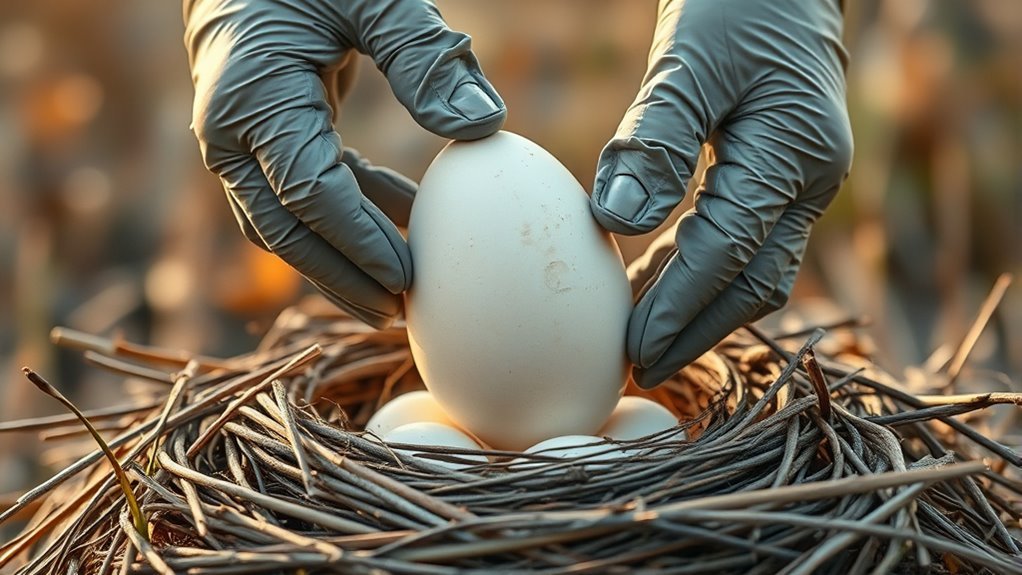
Before you handle any goose eggs, you need to obtain permits from Environment and Climate Change Canada and the Canadian Wildlife Service. These permits are essential because they regulate egg destruction or sterilization under Section 26.1 of the Migratory Bird Regulations.
Obtaining permits from Environment and Climate Change Canada is crucial before handling or managing goose eggs legally.
You must follow the best practices outlined in your permits to guarantee legal compliance. Timing is critical, so coordinate your intervention with regional naturalists or offices to match the nesting periods accurately.
Also, keep detailed records of all nest and egg data, then submit these according to permit conditions. Remember, without obtaining the proper permits and adhering to timing requirements, you risk violating wildlife protection laws and causing unintended harm.
Getting your permits right sets the foundation for responsible goose egg management. It’s really about doing things the right way, so nature and the law are both respected.
Locate and Identify Goose Nests Safely

When you set out to locate goose nests, focus your search near water bodies like islands, shorelines, or elevated spots such as trees and lodges where geese prefer to nest. Look closely for signs of nesting, including woven vegetation, down feathers, and unusual piles that indicate a nest’s presence.
Approach carefully to avoid disturbing the geese or their eggs. Use GPS coordinates or recognizable landmarks to document the nest location precisely.
Plan to visit each site twice, about 7 to 10 days apart, to identify all eggs and check for any new ones laid. Handle eggs gently during identification to protect the incubation process.
Mark and Track the Eggs You Treat

After locating and identifying goose nests, you’ll need to mark and track the eggs you treat to keep everything organized. Marking each egg with a soft pencil or felt pen gives every treated egg a unique identifier. This step prevents double treatment and helps you account for all eggs during future visits.
Keeping detailed records ensures effective monitoring and legal compliance. It might sound like extra work, but it really makes a difference in staying on top of things.
To stay organized, remember to:
- Mark each treated egg clearly before removal or sterilization.
- Record the nest location, date, and number of eggs treated.
- Maintain a detailed log or map of nest sites and marked eggs.
- Use your records to track progress throughout the nesting period.
Choose the Best Method to Destroy or Sterilize Goose Eggs
Although multiple techniques exist to prevent goose eggs from hatching, choosing the best method depends on your resources and goals. The most direct approach is to break or remove the eggs, which immediately stops development.
If you prefer a less obvious method, freezing eggs for at least 12 hours destroys the embryo effectively. Coating eggs with non-toxic vegetable or mineral oil blocks air exchange, sterilizing the egg without breaking it.
You can also shake eggs vigorously to disrupt the internal fluids, halting embryo growth. Piercing eggs with a tiny hole is another option, as it affects water balance inside and prevents development.
Think about your situation carefully to decide which method suits you best for managing the goose eggs. It’s all about what works best for you!
Safely Handle, Dispose, and Record Goose Egg Management
Handling goose eggs carefully guarantees you avoid damage while preparing them for disposal or sterilization. You should crack the shell gently around the top or entire egg, using lukewarm water to remove shell fragments and peel back the membrane.
Once emptied or peeled, dispose of the eggs responsibly by destroying, sterilizing, or burying them on your property with local permission. It’s important to keep accurate records of how many eggs you treat or dispose of, and report this data to the relevant authorities.
- Crack eggs gently to prevent shell damage
- Use lukewarm water for easier shell removal
- Dispose of eggs following local regulations
- Record and report egg management activities
Frequently Asked Questions
How to Make a Goose Egg Go Away Fast?
You can make a goose egg go away fast by gently cracking the top, peeling away shell fragments under lukewarm water, and carefully pressing out the fluid. Be gentle to avoid damaging the skin and speed healing.
How to Get Rid of Goose Eggs?
You’ll want to smash those goose eggs like you’re crushing a mountain! Crack them open, freeze for 12 hours, or coat with mineral oil to stop hatching. Always follow legal rules to avoid trouble.
What if a Goose Egg Doesn’t Go Away?
If a goose egg doesn’t go away, you should check if it’s fertilized or buried. Don’t handle it without consulting local wildlife authorities, as rules vary. They’ll guide you on safe removal or when to leave it alone.
What Do I Do if I Find a Goose Egg?
Did you know a goose can lay up to 12 eggs per season? If you find one, gently check if it’s fertilized, handle it carefully, and follow local laws before deciding whether to remove or leave it alone.
Conclusion
Now that you know how to manage goose eggs responsibly, remember timing is essential—intervening within the first 7 days can reduce goose populations effectively.
Did you know that controlling just 1 nest can prevent up to 30 goslings from hatching each season? By following these steps, you’re helping protect local ecosystems while staying within legal guidelines.
Taking action wisely not only supports your community but also helps maintain a balanced environment. Getting rid of a goose egg the right way is key to making a real impact on your surroundings.
So, if you want to learn how to get rid of a goose egg in 5 easy steps, stick to the guidelines, act quickly, and you’ll be part of a responsible solution that benefits both people and wildlife alike.